Home Blog Page 210

Murals, public art used to revitalize neighborhoods

0
Toledo Free Press cover photo by Andrew Weber.
Maria Rodriguez-Winter of the Sofia Quintero Art and Cultural Center with a mural in South Toledo. Toledo Free Press photo by Kim Sanchez.

Vacant lots strewn with trash, abandoned buildings littering the city, boarded-up windows — it’s no secret that neighborhood blight is a problem in Toledo. “Revitalizing neighborhoods” even became a campaign issue in the November election.

One such abandoned building sits at the corner of 18th Street and Madison Avenue in the UpTown neighborhood. The Arts Commission, Art Corner Toledo (ACT), Home Depot, the UpTown Green planning committee and volunteers from United Way of Greater Toledo are all working together to place murals over its boarded-up windows.

The artwork is expected to do for UpTown what murals have done for other parts of the city. Murals have revived dilapidated landscapes, increased a sense of ownership and transformed a neighborhood plagued by vandalism and prostitution to one that kindles respect and pride. Murals have revitalized Toledo’s neighborhoods, supporters say, and more are planned.

“[Murals] have a huge, huge impact on the way people interact with the city and engage with the city,” said Ryan Bunch of the Arts Commission. “They’re more aesthetically appealing … they create meaning. … Some of Downtown is a little rough-looking at times and it creates this feeling that ‘I’m not alone here — there’s some life and activity here.’”

“Murals and public art have been proven to create destinations for people to visit, take photos and simply be in a positive, creative space and place,” said Rachel Richardson of ACT. “They also attract developers and activate parts of blighted neighborhoods that need some extra help due to decades of decay.”

“Neighborhood revitalization and economic development follow in the wake of public art.”

The murals at 18th Street and Madison Avenue will be painted on panels that can be moved to preserve the art for the future. The Arts Commission is accepting artist submissions with a design concept of “activism and community.” When finished, the murals will be 8.5 feet high and 14 feet wide with contributions from more than 10 artists.

“We are excited about it,” said Julie Champa, executive director of the UpTown Association. “And it will certainly add to the overall feel of the neighborhood in general.”

The mural will be adjacent to a park, called UpTown Green, that is currently under construction. Both the mural and the park are expected to enhance the neighborhood and entice potential developers.

Toledo City Council plans to vote on a measure to spend $15,000 on murals for the city. The money will match $15,000 offered by Lucas County and will go to ACT, said City Council member Lindsay Webb. The measure was on the agenda April 22 but was held for a vote, Webb said.

“Murals are a great way to capture the heart of a neighborhood and express it visually, Webb said. “It’s a part of developing and identifying and dealing with blight. My hope is that we can roll it out citywide and look at Summit Street or maybe on Secor Road and in East Toledo.”

Point Place is also another neighborhood that has expressed interest in getting a mural.

“Point Place would love to put up murals about boats and that aspect. I can’t do that if I don’t have the resources,” Webb said.

One percent of the city’s capital budget is designated to the Arts Commission, Webb said, but that money must be used on city-owned property. Council would like to get murals into neighborhoods to improve blight and increase economic development, she said.
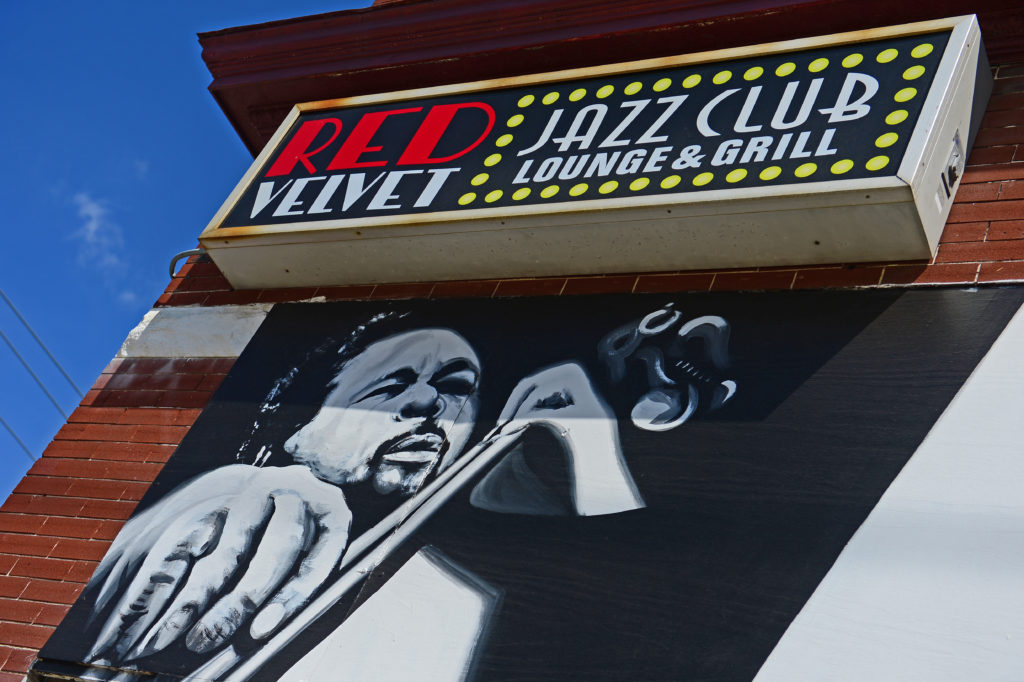
Ahmad Jacobs painted the murals at the Red Velvet Jazz Club at Junction and Belmont avenues. Toledo Free Press photo by Andrew Weber.

Red Velvet Jazz Club

Artist Ahmad Jacobs said people in the Junction neighborhood had a sense there was a “movement” about to happen.

The business owners in the area and the residents were “all happy and full of excitement” to have him paint a mural on the side of the Red Velvet Jazz Club at Junction and Belmont avenues.

“It was really good feedback for me. I felt special,” Jacobs, 45, said. “It brought a lot of people out who didn’t want to come out.”

The building is under new ownership and in the process of opening, according to Jacobs.

Jacobs has painted a number of murals around the city, many of them as a volunteer. He attended the Art Institute of Pittsburgh and taught kindergarten through sixth grade before life got in the way and he said he lost his creative direction.

“I wanted to give up,” he said. “I ended up finding myself again and experiencing art. … I had to get humble. Once I started volunteering, it worked wonders. … My whole thing was to make the city my sketchbook. No one knew I was an artist. I started going around giving businesses a ‘hug.’”

Richardson enlisted Jacobs to paint the mural that he says altered the Junction neighborhood.

“The spirit of the neighborhood completely changed,” he said. “A lot of the businesses had hope when they saw it. And even the people, the winos, they had something positive to talk about. They saw people come into their neighborhood who didn’t live there (who) had passion and drive for their neighborhood. … They needed to step their game up and join in. … So many people I would never talk to came to talk to me and offer suggestion on what they wanted to see.”

The Love Wall

The “Toledo Loves Love” mural at Adams and 13th streets has not only helped revitalize the UpTown area, it has also become a destination spot. Wedding parties, residents and people taking selfies use it as a backdrop.

“It’s a great promoter of Toledo,” said Manos Paschalis, owner of Manos Greek Restaurant, 1701 Adams St., and the owner of the building sporting the “Toledo Loves Love” wall. “Yes, it brings people together and it brings energy to the area and it’s always positive.”

That positive energy can only enhance a neighborhood, Champa said.

“The ‘Toledo Loves Love’ has gotten a lot of attention. … So many people come to that and take pictures. It’s become synonymous with the district and we think that’s really cool.”

Paschalis said the mural is bringing in business; every year, more and more people who come out to see the mural are flocking to area businesses.

A new business is going in at the building the mural adorns. Toledoan Aggie Alt is opening Moxie Live, an art house and pub that will have art on display and offer theater, dance and “anything to do with art,” Alt said.

“I think the mural is such a perfect fit,” she said. “I think it’s going to help us identify with that area. Even people outside the city know it.

“The mural shows artists, ‘Yeah, you can have your work shown here and (the art world) isn’t dead,’ and I think the mural really promotes that.”

‘The Voyage’

In 2013, the United Way of Greater Toledo held its Days of Caring event. The organization set out to “transform a neighborhood, strengthen relationships.” And to do that, they went straight to the Junction neighborhood residents to find out what changes they wanted.

The neighborhood responded. During the event, more than 30 properties were landscaped and mulched, 13 houses painted, five schools beautified, three wheelchair ramps built, two home foundations repaired, two playgrounds improved, one church basement floor installed and two murals painted, plus much more.

Titled “The Voyage,” one of the murals looks like a big blue wave rolling across the side of a building and wrapping around its edges.

It’s painted on the old Munchies building at North Detroit Avenue and Dorr Street, whose sign reads “Munchies. Again. Shrimp. Fish. Chicken.” Behind it sits a Family Food Center and, next door, a dollar store.

“The concept that we wanted to capture is that there is a voyage that needs to take place, for the past, present and future — so (the generations) know who they are and how they are connected to American history with a positive perspective,” said Alicia Smith, a resident and community organizer.

Smith sees the mural as not only a lesson in the voyage of life, but also a testament to relationships: Hundreds of volunteers, sponsors and residents worked together to make the mural and Days of Caring a reality.

“The most important thing is connection. There’s strength in connection; there’s power behind connection. … When you allow the community to have a voice you stop prescribing what you think they need and they start prescribing what they need,” Smith said.

United Way shifted to a grassroots way of interacting with the community about five years ago, said Emily Avery, director of community engagement at United Way of Greater Toledo. The organization listened to the residents at Days of Caring, acted and got great feedback, she said.

“We heard a lot from the neighborhood — it gave people hope again — just to see how much community support that they had,” Avery said. “It’s amazing what a little paint can do. We heard from people that it just kind of spread joy through the neighborhood.”

The Junction neighborhood is not done with its revitalization plan. They recently cleared sidewalks, organized a voter registration drive and will continue to landscape and paint. The journey is not over, Smith said.

“We’re going to continue to do murals. The voyage doesn’t stop,” she said. “The minute you dock the boat, you have to continue.”

Broadway Street

Gordon Ricketts was influenced by the Latino art of his San Diego childhood. As art professor and director of the Arts Village at Bowling Green State University, he wanted to bring the Latino art style to Toledo. To do so, he enlisted his friend Mario Torero.

Torero, an artist born in Peru, helped paint 60 colorful murals on the concrete support piers for the San Diego-Coronado Bridge and I-5, called Chicano Park in San Diego’s Barrio Logan neighborhood.

Ricketts brought Torero to Toledo about five years ago for the first of several murals, two on the underpass of I-75 on Broadway Street. Passersby can see the murals are large and Hispanic in style, much like the murals at Chicano Park.

“Broadway made sense because of the bridge,” Ricketts said. “We got permission from ODOT (Ohio Department of Transportation) and the mayor’s office and business leaders in the neighborhood. It was a pretty involved project.”

Students from BGSU and residents helped Torero paint the murals that stretch from the I-75 underpass to the Green Lantern at 509 Broadway St., Ricketts said.

Since the murals have graced the neighborhood, leaders said they no longer see the graffiti or prostitution they once did along Broadway Street. So far, none of the murals have been vandalized and a survey of the neighborhood showed that residents like the artwork and the gardens.

Maria Rodriguez-Winter, interim director of the Sofia Quintero Art and Cultural Center at 1225 Broadway St., said the murals have had a transformative effect on the neighborhood, which in the past was very depressing with boarded-up buildings and absentee landlords. The decline started about 20 years ago, said Rodriguez- Winter, who has been involved in the neighborhood for the past 40 years.

About 10 years ago, things started to change and now every day she sees a synergy at work in the neighborhood, she said. Residents now have a sense of pride and respect for the neighborhood. The murals are a big part of that.

“We love [the murals],” she said. “We feel that they really add a lot of beauty to the neighborhood and it engages people. When Mario comes and when Gordon comes into the area with the students, they are engaging the community.

“It’s just a process of having the people of the neighborhood be involved in the creative aspect of it. We’ve gotten so much positive feedback that some of the businesses want to have their walls painted.”

This year will be the fifth year Torero has come to Toledo to paint. The artist will be in the Old South End neighborhood June 17-18, Ricketts said.


Letters to the Editor, Apr. 27, 2014

0

Sid Kelly diminishes humanity of low-income people

TO THE EDITOR,

I am writing in response to Sid Kelly’s April 20 editorial, “Accepted Assistance.” Kelly’s thesis appears to be that low-income Ohioans are using their SNAP benefits to purchase things they don’t need. The word “need” comes up a lot. One person doesn’t “need” crab legs. Another doesn’t “need” an iPhone.

All this talk of need got me thinking. What do people need? We need hydration. We need vitamin C to ward off scurvy. We need calories, fats and proteins. Do we need crab legs? Do we need phones? Do we need a Downtown ballpark? Do high-income Ohioans need the money they get from the home mortgage interest deduction?

More importantly, do people need choice, agency or free will? Do people need to make their own decisions about their own life? Maybe they splurge once in a while on their favorite foods. Maybe they have a phone that doubles as their computer. Or maybe, as Kelly argues, these people are prioritizing things we wouldn’t prioritize. Just like Toledo using their tax dollars to build a stadium and wealthier individuals using their tax credits on vacations or second homes, low-income Ohioans deserve the respect of being able to make choices with their benefits. That agency is a need. And Kelly’s judgment of that need only serves to diminish the humanity of our lowincome brothers and sisters.

There is another need. I need your readers to understand that no one “approach[es] assistance as a vacation” as Sid Kelly claims. To qualify for SNAP (food stamps), a household must be under 130 percent of the federal poverty guidelines. That’s less than $1,270 per month for a single person. About $2,580 per month for a family of four. Some vacation.

These people — our neighbors — are hungry and desperate. These benefits help them put food on the table. There is no value in shaming them for occasionally buying crab legs or saving up to buy a phone.

— L. Russell Allen, Columbus

Disappointed in Collins

DEAR MAYOR COLLINS,

I am writing this letter on behalf of my family who are property owners in Toledo, who have attended the public schools and have invested their time and money into businesses in and around Toledo. We are committed to the success of Toledo.

I am very disappointed to hear that you will not entertain any plans to privatize the Toledo Express Airport. I hope that you will reconsider your position. The business at Toledo Express Airport has been shrinking for a number of years. Paul Toth, president of the Toledo-Lucas County Port Authority, has stated that “we continue to see great growth, good numbers,” in referring to the airports. Where are these numbers? Where is the evidence to support this statement?

The Toledo-Lucas County Port Authority may have been the right group to manage the Toledo airports in 1973. However, it is 2014 and our economic situation is different. Under the current management, we have lost tax revenue, traffic volume has decreased, putting us at risk for reduced federal funding, and we have seen a decrease in economic development.

If we want the situation to change, then we need to change. We need a thorough review of the current management of the Toledo airports. We need to consider credible alternative solutions like the Treece plan. The taxpayers deserve the opportunity to hear the details of the proposal in a public forum. Improved management equals more tax revenue to improve schools and more jobs to help put Toledoans back to work. Now is the time to get out in front of this issue before it is too late. Let’s be proactive!

I have started a Facebook page www.facebook.com/SavetheToledoAirports and I have sent this letter to Toledo Mayor D. Michael Collins and the Toledo City Council.

— Jim Wuwert, Toledo

Murphy’s law

TO THE EDITOR,

I just finished reading Tom Pounds’ Publisher’s Statement on the State of the Region in the April 20 issue of Toledo Free Press. I read the advice of Tom Murphy and I thought it to be very timely. Pounds’ column states, “Murphy said Pittsburgh invested in its cultural community and reclaimed the waterfront. Those are both lessons we should well heed.” Having just spent this past Saturday at 419 Day, I am very proud of how Toledoans support their cultural community. There are so many cultural opportunities available and people around the area show their support in so many ways.

However, what about the waterfront advice? We are about ready to sell out some reclaimed waterfront to ProMedica. People fought hard to open that area up to the public by getting rid of a hideous government issue building. Are we really going to give up this land for a parking garage? Are there alternatives? Some say that placing the garage underground is too costly. I think it would be worth the cost — in the long term.

I would suggest that people look no further than the University of Cincinnati. They have created acre upon acre of green space by placing parking structures underground. The aesthetics of the campus have changed drastically, making it a much more inviting campus. There is no doubt that enrollment has been positively affected by these decisions.

Like Pounds, I hope we can heed Murphy’s lessons. Let’s look at alternatives to another ugly parking garage blocking the view of our waterfront and taking up valuable space that could be enjoyed by generations of Toledoans. As Murphy stated, “You need to think of Toledo, not as it is today, but as it can be in the future.”

Will we heed this advice or settle for most expedient?

— Mark A. Smith, Toledo

Kerger: Parking lots — fair profit or gouging?

0

On two different evenings recently, area high schools had events in Downtown Toledo. One was a series of performances by students while the other was an effort to raise funds. The events took place in separate venues, but across the street from the same parking lot.

On both nights, the owner of the parking lot, seeing the opportunity for increased income, raised the parking charge to a flat fee of $10. Since regular parking would be no more than half that, he clearly was taking advantage of what he considered to be a captive audience.

What the owner did not focus on was the fact that future event planners might well determine that other venues would be more appropriate, where the people they were inviting did not have to pay $10 just to park. There are a number of venues around the city that could have accommodated these groups and each would have had free parking.

The parking lot owner is not there to serve the public. His is a private business, operated for his own benefit and at his own risk. He has substantial costs, not the least of which is real estate taxes. I am sure the daytime parking is down as well. He has to plow it, pave it and maintain it on his own nickel.

That said, the point is that parking is a problem and if the city is going to rebound, we need to get people Downtown. In a perfect world, parking would be free. But that would leave the question of who maintains the lots. Moreover, without charging for parking, people would avail themselves of the closest spaces, leaving those arriving later a two-mile hike.

For years, urban planners have cited airport parking as the appropriate model. You charge a high price for those who want the most convenience, and offer bargains for those willing to park further away. That is the way it is in Toledo, except when there are special events. But it seems to me there is a key difference between Mud Hen’s games or those of the Walleye and local high school events. The sports teams are both profit-making ventures, so I think parking lot owners are entitled to make a profit as well.

I’m not suggesting that the owner of the parking lot did anything wrong. But I am saying that this circumstance highlights the parking problem and it seems to me the mayor and his staff ought to address it.

Perhaps offering a tax break to parking lot owners to reduce their prices would help. Or, it might be suggested that they offer special prices for certain events, again with the idea that some form of compensation or tax break could be afforded to lot owners for doing so.

I am sure the University of Toledo has at least one if not more classes that study this topic. By reaching out to the university, the city could obtain some quality free consulting
on the issue.

By the way, I know parking is important. Our firm is located on the south edge of the city and our building has its own parking lot, which is free. Our clients appreciate it and so do I.

Rick Kerger is a trial lawyer at Kerger & Hartman LLC in Toledo.

Retirement Guys: Preparing for retirement

0

We go through life, essentially, learning the entire way. It seems that when it comes time to tackle our retirement planning, we often fall short in educating ourselves or reaching out to fellow mentors about the right choices to make. This can be a costly mistake for retirees.

.

.

We see it more often than we’d like here at the Retirement Guys Resource Center — smart, well-educated individuals who have made vital retirement decisions without taking the time to learn about their different planning options. At retirement, an employee is often handed the biggest check of their lifetime in the form of a pension and a 401(k). Smart decisions have to be made with those accounts so the income lasts as long as needed.

For all these years, the employee relied on the company for a steady paycheck. At retirement, most companies say, “Here are the choices on the pensions and the 401(k) plan. Let us know what you want to do.” Those decisions on how to best manage the money to have a lifetime of income can become overwhelming and at times are made without a lot of prior planning. Don’t make that mistake; here are three tips to follow.

  • Know what is important. A lot should be considered before any retiree makes a decision. Remember, most decisions — like pension payouts — are irrevocable. So once the decision is made, it cannot be changed. Get it right the first time. Start by writing down what is important. Think about what you want to do, where you want to be and how much income you are going to need. Write down all of your dreams, goals, and desires. Just start on a yellow pad of paper and write down anything that comes to mind.
  • Run the numbers. Once you know what is important to you and your dreams, goals and desires are written down, it is time to run the numbers. Is paying off the mortgage a possibility? Do you have enough money to buy a new car or second home? How long will your money last? What do the numbers look like when other options are considered? Running the numbers will not only help a retiree understand what is realistic and possible, but it will also help the retiree begin to prioritize the list.
  • Map out a game plan. Anyone who has met me knows I am big into checklists. I like checklists because they can give an investor a road map to follow and also allow an individual to write in dates and deadlines. Moving into retirement is a new phase for a lot of people, so creating a retirement checklist is a great idea. Financial items on the list should include things like an inventory of all assets, a listing of income sources and an overview of the amount of risk in each account. This list should also include any dreams, goals and desires that, after the numbers were run, are still part of the plan.
  • Retirement planning might seem a bit overwhelming at first. Remember, the best decisions for a co-worker or a friend may not be the best decisions for your family. No one decision is best for everyone.

For more information about The Retirement Guys, tune in every Saturday at 1 p.m. on 1370 WSPD or visit www.retirementguysnetwork.com. Securities and Investment Advisory Services are offered through NEXT Financial Group Inc., Member FINRA / SIPC. NEXT Financial Group, Inc. does not provide tax or legal advice. The Retirement Guys are not an affiliate of NEXT Financial Group. The office is at 1700 Woodlands Drive, Suite 100, Maumee, OH 43537. (419) 842-0550.

Personal growth developed through equine therapy

0
Amanda Thompson and an equine friend

By Lori Dewey

Riverbend Leadership Solutions was founded on the belief that individuals can achieve a greater sense of self-awareness by interacting with horses.

Amanda Thompson and an equine friend

The Grand Rapids, Ohio-based organization was established in 2013 with the goal of enhancing personal and professional growth in development, leadership and communication skills through equine therapy.

The principal idea behind equine therapy is that horses possess an instinctive ability to mirror those with whom they interact, allowing individuals to develop a better understanding of their leadership and communication styles, said founder and Equine Assisted Psychotherapy and Equine Assisted Learning (EAGALA)-certified equine specialist Amanda Thompson.

This heightened understanding leads to the enhancement of effective communication and the development of more unified interpersonal and professional relationships, she said.

Thompson said her goal in creating Riverbend Leadership was to help people achieve health, healing and growth.

“I do not heal people; they heal themselves,” Thompson said. “I just provide the environment and the tools they need to heal.”

Thompson grew up riding and showing horses, and developed a love for the animals at a young age. She spent four years in the military on active duty during which time she began to learn to communicate with and tame wild horses.

She realized that she was on to something when she noticed her interactions with the horses strengthened her leadership, communication and interpersonal skills in other areas of her life.

Upon returning to Ohio after her military career, she attended college for business and wrote a business plan for owning and running a horse farm. She said her grandfather and father helped her to make her dream a reality in 2006 when she bought a farm.

She began by working with horse owners who were having difficulty managing their animals. She was able to assist people in establishing a relationship and communicating with their horses.

Shortly thereafter, she established a nonprofit organization using equine therapy to help abused women and veterans suffering from post-traumatic stress disorder.

She said the positive results for participants were almost immediately recognizable, with improvement in life impairments in as few as six sessions with the horses.

“Horses will pull out of you not what you think you need to know, but what you really need to know,” said Sarah Hafner, operations manager of Equine Leadership Solutions.

Currently, the organization’s primary target audience is corporate America. Thompson believes that business executives can learn about their leadership and communication styles by interacting with the horses, and from there they can develop a plan of action.

By identifying how to incorporate what is learned from equine therapy into the work environment, communication and leadership skills are improved and cohesive professional relationships are formed, she said.

Riverbend Leadership also offers equine therapy to people struggling with depression, anxiety and grief issues. Hafner is currently working with several clients on coping with the grief of losing a pet, which she said she finds extremely rewarding.

“The results are outstanding,” Hafner said. “They come in vulnerable and unsure of themselves and leave with a newfound confidence and empowerment.”

The farm currently houses 13 horses, all of which were rescued by Thompson. Besides herself, consistent with the EAGALA model for equine therapy, she also employs Paul Standinger, a therapist.

Together, they form a team with the horses to provide therapeutic programs and workshops to people and businesses within the community.

EAGALA, Thompson’s certifying body, is a nonprofit organization founded in 1999 comprised of more than 4,000 members from 49 different countries.

This association sets the standards of practice for certified equine specialists, with a vision that “every person worldwide will have access to Equine Assisted Psychotherapy and Learning Services, provided at the highest standard of excellence,” according to the group’s website.

Thompson hopes to continue to grow her organization and expand her services through community awareness and education. Riverbend Leadership is presently in search of sponsors for their horses in order to continue to provide these therapies.

For more information, visit www.riverbendequine.org.

‘West Side Story’ coming to Stranahan May 1-4

0
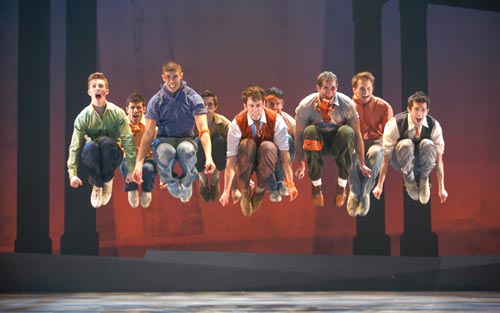
‘West Side Story’ will be in Toledo for one weekend. Photo by Carol Rosegg

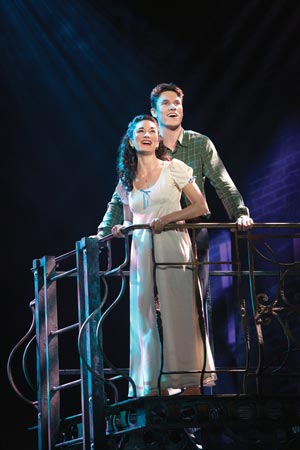
MaryJoanna Grisso’s mother, a music teacher, often played music from “West Side Story” when Grisso was a child, which exposed her to the songs she is performing today as Maria.

‘West Side Story’ will be in Toledo for one weekend.Photo by Carol Rosegg
‘West Side Story’ will be in Toledo for one weekend. Photo by Carol Rosegg

“I grew up loving this musical,” Grisso said. “It was something that I always wanted to be in. It’s such a classical piece of theater and it’s such an incredible story, an incredible message and a lot of people can relate to it.”

Locals can catch her performance when “West Side Story” dances into the Stranahan Theater on May 1. The show will be in town for one weekend only, showing at 8 p.m. May 1; 8 p.m. May 2; 2 and 8 p.m. May 3; and 2 and 7 p.m. May 4. The show runs for two hours and 30 minutes with a 20-minute intermission. Tickets can be purchased online at theaterleague.com.

Grisso, who thinks the show is one of the best of Broadway, said the production is timeless.

“It’s such a relatable story; it’s the Romeo and Juliet story,” Grisso said. “So many people deal with that in their lives, and racism and bigotry all still exist. … I think that’s why it’s still relevant.”

A number of things attracted Grisso to the role of Maria, but she mostly admires the growth of her character throughout the show.

MaryJoanna Grisso in West Side Story. Photo by Amy Boyle

“She is a very inspiring character to me,” Grisso said. “She grows so much in the show. You see her in the beginning of the show and she’s a young girl and by the end of the show, which is only a matter of two days, she’s forced to grow up very quickly with the things that she’s dealing with. … For me to do it every day, it’s like I’m learning from this character, which is really spectacular.”

This is Grisso’s second season playing Maria and she said she never gets sick of the character. The most challenging part was the role’s Spanish lines, which Grisso began being coached for as soon as she got the part.

“There’s a little addition of Spanish in this edition, which is great. It adds so much authenticity to these characters,” Grisso said. “So that was one of the things I worked on.”

For more information, visit the website theaterleague.com.

‘Star Power’ entertainment industry event set for May 1

0

By Chase Will, Toledo Free Press Staff Writer

On May 1, The Mad Ave. Collective will host Holy Toledo: You Got That Star Power, an event that offers anyone aspiring to work in the entertainment industry the opportunity to network with local professionals.

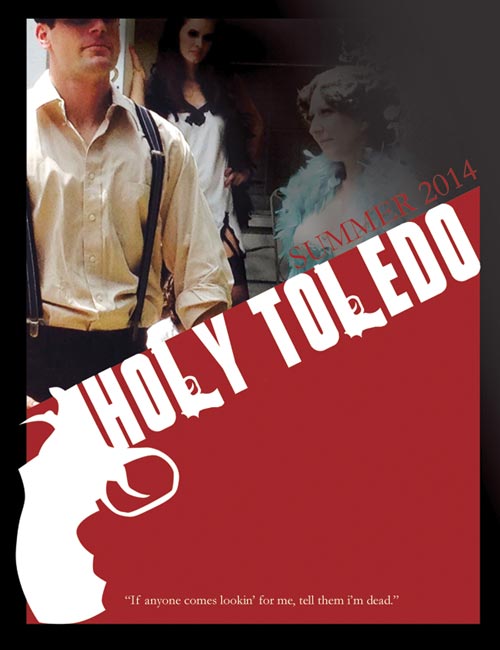
“Holy Toledo” film poster

Throughout the five-hour event, over 30 organizations will have information tables listing upcoming casting calls and production gigs. This event will launch the Greater Toledo Film Commission.

“We’re one of the largest metropolitan areas that doesn’t have a film commission,” said Vincent LaMarr Smith, creator of the event. “I’ve been advocating for three to four years to get some energy going toward putting people interested in the industry together.”

Smith said the biggest benefit of attending the event is the human element of meeting face-to-face with professionals who live in the immediate area.

“I’ve been producing films for the Syfy channel, Lifetime channel and for theatrical releases for about eight years,” said Rich Iott, co-creator of the event. “One major benefit is realizing there are a lot of people in Toledo involved in the film industry in a big way. They live in and work from Toledo, but may be involved in projects in LA or Vancouver or wherever. There’s a guy here in Toledo currently producing a film with Salma Hayek, and a lot of people who may bump into this guy daily may not know he’s traveling back and forth to LA on a regular basis.”

Smith and Iott successfully hosted a similar gathering 18 months ago. The upcoming event, however, has been expanded to welcome all areas of the industry.

“We think Toledo could be successful at attracting larger-scale projects. It’s inexpensive, easy to navigate and we have just about any scenery you could ask for short of mountains. And everything’s within 20 minutes traveling distance,” Iott said. “There are also tons of great screenwriters in the Toledo area. Some of their work, which gets stumbled upon, has been used as a basis for production on the Lifetime channel. There’s a lot of underexposed talent in the city.”

“There will likely be many people at the event who are looking to produce or invest in new projects,” Smith said. “For a little guy who may be an actor or actress or director, you’re going to be able to mingle with these people and possibly launch your career.”

Recent success stories of Toledoans in the film industry include Glass City Films, which just acquired international distribution for an upcoming film, and Charissa Gracyk and Gillian Perdeau, cousins living in the LA area who are currently shooting “Holy Toledo,” a film about Prohibition-era Toledo.

Casting for modeling and acting jobs will also take place at the event, so headshots and résumés are recommended.

The Mad Ave. Collective is located at 1600 Madison Ave. The event will take place on the second floor beginning at 9 a.m. For more information, visit www.madisonave collective.com or contact Smith at (567) 868-2994.

Miller: Cyndi changes everything

0
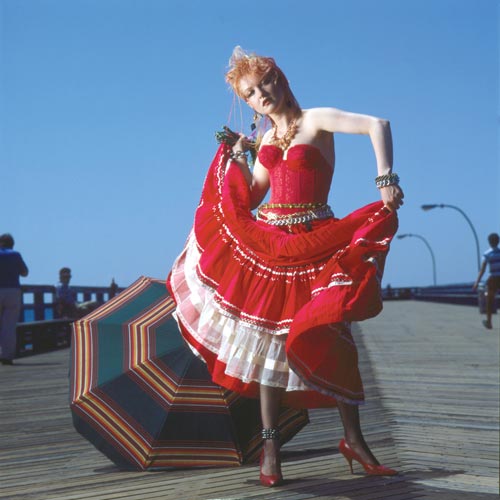
Cyndi Lauper circa 1983, as ‘She’s So Unusual’ began its rise on the pop charts. Photo by Annie Leibovitz / courtesy SONY Legacy

Cyndi Lauper, like so many musicians who debuted during the ’80s MTV era, could have been — should have been — a one-hit wonder.

Cyndi Lauper circa 1983, as ‘She’s So Unusual’ began its rise on the pop charts.  Photo by Annie Leibovitz / courtesy SONY Legacy

Cyndi Lauper circa 1983, as ‘She’s So Unusual’ began its rise on the pop charts. Photo by Annie Leibovitz / courtesy SONY Legacy

“Girls Just Want to Have Fun” was almost too perfect a single to kick off a career. Its anthemic chorus, delivered with a vocal blend of determination, defiance and humor, could have found itself on lists beside “Come On Eileen,” “Take On Me,” “Tainted Love” and other hit singles that served as both introduction and permanent retreat for their performers.

But the New York-born Lauper was too talented a writer and too savvy a performer to gracefully fade into pop star trivia. Her debut  solo album, “She’s So Unusual,” charted five singles, including “Girls Just Want to Have Fun,” the instant classic “Time After Time” and the censor-defying ode to female self-gratification, “She Bop.” “Unusual” was nominated for the Album of the Year Grammy and won Lauper that year’s Best New Artist trophy. Its stature has grown as time has passed; Rolling Stone named it one of the top 500 albums in rock history and historian Dave Marsh tapped three of its songs — “Girls Just Want to have Fun,” “Time After Time” and “Money Changes Everything” — for his book “The Heart of Rock & Soul: The 1001 Greatest Singles Ever Made.”

To mark the 30th anniversary of “She’s So Unusual,” (which was actually released in 1983) Sony Legacy has released a deluxe remastered CD with demos, remixes and B-sides. Lauper discussed the album’s impact on her life and career during a recent interview with Toledo Free Press.

Lauper said the swagger she brought to the vocals of her debut came from her confidence in who she was as an artist.

.

.

“I was very confident going into the making of this record,” she said. “You have to remember I was 30 years old  when the album was released and I had been around.  I had been in bands and had played live for almost 10 years.  I had a record deal with my band Blue Angel before my solo deal. When I got signed to Portrait [Records] as a solo artist, I knew exactly the kind of record I wanted to make, what I wanted it to say, what I wanted it to sound like.”

While a lot of ’80s-era music is trapped in its MTV sound chamber, “She’s So Unusual” has aged well and Lauper said that is in large part due to her production choices.

“Growing up I was influenced by the blues and then by rock music and then later electronic music and then pop music  and reggae, and I think all of those influences came to bear on this album,” she said. “It wasn’t just an ’80s album, it was an album that incorporated different sounds from different periods and maybe, for that reason, it doesn’t sound dated. I never wanted to follow music trends. Because you want all of your albums to sound good 30 years later and beyond.”

Lauper said that at first, she did not react positively to the recording of “Girls Just Want to Have Fun.”

“The first time I heard ‘Girls’ I didn’t like the mastering on it. I thought at first my voice was a little buried,” she said. “In retrospect, it worked well that way because of the key it was in but I wasn’t thrilled at first. I got used to it. The spirit of the music and my voice was there. And then it became a hit.

“Not everyone was convinced ‘Girls’ should be the first single. It was important to me to have a hit with an uptempo song first because if we led with a ballad I would be known as a ballad singer only, and not a rocker. I had seen it happen with a few of my friends who never could get out of that space. I also knew going with an uptempo first would give the album longer life. Then we followed ‘Girls’ with ‘Time After Time,’ which sounded good the first time I heard it.”

One of the album’s gutsier choices was a gender-bending cover of Prince’s “When You Were Mine,” which had recently charted for Mitch Ryder in a version produced by John Mellencamp.

“I’ve never heard the [Ryder] version,” she said. “Rick Chertoff played me the Prince tune and I just really loved it. I wanted to sing it how it was written, never really thought too much about it.”

Giggling all the way

Lauper said she “giggled all the way to the top 5” when “She Bop,” an envelope-pushing song about female masturbation, became a hit.

“Eventually, of course, we were found out and the song became one of the poster songs for Tipper Gore’s Parents Music Resource Center,” Lauper said. “It’s funny, I met her a few years ago and we had a really good conversation.  I think the PMRC complaints actually helped the music become a bigger hit.”

With the whirlwind of touring, videos, magazine covers and wrestling cameos at the time, Lauper said the peaks of “She’s So Unusual” passed by in a blur.

“I did so much promotion and publicity during the life of the album that I probably was out on the road working it when [‘Time After Time’ hit No. 1],” she said. “I remember the first time I heard ‘Girls’ on the radio. I was in Boston in the car of the local label guy there. I got my first real spins in Boston on ‘Girls’ but that’s the only vivid memory I have from that time. And for ‘Time’ to be the second single off the album and go to No. 1 was gratifying because I had to fight really hard to get songs that I wrote on the album.”

“She’s So Unusual” earned six Grammy nominations, but in a year honoring Prince’s “Purple Rain,” Bruce Springsteen’s “Born in the USA” and Tina Turner’s comeback “Private Dancer,” Lauper’s debut went a painful 2-for-6.

“When the Grammy nominations came out and I got six, including best cover art (which went to Lauper’s art director Janet Perr), we were so excited because, at the time, we were the little engine that could,” Lauper said. “When the actual Grammys happened and I lost each one, including Song of the Year [to Turner’s “What’s Love Got to Do with It?”], I felt worse for the people at the label who worked so hard to make the record a hit. Just to watch their faces as each category came and went and we didn’t win. I did get Best New Artist Grammy that year. But the Grammy I really wanted to win was Song of the Year, which ‘Time After Time’ was nominated for. But 30 years later, the song is still so widely covered, that is award enough.”

Following up a legend

Despite the success and pressure of a top 5 debut album, more top 5 singles than any woman had achieved at that time, influential videos, Grammy awards, a Weird Al parody and a Rolling Stone cover, Lauper said she did not fret about a follow-up.

“I did not think about that but a lot of people kept saying that to me. I was thrilled to have so much success off of my solo debut album, but I was familiar, too, with not having success,” she said. “So yeah, of course I wanted my second solo record to be a hit, too, but I was more excited to be back in the studio than nervous about it following up ‘She’s So Unusual.’

“When we recorded that second album [‘True Colors’] it was just not a great experience because there were a lot of people around me saying exactly that and a lot of second-guessing and less creative control for me than I had on ‘She’s So Unusual.’ But I unfortunately think that is really common, that once you have a hit, everyone wants in on the next project, everyone wants to give their two cents and it can be distracting.”

Thirty years later, Lauper said she is happy with ‘She’s So Unusual’ and its legacy.

“I wouldn’t change a thing!” she said. “Listening to it again, I mean really listening to it again, after Sony approached me about the 30th anniversary, cemented that. It still sounds good to me.

“And you can hear how much fun we had making it.”

Michael S. Miller is editor in chief of Toledo Free Press and news director for 1370 WSPD. Email him at [email protected].

‘IMMORTAL’: Percussion icon Bashiri Johnson comes to Toledo with Cirque du Soleil tribute to Michael Jackson

0
Bashiri Johnson has worked with the Rolling Stones, Madonna, Whitney Houston, Beyoncé, Ray Charles, Bob Dylan, Duran Duran and Michael Jackson. Photo courtesy Cirque du Soleil.

It’s a match made in pop culture heaven. The song and dance of the King of Pop merged with the beautiful performance stylings of the world-famous Canadian troupe Cirque du Soleil, creating a multimedia celebration in honor of one of music’s most enduring figures. “Michael Jackson: The IMMORTAL World Tour” has already been on the road for more than two years, playing to over 3 million people in venues across the United States and Canada. The show makes its debut in the Glass City on April 29-30 with a performance at the Huntington Center.

Bashiri Johnson has worked with the Rolling Stones, Madonna, Whitney Houston, Beyoncé, Ray Charles, Bob Dylan, Duran Duran and Michael Jackson.  Photo courtesy Cirque du Soleil
Bashiri Johnson has worked with the Rolling Stones, Madonna, Whitney Houston, Beyoncé, Ray Charles, Bob Dylan, Duran Duran and Michael Jackson. Photo courtesy Cirque du Soleil.

Despite all the pageantry and spectacle, it is music at the core of “IMMORTAL” — a live performance of the songs that made Jackson one of the most celebrated performers of his era. And at the center of that sound is a man uniquely qualified to represent a connection between the performer that Jackson was and the memory that this show represents today.

For decades, Bashiri Johnson has been one of the most celebrated and sought-after percussionists in the music industry. His résumé reads like a who’s who of pop history, with names like the Rolling Stones, Madonna, Whitney Houston, Beyoncé, Ray Charles, Bob Dylan, Duran Duran and many, many more among his collaborators. Johnson has first-hand knowledge of how special Jackson was onstage.

“Michael Jackson, he exists in his own planetary orbit,” Johnson said in an interview with Toledo Free Press. “I mean, I’ve been very fortunate and blessed to work with a lot of great artists that are in their own orbits, as well. But Michael Jackson sort of has his own constellation, in terms of his level of talent and his level of being able to reach and touch audiences.

“I haven’t seen too many people who have that kind of power, and that kind of reach, to be able to touch so many people across so many races and creeds and ages. That’s why Michael Jackson is so loved.”

Johnson was the percussionist for Jackson’s planned farewell tour, “This is It,” in 2009. Though the production never saw an audience, Johnson clearly still has fond memories of the rehearsal experience, as captured in the celebrated documentary of the same name. It was a position, Johnson said, that he garnered through sheer force of will.

“It was an amazing process. For me, coming into that situation, when I first got the call, I had already made up my mind that this is what I was going to do. I wasn’t going to audition, I was just going to show up and start working. And that’s how it panned out for me. I showed up with a high enthusiasm, and I was prepared. And I said, I was just going to play with passion and give it my all, and see what happens.

“So for me, it was just an incredible journey to be a part of.”

Now, five years later, Johnson is getting the chance to relive those days and share the impact they had with a whole new audience. He got the call almost exactly one year ago to replace the percussionist on the “IMMORTAL” tour.

“It took me a month to totally wrap my head around my station, my rig, so to speak. I had studied and rehearsed a few weeks at home, and then when I came out I had a few weeks to prep and get myself ready to replace them and perform in the show.”

It might seem a little daunting for a musician used to a traditional rock show to adapt to a Cirque du Soleil experience — between the remarkable acrobatics and multimedia flourishes taking place, one could get the impression a Cirque production is a world apart from what even an experienced rocker like Johnson has seen. But Johnson insists that, as far as he’s concerned, the gig isn’t all that far removed from what he’s used to.

“This show, for me, is still rock ’n’ roll. I’m doing what I normally do in any rock show. I’m up there, I’m playing full out, I’m playing to packed audiences, and I’m sweating and I’m giving it my full 100 percent every night. So it is rock ’n’ roll for me. The only thing that’s different is, all the other stuff that’s going on around me. And that’s exciting for me. Every night, I have to stay focused.”

As Johnson prepares to rock the Glass City in memory of the magical performer he once shared a stage with, it’s clear he feels some of the same awe he felt then in this new production. “IMMORTAL” is more than a celebration of Jackson’s work; it’s a happening in its own right.

“Cirque du Soleil, what they’ve done is create an amazing spectacle, and an amazing display of human talent, all from the acrobatics, to the dancing, to the musicians, to the music videos, the sets, the staging —it’s really a fully immersive experience for anyone who comes to the show, and I’m proud to be a part of it.”

Jam City returns May 22 to aid Food for Thought

0
Sam Melden is Food for Thought’s Chief Thought Officer. Toledo Free Press photo and cover photo by Joseph Herr

It’s peanut butter and jelly time.

Sam Melden is Food for Thought’s Chief Thought Officer. Toledo Free Press photo and cover photo by Joseph Herr

Toledo nonprofit Food for Thought is hosting the second annual Jam City at the Secor Ballroom, 425 Jefferson Ave., from 6-9 p.m. May 22. Tickets are $30.

At Jam City, the classic peanut butter and jelly sandwich is given a variety of unique makeovers by some of Toledo’s top chefs to raise money to feed Toledoans in need.

Food for Thought started with a free sack lunch program, and quickly expanded to encompass an Oregon food pantry as well as two mobile pantries.  Chief Thought Officer Sam Melden explained that last year they decided to try out a new idea.

“We said, ‘What if we get a bunch of chefs together and they put their spin on the peanut butter and jelly sandwich?’” Melden said.  “The idea was born, and we ran with it.”

And so, Jam City was launched.  Twelve local restaurants were involved, and the event nearly reached its goal of raising $10,000.

“Our event sold out online before the doors even opened,” Melden said.

For its second year, Jam City boasts offerings from 16 restaurants and bars, ranging from classic American fare to Asian fusion, Mexican and Italian.

A new dessert category will be featured, as well.

Melden said the diversity offers tasters a unique experience that goes well beyond the traditional PB&J.

“[For example], last year, El Tipico did a habanero peanut butter salsa, and it was just amazing.”

In addition to the tasting, two raffle drawings will take place.  Winners will receive a $50 gift card from each restaurant involved with Jam City, an $800 value.  Tickets for the raffle are $10, and may be purchased from the Food for Thought website.  Attendance at Jam City is not required to win.

Melden added that live music is also one of the things that makes Jam City a great time.

This year’s lineup features Andrew Ellis, Dean Tartaglia (of Silent Lions) and Nathan Roberts & The New Birds.

Melden said the participation of the restaurants is what drives the success of the event, and transcends just supplying food.

“So many of our restaurants are not just in the event, but they are really partners with our organization, and I feel like there is something to be said for that.”

Tickets for the event and the raffle are available at www.feedtoledo.org/jamcity. Toledo Free Press is a media sponsor of Jam City.