Home Blog Page 195

Vietnam veterans return to battle for the D.O.V.E. Fund

0

A chorus of 5- and 6-year-old children prepared to serenade their guests, stumbling through English lyrics and giggling at each other’s singing voices. Today was a special day in Vietnam’s Quang Tri Province, an area ravaged decades before during the Vietnam War. The kids knew from the plaque at the schoolhouse entrance that Americans had built their elementary school. And today the Americans were coming.
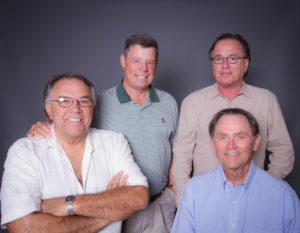
From left, Tom Treece, Fred Grimm, John Abbey and Dan Gregg (seated) are Vietnam veterans and volunteers with Toledo-Based nonprofit The D.O.V.E. Fund, which provides humanitarian assistance to Vietnam. Toledo Free Press photo by Christie Materni

“On the wings of a dove / We will rise high above / All our differences, so far in the past / Through the eyes of the children / See the bridges we’re building / Hope will find a way / Love will save the day, and peace will last …”

The Americans never knew what to expect on trips to Vietnam. But when their 18-person envoy stood outside the elementary school and heard the kids singing “Dove,” they knew why they kept coming back.

Dan May said he wrote “Dove” from the perspective of a former U.S. soldier who returns to Vietnam with the intention of helping his former enemies and rebuilding the land he once helped destroy. He wrote it for a group of Vietnam War veterans who have dedicated their lives to helping the people of Vietnam through The D.O.V.E. Fund.

Founded in 2000, The D.O.V.E. Fund is a Toledo-based organization that aims “to provide humanitarian and development assistance to areas in Vietnam, to provide communication, education and cultural exchanges that reflect the best qualities of both cultures. To create an environment brightened by hope and sustained by peace,” according to its mission statement.

“So many times after we go in and destroy a country, we forget about it,” May said. “These Vietnam veterans have taken it upon themselves to mend the fences.

“That’s what’s great about this organization: It rises above the past and looks toward the future.”

The D.O.V.E. Fund is comprised of mostly Vietnam War veterans who raise money to build schools, complete community projects and provide material items to impoverished areas in Vietnam.

After hearing children sing the “Dove” song during the group’s January trip, D.O.V.E. members said they “are more inspired than ever” to share their story and spread some dove love.

The nonprofit organization relies 100 percent on volunteers with the exception of one employee in Vietnam, a liaison who coordinates the logistics of projects on the ground and communicates with The D.O.V.E. Fund on a daily basis.

During the past 14 years, The D.O.V.E. Fund has raised more than $2.5 million in donations, almost all of which has funded its various humanitarian projects. Its members pay for their own trips to Vietnam and help cover 95-100 percent of operational costs. Last year, this group of a couple dozen veterans and their families fundraised $200,000.

However, D.O.V.E. veterans said that The D.O.V.E. Fund has accomplished feats far beyond pumping investment capital into Vietnam: It has helped them mend the wounds of war with former enemies and regain meaningful lives by making peace with their past.

One school at a time

John Abbey came home in 1970 as a “closet veteran with an anti-war spirit” who participated in several major Washington, D.C., demonstrations and not much else.

Abbey’s youth had been hardened by the realities of life as a soldier. He spent the next five years finishing his education and attempting to reintegrate into civilian life. As far as he was concerned, 18-year-old Abbey in a U.S. Army uniform had never existed. It was only begrudgingly that he revealed his past to the few people who ever asked about it. One weekend in 1975 shattered the charade.

“I was working at a private psychiatric hospital when a depressed woman with reoccurring issues was readmitted,” Abbey said. “We had a policy that someone had to be with you every second of the day for the first 24 hours. She convinced the person with her to leave the room so she could go to the bathroom. Once alone, she hanged herself on the sprinkler with a nightgown.”

That’s when the nightmares started. The suicide reminded Abbey of how “some things happened overseas” and he couldn’t cope.

Abbey spent the next two years seeing a psychiatrist twice a week in Boston, who eventually convinced him to fill out paperwork for post-traumatic stress disorder (PTSD). But the Veterans Administration turned Abbey’s application down, saying that PTSD “didn’t really exist.”

“That’s when I threw in the towel and went into even greater anger and denial,” Abbey said.

“I disappeared for a year, traveling on my bike and living in the woods. I eventually rejoined society on a conditional basis and got hired at Ford Motor Co., where I worked for 30 years. But I wasn’t OK. My first marriage didn’t last — which had a lot to do with my inability to handle this whole thing — and I wasn’t an honest person.”

Everything changed again when Jim Taylor, a D.O.V.E. Fund member and then HR manager for Ford’s former Maumee plant, walked through the door of Abbey’s office in 2005.

“Are you a Vietnam veteran?” Taylor asked, pointing to a small poster of the Vietnam Veterans Memorial on Abbey’s wall. The two men chatted briefly and Taylor convinced his new friend to confront the angry 18-year-old soldier at a D.O.V.E. meeting. At the time, Abbey said he didn’t believe that the shadows of his past or the nightmares of his present could ever go away. Today, he’s the first to admit he was mistaken.

“I never set out for redemption but that’s what I’ve found with The D.O.V.E. Fund,” Abbey said. “Reconciliation. Healing. Making a difference in a world that I had long given up on because I was consumed by tremendous survivor complex and guilt. As soon as I joined D.O.V.E.’s board of trustees, my life completely changed.”
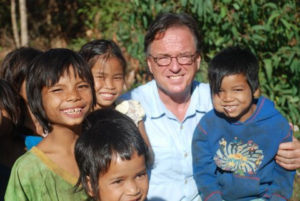
John Abbey with children in a leper village near Pleiku, Vietnam. Source: The D.O.V.E. Fund

.

Since 2005, Abbey has returned to Vietnam with The D.O.V.E. Fund about 10 times, dedicating the majority of his efforts to funding school projects, helping leper colonies and administering scholarships.

The D.O.V.E. Fund collects donations and asks Bui Cam Nhung, its lone employee, to secure a local contract bid within its budget before D.O.V.E. leaders inspect and sign off on the project.

One of the largest school builders in Vietnam, The D.O.V.E. Fund has constructed about 50 schools, including a school for the blind in both Hue and Cam Lo. These two schools provide vocational training and advanced computer systems for visually-impaired students.

“We realize that we can’t build enough schools. There’s always a new one that’s needed,” Abbey said. “We meet with government officials every year and they tell us that lots of people come to Vietnam and some people donate lots more money than we do. But what’s different about us is we come back and check every time.”

The D.O.V.E. Fund also finances $100 high school and $250 college scholarships, which pay for a year of tuition in Vietnam. Last year, it gave away about 180 high school scholarships and 20 college scholarships. D.O.V.E. members said they hope to match those numbers this year.

“When I first joined The D.O.V.E. Fund my life was really, really bad. I couldn’t escape reality anymore and these guys saved my life,” Abbey said. “Happiness isn’t the right word for this story, although I am happiest when I’m there. The Vietnamese have no evident animosity toward Americans even though we attacked them. When your enemy can forgive you, maybe it’s time to forgive yourself. Forgiveness is the word I’d use. That’s what I’m learning one trip at a time, one school at a time.”

Microfinance and PET carts

Fred Grimm had been in Vietnam for a couple of months when the vehicle he was driving got sprayed with bullets. One round shattered the windshield. Another missed his torso to the left. One caught the dusty mirror inches above his head.

“I never shot at a Vietnamese soldier but I was ready to and I wanted to. I could feel myself changing,” Grimm said. “Then one night we were attacked. My buddy and I caught a lot of shrapnel and I blew out my left eardrum.”

It was a warm night in 1969 when Grimm, wounded after only four months of duty, left Vietnam on a U.S. medevac. Today, he has returned to the former battleground 15 times, amassing eight months of volunteer time.

“I’ve been back with The D.O.V.E. Fund every year since it was founded. That’s eight months of helping, which about doubles the time I spent raising hell,” Grimm said.

Grimm serves as the vice chairman of Vietnam projects and coordinates The D.O.V.E. Fund’s ventures, including a new microfinance initiative that helps poor women who ask for a small loan to jump-start a business.

“For example, we met a young seamstress and lent her $150. We went back the next year, and her whole little hut was full of beautiful fabric worth $800,” Grimm said. “She had another brand-new sewing machine at home, too. We were all impressed, and this is just one of many stories. We’ve had huge success with microlending to these women.”

Another woman, who Grimm called the “queen of the market,” developed a method of buying fresh food items in bulk that she would sell to street vendors in the morning on a loan. Others raise chickens or pigs, sell eggs or fruit, or become seamstresses.

In addition, Grimm said he was particularly proud of The D.O.V.E. Fund’s recent partnership with PET (Personal Energy Transportation) International, an organization that makes special carts that allow disabled people to travel on rugged terrain. PET International provides the approximately $300 carts for free and D.O.V.E. members have paid to distribute more than 300 of them.

“We hope to send another shipment of these amazing PET carts this year because a wheelchair won’t be of any real use to these people with lower limb loss. The Vietnamese people are so appreciative and that makes it all worthwhile,” Grimm said. “I just want to thank all the people in the U.S. who have donated money and believed in what we’re doing. I guarantee you that I make sure every dollar is spent wisely. In fact, I’d put our organization up against anybody’s.”

John Abbey with children in a leper village near Pleiku, Vietnam.

Leper colonies

He didn’t want to be “that coward” who opted to go to jail and shame his country. So Tom Treece put on his camouflage and clenched his teeth for a war that he said “would never make sense.”

“I was raised in a loving Christian family then got plucked out of life, trained on all the ways you can kill another human being, sent to the other side of the planet and handed a weapon to go do it,” Treece said. “When it was over, there was no deprogramming except ‘Thanks for your service, sir.’ You hand in a uniform, get a free dinner and you’re on a plane back to your hometown.”

At 21 years old, Treece came home in 1969 without knowing what home meant anymore. His friends were watching movies at the theater. Some other guy was dating his girl. Life had carried on without him. And he didn’t have much use for it, either.

“I felt like a worm on a hot tin; everything had changed, I didn’t fit in anymore and I couldn’t sit still,” Treece said. “I was an angry young man who lost so many of my dear friends. And somewhere along the way, I lost myself.”

From 1969-2000, Treece traveled around the United States, bouncing from job to job. He hitchhiked to Madison, Wisconsin, and lived on the streets for a couple years before forming a rock ’n’ roll band. There was something therapeutic about rolling into a town, jamming out for a few hours and leaving again without ever having to confront himself in the mirror.

“I was screwed up and had so much hate in my heart,” Treece said. “It had eaten me up and I could never figure out how to get rid of it. When I was recruited by The D.O.V.E. Fund in 2000 all that hate started to melt away. For the first time in a long time, I felt like my life had purpose.”

After his first return trip to Vietnam in 2003, Treece wrote a three-and-a-half page article for Michigan’s Monroe News. He said he was shocked when they printed the entire story, and “even more shocked” when the first $100 check arrived in the mail one week later.

In three months, Treece’s article about his trip generated $50,000, including one $35,000 donation. That’s when Treece decided to write “The Ghost Closet,” an autobiographical account of his healing process “on the wings of D.O.V.E.” All profits from the book have been donated to The D.O.V.E. Fund.

“To be able to go back to where I spent 13 months of my life and saw so much death — there’s just nothing like it,” Treece said. “I believe that we are called to be like the good Samaritan who couldn’t walk by and see trouble without stopping to help.”

To date, D.O.V.E. members have built water purification plants and latrines, installed solar lights for villages without reliable electricity and distributed hundreds of pairs of shoes. But “nothing tested the group more” than their recent work with leper colonies, Treece said.

Treece got an unusual call one day from a California woman named Linda Stocker who had found his dog tag in a Ho Chi Minh City jewelry store. The two became friends and Stocker’s volunteer group, the Bandage Brigade, became a close partner with The D.O.V.E. Fund. The Bandage Brigade crochets bandages for Vietnamese lepers and since 2008, D.O.V.E. members have delivered 12,000 of these bandages.

“We’ve taken a special interest in people with leprosy who are unattended, stigmatized and isolated in rural villages,” Treece said. “They wear their clothes until they fall off. Many can’t remember what village they grew up in because they’ve been isolated for so long, grinding it out every day to survive.”

The lepers are the outcasts of society, isolated in rural mountain or coastal villages away from most of the population. Many are missing arms and legs, infected by disease and covered with sores. But D.O.V.E. members say the lepers’ disfigured faces always share one thing in common — they never seem to stop smiling.

Story in a story

As a 22-year-old soldier in the U.S. Army, Dan Gregg frequently traveled in an armored personnel carrier down a dirt road with a schoolhouse nearby. After his tank broke down one day, Gregg went inside the school.

“The kids came up instantly, thinking that I had all kinds of food,” Gregg said. “I handed out some stuff from my C-ration kit … canned peaches or whatever. I made friends with some of them and made it a point to stop there once in a while.”

After returning to the United States, Gregg saved several photos of the school in a photo album, hoping that he could “someday see it again.”

He got his chance more than four decades later. In 2013, Gregg stood outside of the same school, now barely recognizable except for a familiar flagpole at the front entrance.

“I met with teachers to tell them my story and about how much this school meant to me,” Gregg said. “Vietnam was really the most transformative period of my life. I saw it in a totally different way than I do now. Now I see the transformation of a country slowly coming out of war. I like to be part of the rebuilding process because I played a role in the destruction process. It’s life-affirming.”

Gregg, who said he feels inspired by civil rights activists like Mohandas Gandhi and Nelson Mandela, is currently writing a book about how he turned his negative experience as a soldier in Vietnam into a positive experience as a returning veteran. In addition, Gregg said he plans to include his perspective on coping with PTSD and what it’s like to “reconnect with the young soldier that you were years ago.”

“My PTSD didn’t form until 2003 when we invaded Iraq,” Gregg said. “I saw images of bombs on TV and planes exploding … and that brought back a lot of bad memories. Soon afterwards, I joined The D.O.V.E. Fund.”

His book, “Return to Tay Ninh,” describes the guilt of a soldier who remembers seeing Vietnamese civilians suffer — orphans crying for their fathers, a child’s skin blackened by burns — and the overwhelming experience of reconciling with a former enemy.

“I never thought I’d get rid of those images. I still haven’t but they don’t debilitate me like they once did,” Gregg said. “I’m struck by the amazing sense of forgiveness from people who have every reason to hate us. I cried a lot when I went over. I still do. But it’s a good cry because it means my heart is opening up and being repaired. I’m not afraid of the tears and the feelings because I know it’s healing me.”

Embracing peace

The stories of Abbey, Grimm, Treece, Gregg and other D.O.V.E. members may not be unusual. But what they do with those stories sets them apart.

“We were young and far away from home / Cast into a world we’d never known / In a time, so surreal / Oh … now / There’s a chance to go back and repair / Damage that was done when we were there / Pain we feel, scars we heal …”

D.O.V.E. veterans say that May’s words “perfectly encapsulate” how their organization helps repair both the physical destruction in Vietnam and the emotional pain that many veterans continue to suffer from.

“We all shared the same experiences. We all went through the same things. Even though we didn’t serve shoulder to shoulder, we all know the smell of gunpowder,” Gregg said. “We’ve seen men put in body bags, dead people, arms separated from bodies. There’s a certain understanding among us that this is why we do what we do. We love each other and we would do anything for each other.”

The group has tentative plans to make its next venture overseas on New Year’s Day 2015. In addition, a group of university students from Wisconsin and Minnesota will be traveling to Vietnam with medical supplies as volunteers at The D.O.V.E. Fund’s Hai An Medical Clinic.

“The D.O.V.E. Fund has turned into one of the most important things in my life,” Treece said. “First is my salvation. Second, my wife —the delight of my life. And three or four is without a doubt going back to Vietnam and shedding off that old skin of hate that I had from the war. This group has done more to win the hearts and minds of the Vietnamese people than 15 years of war. No one cares about how much you know until they know how much you care — and believe me, we care a lot.”

Bikers prep for July 12 Keith Dressel Memorial Ride

0

By Michelle Li, Toledo Free Press Staff Writer

The sound of 200 motorcycles carries like thunder over the flat fields at Oscar Bunch UAW/GM Powertrain Park. Some of the riders carry passengers. Some wear police uniforms; others wear matching black T-shirts.

Riders at the 2013 Keith Dressel Memorial Ride.

Riders at the 2013 Keith Dressel Memorial Ride.

Organizers say this is the scene that greets attendees at the Keith Dressel Memorial Ride. The eighth annual ride, and fourth at Oscar Bunch Powertrain Park, is scheduled for July 12.

Toledo Police Detective Keith Dressel was fatally shot in the line of duty in February 2007.

All proceeds from the ride go to the Officer William Miscannon Scholarship Fund at Owens Community College, in memory Dressel.

Miscannon was shot in the line of duty in September 1970.

The memorial ride was established through the efforts of Keith’s family, Oregon police officer Sara Shaw and Toledo Detective Bonnie Weis.

“Bonnie and Sara deserve the credit for the ride,” said Mike Dressel, Keith’s father. “They were there from day one.”

This year’s route for the memorial ride, beginning and ending in the park, is approximately a 35-mile round trip. Led by a police escort, the riders will uphold the tradition of passing by the site where Keith was shot.

Participating riders pay a registration fee of $25 for singles and $35 if riding with a passenger. The fee includes a raffle ticket, T-shirt and lunch.

Larraine Dressel, Keith’s mother, said the ride brought their families closer together and sparked a tight bond with Miscannon’s daughter, Diane.

Why a memorial ride?

“Bikers have the biggest hearts,” Miscannon said.

Larraine said she believes bikers have much in common with her son Keith.

“A lot of biker groups are police-oriented,” she said.

Neil Dressel, Keith’s brother, said this explains much of the bikers’ willingness to support the police through a ride — regardless of the weather.

“I remember a couple years ago, it rained so hard in the morning, but you’d be amazed how many bikes still came out,” he said.

Diane said despite the somber origins of the event, attendees have a good time.

“Yes, we have the passing of two officers,” Diane acknowledged. “But it’s a fun atmosphere.”

Larraine said she hopes the memorial ride continues to embrace a lively atmosphere.

“It’s a celebration of their lives,” she said. “Not their deaths — their lives.”

Mike said everyone is welcome to attend the send-off.

“You don’t have to ride a bike to come. You can buy shirts, have lunch,” he said

Diane said the diverse turnout always thrills her.

“You’ve got parents that’ll bring their little kids, you’ve got the older people, you’ve got people that don’t have bikes who come out just to take part in the camaraderie,” she said. “And they know how much we appreciate them coming out. It’s a big deal.”

Larraine said she believes the best part of the event is that it benefits the scholarship fund.

“Doing the scholarship, it continues doing work like they did,” she said. “Good work to protect and serve.”

Preregister or donate online at www.kdmr812.com.

Area Make-A-Wish office hires new leadership

0

By making others’ wishes come true, two new members of the Ohio, Kentucky and Indiana chapter of the Make-A-Wish Foundation are fulfilling one of their own — the wish to change lives.

Cherie Chatreau-Grifo, new senior development officer at Make a Wish Foundation

Cherie Chatreau-Grifo, new senior development officer at Make a Wish Foundation

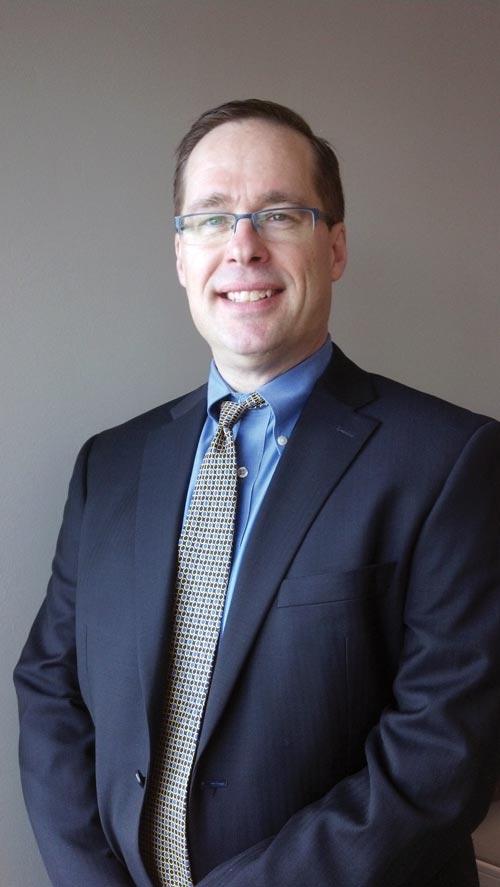
Cherie Chatreau-Grifo, new senior development officer, and Doug Kelly, new president and CEO, expressed the enjoyment they get from seeing children’s wishes come true in through Make-A-Wish.

“I had no idea how much of an impact it can make,” Chatreau-Grifo said. “It doesn’t just change the child’s life. It changes the whole family. Mom and dad get a break. It’s covered financially, all the plans are made ahead of time for them. When they get there they’re treated like stars wherever they go. When they get back, they’re refreshed and the kid wants to continue his treatments now because he feels better, he’s happier.”

Chatreau-Grifo said this is different from any work she’s ever done, even though she’s always worked in the nonprofit area, previously with child protective services and then the Arthritis Foundation.

“Before, it was just like pulling teeth to get people to help,” Chatreau-Grifo said. “Here people just want to get involved. They want to help. You can see it. I was looking for something that would reignite my passion. I had a previous employer talk to me about it, and said this would be a great opportunity.”

Chatreau-Grifo’s job is to fundraise to ensure the wishes can be financially supported. Each wish is provided at no charge to the family — hotels, plane tickets and meals. Make-A-Wish makes all the plans, so the families can relax and take a break.

“Basically, I go out and let everyone in the community know what we do and why we do it, and then ask for money,” Chatreau-Grifo said. “I’m looking for people who want to support this. I just try to grant the funds for all the wishes that we get. Right now we have 68 wishes we’re working on in Northwest Ohio.”

Many of the wishes Make-A-Wish grants to children with [life-threatening medical conditions] include trips to Disney World, swims with dolphins or meeting a professional athlete. Chatreau-Grifo said the kids, ages 2 to 18, get more creative with their wishes when they’re older.

“The ones that really touch you the most are the ones who want to pay it forward,” Chatreau-Grifo said. “We had a girl in Cincinnati whose wish was to feed the hungry. She wanted them to have hot soup. They set up a meeting with chef Jean-Robert [de Cavel] and came up with a soup that they call Natalia’s Soup of Love. They served it at all the soup kitchens in Cincinnati, and I’m reaching out and we’re going to try to serve it here in Toledo at the Cherry Street Mission.”

Kelly said kids like Natalia and all the other wish kids are what inspire him in his job.

Doug Kelly, new president and CEO of Make a Wish Foundation

Doug Kelly, new president and CEO of Make a Wish Foundation

“There are many things that are inspirational about Make-A-Wish, but let’s just start with the kids that we serve. These are kids with life-threatening conditions, whether it be cancer or cystic fibrosis. These kids live, many times, in the climate of no: no friends, no sports, no playing outside. What we do is we say ‘yes’ to something they really, deeply want. Sometimes it’s building a man cave in their basement. Sometimes it’s a trip to Disneyland, but that yes is a very, very powerful thing.”

Kelly began a new job search after leaving electoral politics. When his brother died unexpectedly at 51, Kelly said he was motivated to do something bigger and more cause-driven.

“I wanted to do something that kind of moves the needle and makes a difference on a larger scale. I talked to my wife and started a six-month job search. I saw this listing for the president of Make-A-Wish, and I turned to my wife and said, ‘Yes! That’s what I want to do.’”

Kelly said he works with the board of directors, their team and others with a vision to see wishes granted, making Make-A-Wish in Ohio, Kentucky and Indiana succeed as much as possible.

“One is to make sure we’re raising the money we need, that we have the vision the organization needs,” Kelly said. “That we’re keeping the talent onboard to make sure that we can achieve our mission, which is to grant the wishes of the kids with life-threatening illnesses. At the end of the day, that’s the CEO’s job.”

Kelly said Make-A-Wish grants about 800 wishes a year in Ohio, Kentucky and Indiana, and this year will be granting about 810. Those wishes are made possible through donations of both money and airline miles.

Kelly said the donations of frequent flyer miles are incredibly useful because about 75 percent of wishes require flights, and the miles never expire.

Kelly said 76 percent of the money used at Make-A-Wish goes to grant wishes. There are Make-A-Wish chapters in Toledo, Cincinnati, Louisville, Cleveland, Columbus and Indianapolis. If money is raised in Northwest Ohio, Kelly said, they keep that money in the area.

“We want people to understand that Make-A-Wish is a very local organization,” Kelly said. “You can become a volunteer on a local level. You can grant wishes in your community. Everyone who comes in contact with a wish comes away with a renewed sense of faith in humanity.

“I’ve been six months on the job, and it’s the greatest job I’ve ever had,” Kelly said.

For Chatreau-Grifo, that means money she raises in Northwest Ohio stays in Northwest Ohio. She said people can see how their money is affecting the lives of the children.

“At the end of the day, the thing that we’re really focused on is providing the wishes for these kids to give them hope, strength and joy,” Kelly said. “And everyone who comes in contact with that — you can never have too much hope in your life.”

Retirement Guys: Obamacare and Medicare

0

Obamacare. It’s been around for a while now, but many people are still not clear on how it will affect them. What is Obamacare? The official title is the Patient Protection and Affordable Care Act, which President Obama signed into law on March 23, 2010. The requirement that all Americans carry health insurance is a key provision of the act and the Supreme Court upheld the law June 28, 2012. The objective of Obamacare is to provide affordable, quality health care to all Americans.

Obamacare attempts to solve several problems. It was passed because there were some serious problems with our health care system. If you have been able to get quality heath care and have costs fully covered by insurance, you have been fortunate.  A problem for some has been that private health insurance companies could deny coverage to people with pre-existing conditions. These are typically folks who need health insurance the most. If you cannot work because of ongoing sickness and are not on an employer plan, you would have to buy your own insurance to get coverage.

If your condition is such that no insurance company will cover you, then you could get stuck being responsible for huge medical bills. This could be financially devastating.  Other problems include small companies not being able to afford health insurance for their employees, insurance companies imposing coverage limits, raising premiums and even canceling policies without justification, and Medicare beneficiaries in the “doughnut hole” charged up to $4,550 per year in prescription drug costs. This has been very difficult for those trying to survive on a fixed income.

Now that we have identified some of the problems people have been facing, let’s summarize some of the key provisions of Obamacare:

  1. Individuals with pre-existing conditions will be able to get health insurance.
  2. Young people can stay on their parents’ policies until age 26. This gives them time to get out of school and get a job where they’ll be covered by employer-sponsored health insurance.
  3. Employers have been given incentives to offer health insurance to employees in the form of tax credits.
  4. Everyone is required to have health insurance or pay an additional tax.
  5. Health plans are required to provide a minimum level of coverage.
  6. Medicare beneficiaries will get some relief from high drug costs.
  7. High-income Americans will pay additional taxes to help cover the costs of Obamacare.

We have listed some of the key provisions, but as The Retirement Guys we obviously want to outline how Obamacare will affect those who are 65 and older. If you are 65, the government generally requires you to enroll in Medicare. One way Obamacare helps you if you are on Medicare is that you can now get certain preventive services without paying a deductible or copayments. These include yearly wellness visits, mammograms, bone mass measurements, prostate cancer screenings, diabetes screenings, flu shots and more.

Most Medicare beneficiaries are not taking advantage of these services, mainly because they don’t know about them, even though they are listed in the “Medicare & You” book that every Medicare beneficiary receives each year. If you are on Medicare, talk to your doctor about getting some of these free screenings. And be sure to get your annual flu shot. It’s free.

The big change for certain Medicare beneficiaries is relief from high drug costs.

If you happen to take a lot of meds, such that your total drug costs exceed about $2,800, you enter the coverage gap, or doughnut hole. While you’re in the doughnut hole, you have to pay 100 percent of your drug costs until your out-of-pocket costs reach about $4,550, at which point the insurance company comes back in and pays most of your costs. This doughnut hole can be a killer for a lot of people. Obamacare has arranged for you to get a discount on covered brand-name drugs and some coverage for generic drugs. These discounts are starting out small, but they will increase in the years ahead. By 2020 the doughnut hole will be closed.

Part of smart retirement planning is to understand what health care costs can be in retirement and where the money is going to come from to pay for them. A helpful tool can be “The Baby Boomers Guide to Medicare Planning.” You can get a copy by going to www.retirementguysnetwork.com and sending us an email request.

For more information about The Retirement Guys, tune in every Saturday at 1 p.m. on 1370 WSPD or visit www.retirementguysradio.com. Securities and Investment Advisory Services are offered through NEXT Financial Group Inc., Member FINRA / SIPC. NEXT Financial Group, Inc. does not provide tax or legal advice. The Retirement Guys are not an affiliate of NEXT Financial Group. The office is at 1700 Woodlands Drive, Suite 100, Maumee, OH 43537. (419) 842-0550.

Spooked: Web series brings Australian actor visibility

0
The cast of the Web series “Spooked.” PHOTO COURTESY HULU

We meet them as they arrive on the scene of their first case, a pesky poltergeist haunting the suburban home of a pair of newlyweds. The five members of the team pile out of a repurposed Winnebago, looking less like Mulder and Scully (or even the Ghostbusters) than like a group of college pals on some wild vacation. On the side of their ride is written the group’s name: Paranormal Investigation Team. The acronym, one assumes, was unintentional.

The cast of the Web series “Spooked.”  PHOTO COURTESY HULU
The cast of the Web series “Spooked.” PHOTO COURTESY HULU

“They are the cheapest team money can buy and it kind of shows,” said actor Julian Curtis in an interview with Toledo Free Press.

Curtis is the lead of this ragtag group of ghost catchers in “Spooked,” the new Internet series airing on Hulu and the YouTube-based Geek and Sundry network. The half-hour comedy — executive produced by Bryan Singer and Felicia Day — debuted June 4.

Connor, Curtis’ character, is not just the leader but in many ways the emotional center of the show’s story, he noted.

“He walks this fine line between being a people-pleaser and being an authoritarian,” Curtis said. “The latter is not a good fit for him and he ends up causing more upset despite his best intentions. His protective bond with his sister — an aspect of the story our director Richard Martin was very focused on — gives the show ‘weight’ and — dare I use the cliché — ‘heart’ to the show.”

Don’t get the wrong ide. This is no heavy drama.

Rather, its flat-out comedy, with supernatural silliness sprinkled throughout the show’s four-episode run. It’s said that getting laughs is harder than creating drama, but drama gets the awards because when comedy works, it looks easy. Curtis argued that might actually be getting even truer these days.

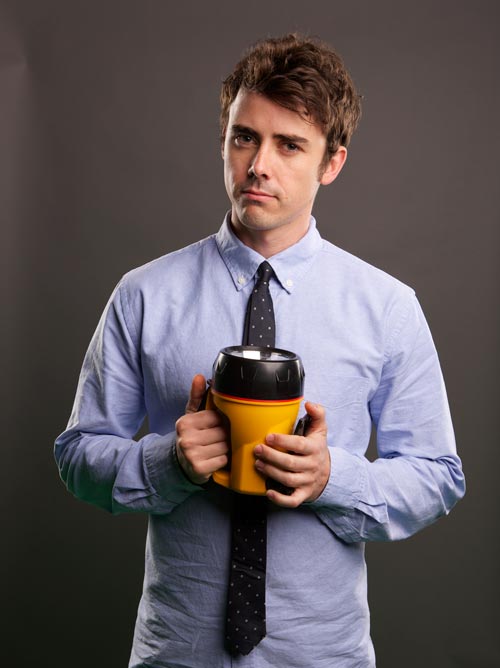
Actor Julian Curtis in character as Connor PHOTO COURTESY HULU

Actor Julian Curtis in character as Connor

PHOTO COURTESY HULU

“I do believe comedy is harder in modern film and TV. Back in the day — even in the ’90s  — we had longer takes, used traditional and pricey film, etc. I feel this gave the actor more incentive to come 100 percent prepared. Now, it’s a little more casual with digital technology and I don’t think it’s in a good way. Post-production can save a bad performance too, but in comedy, it’s trickier to fake that stuff.”

For Curtis, a native Australian who is just beginning to get a foothold in American film, getting a role on a pretty prominent Web series surrounded by established talent — Neil Grayston of “Eureka,” Ashley Johnson of “The Last of Us” — might seem like a lot of pressure, especially when he plays such a central role. But Curtis didn’t have much time to ruminate on such things.

“You know, I came on only two days before production so there wasn’t really any time to overthink it in that way,” he said. “I just jumped in and hoped for the best. I probably never worried about it because everyone around me was so great and the crew and production team were so brilliant.”

The series was filmed in a sprint of creativity last November. While in lesser hands the frenetic pace of the production might have derailed the combination of scares and humor the series aims for, Curtis again credits the professionalism of the crew — particularly director Martin — for keeping the show on track.

“It was certainly fast and furious. Although, for whatever reason, I never felt stressed. [Martin] has a calming influence as a director, which is a pretty special gift particularly with how demanding the schedule is. The schedule was more like a feature film than a TV series. We would jump back and forth between the four episodes based on location rather than the chronology of the story. It was such a fun, dynamic set and we’ve all become genuine friends. We are definitely eager to return and play together again.”

Indeed, that’s the main sense one gets from “Spooked” and its leading man — the feeling of shared joy at something that was genuinely fun to put together. And an overriding desire to share it once more.

“I hope people love it as much as we do. Then we can make more. I think they will. Paranormal comedy is definitely not a new thing but there is a freshness here that I think may strike a chord.”

Area drive-in theaters to screen Jimmy Buffett concert June 19

0
performs onstage at Jimmy Buffett & Friends: Live from the Gulf Coast, a concert presented by CMT at on the beach on July 11, 2010 in Gulf Shores, Alabama.

Two area drive-in movie theaters will take part in a landmark concert event, featuring one of America’s favorite party bands.

Jimmy Buffett and the Coral Reefer Band will perform “Live at the Drive-In,” a live concert broadcast from the Coyote Drive-In at Panther Island in Fort Worth, Texas, on June 19.

The performance will be simultaneously broadcast to other drive-ins across the country, including the Sundance Kid in Oregon and Field of Dreams in Liberty Center.

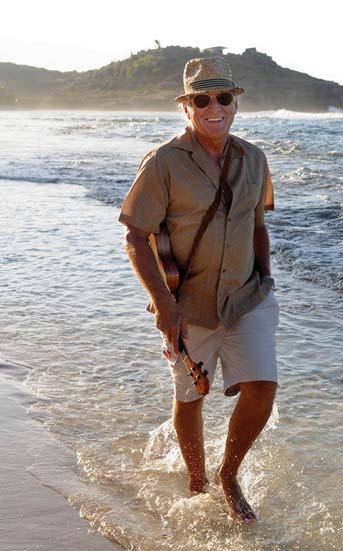
Jimmy Buffett. Photo courtesy Jimmy Buffett.

The first-of-its-kind event has been coordinated from Texas by Brandt Wood, one of the owners of the Coyote Drive-In. He decided to get into the business last year, with the hope of bringing back a fading American tradition.

“The idea of the drive-in as an iconic venue has been reduced in number just in the modern age, and converting to digital projection [is a challenge],” Wood said. “[Our] idea was to bring it back, and create a 21st century drive-in with really good food and beverage and playgrounds, sort of a restaurant/bar at a drive-in.”

So far, the Coyote has been a success and has been setting the standard for other digitally equipped drive-ins across the country.

“It’s sort of been the model of what a drive-in can be, as far as amenities. It’s been fun,” Wood said.

The idea for the live broadcast first emerged when Wood was visiting with Buffett at a concert. When Buffett learned that Wood had opened a drive-in, he expressed interest in playing a live show at the location.

“We thought, why don’t we hit him with an idea to broadcast it to all the other drive-ins and make it a really impactful, positive thing for the drive-in business, and a way for him to reach fans that may be out of his touring range?”

Buffett loved the idea, and got his team involved in helping to make it happen.

“Everybody’s super fired-up. It definitely turned some heads,” Wood said.

Eighty-six theaters are involved with the project, and Wood and his team established a working relationship with all of them to market the event.

“It took a lot of trust and good faith,” Wood said. “Drive-in owners are quintessential ‘good folks.’”

The concert will begin at 9:50 p.m., but the Sundance Kid will open its facilities at 7 p.m. for a few good hours of tailgating.

“We’ll have a DJ playing beach music, we’ll be grilling out, we’ll have souvenirs and goodies for sale,” said Kim Walter, marketing director for Great Eastern Theatres, which operates the Sundance Kid.

Grilled food like burgers (“Cheeseburgers in Paradise”) will be available for purchase, and beer and margaritas will be served by the Eastern Maumee Bay Chamber of Commerce. All alcohol must be purchased on site.

Tickets are $20 and may be purchased at greateasterntheatres.com/jimmybuffett or www.fieldofdreams drivein.com.

Parking is first come, first serve, and a working radio will be necessary for sound.

Walter said Great Eastern has been coordinating with the Oregon Police Department and its own staff to make the event a “safe and fun adult party.”

“Parrotheads like to party,” Walter said.

Barhite: Golf outing to help fund technology

0

The laptop that student is using in the classroom could be because of your birdie.

Or your par.

Or your bogey.

.

It doesn’t matter how well you golf, it just matters that you play.

The third annual Tee It Up for Classroom Technology will be Aug. 1 at Stone Oak Country Club in Holland. Everyone is welcome to participate as long as registration is completed by July 18.

Springfield Schools Foundation is hosting the outing with sign-in and lunch at 11:30 a.m. and a shotgun start at 1 p.m.

Team entry is $600 for the four-person scramble. This year’s corporate sponsor is Health Management Solutions, which handles Springfield’s workers’ compensation program. Sponsorships are still available at $150 per hole or $1,000 for a cart, lunch or awards dinner sponsorship.

“The whole mission with the golf outing is to help provide funds for technology within the district and we have seen the result of that already through the $41,000 the foundation is going to give for the Google Chrome laptop carts,” said board member Scott Walsh.

Walsh said technology is always changing, and the school system needs to help students get at a level to compete in today’s world.

Last year, 14 teams played; the goal for this year is 18.

“Just going from the first year to the second, essentially every team came back. It is a nice day and Stone Oak does a great job and we try to make everyone feel welcome,” Walsh said. “I think there is something to be said for people getting the chance to play at a private club.”

Walsh said Stone Oak is the only golf course within the Springfield City School District and it has been supportive of the foundation’s mission. The $600 entry fee includes golf for four, lunch, cart and appetizers afterward.

“We will recognize first, second and third place and we do door prizes. There is also a nice tee gift for the teams that enter,” he said.

Board member Judy Gorun is in charge of the gift bags for every participant. In the past, she has given out a combination of golf tees, letter openers, notepads, cooler bags and other goodies.

“One year we even had someone donate a bottle of glittery nail polish for each bag.  What fun that was,” she said.

Mike Bilik from Buckeye TeleSystem will be on the greens at Stone Oak on Aug. 1.

“I had people go in my place last year because I couldn’t be there, but we plan to come back. We are part of the community and it makes sense for us to play,” he said.

Walsh said the golf outing is starting to gain momentum and he hopes to raise another $14,000, as they did last year. The first year, it raised nearly $13,000. All the money will go toward the purchase of four carts with 30 laptops each for testing, Walsh said. Without fundraisers like the golf outing these types of purchases would not be possible, he said.

To register a team, visit springfieldschoolsfoundation.org.

Editor’s note: Brandi Barhite is a board member of the Springfield Schools Foundation.

Book reveals gritty truth of fighting crime

0
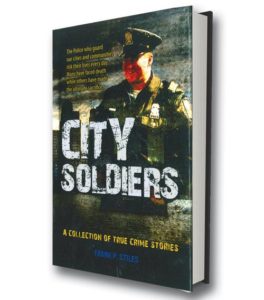
City of Soldiers by Frank Stiles

Frank Stiles could have died on May 15, 1967.

A perpetrator at a local convenience store had fury in his eyes and a gun at Stiles’ stomach; before the detective could stop him, he pulled the trigger.

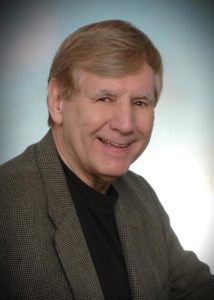
Author Frank Stiles

“Only the person that experiences those things can really tell the story and understand the feeling of the traumatic experience you go through,” Stiles said. “You’re not really worried about what’s going to happen to you, you’re worried about taking care of the job at present.”

Stiles lived because of a misfire, what he calls “a miracle.” Today, he is chief investigator for the Lucas County Prosecutor’s Office and author of two true-crime books. His newest book details cases from his time as a detective for the Toledo Police Department (TPD).

Stiles’ near-death experience is the first anecdote shared in “City Soldiers.” The book highlights the violence police officers have experienced in Toledo the past few decades.

“I’ve been very fortunate in my position as far as experience goes,” Stiles said. “I handled most of the high-profile cases when I was [with TPD], and at least assisted on others.”

Stiles’ true-crime novels are 2007’s “Evil Brothers,” which he followed up with “Blind Trust” in 2010; both detail local crimes he was instrumental in solving. At the prosecutor’s office, Stiles works on mainly white-collar cases.

He is a cheerful man with a full head of blond hair who enjoyed a successful 25-year career with TPD. He said he “made thousands of arrests and interrogated thousands of people.”

He smiled while discussing his accomplishments, though his blue-gray eyes turned downward while discussing the brutality of some of the crimes he encountered.

Stiles said his goal was to not become hardened as a result of his trying profession.

“You have to tell yourself, when you walk out of that department or wherever you work, that most people are honest, good people,” he said. “We’re only dealing with very few people in society that are doing these things.”

Stiles has a table full of photos in his office. He points to one in particular, of a girl with long brown hair. The girl is Dawn Backes, one of the victims of Anthony and Nathaniel Cook, the serial killers detailed in “Evil Brothers.” Stiles arrested Anthony in 1981.

“Her mother gave me that picture,” Stiles said. “I said, ‘I’ll put that with my family pictures,’ so I’ve always had that there.”

Backes was 12 years old when she was assaulted and murdered by the Cooks. The photo reminds Stiles of those whose lives were cut short due to violence.

City of Soldiers by Frank Stiles

Each chapter of “City Soldiers” follows officers through a night on the force. Stiles didn’t work all the cases he wrote about, but his research was extensive. He said he read police reports, spoke to surviving officers and family and looked at old news stories.

The most recent story included in the book is that of Keith Dressel, the detective killed in 2007 during the attempted arrest of a juvenile suspect.

Larraine Dressel, Keith’s mother, said though the experience was painful to relive, Stiles wrote in such a way that she was not overwhelmed.

“It was put in a way that I could follow along all of the crimes and understand, because some of the crime scenes are very difficult,” Larraine said.

Larraine said Stiles, whom she met last year, struck her as an honest man with good intentions.

“He asked questions and he seemed very caring, he wanted to be thorough,” Larraine said. “He told us he was investigating it, checking every fact, so I knew what he said would be the truth.”

Diane Miscannon, daughter of slain officer William Miscannon, also met Stiles when he contacted her last April to confirm details for his book. William died on patrol during a Black Panther riot in the 1970s.

“From what I know of Frank and what I’ve heard of him, he’s a pretty sharp guy and I’m very appreciative he included my dad in his book,” Diane said.

Diane said she hopes Stiles’ book raises awareness and fosters respect for those in uniform.

“The police department and fire department put their lives on the line every day,” Diane said. “This is a life-sacrificing job. This is a life-changing job.”

Stiles said the lesson in each of his books is that people should be cautious, no matter where they live.

“[These cases] just show anybody during any period of time that they can face those kind of situations,” Stiles said. “No area is immune to crime, and in some it’s much more prevalent than others.”

Stiles said his book should show the true sacrifice TPD officers make each day.

“We want [people] to remember our police officers as we remember our military on Memorial Day,” Stiles said. “We never want to forget the price they paid, whether they died, were shot or faced these near-death situations. We’re thankful that they did their job.”

Gooooaaaallll!!! Local soccer club hosts World Cup parties

0
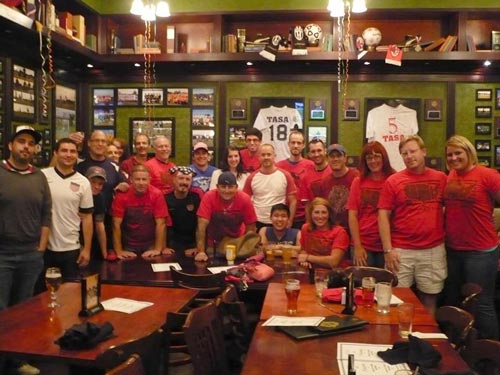
The Toledo chapter of soccer fan club the American Outlaws host World Cup and U.S. national team watch parties at Claddagh Irish Pub at Franklin Park Mall. Photo courtesy Mark Blankenship

By David Kubacki

For quite some time, home games for the United States national soccer team felt like away games, as the opposing country’s fans often outnumbered U.S. fans.

The Toledo chapter of soccer fan club the American Outlaws host World Cup and U.S. national team watch parties at Claddagh Irish Pub at Franklin Park Mall. Photo courtesy Mark Blankenship

But with the sport’s growing popularity in America and organized fan groups such as the American Outlaws, the atmosphere at national soccer games has drastically changed, club members say.

In 2007, a group of soccer fans in Lincoln, Nebraska, started watching U.S. national games together. They felt like they were the outlaws of the sports world, following a sport most Americans didn’t.

It was there, sporting bandannas worn by American wild west outlaws, that the American Outlaws were born.

For Mark Blankenship, one of the founders of the American Outlaws’ Toledo chapter, there was an opportunity to bring that excitement to Toledo.

“I learned about the American Outlaws when I was in Columbus and wanted to bring the same support to Toledo,” Blankenship said. “There was nothing here when I started, but I put a Facebook page together to start trying to get some interest. Once we had enough members, we applied with the national organization to become an official chapter.”

To start a chapter, applicants need to have a minimum of 25 paid members and a “home base” bar where fans can expect to meet to watch each game. Toledo’s chapter now has more than 300 members and continues to grow. According to Richard Parish, a member of the Toledo chapter, the goal is to strengthen the support system for the national soccer teams.

“Whether it’s the men’s team or the women’s team, we want to support U.S. soccer wherever they are or whatever they are doing,” Parish said. “That’s what being an Outlaw means.”

With the World Cup slated to start June 12, soccer fans worldwide will be turning their attention to the soccer pitches of Brazil to see who will hoist the FIFA World Cup trophy in July.

The U.S. men’s team faces a steep challenge, as players will have to compete in the group appropriately dubbed the “group of death” to advance. For the U.S., play begins with Ghana on June 16, followed by Portugal on June 22 and Germany on June 26.

The U.S. was ousted by Ghana in 2006 in the group play level and in the round of 16 in 2010. With Portugal and Germany ranked No. 4 and No. 2 respectively in the FIFA world rankings, the group stage will certainly not get any easier.

In preparation for the World Cup and for future U.S. national games, the American Outlaws sought a home for their watch parties.

“We have our own room at the Claddagh Irish Pub at [Franklin Park Mall],” Blankenship said. “We’ll be holding watch parties for all the American games there. Everyone will be decked out in their colors to show their support. It should be a really good time.”

Blankenship said club members are eligible for drink specials and other perks, but anyone is welcome to attend the watch parties.

American Outlaws’ membership dues are $25 per year, which includes an official American Outlaws’ supporter shirt and an American flag bandanna.

Members are also eligible for a variety of other benefits such as discounted game tickets, admission to viewing parties and tailgates and various other discounts at soccer-related venues. Five dollars of every membership fee goes to support the local chapter directly.

For more information, visit the Facebook page www.facebook.com/AmericanOutlawsToledo.

Miller: The dead badge of courage

0

A Toledo Free Press intern is struggling with an unpleasant revelation. In researching a story about a possible misstatement made by an elected state official, the intern has encountered a number of political types who have employed delay tactics, subterfuge, mock outrage and deception to throw her off track and keep the story from surfacing. Witnessing firsthand how rotten and self-serving politicians can be has rattled her a bit and shaken her belief in the motives of public servants.

.

.

A journalist with as many barnacles on his hull as I have expects politicians to be more interested in power than in serving constituents, but it is still lugubrious to see a young person’s sense of trust and idealism take its first slashes.

Two streams of local news have illustrated just how rare courage is in public life. On the positive side is Ohio Secretary of State Jon Husted’s overdue but welcome decision to rebuild the Lucas County Board of Elections (BOE) and dismantle the lamentable circus into which it has devolved. On the shameful side is Toledo City Council’s resolute refusal to condemn one of its members, Larry Sykes, for an outrageous act of dangerous race-baiting and disparagement of two Toledo police officers.

Plodding but proper

Since the ascension of Jon Stainbrook, aided by The Blade and Toledo City Paper, the Lucas County Republican Party and BOE have been crackpot, untrustworthy, loathsome nests of foolishness, incompetence and suspected malfeasance. From signature forgery to questions about spending to accusations of system manipulation, it has been an era of implosion and sewer-level hustling.

The more cronies Stainbrook worked into the BOE — his close pal Meghan Gallagher and former legal representative Tony DeGidio being the most visible examples — the further into chaos the elections process has deteriorated. As far back as 2011, Toledo Free Press urged Husted to step in and rescue the sanctity of the voting process from the hostage situation in which it was entangled. It has taken years of embarrassment, election debacles and hundreds (thousands?) of hours of attention and untold financial resources from the secretary of state, but the process has finally played itself out: Husted has cleaned house at the BOE.

Like dominoes, the Stainbrook links of influence have toppled; there is now an opportunity to literally start from scratch and build an institution that voters — in the county, state and nation — can have faith in, or at least take for granted as almost every other county in the system does with their BOEs.

Husted followed the plodding but proper procedures and finally asserted the needed authority to make sweeping changes in Lucas County. That takes courage, even if that courage was applied with the pace and patience of a snail crossing a highway of salt. A sordid and tragicomic era in local politics will come to end thanks to Husted.

Shameful scandal

A few floors down in One Government Center, courage is as scarce as a shovel in the dirt at the Marina District. In the aftermath of a shameful scandal perpetrated solely by Sykes, not one Toledo City Councilperson has had the courage, sense, decency or pride to step up and condemn his reckless, divisive behavior.

To recap, Sykes was driving home April 24 when a Toledo police officer pulled him over because he could not read Sykes’ rear license plate. The officer had an even tougher time reading Sykes’ front plate, as he did not have one. That’s illegal in Ohio, and while it’s a minor and probably common offense, we have a right to expect our elected leaders to understand and obey basic laws.

Sykes subsequently wrote a letter to Chief of Police William Moton, saying his April 24 experience was attributable to “profiling.” On official City of Toledo letterhead.

An investigation definitively showed that no such profiling occurred. But the damage was done, as Sykes besmirched the reputations of two Toledo police officers in his quest to shirk responsibility and play the “I’ll show you who I am” card.

Dan Wagner, president of the Toledo Police Patrolman’s Association (TPPA), has called for Sykes to resign. The International Union of Police Associations, AFL-CIO (IUPA), issued a statement May 28 in support of the TPPA, calling for Sykes to resign after an internal police investigation found his claims of police profiling at a recent traffic stop to be unfounded.

IUPA called on its entire membership, especially police units in Ohio, to stand with the TPPA on this issue.

So at some point, other members of Council could have — should have — made it clear they do not condone Sykes’ behavior. They could make a statement supporting the police, censure Sykes’ behavior or, if they collectively could gather one spine among them, join the call for his resignation. They could at least condemn his irresponsible invocation, right?

Nope.

Toledo City Council members Mike Craig, Paula Hicks-Hudson and Jack Ford declined to comment on the call for Sykes’ resignation.

Sykes and Council members Tyrone Riley, Matt Cherry, Tom Waniewski, Lindsay Webb, Theresa Gabriel, Rob Ludeman, Sandy Spang and Steven Steel did not return requests for comment.

Cowards, every one of them.

Silence is consent. By hiding and avoiding even the slightest condemnation of Sykes’ actions, they are condoning his behavior and adding their piss to the disrespectful stream Sykes aimed at the badges of our Toledo police. Mayor D. Michael Collins — a retired cop, for Chrissake — hasn’t distinguished his leadership in this incident, either. Mumbling about an investigation is not leadership; it’s avoiding the issue.

I know race is a complicated and scary topic, but what about simple right and wrong? Doesn’t the value of doing what is right transcend the politics of race? Of politics itself?

Good luck expressing your outrage at the next faux cause that comes along, Council members. If you can’t work up the courage to stand beside police who are unfairly tarred with such an alarming false accusation, what will motivate you? Any topic you call a news conference to grandstand on is laughable if you can’t take a stand on such an egregious abuse of authority as Sykes tried to perpetrate on our cops.

The failure to condemn Sykes calls into question the ability of Council as a body and its individual members to function with any moral credibility. Perhaps another BOE-like clean sweep and fresh start is in order.

I am no summer intern; this behavior does not shock me. It simply reinforces my conviction that Toledo politics is the lowest form of public service.

It took years for Stainbrook to ruin the credibility of the BOE and for Husted to start the repairs. It only took one incident for Sykes to reveal Toledo City Council’s true colors: not black or white, but a blazing streak of yellow.

Michael S. Miller is editor in chief of Toledo Free Press and news director of Newsradio 1370 WSPD. Email him at [email protected].