Home Blog Page 192

Put-in-Bay faces media scrutiny over alleged date-rape drug use

0

At Put-in-Bay, one of Northwest Ohio’s favorite summertime destination spots, 15 women who thought they were having an innocent drink may have been given the date-rape drug Rohypnol.According to reports by the Put-in-Bay Police Department from May 5 to July 25, police responded to reports of “possible rape,” “intoxicated female” and “possible drugged female” 15 times at several locations on the island, mainly taverns but at least one bed and breakfast.

Each of the police reports had a similar vein: The women were either violently ill or passed out when police arrived and those conscious could not remember the circumstances or events that led to becoming ill. Upon further investigation, police found that the women had received drinks from a stranger or acquaintance in many of the cases.

At least two of the victims may have been raped and two others had to be transported via helicopter to Mercy St. Vincent Medical Center in Toledo. One man has been questioned and another detained, but no arrests have been made.

Put-in-Bay Police Chief Ric Lampela has come under scrutiny and criticism recently. About one fourth of the officers are in their first year of service and four more seasoned officers are slated to leave in about a week. More inexperienced officers will replace them.

Negative attention was fueled anew July 30 by a Cleveland Scene article, shared widely via social media, that refers to Put-in-Bay as “Roofie Island.”

READ: Cleveland Scene article: “Roofie Island: A Summer of Reported Druggings and Rapes on Put-in-Bay, Lake Erie’s Party Destination”

Lampela was not available for comment July 31. An officer at the station reached via telephone said Lampela was off. However, a faxed media statement from the department noted none of the incidents have been proven to involve drugs.

“There have been 15 reported incidents in 2014 (as of 7/31/2014) where the person believed that they were possibly drugged while at Put-in-Bay,” stated a fax to reporters. “To this day, none of the cases have been positively confirmed as a drugging incident.”

A police report from June 15 states that after a woman got off work, “she was picked up by a male named Kevin and was taken to St. Hazards [on Middle Bass Island] for a drink. (The woman) says she was later dropped off at her house and about an hour later, she started feeling funny and her parents noticed she was acting differently…” It’s not clear from the report whether Kevin is a suspect.

On May 5, police reported that a woman got off work from Mr. Ed’s Bar and Grille about 1:30 a.m. and then had drinks with a man whom police would not identify. They consumed alcohol at three establishments. She did not remember anything until later. She then recalled the man lying on top of her “yelling for her to ‘take her f***ing clothes off’.” The man then raped her, she told police.

Lampela has said it’s hard to find quality candidates because of the job’s seasonality and low pay and that he is competing with other departments.

Put-in-Bay is a summer resort and tourism destination on South Bass Island in the western end of Lake Erie. Only about 140 residents live on the island year-round, but thousands throng to its shores every summer for the boating, fishing, gift shops, caves and national monument as well as its bar culture. The island recently celebrated one of its busiest annual events, the 12 Days of Christmas in July, in which the island is decked out in Christmas decorations and businesses offer drink and food specials.

Some island residents and business owners are upset by the media coverage.

In a letter to the editor to the Sandusky Register, Ken Benjamin, owner of Stonehenge Estate on Put-in-Bay, said the negative coverage was hurting tourism.

“Your daily negative front page drum beat of South Bass Island issues needs to be reviewed,” he wrote. “All of this lazy, space filling reporting negates the positive work of the Lake Erie Shores & Islands organization and various chambers (of commerce). Your ‘National Inquiry’ reporting destroys the money and time spent encouraging visitors from all over the country to share this wonderful part of Ohio with us. Our industry is tourism and we all have to deal with thousands of visitors in a short 110-day period. Most of us in the islands business comunnity wish that 1 percent of those thousands who cause most of the trouble’s would go somewhere else. The picture you continue to paint every day of our community is ugly. Not so and it needs to stop!’

In an editor’s note, the newspaper defended its coverage, responding that to “censor news information to create a better local business climate does not align with better journalistic practices.”

A call to the Put-in-Bay Chamber of Commerce & Visitor’s Bureau went unanswered July 31.

Hollywood Casino launches 12-day ‘Poker Challenge’

0

In a windowless office below the gaming floor of Hollywood Casino

Toledo, poker room manager Ken Lambert Jr. was keen to talk up his latest and most ambitious project: The Hollywood Poker Challenge.

Hollywood Casino Toledo Poker Room Manager Ken Lambert, Jr. will host Hollywood Poker Open in May. Toledo Free Press photo by Dave Willinger.

Hollywood Casino Toledo Poker Room Manager Ken Lambert, Jr. will host Hollywood Poker Open in May. Toledo Free Press photo by Dave Willinger.

Lambert, the veteran Las Vegas poker tourney organizer, was brought to the Glass City’s gambling emporium by Penn National Gaming about five months ago. Now he’s ready to “bring something to the Toledo area that’s never been here before.”

The Hollywood Poker Challenge includes 12 days of poker tournaments beginning Aug. 21 and will feature twin marquee No Limit Hold ’em events with respective guaranteed payouts of $50,000 and $100,000.

Lambert has structured the Poker Challenge “to drive the numbers” of players, in his words. Poker aficionados can win seats at either main event through multiple feeder tourneys with buy-ins as low as $15 and $35 running from Aug. 21 to Aug. 31. For example, Super Satellite events, which cost $20 to enter, guarantee 10 seats for the $125 buy-in Mega Satellite tournaments, which in turn feed into the main event, a $1,070 per seat tournament.

In order to have success, “a guy doesn’t have to win [the Super Satellite],” Lambert said. “Just make the final table.”

“We’ve been very generous with our guarantees,” Lambert said, conceding recent poker room losses due to poorer than expected participation this summer. For example, a $15,000 guaranteed payout for the recent Fourth of July weekend tournament fell short, he said, costing the casino about $4,500.

“I haven’t figured out this market yet,” admitted Lambert, who is licensed to run gambling operations in eight states and has worked in poker rooms from Las Vegas to Mississippi. Still, Lambert, who has a reputation for putting players first, ultimately believes in the “goodwill” those guarantees create.

Lambert, a stylish yet low-key presence at the casino, makes a sincere impression. As a teenager, he earned extra cash after getting off work as a bus boy at Binion’s Horseshoe casino in Las Vegas by crossing Fremont Street with ice cream for the high limit players at the poker tables in the Golden Nugget. In the years since, he has built lasting friendships throughout the professional poker world.

While detailing the Poker Challenge, Lambert was repeatedly interrupted by texts coming into his phone, including a message from Todd Brunson, son of legendary Poker Hall of Famer Doyle Brunson and an accomplished pro in his own right. Todd Brunson was replying to an invitation by Lambert to come to the Hollywood Poker Challenge. “That’s right before my tournament but let me see if I can swing it,” Brunson texted, according to Lambert.

One poker notable who has already committed is Chris Moneymaker, the 2003 World Series of Poker winner. Moneymaker will host a pre-event meet and greet on Friday evening, Aug. 29, before joining area players at the tables that weekend for the main event.

Also scheduled as part of the Poker Challenge are Ladies Only and Seniors Only No Limit tournaments, a Seniors Only Pot-Limit tournament and an Omaha 8 or Better tourney.

The Aug. 30 Ladies Only tournament is co-sponsored by Ladies International Poker Series (LIPS), a Las Vegas-based organization whose founder and CEO Lupe Soto will be on hand. According to its website, LIPS seeks “to promote and provide poker tournament venues for women poker players seeking opportunities to challenge other women in comfortable, friendly and yet competitive environments.” Lambert called it a “strategic move” to involve LIPS, a 10-year-old organization with promotional resources and an established reputation.

Seniors-only tournaments “are a big deal out there” in the national poker world, Lambert said. The idea is to gear an event toward those who enjoy playing poker “with guys who grew up playing old-school,” in contrast to the overwhelmingly online experience of many of today’s younger players. Hollywood Casino’s seniors-only events are open to those 50 and older.

To accommodate the event, for about two weeks Hollywood’s 20-table poker room will be expanded into pit six, where roulette and craps tables will be replaced by 10 poker tournament tables trucked in from Hollywood’s sister property in Lawrenceburg, Indiana. Additional poker dealers will come up from Hollywood Casino Columbus to help staff the tournaments. Players at the two final tables of the championship will be seated on the H Club stage and their play will be live streamed online, pending approval of the Ohio Casino Control Commission.

“Nobody has done a tournament like this in this market,” said Lambert, who is already working on a follow-up event to be held the first half of December.

Lambert expects the Poker Challenge’s economic impact on the area to include “a couple hundred” hotel bookings for each of the two weekends involved. He said Hollywood Casino is working with the Grand Plaza Hotel Downtown, as well as several Perrysburg properties, including Candlewood Suites, Comfort Suites and Hampton Inn & Suites, to provide special rates for tournament players.

One local man who plans to play in the $100,000 main event is Miles Reinhard of Wood County. Reinhard was one of 20 area players who traveled to the M Resort Spa Casino in Henderson, Nevada, in June to play in the Hollywood Poker Open (HPO). He is the only area player who finished in the money.

Miles Reinhard of Wood County. Toledo Free Press photo by Dave Willinger.

It was his first time in a major live poker tournament, Reinhard told Toledo Free Press, although he said he had success online before the U.S. government banned its residents from gambling on the Internet about four years ago.

At the HPO, Reinhard lasted two 12-hour days at the poker tables, even surviving a day-one table with four pros, including Dennis Phillips, the third place finisher in the 2008 World Series of Poker. Close to midnight on the second day, Reinhard’s pocket kings got cracked when an opponent with pocket 10s made a set on the flop. Reinhard exited 45th out of a field of 682 and cashed for $7,188.

“I was totally spent mentally after each day,” said Reinhard, 43, noting he tried to pay attention at all times, even when not in a hand, in order to better figure out his opponents.

That success at the M “gave me a little confidence,” said Reinhard, who noted he “did real well last year” at dice.

“Now I got the taste [for poker].”

Donations sought for Owens’ ‘Backpack to the Future’ drive

0

Like many families, it was a tradition for Laura Moore’s daughters to get new backpacks at the beginning of each new school year.

“Their dad loved to take them to get new backpacks,” said Moore, director of alumni relations for Owens Community College. “Their backpacks were perfectly fine, but it was their fun thing to do together. But then I had these perfectly good, gently used backpacks. That’s how this started.”

Owens’ 11th annual “Backpack to the Future” drive will collect backpacks and school supplies for low-income kindergarten students in Northwest Ohio.

“Without the necessary tools, entry to school is difficult,” Moore said. “Kindergarten is the first entry kids have to school and we want it to be a really positive one.”

Last year, 17 schools in Lucas, Wood and Hancock counties received supplies, including five from Toledo Public Schools.

“The donation by the Owens Alumni Association came at a great time,” said Michelle Pelz, principal at  Samuel M. Jones at Gunckel Park Elementary, in an email. “Most of our students are living below the poverty level. Their parents are doing the best they can, but so many of our students still start school in need of just basic school supplies.”

Since 2004, the Owens Alumni Association has given away 3,410 backpacks and 62,370 school supplies. The collection runs through Aug. 18. Drop-off points include:

  • Books-A-Million (2105 Levis Commons Blvd., Perrysburg).
  • Directions Credit Union branches (5121 Whiteford Road, Sylvania; 3000 Tremainsville Road, Toledo; 3321 Briarfield Blvd., Maumee; 4150 Brockway Drive, Perrysburg; 3312 Dustin Road, Oregon; 2533 S. Reynolds Road, Toledo; 3450 W. Central Ave., Suite 128, Toledo; 27427 Crossroads Pkwy., Rossford;  and 1 Owens Corning Pkwy., Toledo).
  • Great Lakes Credit Union branches (6600 Sylvania Ave., Sylvania and 580 Craig Drive, Perrysburg).
  • Genoa Bank branches (801 Main St., Genoa; 3201 Navarre Ave., Oregon; 703 Conant St., Maumee; 24950 W. State Route 51, Millbury; and 9920 Old U.S. 20, Rossford).
  • Owens’ Office of Alumni Relations in Perrysburg, Education Center Atrium in Findlay or the Learning Center in Maumee.
  • Items needed include gently-used or new backpacks, crayons, markers, bottles of glue, glue sticks, colored pencils, pencils, pink erasers, school boxes, pocket folders, marbled covered composition books and Kleenex tissues.

“The community support has been tremendous over the past 10 years,” Moore said.

Rabid fan base: Mike ‘Mad Dog’ Adams contributes to summer Red Cross benefit CD

0

Mike “Mad Dog” Adams has enjoyed a successful 40-year musical career and, with this year’s 35th anniversary of the Put-in-Bay regular’s show at the Round House, he’s looking for a change of pace.

Mike ‘Mad Dog’ Adams

“Lots of guys put out CDs frequently,” Adams said. “I find working in the studio to be very tedious. I like to get the direct response back from the audience immediately. That’s what I’ve done all my life.”

With his donation of a track to this year’s American Red Cross benefit CD “Red, White & You, Too!” Adams feels he has contributed to something great.

“It’s nice to be able to help out something like Red Cross,” Adams said. “I also donated a guitar to the Red Cross [that was auctioned off in July].”

The $10 benefit CD is available at all area Frisch’s Big Boy and Ralphie’s restaurants.

Adams’ song, “Sundown Friday Evening,” is from an album he released 10 years ago. He said his father, who was a steelworker in Cleveland, inspired the tune.

“I was trying to capture the spirit or feeling of what it’s like for people who are on their way to the island or anywhere when you’re getting away on the weekend,” Adams said. “Leaving work behind, troubles behind, going to the island.”

In the past year, Adams has traveled extensively, going as far away as Ireland to visit a pocket of fans. He also hosts an hour-long radio show once a week for WPCR in Port Clinton.

Looking forward, Adams wants to release another album.

“I do all kinds of things but primarily I’m a performer,” he said. “I’ve done two comedy projects and I’ve done four to five music projects. I don’t do [records] frequently, but I’m due for one.”

Adams said he hopes his fans take the time to appreciate life and not worry about minor inconveniences.

“My philosophy of life: Live. Every day above ground is a good day,” he said.

Adams also wants success to follow this and other charity projects.

“Let’s get some of these local artists from Toledo heard and generate some money for the Red Cross,” Adams said.

Girl Develop It Toledo offers bargain tech classes

0

Google recently published a diversity report that revealed 30 percent of its employees are women. The company said that number is “miles from where we want to be,” and began offering vouchers for free coding lessons to any female interested in learning.

Google’s national initiative to close the gender gap in technology has already begun on a local level with the recently launched Girl Develop It Toledo.

Girl Develop it Toledo is a national coding initiative. Shown above is a Girl Develop it class in Pittsburgh. photo courtesy Girl Develop It!

Toledo is one of more than 30 locations for its parent organization, Girl Develop It. The international nonprofit aims to provide affordable and accessible programs to women who want to learn software development.

Lindsey Danforth and Angel Thomas, Girl Develop It Toledo co-founders, said the group’s emphasis on one-on-one mentorship and hands-on instruction sets it apart from other educational programs.

“Anyone can come — you don’t have to know anything about coding,” Thomas said. “It’s basically instructor-led exercise programs where we explain a concept then walk through the process of doing it. We want to give women in our community an opportunity to learn … and the best way to learn is a very hands-on approach.”

In addition, Girl Develop It Toledo provides a comfortable classroom environment where women of all coding skill levels can learn and ask as many questions as they want. Cost for each class varies from free to $50.

“I never felt encouraged to ask questions in school. It wasn’t so much the instructors but I felt awkward being usually the only female in my class,” Thomas said. “Girl Develop It classes are very inclusive. You can learn at your own pace and there are no stupid questions here.”

Class topics range from website building and customization to HTML and CSS for beginners. Interested women should go to meetup.com and search for Girl Develop It Toledo, where they can RSVP for upcoming events, find other “nerdettes” on Facebook and sign up for the Girl Develop It Toledo email list.

“Right now is a good time to be a woman and get into programming — companies like Google are looking for you,” Danforth said. “We want to bring more women into the tech world because there’s a lot of jobs out there for people who learn even a little bit of programming. We can help build the economy and reduce disparity between men and women.”

Girl Develop It Toledo classes have an average attendance of about four students, but could accommodate about 20. Regular attendees said they hope to see a dramatic increase in turnout by the end of the year.

“Just come! Come to the intro classes because they give you such a good foundation. You may not come out as an expert but you’ll learn a lot,” said Julie Woods, who has attended about a dozen Girl Develop It classes. “It’s really learning a new language, almost like Spanish or French. It’s really just another form of art. Some people draw or play a musical instrument. I create a website.”

All classes are held at Seed Coworking, 25 S. St. Clair St.

The Girl Develop It community also meets outside of the classroom on a monthly basis. “Code and Coffee” is an opportunity for women to network, get programming advice and talk about their tech projects.

“We just want to get the word out about coding,” Danforth said. “We’re trying to make it less nerdy. That’s the whole goal: To learn, have fun and find a way to show that coding is actually cool.”

City of Toledo active with Southwyck development

0

Though still early in the process, the City of Toledo now has fewer than 120 days in which to market its recently purchased 58 acres at the site of the former Southwyck Mall along Reynolds Road in South Toledo.

Spokesperson Lisa Ward said the city is “not making public any information on calls or contacts concerning the property,” yet there is much at stake between now and mid-November. Southwyck’s location remains relevant and strategic, situated near the Ohio Turnpike and I-475, and still has a strong commercial and residential mix in the surrounding area.

RELATED: Six years since Southwyck closed, but future of site still unclear

“It’s an important site, in an important section of town,” said Larry Dillin, president of Dillin Corp., a developer who once attempted to revitalize the site until the banking environment took a downturn in 2008. “I think it’s potentially a good location and with new investment, because new investment brings more investment.”

Photo by Shawn Rames / Exploring Northwest Ohio from the Sky

Photo by Shawn Rames / Exploring Northwest Ohio from the Sky

The 120 days is a “due diligence period” whereby the City can do their own investigation and homework of the property — much in the same way any citizen might investigate a home purchase, according to Matt Sapara, director of the city’s department of development.

“We had a very good deal that’s very fair,” Sapara said. “We need to be very good stewards of the public funds. We take this very serious, and it’s a good deal to the Mayor.”

Right now the city is “marketing the heck out of it,” Sapara said. “We have already had a couple of discussions since last Monday.” When day 121 arrives, the city must then commit and will have 30 days to finalize the sale. Any time prior to this, the city may back out of the deal.

Two conceptual drawings for possible future development on the site were revealed July 20, but those were merely ideas, and its eventual use remains an unknown.

“The city is open to the needs of businesses interested in this property,” Ward said. “We have not defined a specific preferred use.”

The city has spent more than $7 million to update the infrastructure surrounding the mall, including a landscaped and redeveloped Rey-nolds Road and a rebuilt Southwyck Boulevard. It will also spend $434,000 to raze the former Clarion Hotel.

Private investment in the area is significant.

A total of $29.5 million has been spent among several ventures, some who were around during Southwyck’s tenure, and others who are new: Maumee Valley Country Day School, Lyden Oil, At Home superstore and Genesis Village.

Many businesses near Southwyck “have expressed support of our action,” Ward said.

“We’ve had many in the community reach out to us and tell us they’re glad we’re taking an aggressive stance, rather than hoping others do it on their own,” Sapara said.

“We’re all excited because our location is just a dying location,” said Shana Bryant, Goodwill assistant manager, whose store is situated directly across from the former mall property. “If they do bring in something really nice it would bring more business around here.”

Nearby residents also express hope that the city can attract another positive force onto the land that once housed one of Toledo’s most popular malls.

“I’m pretty excited,” said Mary Witt, who lives not far from the site in Maumee. “I’m hoping it will be something that will bring business to the area. Personally, I don’t think we need office buildings. We have those all around the (Southwyck Boulevard.) circle and many of them are empty.”

For now, Sapara said the city will continue to seek tenants.

“I think people are very, very happy that they’re seeing an aggressive approach by the city,” he said.

UT med student recognized for video tutorials

0

A University of Toledo medical student is hoping to help future medical students across the country the same way he’s now helping current students in Toledo.

John Luckoski, 24, recently returned from a video-making workshop in Mountain View, California, after winning an academic contest sponsored by Khan Academy, a nonprofit organization that offers free educational videos.

The contest was part of an initiative to provide free, online resources for students preparing for the revised Medical College Admission Test (MCAT) to be administered in 2015.

“It was sort of like a boot camp for making videos,” Luckoski said. “It was pretty intense. But as tough as it was, I’m really glad I went. I learned so much. Now I feel like I have to go back and fix all [my old videos].”

When he entered the contest, the Dayton area native, a volunteer tutor at the Academic Enrichment Center (AEC) on UT’s Health Sciences campus, was working on an initiative to create a library of tutorial videos on biochemistry, cellular and molecular biology, genetics and more for first-year medical students.

“When I got an email about the contest, it seemed right in line with what I had already been doing,” Luckoski said.

Twelve winners were selected in the video contest and 20 winners were selected in a question-writing competition. Luckoski was one of only two who won both contests.

Luckoski started making videos with his cellphone and drawing paper. Now he has a Macbook laptop, microphone and drawing tablet from AEC.

He plans to specialize in trauma surgery because he’s “drawn to intensity,” he said.

However, his experience at AEC made him realize he also wants to teach.

“There’s a limited number of lives I could save in my own life span, but if I get to teach students how to take care of people, I feel like that perpetuates my ability to help others far beyond what I could do with my own two hands,” Luckoski said in a news release.

“I’m just thrilled for him,” said AEC Director Joni Trempe. “He put the hard work in and he deserves the award.

“As an educator, to see someone find something they’re so passionate about, it’s great. A year ago, he would never have thought this was something he would be passionate about. Now he sees it as part of his medical future.”

Casino plans events for Responsible Gaming Week

0

Dining specials, a fundraiser for a local behavioral health nonprofit and special appearances from “Beti,” a character emphasizing safe betting, are among the activities planned for Aug. 4-8 at Hollywood Casino Toledo to mark Responsible Gaming Education Week.

The 17th annual initiative, held the first full week of August, is a program of the American Gaming Association.

Hollywood Casino Toledo will mark  National Responsible Gaming Education Week  Aug. 4-8. Toledo Free Press File photo by James A. Molnar

Hollywood Casino Toledo will mark National Responsible Gaming Education Week Aug. 4-8. Toledo Free Press File photo by James A. Molnar

Each day will feature a special meal at Scene sports bar, including Winner Winner Ranch Chicken Dinner on Aug. 5 and Know Your Limit Beef Lasagna on Aug. 8, said Brian Hopkins, slot manager at the casino who is leading Toledo’s effort.

The casino will also donate $1 from each Epic Buffet meal purchased on Aug. 4, 7 and 8 to Unison Behavioral Health Group in Toledo.

Beti, a character based off of Progressive Insurance mascot Flo, will emphasize making safe bets. She will appear at the casino, including at the Smokey Robinson concert Aug. 8, as well as at the Wood County Fair on Aug. 4 and the Northwest Ohio Rib-off and Mud Hens game on Aug. 7.

Each year, properties owned by Hollywood Casino Toledo’s parent company Penn National Gaming compete to see who can come up with the most fun promotions while not diminishing the seriousness of the subject, Hopkins said.

Also as part of the week, all casino employees will be retrained to spot warning signs of problem gambling.

“Hollywood Casino Toledo takes responsible gaming very seriously,” Hopkins said. “It’s not just one week of the year; it’s an everyday commitment.”

As stipulated by state law, 2 percent of the tax on Ohio’s gross casino revenue goes to problem gambling resources.

“It was very important to lawmakers that money be set aside to help people who might have a problem,” said Tama Davis, director of communications with Ohio Casino Control Commission (OCCC).

Scott Anderson, gambling disorder treatment specialist with the Ohio Department of Mental Health & Addiction Services (Ohio MHAS) Bureau of Problem Gambling, has been working with problem gamblers for years.

“Gambling isn’t new to Ohio. It’s only the casinos that are new,” he said.

Horseshoe Casino Cleveland and Hollywood Casino Toledo opened in May 2012. Hollywood Casino Columbus opened in October 2012, followed by Horseshoe Casino Cincinnati in March 2013.

Gambling addiction was recently reclassified by the American Psychiatric Association as a substance-control addiction rather than an impulse-control disorder, Anderson said.

“Gambling addiction is 90 percent the same as any other addiction, but 10 percent very, very different,” Anderson said. “It doesn’t have the component of toxicity. You can’t overdose. If you gamble, gamble, gamble, you won’t pass out or get sick. If I were high or drunk, you would probably be able to tell, but there’s no way to tell that someone lost $10,000 over lunch.

“It’s a pathological relationship with mood-altering experience.”

Resources

One resource is the Ohio Problem Gambling Hotline (1-800-589-9966). A total of 16,431 people have called since January 2012, including 10,176 in the past year. From January to June 2014, the hotline received an average of 650 calls per month.

Another resource is the state’s Voluntary Exclusion Program (VEP). More than 1,000 people from 12 states and one Canadian province, including 155 in Lucas County, have voluntarily banned themselves from entering Ohio’s casinos.

More than 85 percent of the 1,032 people currently on the list are from Ohio. As of July 14, there are 879 participants from Ohio, 116 from Michigan, 21 from Kentucky, four from Indiana, three from Ontario, Canada, two from Pennsylvania and one each from Arizona, Florida, Georgia, Illinois, Missouri, New York and Wisconsin. Twenty-four are from Wood County, four from Fulton County and three from Ottawa County.

The list includes 758 men and 274 women. More than half are 40 or younger, with about a quarter of the applicants 30 or younger.

Thirty-one percent of applicants placed themselves on a lifetime ban list, 22 percent excluded themselves for five years and 47 percent for one year.

To be added to the list, an application must be filled out in person at an OCCC office, located at each of Ohio’s four casinos as well as the agency’s headquarters in Columbus. The list is confidential and only accessible to certain OCCC employees via a secure database, Davis said.

Those on the list are removed from all direct marketing and his or her player card is deactivated. They are also excluded from entering any property operated by Penn National Gaming or Caesars Entertainment Corporation. Penn operates the casinos in Toledo and Columbus while Caesars operates the casinos in Cleveland and Cincinnati.

“From a psychological standpoint, the Voluntary Exclusion Program would be a step in taking some self-responsibility during recovery,” Anderson said. “It’s a move in the direction of abstinence, a move to minimize life-damaging consequences.”

Nothing electronic flags a person on the VEP list from entering a casino. They must be recognized by a staff member. However, if they try to cash in a jackpot or use their player card, they will be flagged.

“The downside of it is it’s completely up to the individual to police themselves,” Anderson said. “Unless they run into someone at the casino who knows them or they win a jackpot or use their player card, they would go undetected, so it’s not really foolproof. It’s a voluntary exclusion program with the key word being voluntary.”

Those on the VEP list found at a casino are asked to leave and could be arrested and charged with trespassing.

For the fiscal year ending June 2014, 91 people were charged with criminal trespassing in Ohio’s casinos, 73 of them from the VEP list, Davis said. Thirty-three were at Hollywood Casino Toledo, with 25 of them from the VEP list.

Four state agencies — Ohio MHAS, OCCC, the Ohio Lottery Commission and the Ohio State Racing Commission — make up Ohio for Responsible Gambling, an initiative aimed at promoting responsible gambling in Ohio.

“We were the first state in the country to bring state agencies under one umbrella [to focus on problem gambling prevention],” Davis said. “There is a big concentrated organized push in Ohio under this collaboration to really understand who’s at risk, to target prevention messaging and help make resources available to help any Ohioan who may face a gambling problem.”

“This is something we take very seriously,” Anderson added. “We’ve taken a very proactive approach to it.”

Toledoans join state rally to support marriage equality

0

The Cincinnati-based 6th Circuit Court of Appeals will determine the future of marriage equality in four states on Aug. 6, but supporters will rally outside the courtroom the day before.

Gays, lesbians, bisexuals, transgendered people, straight allies, faith leaders, business owners, elected officials and more will be present at the rally, said Michael Aremo, campaign manager of Why Marriage Matters Ohio. Speakers at the rally will include State Rep. Nickie Antonio, Cincinnati City Councilman Chris Seelbach and former Ohio Gov. Ted Strickland.

The rally is a time to show that “Ohio is ready for marriage equality,” Premo said.

“This is the most important day in the legal fight in marriage equality in Ohio’s history,” Premo said. “When you have this many people who are willing to get in their cars and drive down to Cincinnati to participate in this rally … it’s incredible.”

The rally will be 5:30 p.m. Aug. 5 at Lytle Park, in Cincinnati and Toledo locals will be traveling to the location. Brent Rabie, volunteer and Equality Toledo board member, will lead a caravan and carpool to the rally. The group will leave from the Collingwood Arts Center, 2413 Collingwood Blvd., at 1 p.m. Aug. 5.

Supporters are encouraged to wear red the day of the rally to show support because red is the color of love, Premo said.

“The fight for marriage equality is about love and commitment,” he added.

On Aug. 6, oral arguments of five landmark cases will be presented in front of a three-judge panel, representing four states: Ohio, Michigan, Kentucky and Tennessee.

Premo said the five cases focus on different issues. The plaintiff couples from Ohio and their attorneys will make the case that the refusal to recognize legal marriages performed in other states is unconstitutional.

After the arguments, the three-judge panel will issue their decision, upholding or overturning the lower court’s ruling that Ohio’s ban is unconstitutional, Premo said. He added that whoever does not get the decision they want has the option to appeal to the Court of Appeals or directly to the Supreme Court.

“The oral arguments, I believe, will reinforce how harmful and widespread marriage bans really are,” Rabie said. He added that this event can change the lives of many in the area.

Premo, who is a straight ally, has worked with Why Marriage Matters Ohio since December, and he said support for marriage equality has grown. Since Why Marriage Matters Ohio was founded in September, Premo said there has been a nine-point increase in public opinion in favor of marriage equality.

“Momentum is clearly on our side and we want to make that clear at this rally,” Premo said. “What we’ve been encouraging people to do since the beginning was to have conversations with their family and friends about marriage equality and why they support it and why it’s important to them. Those conversations have been bearing fruit in that people are starting to think about marriage equality in a way that they haven’t thought about it before.”

He also added that two polls from this year show 50 percent of Ohioans support marriage equality, which is a five-point increase from last year. Opposition has dropped four points as well.

Before working in Ohio, Premo worked with the marriage equality campaign in New Jersey, which he said was “tremendously gratifying.”

“I wanted to bring that experience here to Ohio,” he said. “Marriage equality is coming to Ohio. It is no longer a question of if; it’s a question of when.”

For more information on the rally, visit action.wmmoh.org/page/s/rally-for-marriage-equality. To RSVP for the carpool, visit marriageoh.org/rally.

Officials battle heroin and opioid abuse

0

By Tom Konecny

Toledo Free Press Associate Editor

[email protected]

By Danielle Stanton

Toledo Free Press News Editor

[email protected]

The alarming escalation of heroin and opioid abuse, and subsequent death, is just as evident in Northwest Ohio as it is across America. The outbreak is real. The outbreak is serious.
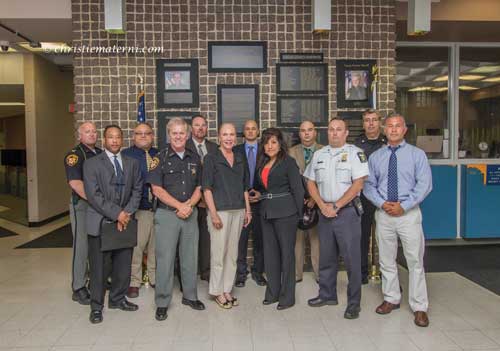
n FIGHTING AN EPIDEMIC:  Back Row: William Talbott, Matthew Rizzo, Scott A. Sylak. Damian Worthy, SHERIFF’s Sgt. Joe Gorney and Paul Magdich Front Row: DEPUTY SHERIFF Charles Johnson, LUCAS COUNTY Sheriff John Tharp, Prosecutor Julia Bates, Lt. Andrea LunA, Capt. Michael Troendle and Detective John Szmania. Toledo Free Press photo by Christie Materni/cover illustration by James A. Molnar

n FIGHTING AN EPIDEMIC:

Back Row: William Talbott, Matthew Rizzo, Scott A. Sylak. Damian Worthy, SHERIFF’s Sgt. Joe Gorney and Paul Magdich

Front Row: DEPUTY SHERIFF Charles Johnson, LUCAS COUNTY Sheriff John Tharp, Prosecutor Julia Bates, Lt. Andrea LunA, Capt. Michael Troendle and Detective John Szmania. Toledo Free Press photo by Christie Materni/cover illustration by James A. Molnar

One Northwest Ohio woman is fighting back with her most powerful weapon — a parent’s love.

Mary Juarez of Archbold lost her 31-year-old son Marjoe Gineman to drug and alcohol addiction in 2010, and has become — as her website indicates — “a mother on a mission.”

She quit her job to help others with the same problem.

“Drugs,” Mary said, “offer the hardest battle we have to fight.”

Marjoe lived far from any major urban setting or gang culture. He had a love of God, enjoyed sports, was artistic and liked to joke around.

Mary raised her son in this rural Fulton County town (pop. 4,300) in a faith-filled home surrounded by loving, extended family.

“My mother passed away in Marjoe’s freshman year,” she said.  “I do believe for a 14-year-old young man, going through adolescence and a whole new realm of life — learning to deal with grief — he ended up in the wrong place at the wrong time. Instead of walking away, he gave into the temptation of a few beers.”

It led to more drinking, which was a gateway to marijuana. He turned to heroin, which then evolved into prescription pills.

“I didn’t know him,” Mary said, “and he didn’t even know himself.”

Marjoe’s 15-year addiction landed him in two rehabilitation centers, but by 2009 he seemed to be conquering his problem and finding peace, courage and new hope.

“He was so strong then and said, ‘If I can make it through rehab, anyone can make it through rehab,’” Mary said. It only took a small relapse where Mary believes “for one second he let go of God’s hand and the courage to say no,” and Marjoe was gone.

Not long after, her sorrow grew into a passion for helping others with Never Let Go Ministries, a nonprofit aimed at creating drug-free communities through education and awareness.

Mary and her husband, Victor Juarez, have spoken to more than 60 schools, youth groups and rehab centers throughout Northwest Ohio and appear at various events, such as the recent EXCLAIM! Christian music festival in Toledo.  Their website — neverletgo ministries.com — explores their motto, “Never let go of God’s hand, and never let go of the courage to say no.”

“The main thing is she (Mary) doesn’t want Marjoe’s life to be a waste of a life,” Victor said.  “She wanted his death to have a purpose.  If it wasn’t for him losing his life, we wouldn’t be doing this. She does this because Marjoe lives on through this. She wants something to become good through his death.”

Having recently obtained 501(c)(3) status, the Juarezes have big plans for Never Let Go Ministries as they hope to obtain an office, earn grants and create a center where others can get counseling. Fighting the battle in Northwest Ohio must be a group effort, said Victor, because the location poses problems.

“You have the turnpike which crosses the top of Northwest Ohio,” Victor said.  “You have Michigan, Detroit, Canada, Fort Wayne — it’s just surrounded by different areas and highways where dealers can come in and sell their product.  It’s just so hard for law enforcement to keep it down, and they’re trying very hard.”

While the couple will do what they can to help, they realize addiction is often the result of bad choices.

“I can’t say I ever met an addict who wanted to be an addict,” Mary said. “They tell me it is the most hopeless, sickest journey anyone has ever walked, but once they cross that line there is no going back. These are absolutely beautiful people, but they made some wrong choices.”

Epidemic proportions

When former first lady Nancy Reagan introduced the famous “Just Say No” anti-drug campaign in the 1980s, it wasn’t as though the war on drugs had just begun. That battle was originated, at least formally, 100 years ago in 1914 by the U.S. government.

The campaign was, however, a very public and concentrated group effort among national and world leaders, educators, law enforcement and drug abuse programs to stop what was becoming a growing problem.

Right here in Toledo that same concept is being applied to a drug problem that’s not just grown, but has reached epidemic status throughout Northwest Ohio and all of America:  heroin and opioid abuse.

“This is now the No. 1 cause of accidental death in America,” said Dr. Robert Forney, Lucas County chief toxicologist.  “And it’s growing at an exponential [rate].  There is no plateau yet.”

If that statement doesn’t cause alarm, a quick look at local statistics should. The Lucas County Coroner’s Office confirmed the following heroin deaths in recent years: 2010, 8; 2011, 15; 2012, 31; 2013, 80; 2014, 60 in the first five months, with 100-150 possible by the end of the year.

“I think the thing that needs to be remembered is that some of these people were put on medications, and for one reason or another became addicted,” said Dr. James Patrick, Lucas County coroner. “The public and others have come to the understanding that one should not have to endure chronic pain. The problem with that is — and I don’t disagree — many of the drugs that are used to alleviate pain are significantly addictive. Then the problem is, if the source of pain is no longer there or is fixed, the question becomes then how to wean somebody off these drugs if they’re addictive.

“They are using heroin as a substitute for prescription drugs that they’re no longer able to obtain in the quantities that they need them.”

Another surprise to many is that this epidemic affects various social groups, and is not necessarily confined to an urban setting, as many often expect. Forney indicated that of the 60 heroin deaths so far this year, 76.3 percent were men and 82.8 percent were white/Caucasian. The age range is 19-66, with the average at 39.9.

“This is really in the suburbs,” Forney said. “I don’t mean it’s not in the inner city, but these aren’t people meeting street people in the inner city, and part of that whole gang/drug sort of culture.”

He said addiction can affect anyone, using Rush Limbaugh’s battle with prescription painkillers in 2003 as an example.

“If you look at the statistics of people that are dying of overdoses, they are typically individuals ranging from mid-30s to mid-50s, typically Caucasian,” said Scott Sylak of the Mental Health and Recovery Services Board of Lucas County (MHRSB). “ZIP codes are primarily not in the central city district.”

The current epidemic can be traced back several years, Forney said. In 2001, the Joint Commission — an independent organization that accredits and certifies over 20,000 health care organizations and programs — named pain a fifth vital sign (the others being the more scientifically measurable temperature, blood pressure, pulse and respiratory rate).

With pain as vital sign, the physician must now pay attention to it and treat it, according to Forney, and that’s where opioids come in. Opioids’ narcotic effect causes a dullness and soothing emotion, and synthetic opiates are often used to treat bodily pain.

In the wake of the Joint Commission’s revised standard, the sale of opioids began to increase as more and more prescriptions were written for outpatients. But while there is a real attempt to treat pain with narcotics on a chronic, long-term basis, as the body adjusts to these drugs it needs higher doses to be effective.

“These are all combination deaths,” Forney said.  “It’s very [different from] what we typically see in a suicide, where people take a handful of pills. That’s not the way these look. With narcotics, the more you take the more your body accommodates itself to it.  It’s a little bit like the tolerance to alcohol, although the actual methods of tolerance are different.”

“One of the problems with opioid drugs is not only are they addicting,  it takes more of them to do their thing,” Patrick said. “The idea is that there is clearly a factor of tolerance with the opioid drugs. You are apt to require more to alleviate pain.”

There was a time when patients with expired prescriptions could drive to an urgent care facility in another city to get more medicine, but now a statewide monitoring system prevents that overuse.  But the fact remains that when someone is hurting, they want drugs to alleviate the pain.

When a prescription supply is cut off, many seek alternate sources for the medication they’ve become dependent on. Instead of obtaining the drugs they really need, they may turn in desperation to heroin, which can be inexpensive compared to drugs like Vicodin.

The conundrum begs more questions, for which it’s difficult to find solid answers.

“I’m not a social scientist, but I’ve heard others, especially in the media, comment on the ‘greatest generation,’” Forney said.  “They were tough people and were willing to suffer a lot without calling in sick or needing much in the way of pain relief.  If you go to the next generation — baby boomers or generation X — are we crybabies?  These [cases] are mostly men.  Why aren’t there more women? Why aren’t there more minorities?”

Doctors are somewhat caught in the middle. If they don’t alleviate patients’ pain, they can be criticized. If they believe what patients tell them and prescribe opioids, they’re in a sense part of the larger problem.  Pain, it could be argued, is a subjective symptom, not an objective sign.

At MHRSB, officials work to help those with addictions.

“Our role is mainly to look at those folks in need of treatment, and how to get them the best possible treatment in our community,” Sylak said. “We’ve been working on a process to refer people to us. I think in general, [to curb] the heroin and opioid epidemic, it will take multiple efforts of different groups working together.”

By law, MHRSB doesn’t provide direct services, but rather contracts with five different centers in the area to offer that help:  Harbor, Zepf Center/COMPASS, Unison, New Concepts and Rescue Mental Health Services.

Sylak notes that MHRSB is working with each to ensure there’s adequate capacity to serve future clients as projected by the trends. Their most recently passed levy in November 2012 is certainly helping them in their quest, Sylak said.

Fighting the war

Until recently, law enforcement dealt with heroin overdose cases in a “callous” manner, Lucas County Sheriff John Tharp said during a July 25 interview.

Tharp recalled a case he handled with Toledo Mayor D. Michael Collins when both men were police officers. They were called to a home, he said, and found three people who had overdosed on heroin.

The protocol: Find out their names, create a file and be done with it.

Tharp may have revolutionized the procedure for handling heroin cases by recently creating the Addiction Resource Unit (ARU), comprised of law enforcement officers and agencies from across the county. They will visit hospitals, talk to family members and investigate the scene all with the intent of getting the victim treatment and arresting the drug supplier.

The ARU involves a staggering level of cooperation among agencies: police and fire departments around the county, dozens of rehabilitation services, the metro drug unit, the county prosecutor’s office and the county coroner.

“This is not a program, not a philosophy,” Tharp said. “This is a new way of doing business.”

It’s a collaborative effort with the goal of keeping people alive, he said.

Dispatchers are often unaware that emergency calls are actually heroin overdoses because family members cover up for their loved ones. They don’t want police to know that their son or daughter or aunt or father is using.

Law enforcement knows what to do when there’s a shooting or stabbing, but they didn’t know what to do when dispatched to a hospital for an overdose. They did know that the person being treated might not be able to speak, not only because of medical treatment, but because they might not want to talk to law enforcement, Tharp said.

That’s where Matt Rizzo, interim executive director of A Renewed Mind, steps in. Rizzo developed a training module for deputies to use on the streets.

The SOS method involves “supporting” families and listening to their struggles that have led to a loved one using heroin or opioids, including information on what may lead to an arrest; “offer” resources that are available to help the victim into treatment; and “secure” the environment for recovery, such as removing any prescription drugs from the home.

With 20 years in the mental health and addiction field, Rizzo used his experiences in social work and therapy to develop the SOS training model. A DVD is currently being created so law enforcement can train themselves. Counselors are also riding along with deputies to provide additional support.

The training aids the deputies in their dealings with family members at the home or hospital. They now can help families find treatment and discuss insurance options for their loved one. Deputies also hand out educational prevention kits that contain information and resources on addiction.

“We’ll continue working with the family,” Tharp said. “If there’s a relapse, we’ll still be there for them.

“We’re not going to walk away. When that person hits bottom, that deputy could be the spark to get them into counseling and start a new life for themselves.”

Lucas County Prosecutor Julia Bates is on board with Tharp’s new way of doing business. Bates plans to hand down manslaughter or homicide charges to suppliers if the evidence supports it.

Now, deputies will investigate overdoses that result in death as homicide cases. They will gather evidence, including syringes and fingerprints, to track down suppliers.

Bates said she will take each case on an individual basis.

“We don’t want to make criminals out of the overdose subjects,” Bates said. “So we’re going to have to feel our way with this, but maybe we can help these people get off of drugs. If the victim does die, we’ll look at it as a homicide; we’ll look at the scene and see what we can find out — who did they get the drugs from, who gave it to them?

“We’ll look at what kind of evidence is found. If we find the dealer, we can prosecute the dealer.”

National trend

According to a July report by USA Today, there’s a national trend to prosecute overdoses that result in death as homicides.

Ohio legislators are considering a drug-induced homicide law. Illinois, Pennsylvania and Kansas have already passed one. Wisconsin prosecutors charged 71 people with first-degree reckless homicide by drug delivery in 2013, compared to 47 in 2012.

In Michigan, it has been reported that the homicide charge has been used against 75 people from 2010 to 2013.

The deputies in ARU currently have more than 60 cases they’re working on, including two deaths. Tharp said two to three people overdose per week, just in Toledo.

Tharp did not receive any startup money for the unit, nor did he want to wait for grants. With the county commissioners’ OK, he pulled in deputies from other departments and paid overtime.

“The county commissioners have been very aggressive to encourage a change in the way of doing business,” Tharp said. “This could not wait for grants. This service needed to be done immediately.”

The Addiction Resource Unit is housed Downtown at the Lucas County Sheriff’s Office. Tharp said they are currently in the process of knocking down two walls in an office area to create one large squad room where deputies can work together. “United we’re strong,” he said.

The Lucas County Sheriff’s Deputies in the unit include Deputy Sheriff Charles Johnson, Deputy Sheriff Damian Worthy, Sheriff’s Sgt. Joe Gorney and Lt. Andrea Luna.

Johnson said he has been inundated with emails from the public seeking assistance and information since the unit was formed a few weeks ago. Johnson, who has worked for the Lucas County Sheriff’s Department since 2002 and has 19 years in law enforcement, called his new position the most demanding yet fulfilling job he’s ever had.

“I will work 20 hours a day doing this job and get paid for eight because I’m helping someone out,” Johnson said.

The unit’s work is “very, very important,” Tharp said, because young people are destroying their lives and their families every day.

“All resources have to pull together to curb this heroin epidemic — all law enforcement agencies in the county, all fire departments in the county, all rehabilitation agencies in the county and in the community,” Tharp said. “We all have to pull together.

“And we have to stay united.”