Home Blog Page 191

LGBTQ community center marks first year

0

Almost one year ago, a community center focused on the needs of Toledo’s lesbian, gay, bisexual, transgender and questioning (LGBTQ) community opened at the Collingwood Arts Center.

The space, called Pride Center 419, was a long-held dream of many in Toledo’s LGBTQ community and its organizers hoped to offer a place to hang out, referral services, meeting space, a hygiene pantry, an LGBTQ library and more.

“It’s not exactly what we thought it would be, but it’s been so successful in a way we didn’t really expect,” said Toledo Pride Foundation Executive Director Lexi Staples. “We expected to have to run a lot more programming, but I think just the space is what was needed — a safe space for people to be able to use and have their meetings.”
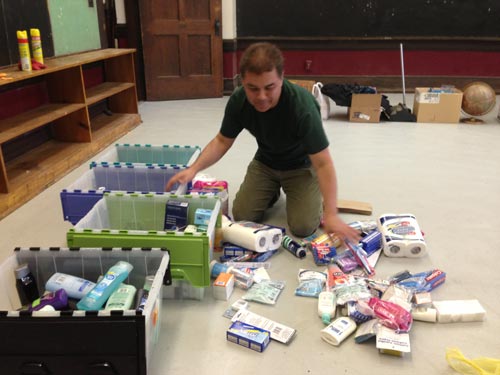
Rick Cornett works on a hygiene pantry at Pride Center 419. Toledo Free Press File Photo

Rick Cornett works on a hygiene pantry at Pride Center 419. Toledo Free Press File Photo

Toledo Pride Foundation member Torie Thorne agreed.

“It’s going not how we thought it would go, but not in a bad way,” she said. “I think because we never had a clear-cut idea of what it would be, it got to turn into what it is without us being like, ‘No, that’s not what we wanted to do.’ You don’t always know what the community needs and it was able to become what was needed kind of on its own.”

The launch

The Pride of Toledo Foundation and Equality Toledo worked in conjunction with various local LGBTQ organizations to launch the center, located in a rented room at the Collingwood Arts Center, 2413 Collingwood Blvd. The center officially opened Sept. 5 and is coordinated by Sherry Tripepi of Equality Toledo along with Staples and Thorne.

The center is open from 11 a.m. to 2 p.m. Mondays, staffed by Thorne, during which time people often stop by to pick up or drop off hygiene products, browse the library or drop off donations and more.

One limitation has  been there isn’t someone available to staff it daily, Tripepi said.

“It’s been well-utilized, but I think it definitely has more potential,” Tripepi said. “Hopefully we’ll continue to grow.”

A one-year anniversary party for the LGBTQ community and allies is planned for 6-8 p.m. Sept. 11. Refreshments will be served.

The space gets used an average of 15 times per month, Staples said.

Among the groups that have utilized the space are Equality Toledo, Why Marriage Matters Ohio, Young Gay & Proud, Holiday with Heart Charity Gayla, Toledo Pride, Owens Community College Gay Straight Alliance, AIDS Resource Center, Rainbow Area Youth and more.

The space has been used for meetings, movie nights, HIV testing, parties and more. Any nonprofit group can use the space for free, Staples said. The group does not have to be affiliated with the LGBTQ community.

The space is open for use on a first-come, first-serve basis by emailing [email protected].

Besides serving as a meeting space, Pride Center 419 offers an LGBTQ book and video lending library. A hygiene pantry is also available with many free items for both men and women.

Donations to the library and the hygiene pantry are welcome.

The center also serves as a resource for information and referrals for LGBTQ support groups, churches, charities, health services and more. Any LGBTQ group is welcome to leave brochures, business cards, newsletters, magazines and promotional items. A community bulletin board is also offered to post announcements and notices on upcoming events.

Hygiene pantry

The hygiene pantry has been a much-utilized resource, Staples said.

“We thought when we started it we would, and it has definitely turned out to be something that’s very needed,” Staples said. “People can usually get assistance or money to get food, but to get those things to make sure you’re clean and fresh are harder to come by.”

Young, Gay & Proud group meets at Pride Center 419 once a month. Photo Courtesy Christopher Coleman

One group that regularly uses the space is Young, Gay & Proud (YGP), a peer support group geared toward African-American males ages 13-24 led by co-facilitators Christopher Coleman, Kennyetta White and Marlon Barbour.

The group, which is open to anyone, started a year ago with three attendees meeting at Coleman’s home. Now it averages 25 youth at monthly meetings at Pride Center 419, Coleman said.

“If they are having problems at home, once a month they can come and be themselves, get some food, some health products, maybe some health services they didn’t know were in the community,” Coleman said. “We try to be a one-stop shop as far as life skills and life needs for them.”

“They need somewhere to go and someone to believe in them. YGP offers a safe place to express what they are going through that day, week, month, year. To be able to have a voice, to not hide behind a curtain of sexuality, to bring a boyfriend and just live, laugh, enjoy.

The group’s recent one-year anniversary party included a candlelight vigil for 16-year-old Tyler McIntoush of Toledo, who was shot and killed in July. Although to Coleman’s knowledge McIntoush never attended a YGP meeting, he considered him a member of the group and many of his friends were regular attendees.

Possible safe house

Coleman hopes one day to be able to offer a safe house for local LGBTQ youth without a place to stay.

“One of the No. 1 demographics experiencing homelessness not just here but in the country are gay youths,” Coleman said. “In a perfect world, they would come out and their parents would be accepting and talk about it and process it with them, but that’s not always the case. Many are kicked out by those who don’t understand it and don’t want to hear it.”

During the upcoming Toledo Pride, a CD of music from the past five years of Toledo Pride will be made and sold for $7 with proceedings benefiting Pride Center 419, Staples said.

Other groups, including a men’s support group and a transgender support group, are talking about meeting at the space, Staples said.

“There’s talk of all kinds of stuff and I believe people will make it happen,” she said. “We’re very excited to promote our one-year anniversary party and we’re very excited that we’re 1 year old.”

Birmingham Festival celebrates ‘strong ethnic neighborhood’

0

The 40th annual Birmingham Ethnic Festival will welcome home participants from Hungary, Italy and across the world.

“Everyone talks about coming home for festival, so we decided it would be a good theme” said Betsy Ujvagi, who organizes the festival.

The weekend-long celebration calls attention to the rich ethnic heritage of Consaul Street, which was nearly demolished in the 1970s.

“Forty years ago there was a proposed overpass which would’ve knocked down all the buildings on one side of the street,” Ujvagi said. “A lot of people in the neighborhood came together to stop that from happening, and they all wanted Toledo to know they’re there, so they started the festival to talk about the cultural lifestyle.”

This will be the first trip to America for several international participants. A group of these guests will tour Ohio, Michigan and Illinois.

One newcomer is folk artist Izbeki Gabriella Cseuz, who will teach traditional embroidery of the Hungary’s Southern Great Plain. Cseuz will also bring an exhibition of folk art from Algy? and Csongrad County artists.

The festival’s unofficial kickoff will be the 19th annual waiters race set for 7 p.m. Aug. 15. Teams of four are challenged to carry trays with full pitchers and glasses of beer as quickly as they can without spilling.

Ujvagi stated this event used to be on a Saturday night prior to the festival becoming a two-day event.

Guests are encouraged to sample ethnic foods offered by vendors from across the globe. A few noteworthy items are stuffed cabbage, chicken paprikas and homemade kolbasz sandwiches. Those worried about overindulging will have plenty of opportunities to burn calories.

Ujvagi estimated there will be eight different performing groups, including Hungarian dancers, a Mexican singer and some Irish bands.

The Gyanta Orchestra from New Jersey will perform again this year. This orchestra is one of the premier Hungarian folk music groups in the United States.

Modern rock music is featured later in the evenings, with headlining  Shout!’ a Beatles tribute.

“The interesting area on Saturday night is the Calvin United Church of Christ lot, where Hungarian folk dancers and musicians gather to literally sing and dance the night away,” said Imre Bertalan, an event organizer.

Bertalan has been involved with the festival since its second year, after coming to Birmingham as the community organizer and becoming pastor of Calvin United. He remembers the protests that originally overturned plans for the Consaul Street overpass.

“It was a very strong ethnic neighborhood. There were instances where people came out of St. Stephen’s Church and out of their homes to stop trucks on the street and protest,” Bertalan said.

“We’re super impressed we’ve made it 40 years, and it’s only gotten bigger and better,” Ujvagi said.

The festival runs from noon-10 p.m. Aug. 16 and noon-9 p.m. Aug. 17. Admission is free.

Ohio EPA letter unrelated to water crisis, Toledo officials say

0

Toledo officials insisted at a news conference Aug. 8 that concern from the Ohio Environmental Protection Agency (EPA) over conditions at the city’s water treatment plant are unrelated to last weekend’s water advisory.

Toledo Mayor D. Michael Collins talks to media about the Collins Park Water Treatment Plant on Aug. 8. Toledo Free Press photo by Sarah Ottney

Toledo Mayor D. Michael Collins talks to media about the Collins Park Water Treatment Plant on Aug. 8. Toledo Free Press photo by Sarah Ottney

“The algal bloom caused the issue,” said Department of Public Utilities Director Ed Moore. “The plant did not cause the issue.”

The Ohio EPA has raised concerns in a series of letters to city officials, most recently on June 9. The letter to Toledo Mayor D. Michael Collins from Ohio EPA Director Craig W. Butler stated that the condition of Toledo’s Collins Park Water Treatment Plant could “severely impact the City’s ability to provide adequate quantities of safe water to its citizens.”

“I cannot underscore boldly enough the precarious condition of Toledo’s drinking water system and the imminent vulnerability to failure,” Butler wrote.

The letter also noted the city did not appear to be “on a path to timely comply” with fixing “significant deficiencies,” outlined in previous letters.

On Aug. 8, officials said the city and Ohio EPA agree that repairs to the water treatment plant are needed but disagree on the design and timeline and are working together to resolve those issues. The city’s 20-year plan for repairing the plant will be accelerated to five years, to be completed by 2019, Moore said.

Officials said they realize there were issues with public communication during last weekend’s water crisis, but have learned from the experience and are working on creating improved communication and emergency response plans.

Regarding the testing of water samples, Dr. David Grossman, commissioner of the Toledo-Lucas County Health Department, said Toledo’s former water test involved breaking open, or “lysing,” the cells to release all the toxic microcystin inside the algae in the sample.

However, confusion came about after the Ohio EPA ordered an “unlysed” sample to be tested, which would be expected to detect lower levels of microcystin than Toledo’s lysed sample, but in fact showed similar levels.

It was discovered that chlorine in the lysed samples was artificially lowering the toxin count to the level of an unlysed sample. When chlorine was removed from the sample — called quenching — the numbers came back as expected.

Toledo’s former practice was to test “nonquenched lysed” samples, or water treated with chlorine and cells broken open to release all toxin. The new state standard — developed as a result of Toledo’s water crisis — calls for testing “quenched unlysed” samples, or water with chlorine removed and cells intact.

The estimated cost of the water crisis is $270,000, said City Finance Director George Sarantou, which includes $73,000 for Department of Public Utilities overtime pay, $52,000 for Department of Public Services overtime pay, $48,000 Toledo Police Department overtime pay, $10,000 in Sheriff’s Department overtime pay and $10,000 to fly water samples to Cincinnati, Columbus and Michigan’s Upper Peninsula for testing. Sarantou said he’s not sure if Toledo will be charged for flying the samples, but for now he’s including it in the costs.

Veritas Cork & Craft wine bar opens Downtown

0

A number of new bars and restaurants have emerged in Toledo’s Downtown in recent years, but the area’s first wine bar splashed onto the scene this week.

Veritas Cork & Craft opened its doors to the public for the first time Aug. 11. The privately funded establishment is located in the first floor of the Commodore Perry Apartments on Jefferson Avenue. The watering hole’s grand opening is tentatively scheduled for Aug. 21.

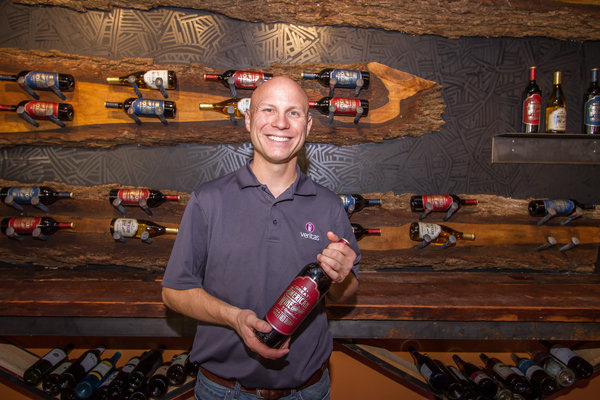
Nick Kubiak, co-owner of Veritas Cork & Craft. Toledo Free Press photo by Christie Materni

Nick Kubiak, co-owner of Veritas Cork & Craft. Toledo Free Press photo by Christie Materni

“We want to have some time to get all our ducks in a row before we make things too public,” developer Franz Gilis said. “We’re trying to bring to Toledo something it didn’t have before. It’s a unique opportunity.”

Gilis is a longtime fixture in the area’s restaurant scene, having spent time as regional manager for Marco’s Pizza and vice president of Zoup! in Maumee. To open the shop, he partnered with Nick Kubiak, a 13-year veteran of the wine industry with a background in retail, wholesale and importing. Acquaintances since childhood, the pair are both 1997 graduates of St. Francis de Sales High School.

“With his restaurant and management experience and my time in the wine industry it seemed like a perfect fit,” Kubiak said.

Veritas has a room for about 80 customers in a 2,300-square-foot space. It features soft seating, tables, a granite bar and repurposed woodwork. The space is intended to have a contemporary but classic appeal.

The 19-story building in which the wine bar resides opened in 1927 as the Commodore Perry Hotel, one of Downtown Toledo’s premier locations that included small shops lining the street level. The building is between Fifth Third Field and the Huntington Center, and just down the street from the SeaGate Convention Centre. It also has a connected parking garage.

Veritas Cork & Craft at the Commodore Perry building. Toledo Free Press photo by Christie Materni

Veritas Cork & Craft at the Commodore Perry building. Toledo Free Press photo by Christie Materni

Renovated and turned into apartments in 1999, a number of bars and restaurants have come and gone since then, making the wine bar the only business in the first floor storefront of the Commodore Perry. The significance of the building and the opportunity for its revival are not lost on Gilis.

“The Commodore Perry has a lot of history,” Gilis said. “In Toledo this was the place to be seen in ’30s, ’40s, and ’50s, all the way up to the ’70s and early ’80s. I mean, my parents had their honeymoon here. It’s a great place.”

Now within the confines of the storefront are food and wine that have been carefully selected to acknowledge what various regions of the world have to offer, Kubiak said. The wine bar includes a kitchen serving small plates and appetizer-style dishes, with artisan and locally made products such as cheese, olive oil, vinegar and bread.

“There’s nothing like this concept currently in Toledo that I know of,” Kubiak said. “There are other wine bars in the area, but none that offer wines and drinks like we have.”

In addition to its bar and lounge, Veritas also features a full-service retail store with 400 wines and over 150 craft beers available for purchase.

“To me the retail store is something Downtown really needed,” Gilis said. “There’s 3,000 people that live down here and nowhere to go to buy a bottle of wine or six pack of beer if you want anything besides Bud Light or Coors Light.”

The name was inspired by the Latin phrase “In vino veritas,” meaning “There is truth in wine,” Kubiak said.

Both partners believe that while the venue has an upscale atmosphere, the environment is such that it allows for a more casual experience as well.

“If you’re in jeans and a T-shirt before or after a game or you’re in a three-piece suit after leaving work you can come in here and feel comfortable in the surroundings,” Gilis said.

Since Veritas’ opening, Kubiak said he and the staff have encountered overwhelmingly positive feedback from customers as the establishment finds its bearings. Early success has given him confidence heading into the store’s grand opening.

“There’s something for everyone,” he said. “If you want to have something you know and are comfortable with we have it and if you want to try something new, you can do that here.”

Veritas is open Monday through Saturday with the retail area opening at 11 a.m. and the lounge seating at 4 p.m.

Miller: Collins mucks around

0

The two-and-a-half-day water shut-off caused by toxins released by Lake Erie algae blooms left our community with a need to work together but the impulse to point a few fingers.

Many of those accusatory fingers are aimed in the direction of Ed Moore, director of Toledo’s Department of Public Utilities (DPU). But while a closer examination of Moore’s role should result in a retraction of most of those prodding index fingers, Toledoans invested in accountable government should reserve an extended middle finger for his boss, Toledo Mayor D. Michael Collins.

.

.

Moore has worked for the City of Toledo for about 22 years; his survival across changing administrations demonstrates an inclination to place the public over politics. Under Mayor Mike Bell, Moore served as the director of public service; when Collins took office, Moore became the commissioner of engineering services. When Robin Whitney left the city’s employ to work for ProMedica, Moore agreed to what he undoubtedly knew was the thankless job of DPU director.

Public Utilities is a difficult division. It encompasses all services related to water — sewer, treatment, distribution, repairs, billing and engineering services.  Many believe, and probably rightfully so, that this division should be split, as its operation is time-consuming and leaves little room for error.

Despite the challenges, Moore has accomplished something previous directors have not been able to do: He began to build a relationship with the Ohio Environmental Protection Agency (EPA). Before you point a finger, be clear that the recent media attention on the Ohio EPA’s possible takeover of the Collins Park Water Treatment Plant was not based on communications making such threats to the city; it was based on internal memos by staff that had issues with Toledo. The upper levels of administration at the Ohio EPA were reportedly working with Moore and insiders maintain  progress was — and is — being made.

Moore has said he believes there is overstaffing in some areas of DPU and has cut positions. He has also worked on combining Call City Hall call takers with Public Service customer service reps, which is efficient and the first step toward a 311 call center system. Moore has not been afraid to stand up to the unions or to hold firm under a barrage of unwelcome attention from Toledo City Council members who have personal issues with him because he will terminate people who don’t do their jobs — even, it is rumored, relatives of Council members.

During the water crisis, several insiders say Moore did not lose his cool under pressure, as some notable elected leaders did.

None of this is to suggest Moore is perfect. There are clearly ongoing issues at the DPU and specifically with the water treatment plant. Moore is captain of that ship, and any algae bloom icebergs it hits are his responsibility. How the next few months unfold will determine whether Moore’s good intentions will repair and stabilize a crucial situation, or whether he will need to be replaced by someone who can calm the waters — literally and figuratively.

So for now, retract the fingers of blame pointed at Moore and use that energy to return the one-finger salute Collins is showing you through his calculated diminishment of transparency at the water treatment plant and the favoritism he is showing The Blade.

Every television station and many other media outlets — including Toledo Free Press — are banging on the door to get cameras and reporters inside the water treatment plant. But through false starts and broken appointments, the Collins administration has locked everyone out — except The Blade, which has been the sole media outlet granted access to the plant since the water crisis.

This isn’t a Toledo Free Press issue or even just a media issue; it’s an alarming lack of true transparency for the nearly 500,000 people who depend on the city’s drinking water (“rate payers,” as Collins so coldly labeled you during the initial hours of the crisis).

For Collins to deny Toledo Free Press and every Toledo television station access to the water treatment plant while bending over backward to accommodate his pals on Superior Street is a blatant extended middle finger to the area’s “rate payers” — you. Do you trust a politician under fire who makes such an exclusive arrangement concerning such a public issue? Do you trust one media’s reporting, uncorroborated by any other source?

Remember this pre-election story?: After a particularly grueling afternoon of cleaning horse stables, young Mick Collins, the future mayor of Toledo, was greeted by his father, Michael. The older man, an Irish immigrant who braved the Atlantic Ocean to bring his family to America, praised the boy’s work and handed him a pop. Father and son sat down, the elder Irishman nursing a beer. Following a brief silence, the man turned to his son and offered him some blunt advice.

“Life is like a card game,” Michael told his son. “And you have one consistent card to play your whole life — the F*** You Card. Your successes in life are defined by when you don’t play that card.”

Mayor Finkbeiner — sorry, I mean Collins — is playing that card now, dropping it on all but his favorite media and, most importantly, you.

Demand transparency. Demand access.

Moore is not off the hook, but he stands in the shadow of a mayor’s extended middle finger, a bird that blocks access, transparency, accountability and fairness.

Algae blooms aren’t the only toxins infecting Toledo, and there’s not enough water in the Great Lakes to wash this bad taste out of rate payers’ mouths.

Michael S. Miller is editor in chief of Toledo Free Press. Contact him at [email protected].

Toledo Pride marks fifth year with biggest weekend yet

0

By Sarah Ottney and Danielle Stanton, Toledo Free Press Managing Editor and Toledo Free Press News Editor

As Toledo Pride celebrates its five-year anniversary Aug. 22-24, organizers are marveling at the way the event has grown almost exponentially since the first Toledo Pride festival was held at Erie Street Market in 2010.

Executive Director Lexi Staples said she hoped for 1,000 attendees that first year — a goal even some fellow committee members thought was comically out of reach — but 2,500 people came out to show their support for the lesbian, gay, bisexual, transgender and questioning (LGBTQ) community.

Members of the 2014 Toledo Pride planning committee. Toledo Free Press photo by Christie Materni

The following year, 5,000 showed up; the third year, 10,000; and last year, 15,000. This year, organizers were reluctant to estimate a number, but said they expect at least 15,000 to possibly as many as 25,000 to participate in the three-day event.

RELATED: Two new Downtown events to bookend Pride weekend

“I love being on the committee and watching the festival grow from 2,500 to potentially 25,000, and everybody coming together to support it,” said outreach coordinator Brent Rabie.

“It’s gotten bigger more quickly than we could have ever hoped or expected,” Staples said. “It’s just really cool to see the growth.”

“It’s our biggest and best year yet,” said marketing coordinator Kelly Heuss. “We definitely raised the bar.”

Growth of support

Food vendor coordinator  Nicole Hayman said she had about eight food vendors last year; this year, the festival will feature 17 vendors, 14 of them local.

“Every year we’ve had to seek out food vendors. This year we actually had to turn people away,” said parade coordinator Torie Thorne. “People are starting to take us more seriously. Last year, people ran out of food because they didn’t believe we would actually have that many people. This year, they are like, ‘Oh, we’re prepared. We’ve been preparing all year.’”

As the event has grown, so has the number of business sponsorships within the community. Such companies as Fifth Third Bank, Owens Corning, TARTA, Yark Fiat and the Park Inn are participating this year, Heuss said.

“It’s really cool because we have really struggled with getting some of those supports in place initially,” Staples said. “When you’re first starting, it’s really hard to convince people that you can run a big event.”

Sherry Tripepi, executive director of Equality Toledo, said all of Ohio’s major cities had LGBTQ pride festivals six years ago, but not Toledo. The “remarkable” growth of Toledo Pride, Tripepi said, shows the need was there.

“I think overall, as issues rise, there’s always backlash,” she said. “I think especially with the younger generation there’s more acceptance, there’s more pride, there’s more celebration.”

Two years ago, 5K coordinator Justin Veigel said about 150 people signed up for the Nite Glo 5K on Friday night; this year, he expects 500 people.

“You don’t see it on a day-to-day basis, how much support we have in the community,” Veigel said. “Even over the last five years in this area we’ve seen a lot more support. I’m really excited again about the support this year and it’s really cool to see it grow and change and get better every year.”

The beginning

Toledo Pride started in 2010 with “$900 and a dream,” Thorne said.

Shortly after opening lesbian bar OUTSKiRTS — which closed in May — Staples and her mom, Johanna Staples, were talking with Thorne about doing something to give back to the community.

“OUTSKiRTS has been the catalyst for a lot of really great [community events] and one of those things is Pride,” Staples said. “I was pretty excited and pretty adamant about it. We just wanted to create something for the city that we didn’t have before.”

After learning local LGBTQ nonprofit Equality Toledo was also interested in organizing a pride event, Staples reached out and they decided to work together using $500 from OUTSKiRTS, $400 from an anonymous donor and lots of volunteer hours.

“The first year it was really grassroots. We were making buttons, printing T-shirts. Everything was happening inside the bar,” Staples said. “It was probably seven to 10 of us planning. A few of those people didn’t come back, but a few of those core people have been involved the whole time.”

“Equality Toledo wanted to be able to have a place for the LGBT community to come together to be celebrated, to be proud of who we are, to have a safe place to have fun,” Tripepi said. “It absolutely was accomplished.”

In 2011, a parade was added. In 2012, the event expanded to three days. In 2013, Sandpiper boat rides were added. This year, organizers added KISS ‘N’ Drag, a charity CD and expanded Sunday Funday to a full day.

“Anytime an opportunity presents itself, we’re like, ‘That seems totally cool! We should do that!’” Staples said. “I don’t think we even realize we’re doing it.”

The festival acts as a support to people in outlying communities who don’t have an LBGTQ community to go to.

“It’s Toledo Pride but it’s definitely a regional event,” Heuss said.

“People are proud of it. People really embrace it,” Thorne said. “It’s clearly what was needed.”

Many people enjoy Toledo’s event because it’s smaller and more community-oriented than many pride events in larger cities, Staples said.

“It feels really community-based here,” she said. “I really like the feel of our event.”

“It’s like a big family reunion,” Thorne said.

Most Pride events happen in June so Toledo’s in August marks the end of Pride season.

“It’s like the last hurrah of summer,” Thorne said.

Heuss said the number of people at last year’s event was almost overwhelming compared to years past.

“It’s amazing,” Heuss said. “I was walking on the side of the parade route [last year] and came to Summit Street.  There were so many people watching the parade, I almost cried.”

“Every year it’s grown so much, it’s awe-inspiring and scary at the same time,” said entertainment coordinator Mandisa Sherife-Kekulah. “What does that mean for next year? It makes you want to pull your hair out, but it shows there’s so much love.”

Staples said she’s excited when she thinks about the future of Toledo Pride.

“I’ve talked to Columbus Pride and it’s really neat to get feedback about what’s worked for them because they’ve been doing it so long and get, like, 400,000 people. We’re not even in the same hemisphere,” Staples said. “But they’re at year 30 and we’re at year five, so we might have 400,000 people by year 30, who knows? There’s got to be a plateau point, but I don’t know where that is. I think it’s feasible for us to look at numbers like 50,000 by year 10. That might be something we can easily reach.”

Organizers will meet in the coming months to start formulating a game plan for the next five years.

“I get excited thinking about what we could do futuristically,” Staples said. “We’re putting together a strategic planning session sometime after the dust has settled on this year’s Pride to get us up to year 10 and figure out where we want to be and what we want to be doing. It’s really exciting. I can’t wait to see where this goes.”

Toledo Free Press is media sponsor for Toledo Pride. For more information, visit toledopride.com.

2014 schedule of activities

Aug. 22:

  • 8:30 p.m.: Nite Glo 5K ($18-$23 in advance/$30 day of) and one-mile fun run/walk/roll ($15 in advance, $20 day of) at University of Toledo Centennial Mall, registration starts at 7 p.m.
  • 9 p.m. to 1 a.m.: KISS ‘N’ Drag kickoff party sponsored by 92.5 KISS FM, at Promenade Park, featuring DJ 3 PM and drag shows. Admission $8, or $5 with a canned food item to benefit Toledo Northwestern Ohio Food Bank.

Aug. 23:

  • Noon: Parade starts on Washington Street at the intersection of Ontario Street, crosses the Owens Corning bridge at North Summit Street and finishes at Promenade Park. Entrance to Toledo Pride is $5 for adults, $7 after 7 p.m. and free for children younger than 18.
  • 12:45 p.m.: Breaking Ground
  • 1:55 p.m.: Drag performances: Gina Arnaz, Porsha Armani
  • 2 p.m., 3 p.m., 4 p.m. and 5 p.m.: Sandpiper boat rides, 40 minutes each, dock on the Jefferson Street side of Promenade Park, $6 or two for $10.
  • 2:20 p.m.: Kids with Knives
  • 3:35 p.m.: Dumb Easies
  • 4:50 p.m.: Bird’s Eye View Circus Space contemporary circus acts
  • 5 p.m.: Drag show: Muffy Fishbasket
  • 5:20 p.m.: Chavar Dontae
  • 5:55 p.m.: Drag show: Santana Romero, Makayla Sinclair Styles, Tequila Mockingbird, Feliciana Thunderpussy, Muffy Fishbasket
  • 6:25 p.m.: Bird’s Eye View Circus Space contemporary circus acts
  • 6:45 p.m.: Flabongo Nation
  • 8:10 p.m.: Arctic Clam
  • 9:30 p.m.: Eryn Woods
  • 9:55 p.m.: Drag show: Ava Aurora Foxx & Brook Lockhart, Amaya Sexton, Amber Stone
  • 10:20 p.m.: Rye Rye
  • 10:45 p.m.: Drag show: Deja D. Dellataro, Bois with Outskirts
  • 11 p.m.: Pastele
  • 11:25 p.m.: Drag show: T-Town Tassels, London Asia, Amaya Sexton, Farrah CT

Aug. 24:

  • Noon to 3 p.m.: Free Sunday Funday at Promenade Park featuring family-friendly activities for kids.
  • 3-10 p.m.: Sunday Funday continued at Promenade Park, featuring food, drinks and entertainment, including Steel Wynd, Calvin Green, Johnnie Mae, Tiffany Covington, Sam Tolson, Joe Woods, The Blood Sisters featuring Barbara Payton and Midnight Flowers interspaced with drag performances, magic performances and performances by Bird’s Eye View Circus Space. $3 for adults, free for children younger than 18.

See www.toledopride.com for full schedule.

All times and events subject to change.

Guild of Artists & Artisans set for Levis Commons Fine Art Fair

0

This year is the 10th anniversary of the Levis Commons Fine Art Fair. On Aug. 16 and 17, the Town Center at Levis Commons in Perrysburg transforms into an outdoor art gallery. The open-air event is presented by the Guild of Artists & Artisans and hosted by The Town Center at Levis Commons. Admission and parking are free. Fair hours are Saturday 10 a.m. to 8 p.m. and Sunday 11 a.m. to 5 p.m.

More than 125 artists from across the country have been invited to show their work at this juried event. Featured artwork includes ceramics, glass, painting, drawing, multimedia, sculpture, photography, fiber, leather, wood, jewelry and more.

The fair will also feature a free children’s art activity center presented by the Toledo School for the Arts (TSA). TSA students will help children with several fun art activities. Face-painting will also be offered free of charge. Adjacent to the children’s area, TSA Artisans’ Guild will have a booth of items for sale created by students in this year’s summer program.

“We are delighted to bring the Levis Commons Fine Art Fair to our community for its 10th year,” said Casey Pogan, marketing director with The Town Center at Levis Commons. “The fair has become a must-attend event in Northwest Ohio, and every year the quality of the art surpasses our expectations. You can see the passion and creativity of the artists in every piece.”

The fair is produced by The Guild of Artists & Artisans, the same group behind the Ann Arbor Summer Art Fair. More information is available at LevisCommonsFineArtFair.com.

Singer-songwriter Al Stewart offers historical perspective

0
Stewart

Chatting with the affable Al Stewart is as enjoyable as listening to him wield words in song.

“I often say I only have two talents in life: I can rhyme just about anything, and I can read a wine list. And as it happens, these are the two things that you need to do my job,” he said and laughed.

Most know the artist for the jazzy, piano-driven “Year of the Cat” with its memorable sax and guitar solos and clever lyrics. The cool song was a surprise hit in 1977 during the disco era.

“We really didn’t see that coming,” Stewart said. “I purposely tucked [‘Year of the Cat’] away at the end [of the album] because I thought it was the least commercial track. I had no idea. I tend to put the long songs at the end.”

He reminisced during a call from a tour stop in London.

“I think some people were confused because they’d come to hear ‘Year of the Cat’ and I’d play ‘Roads to Moscow.’ Sixteen-year-old girls are not necessarily interested in the Russian pact from World War II, so I think a lot of people were a little confused initially,” he said. “ ‘Year of the Cat’ and ‘Time Passages’ were, I think, atypical in my career.”

Born in Glasgow, Scotland, Stewart grew up in Bournemouth, England, telling everyone he was going to be a rock musician.

“I discovered to my horror when I bought an electric guitar that I really didn’t have a talent for it,” he recalled. “I was really hovering in total anguish at 17. Then at 18, along comes Bob Dylan; he pretty much saved my life because he couldn’t sing or play either, but, of course, he was able to unspool these vast amounts of words by, as one of my songs says, ‘throw them like fireworks in the air.’

“And I thought: I can do that. I can’t do it exactly the same as Bob Dylan, but I get the principle: You buy an acoustic guitar and then you write hundreds of words in songs and turn them into stories. So I sold my electric guitar and became a folk singer.”

By the mid-1970s, Stewart’s stature as a storyteller reveling in history was set.

“I write my songs to be like the books and movies that I like,” he said. “There’s usually plot development; a lot of them take place in different countries, different time zones and different centuries even.

“And a lot of them have several different things going on at the same time, so you don’t really know if it’s a historical song or if it’s an allegory. So there’s a certain amount of intrigue.”

Stewart will bring that musical mystique to the Ark in Ann Arbor, where he’ll play at 8 p.m. Aug. 15. Tickets are $30. Doors open at 7:30 p.m.

“It’s a very unusual job, performing things you’ve made, things you created,” he said. “The fact that you could write songs and somehow pay your way just by doing that is quite extraordinary to me. … I’ve been able to do this for 50 years and make a living at it. It’s a wonderful gift.”

Program pairs veterans with private caregivers

0
Marty Lipka

Marty Lipka landed in North Africa as a member of the Army 10th Mountain Infantry. A year later, he took an English boat to Italy and fought through to Austria.

For many years after the war, Lipka, 97, worked in the Sears and Roebuck Co. building located where the Oakland Mall in Troy now sits.

Today, Lipka lives with caretakers Mike and Yvonne Arnold in their home in Brighton, Mich., as part of the Medical Foster Home Program with the Veterans Affairs (VA) Ann Arbor Healthcare System.

The program pairs veterans who require round-the-clock care with private caregivers. The program prevents many veterans from entering nursing homes and helps the families of veterans who may be burdened by the constant care.

Currently, there are eight homes in the program, two in Toledo and six in Southeast Michigan, serving 12 veterans, said April Bartlett, the program’s manager.

Lipka and Mike Arnold, 63, have formed a tight bond since Lipka moved in with the Arnolds two years ago. Arnold has no formal training, but took care of his mother, who suffered from Alzheimer’s. He built a house next door to his own to care for her in 2007, but a year later, she passed, leaving him with two homes during the economic crisis.

He sold his home and moved into the newly constructed house. Because it was built for caretaking, he decided to take in Lipka, who was in a nursing home at the time.

“The need was just so great,” Arnold said. “Marty was in a nursing home, and he hated it. He couldn’t go outside; he couldn’t see sunshine. Now he can walk out anytime he wants.”

Lipka said he was happy with Arnold’s care, that he likes to watch TV and sit outside to watch the ducks and geese.

“I’m happy. Most of the time. Mike’s OK. I can’t trade him for a new one,” Lipka said, joking during a recent telephone interview.

“When I brought him home, he went outside,” Arnold said. “When I saw that moment, it was just like [so touching] and he’s not the only [veteran] who has needs. [The need] is real.”

Arnold and Lipka have made many trips and visits together. They even went to a Willie Nelson concert in Kalamazoo. The country star signed Lipka’s photograph, and Arnold is currently searching hard to find tickets to Nelson’s show in the Freedom Hill Amphitheater in Sterling Heights, Mich., on July 13. So far he hasn’t been able to locate any tickets, and Lipka is looking forward to seeing Nelson again.

In the past, they have visited The Henry Ford Museum to see the Titanic exhibit and Detroit to see the  Thanksgiving parade. They even went to Oak Grove, Lipka’s hometown where they visited the cemetery where his parents are buried and the seven-bedroom farmhouse where he grew up.

Bartlett said the VA is looking for more caregivers like Arnold to join its program. To sign up, a care-giver needs to be at least 21 years of age, have a back-up caregiver who must meet requirements, have active CPR certification and meet fire and safety standards.

When Bartlett places a veteran with a caregiver, she said she does so with the intention and hope that the home will last indefinitely. Each home is allowed to take up to three veterans.

“Some veterans have mobility issues, so we prefer to have homes on the ground floor so they don’t have to navigate the stairs,” Bartlett said. “I’m hoping this will be (their) forever home and (they) will be able to stay indefinitely.”

The foster home program combines traditional foster care with a team of caregivers, Bartlett said. Several specialists will visit the home to check up on the veteran, including a nurse manager, social worker, dietician, physical therapist, recreational therapist, psychologist and pharmacist. Depending on the veteran’s care plan, a veteran could be seen two to three times a week by care-providers.

The VA doesn’t pay for the program. The cost is negotiated between the caregiver and the veteran and is “very reasonable” for the service they are being provided, Bartlett said. The average cost is $2,200-$2,300 a month which includes room and board, 24-7 care, meals, laundry and personal care.

“Those veterans eligible for VA benefits, I’m able to help them apply for those,” Bartlett said. “If eligible and awarded those benefits, they can use that….Primarily, they use their social security benefits to help them afford the care.”

Bartlett said the program is so successful, it’s actually saving the taxpayer a million dollars about every seven days because the program diverts long-term care costs paid by the state Medicaid program.

The foster home program started in 2000 in Little Rock, Ark., by two social workers looking for care support for veterans in their own communities. A pilot program was created in 2004. Now there are 114 foster home sites across the country, currently serving 747 veterans, Bartlett said. The program at the Ann Arbor VA has served a total of 21 veterans since starting 3.5 years ago.

“We’ve seen an improvement in the health of some of our veterans,” Bartlett said. “One graduated from the program and was able to move back home with a family member. We hope that this becomes their forever home, but it was good for him to get back on track.”

The foster home program takes the veterans out of institutionalized care and puts them into a family structure, in which the veterans can come and go as they would in a family unit. Arnold says Lipka can sit in his room or come out to discuss something he watched on TV. The relationship is mutually beneficial, he says.

“You do it because you can,” Arnold said. “There’s sacrifices and tradeoffs. But when they seem to appreciate it, you just know it’s right. And the main thing you know, really, is we’re getting older not younger. And we’re all going to need more help. Maybe the Lord will send someone to us when we get older.”

Letters to the Editor, Aug. 10, 2014

0

Lorax on the Lake

As a kid I thoroughly enjoyed my time spent frolicking in the waters of Lake Erie. My drinking water came from Lake Erie for many years. I have eaten the harvest of Lake Erie. I hope to frolic, drink and eat for many years.

But I breathe deeply while I can.

Dr. Seuss said it in 1971 in his book “The Lorax” but under pressure from the Ohio Sea Grant College Program removed the line: “I hear things are just as bad up in Lake Erie.”

The original text read:

They’ll walk on their fins and get woefully weary
in search of some water that isn’t so smeary
I hear things are bad up in Lake Erie.

The Ohio Sea Grant College Program reportedly wrote to Dr. Seuss, argued the conditions had improved and asked him to take the “Lake Erie” line out. Dr. Seuss agreed and it was removed from future editions.

Today, the National Sea Grant College Program is a program of the National Oceanic and Atmospheric Administration (NOAA) within the U.S. Department of Commerce. It is a network of 33 Sea Grant colleges working with scientific research, education, training and extension projects intended to help with the conservation and practical use of the coasts, Great Lakes and other marine areas.

I see that the more things change the more they remain the same.

UNLESS someone like you
cares a whole awful lot,
nothing is going to get better.
It’s not.

-Don Rysdale, former resident of Niagara Falls