Home Blog Page 181

Chess transforming students at Jones Leadership Academy

0

In the halls of Jones Leadership Academy — the former Jones Elementary School, now reborn as part of the district’s plan to transform itself — one of the most striking transformations taking place may be centered around one of the world’s oldest forms of competition: chess.

In 2013, students under the guidance of coach Warren Woodberry won the 10th Annual TPS Chess Tournament, covering 35 schools from all over the Toledo area. For any group of kids to rise to the top in such a competition is impressive. But for a program only a few semesters into its existence — from a district struggling to reinvent its academic reputation in a time of restructuring — it’s extraordinary.
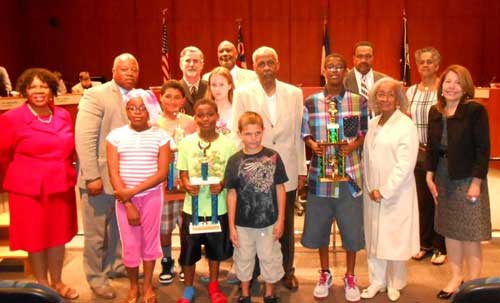
Leadership Academy chess students honored by Toledo City Council. Photo Courtesy Warren Woodberry

Jones Leadership Academy chess students honored by Toledo City Council. Photo Courtesy Warren Woodberry

Yet the coverage for this achievement was almost nonexistent.

“If we were a football team or a basketball team in 2013, and we won the championship, we would be covered in the sports page, we might be mentioned in your academic books or your newspaper,” coach Woodberry said in an interview with Toledo Free Press. “How a little inner-city school, with a mix of African American, Spanish and white — diversity — we beat every school in the city. Out of the 35 schools, we won first place as a team, and first, third and fourth as an individuals.

“That’s Ottawa Hills, that’s Maumee Valley, that’s Start, that’s Central Catholic. That’s all of them. Not a peep,” he added. “For one of the inner-city schools that has decided to do this, and win in chess — which is one of the most difficult sports — why wouldn’t there be some coverage, or some encouragement or something?”

The story of Jones students embracing one of the most demanding of all games may have largely gone unnoticed at first, but the seeds of the students’ newfound passion have begun to sprout in arenas far removed from simple competition.

“We actually started the program as ‘Kids, Cartooning and Chess,’” Woodberry said, recalling the program’s early days. “But once we got here and we introduced the chess segment of it, we found the kids really gravitated to that.”

The impact of introducing a game with such rigorous structure to his students has not been lost on Woodberry. He cited numerous studies that demonstrate how students who did well in chess had improved scores on standardized tests, with gains even greater among children with low social and academic skills.

“Also, the emotional intelligence of children in chess — it’s a game where they have to be polite. Where they have to learn to lose — they can’t stand up on the table and punch someone. So it’s a game where they have to show control and respect. It’s a very good game for people who have anger management [issues], because we have kids that have that.”

The fruits of the program’s labor have begun to be born in Jones classrooms, Woodberry said.

“A lot of the teachers marvel at the fact — we have letters from the teachers — that we can get a child to sit down in our class for two hours, play chess, not make a sound, and they would have sent them to the principal’s office three times for acting out and clowning.

“So there’s a lot to the game that makes an individual take responsibility for his actions. He acknowledges the fact that, when he loses, the person is better learned than him. You can’t be a bully in chess. You can’t be a clown. It doesn’t matter whether you’re rich, poor, black or white. You’re using your mind.”

And as results begin to show, so too is acknowledgment beginning to trickle in. On June 17, Toledo City Council officially recognized the Woodberry Park Chess Program, as well as its efforts to promote National Chess Day, Oct. 11. In March, Jones returned to the Toledo Public Schools Chess Tournament and finished second.

Woodberry stressed how an extraordinary amount of credit must be given to superintendent Romules Durant, officer James Gault and Jones principal Ward Barnett for helping introduce chess into the school system.

“The kids that we brought in were excellent at what they did, to defeat all the other kids — the kids that have chess coaches,” Woodberry said. “These kids don’t have that background, but they are willing to learn.”

Downtown’s Okun Produce celebrates 100 fruitful years

0

The Sam Okun Produce Company celebrates 100 years of operation Oct. 11, a distinction that could also make it the Dean of Downtown Businesses, having achieved all of its success in the heart of Toledo.

Supplying fresh produce to Northwest Ohio businesses since 1914, Okun Produce has changed with the times but continues to thrive by sticking to its original ideals.

“We’ve never lost sight of the values, the priorities and the actual mission of Sam Okun,” said Shelly Okun, president. “It’s based on integrity, honesty, quality of product, quality of service and maintaining strong relationships with our vendors, suppliers and customers, no matter how big or small. That’s never changed from the very beginning.”

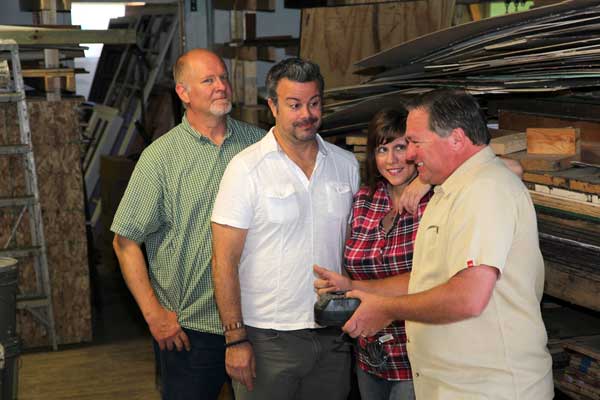
CEO Fred Okun of Sam Okun Produce, celebrating 100 years in business this month. Fred’s grandfather started the business in Toledo in 1914. Toledo Free Press photo by Aaron Geller.

The bulk of Okun’s business originally came from independent, family-owned grocers located on seemingly every Toledo neighborhood corner. As those small retail stores began to close and shoppers migrated to big box stores, Okun continued to service the smaller retail chains that remained, but also began to focus  on health care, schools, senior living communities and several local institutions.

Okun’s business started thanks to immigration and a simple letter. It was in the early 1900s when Sam Okun’s oldest sister, Fanny, came to New York from Lithuania and happened to visit Toledo. She wrote back to the entire family with the message, “Toledo seems to be a nice place to make a living and raise a family.”

That was all it took for almost the entire Okun family — Sam, his four sisters and parents (two brothers stayed behind in New York) — to move to Northwest Ohio. Sam first used a horse and cart, then eventually a truck, and to deliver produce all over in addition to operating a small market at the intersection of Spielbusch Avenue and Cherry Street. That store moved to Huron Street where the present Fifth Third Field is located.

In 1946, Okun purchased the company’s current Huron Street facility and focused solely on supplying produce; it has maintained the same location since.

The business remains well-rooted in the family, with Sam’s grandson Fred Okun as CEO, and Fred’s daughter Shelly as president. Several other siblings and relatives have played key roles in its success over the years. Okun also has nonfamily employees who have worked with them for several generations, creating an extended group with family-like ties.

“Statistics show that family-owned businesses make it to the third generation, but we’ve made it to five,” Shelly  said. “I’ve walked the same floor that all of them walked. Every day I’m in here I feel them. It’s really neat.”

Okun Produce has also achieved official WBE (Woman Business Enterprise) certification by the National Women Business Owners Corporation, which means that a woman has majority ownership and control of a business entity. In truth, though, the business has been led by the women since the beginning, as Sam’s wife Rose was a central figure in Okun’s early beginnings.

“I listen to my dad tell stories, and [Rose] didn’t have washers or dryers, or cars, or the luxuries that our generations have, yet it was a really good life for them,” Shelly said. “And they raised really happy children, who in turn raised happy children, who also raised happy children. That work ethic is in our genes. She was amazing.”

Fred Okun was also heavily influenced by various family members, and learned similar life lessons.

“I just learned different work ethics (from family),” he said. “Their ethics were above reproach. They just worked hard and taught me very good lessons. I admired them a lot.”

Okun’s allegiance to Downtown started out of necessity, but in time it became a mutual loyalty. In its infancy, Okun was reliant on trains with iced rail cars that came Downtown, as truck refrigeration wasn’t yet an option. However, by the time trucks became refrigerated, rail cars had more than doubled in size and their large capacity meant they were still the desired choice.

All this found Huron Street home to 15 wholesale produce companies in its heyday in the 1940s, a fact largely responsible for giving the Warehouse District its name.

As Okun continues to not only operate but thrive, its leadership knows the day could come where they may have to investigate a more modern facility, all in the name of space and safety.

“It’s not on one floor, so using a freight elevator is a grind, and as we get more business it’s getting more apparent that it could change someday,” Shelly said. “At this point, it’s important to maintain integrity and safety of product.  We have a third party to judge us on how we keep everything safe for the community we serve. This facility might be too expensive for us.”

Fred added, “Time will tell.”

Okun plans to celebrate with an extended family reunion dinner Oct. 10, and then a company open house Oct. 11. It’s a chance to celebrate all things good at Okun and in Toledo.

“My dad is a very loyal and consistent person in his professional life and personal life,” Shelly said. “He could never give up on Toledo. He still believes in it, and now there’s new, young people investing their time in Downtown much like my dad did. It’s a very cool story.”

Retirement Guys: Life insurance strategies start with saving

0

More than 20 years ago, a month after I turned 18, I, Nolan, got licensed to sell life insurance. I knew I wanted to get into the financial services business after my parents taught me to start investing at the early age of 12. My parents also had some friends that were in the financial services business, so I had the opportunity to job shadow them.

.

.

Mike Johnson and Mick Poncsak were my first two mentors when I joined Franklin Life Insurance. I can still remember the 100 men story. As the story goes, the average person will start to earn their first paycheck in their early 20s and their income will usually go up till retirement time. Over the course of their working career they will earn almost $1 million, even more if they have special training. What is interesting about the average person at age 65 is, only four will be well off financially. Forty-nine will struggle financially in retirement time, 22 will live in poverty, and 25 will die before retirement.

Ninety-six out of the original 100 will either be dead or dead broke. Maybe these people didn’t understand they need to have a written plan, a plan to automatically save every month.

Twenty years later, what is interesting is most of those facts, in my opinion, still apply today. The one thing that has changed over the last 20 years is the cost and strategies that are available today when incorporating life insurance into a well thought out written plan.

Term insurance can still be a great option to cover the needs for a set number of years. Costs have generally decreased and new options are available. In 1994 when I started selling life insurance it was mainly done face to face with an agent who represented one or a limited number of companies and a family. Today, independent agents, the Internet and longer life expectancy all have made insurance cheaper.  Plus, some policies now even offer terminal, critical and chronic care riders to protect policy owners while they are alive and not just benefits for others at death. I recommend in term insurance to purchase a policy that has an option to convert to a permanent policy without a new medical review in case the insured’s health changes.

Asset-based policies are another change that I have seen over the years. Do you have an emergency or rainy day fund? In a lot of cases, people we talk with say yes. When we ask what the purpose of that money is, often times we hear it is in case of an unexpected health care crisis. An asset-based longterm care policy may be a better option. Instead of just having the money in the rainy day fund, if a person who qualifies for coverage and repositions the money, it can be leveraged into tax free life insurance benefits as well as longterm care coverage.

Let me give you an example. Sara, aged 64, in good health, had $100,000 in an emergency account. If she took and repositioned $50,000 she could get three benefits. One, if she ever needed the money back, guaranteed in writing she could have all of the money back. Two, if she never needed the money and never had a health care crisis, her beneficiary will receive up to 200 percent of her deposit paid in the form of life insurance. Three, if she had a health crisis, her deposit could be leveraged up to 400 percent for long term care benefits. The amount of coverage depends upon several factors, including Sara’s health, age and type of benefits and company she selects. Yet, bottom line is her $50,000 deposit could provide substantially more benefits than her current fixed account.

Other people don’t have a lump sum money available for asset based longterm care. Thus, another option is what we call a Life Leverage Plan. This policy can provide many of the same benefits as asset-based longterm care, except instead of making a single deposit the owner usually makes payments over time, say, 10 years or over their entire lifetime. Yet, since it is insurance, their money is immediately leveraged in the event of a premature death as well as for long-term care coverage.

Our recommendation is to review insurance policies every few years. This gives the account owner the ability to review costs, like with term insurance, as well as other benefits like we mentioned with policies that include long term care coverage. Before making any changes, be sure to get educated the on the pros and cons of any recommended changes.

For more information about The Retirement Guys, tune in every Saturday at 1 p.m. on 1370 WSPD or visit www.retirementguyradio.com. Securities and Investment Advisory Services are offered through NEXT Financial Group Inc., Member FINRA / SIPC.  NEXT Financial Group, Inc. does not provide tax or legal advice.  The Retirement Guys are not an affiliate of NEXT Financial Group. The office is at 1700 Woodlands Drive, Suite 100, Maumee, OH 43537. (419) 842-0550. Insurance guarantees are based upon the claims paying ability of is insurance company.

The fall of the American dream: Jennifer Rockwood brings ‘Detroit’ to Toledo

0

Much of the human experience in the modern age is an ever-shifting landscape of our own expectations. What the average American wanted out of life decades ago — or even a few years ago — is nowhere close to what they want now.

Turning an eye on that kind of change is the sort of thing that Toledo stage director Jennifer Rockwood has been drawn to throughout her illustrious career. Her latest expression will come on Oct. 10 and 11, with a reading of Lisa D’Amour’s quirky satire “Detroit” at Studio A of the Valentine Theater.

“’Detroit’ is a play about couples’ expectations,” Rockwood said. “Couples’ expectations of the American dream. It’s about two couples who end up in the suburbs, and it’s about how today is very different from, I guess, where it used to be. And maybe we are, in our own ways, mourning the past.

From left, Jeff Albright, John DuVall, Cindy Bilby and Lane Hakel in

From left, Jeff Albright, John DuVall, Cindy Bilby and Lane Hakel in “Detroit.” Photo by Todd Grinonneau

“People used to have block parties, and hang out in the neighborhood, and Big Wheels, and now, of course, people don’t even know their neighbors. Or they may live next to their neighbors for ten or fifteen years and they may not even learn their names. So it’s about the changing world of what we see as the American dream.”

Though the show may be named after the Motor City, nothing in the play itself gives any indication of where the story of its bored and disgruntled suburbanites may be taking place. Which, of course, is part of the point, Rockwood said.

“It’s anywhere. Anywhere on the outside of a downtown, where people — the dream used to be to have a home, to own a home and live in the suburbs, and a nice car, and raise your family and go to the right schools. And people can’t do that anymore —the economy is wrecked, and people are under water, and the ability for us to communicate with our neighbors, and the idea that we are not friends and have block parties and those kind of things is kind of gone.”

This reading of D’Amour’s play — a Pulitzer Prize finalist for Drama in 2011 — fits right in with the canon of material Rockwood has made her own in the city for years. The area’s avid theatergoers have long become accustomed to the director’s affinity for works that are both seeing and humorous — finding the funny side of issues, but with a sting in the tail.

“Those are the kind of plays I like. I like to take serious issues — I mean, laugh, get the audience to laugh, and think about serious issues. While you’re laughing, on the inside you’re going, ‘Oh, God. You know, this is true.’ Or laughing at something that’s really sad. I’m watching the death of something that used to be an important part of America.”

Putting “Detroit” onstage is another passion project in a career littered with them for Rockwood. She jokes about how it often seems her muse has a pattern — discovering a work, becoming obsessed with a work, sharing it with others and, finally, a pressing need to bring a production of it to life.

“I was passing this play around a year ago, telling people that I want to do it. Maybe even longer than that. And that’s what I do — I glom onto a few different plays.

“I find these plays, and I just start passing them around to actors and passing them around to friends and saying, ‘Don’t you think these are great? Tell me what you think about this.’ So some of these people, even though they weren’t cast yet, were on board and liked the play, when I was passing it around a year ago.”

It helps that Rockwood has a core of actors that she has worked with regularly and is comfortable sharing the creative process with. “I like to work with small casts. There’s a joke that big casts are like herding cats,” she said.

“I have a sort of small ensemble that I’ve worked with for quite a while. I have the actors that I like to work with, and they’ve worked with each other before. And we sort of speak the same language. They know how I direct, and I don’t have to use too many words to get them to do something.”

Rockwood has more projects in the months to come — in addition to more directorial work, she’s been focused a lot more on writing in recent days, working on a few plays of her own. Theater may be ephemeral — much like life — but the emotions it can generate live on well after the curtain falls.

“I don’t want to lecture to people. I mean, a lot of plays do lecture to the audience. But I don’t want that — I prefer to make people laugh a lot, and then afterwards, maybe see something a little differently, or maybe understand the human condition a little different.”

Baumhower: Dear Sergio

0

Dear Sergio,

Chrysler’s Jeep Wrangler and I have a lot in common.

The Wrangler and I are both the product of hardworking parents who sacrificed for our future.

  .

.

We were both born and made in Toledo, Ohio. We’re from the same streets and neighborhood. We know the same people, some of whom were made in a Jeep.

We are both driven by family. While I’d do anything to protect the well-being of my loved ones, the Wrangler makes sure their safety is its first priority. As parents, we love to brag about how awesome our kids are — the back window of the Jeep have become a favorite place for us to boast about our children’s activities.

The Jeep Wrangler and myself are built for all seasons — we’re not scared by the cold in the Winter and we’re not afraid to take our top off in the Summer.

We know how to work and we know how to have a good time.

We are both hardworking, never afraid to get dirty or to help a friend in need. We both tend to be pretty low maintenance– just occasionally needing some refreshing fluids, maybe a little romp here or there to keep our engines running and our spirits up. We both like to park and we both enjoy getting some action.

We are loyal. We take care of those who take care of us.

Jeeps have been made and owned by numerous generations of families. Our grandparents made them during World War II. Our parents made them while they were being showcased on “M*A*S*H.” We’ve been manufacturing them ever since … through 9/11 and the bailout — good times and bad. We have put Jeeps on the road and Jeeps have been putting food on our table and children through college.

Our parents bought us our first Jeep — as we find a way to buy one for our children. It’s not a business relationship; we’re family. We share the same blood.

I know you are thinking about changing the body of future Wranglers to the lighter aluminum — we can relate, our wives have been wanting us to get in better, lighter shape for a long time. However, if you choose to move the production of the Jeep Wrangler, our brother, to anyplace other than its home– you are ripping out not only its very heart and soul, but the hearts and souls of its family.

We have been through a lot together, but we have always been there for each other.

Please keep our family together.

With Love, a Toledoan

Email columnist Jeremy Baumhower at [email protected].

Miller: Goodbye, farewell and amen

0

Few experiences foster sentiment like an unexpected goodbye, but as I leave Toledo Free Press — and Toledo — the past few weeks have paradoxically blessed me with great clarity.

Orson Welles once said that a movie set was the best train set a boy ever had; having contributed to the creation, ascension and maintenance of Toledo Free Press for nearly 10 years, I would contradict him and suggest a community newspaper is an even better mental laboratory, war room and playground.

.

.

When Tom Pounds contacted me in early 2005 with his idea for a weekly newspaper aimed at being a community partner, I hesitated. I was uncertain if I wanted to leave the security of my News Editor gig at The Daily Telegram in Adrian. Pounds convinced me he would provide the resources and allow me to build a newspaper from scratch, an opportunity I could not resist.

Ten years later, Pounds has never broken his promise to allow me to guide Toledo Free Press content. That does not mean we are not collaborators in strategy and business, but it does mean that if you like, love or hate what Toledo Free Press is, you like, love or hate my singular vision for what a newspaper can be in a community. Like Welles tinkering with cameras and film, I have utilized words and images to forge a publication that strives to be a good neighbor and community partner, but also a watchdog and critic. That may seem like a dichotomy, but both roles stem from love for the people and spirit of Toledo.

While I owe Pounds my gratitude for the opportunity to create this news voice — winner of five consecutive Society of Professional Journalists Best Weekly Newspaper in Ohio awards — my greater debt is to the readers who patiently watched as Toledo Free Press evolved. For more than 500 weeks, many of you met me here to read about life in and around the Glass City, then turned the pages to absorb my vision for news, arts and business coverage.

We have been particularly close on this page. You have allowed me not only to rebuke the Carty Finkbeiners, Larry Sykeses and Jon Stainbrooks of our region (although fortunately there is only one of each of those villains), but to walk with you on some intimate journeys. When Toledo Free Press launched, I was married but did not have children; we now have two amazing sons, and as I have chronicled Evan and Sean’s growing pains, you have helped me understand that no matter how personal an experience may be, it is almost always also universal.

You were also patient and encouraging as I wrote about my weight gain and loss issues. As I ballooned to more than 400 pounds and then chose a bariatric surgery that brought me back down to 200, you listened. Many of you actively cheered me on, which was tremendously motivating. Some of you embarked on similar journeys, which was even more motivating. A few of you were mystifyingly nasty about it, which I found to be the most motivating of all.

There have been some great partners who made this journey possible. Pounds, of course, and charter employees Renee Bergmooser and Pam Burson. I have also been blessed to work with some incredible journalists — Brandi Barhite, Vicki L. Kroll, Justin Kalmes, Kristen Criswell, James A. Molnar, Don Lee, Matt Zapotosky, Duane Ramsey, Jeff McGinnis and Sarah Ottney, to name just a very few among many.

I have watched with admiration and amusement as two particular people who are not trained journalists have revolutionized Toledo media — Lisa Renee Ward and Jeremy Baumhower may not have degrees in communications, but I would work with them over many of the more established media figures in our market. Ward and Baumhower represent a new age of media, and those who ignore their contributions do so at their own continued ignorance.

There have also been people who played various roles in Toledo Free Press philanthropy projects — Chris Kozak, Chrys Peterson, Ellie

McManus, Eric Slough, Tim Yenrick, Amanda Aldrich, Lauren O’Neill, Rachel Richardson, Julie Malkin, Rob Armstrong, Jim Murray, George Sarantou, Sam Melden, Will Lucas, Kelly Fritz Garrow, Kyle Grefe, Bill Kitson, Lexi Staples, Larry Meyer, Rick Cornett, Justin Moor, Jennifer Rockwood, Ken Leslie, Becca Gorman and a score of others. It is through these people that Toledo Free Press was allowed to play a role in such legacy projects as our annual CDs, Toledo Pride, Restaurant Week Toledo, Jam City, Holiday with Heart, TEDx Toledo and many other philanthropic events.

The CD projects have allowed me to become friends — or at least friendly — with some of the most talented people in Toledo. Kerry Patrick Clark, Eddie Boggs, Jeff Stewart, Kyle White, Alyson Stoner, Crystal Bowersox, Ramona Collins, Pat Dailey, Mighty Wyte, Chris Stoll and so many other amazing talents.

All of these people give because they understand the larger community needs people who give. These are people with inner lights so bright, they lead the way for those of us with far less talent and heart. I love these people for fighting for those who can’t fight, and for inspiring action over surrender.

These Toledoans are especially important to me because I have also had to battle a number of absolute creeps and cowards who seek only personal advancement at the expense of the greater community. There are corrupt elected officials, wicked and greedy leeches in the business community, incompetent pay-for-play media practitioners, Judas betrayers, car dealers who prey on economically challenged customers but don’t pay their own bills, weak-willed academics, spineless news anchors and gutter-dwelling errand boys who contribute to the attitudes that rot this great city at its core. There are people walking among us so warped by their own ambition and hypocrisy that their souls are hopelessly smothered under spider webs of lies and delusion.

I have always tried to be honest with you, so I am obligated to tell you that I have become something I have always claimed to loathe. I have long lamented that Toledoans often chose comfort over ambition. Our people cling to a substandard status quo rather than take risks today that could lead to a better tomorrow for all of us. The rejection of Mike Bell’s ambitious and progressive agenda is only the most recent example of this attitude. I am disappointed to realize that I have fallen into this behavior in my job at Toledo Free Press. I have cleared a path, and find myself circling back over it again and again rather than seeking more challenging terrain. I have chosen comfort over ambition, the sin I identify as Toledo’s greatest failing. I am startled to realize that I could coast in this job for as long as I could channel work to others and rest on the laurels of successful projects.

But choices like that lead to the corruption that has enveloped so many prominent Toledoans and inhibits Toledo’s growth and prosperity. I need to shake up my professional life so I may contribute in new and greater ways. That opportunity has arisen as a result of a major career move my wife is making. She has been offered a fantastic role in her art therapy field, one that will take our family to the Cleveland area. I am blessed to have also found an opportunity that offers new challenges and a chance to make a difference — as Director of News and Community Content for United Way of Greater Cleveland. I am excited to begin there even as I am sad to leave here.

It feels like a heart-rending breakup.

It’s not you, Toledo, it’s me.

I hope you will understand, as you have so generously understood my previous choices.

I hate to let go of your hand. I am scared to leave your company. I am going to miss you and I will ache for your friendship.

But I refuse to calcify. I refuse to allow a lowest-common-denominator attitude to define my life. I refuse to become complacent and be part of the problem.

I will always sing of you, Toledo. I will always brag about you. I will always take solace in our time together. I will always be in your debt and I will always love you.

Goodbye. Farewell. Amen.

Michael S. Miller has been Toledo Free Press Editor in Chief since its inception in January 2005.

Ottney: Let’s rock and roll

0
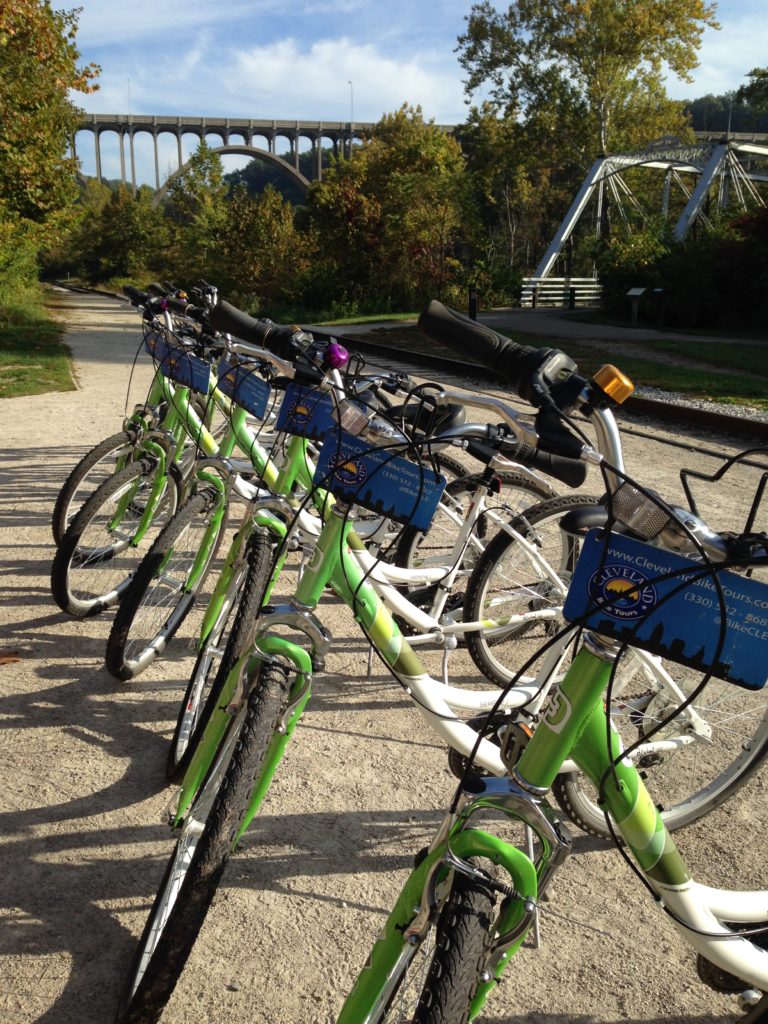
RENTAL BIKES ON THE TOWPATH TRAIL IN CUYAHOGA VALLEY NATIONAL PARK NEAR CLEVELAND.

Cleveland rocks.

I already knew that from the many concerts I’ve attended, since they’re just about the only reasonI’ve ever gone to Cleveland. But it also rolls.

I visited Northeast Ohio this past weekend along with Toledo Free Press Editor in Chief Michael S. Miller to dig into a weekend of “urban outdoors” activities organized by Positively Cleveland, the city’s tourism and convention bureau. Our group of mainly travel writers hailed from as far as Toronto, New York City and Denver as well as elsewhere in Ohio.

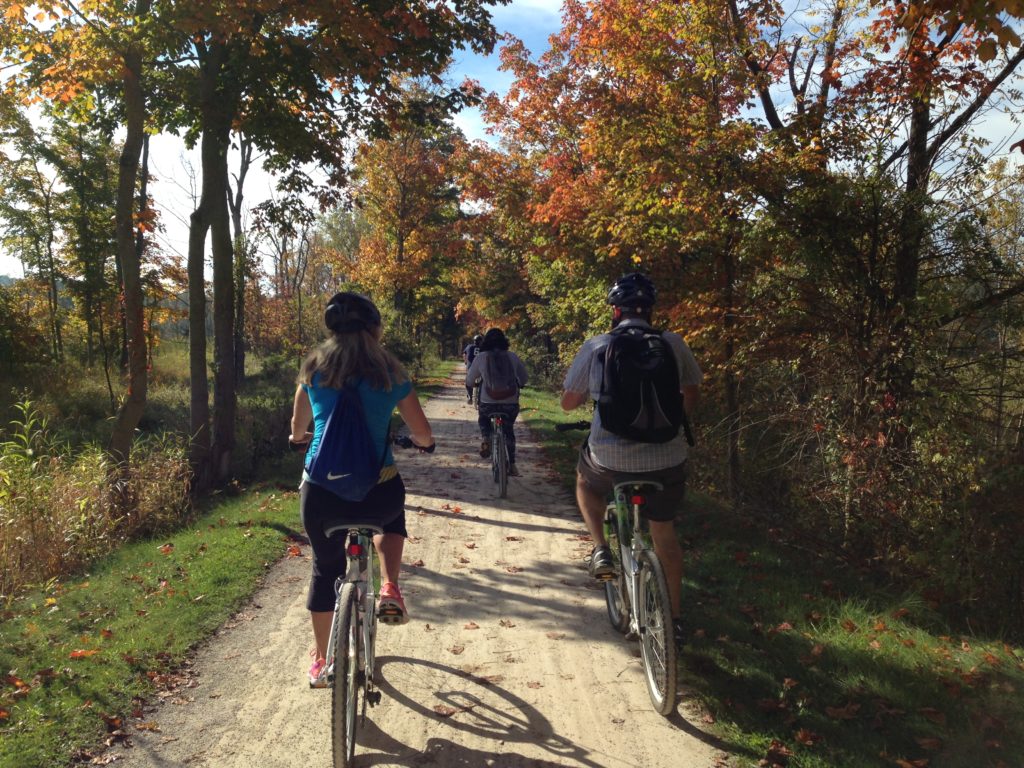
I logged more miles on a bicycle than I have in years, including a ride on the Ohio & Erie Canal Towpath Trail through Cuyahoga Valley National Park, on painted “trails” winding through a massive mountain bike park built inside a former factory and an amazing night ride with 1,500 other cyclists on the Cleveland Memorial Shoreway highway, from Edgewater Park to the Rock and Roll Hall of Fame and back. Kayaking, birdwatching and outdoor yoga were also on the agenda.

Cleveland, like Toledo, is a Rust Belt city shaped by its blue-collar, industrial past. But, like Toledo, it also features a vibrant art scene, creative culinary scene, lots of green space and plenty of pride.

Clevelanders have heard all the jokes — about the river that caught on fire, the losing sports teams, “At Least We’re Not Detroit” — but you have to respect those who embrace the mockery and turn it on its head. People make fun of your burning river? Name a beer after it. Name a festival after it. Name a roller derby team after it. Better yet, name a foundation dedicated to improving and maintaining said river after it. Own it.

I heard a lot of other R words this weekend: Renaissance. Revival. Rebirth. Revitalization. Renovation. Rejuvenation. Resilience.

Positively Cleveland’s research shows a huge gap between the positive experiences of those who have visited the city and the negative perceptions of those who have not, the organization’s president and CEO David Gilbert recently told cleveland. com. The same could be said of Toledo.

Cleveland’s Ohio City — recently pegged by USA Today as an up-andcoming neighborhood — is known for its food and breweries. In 2011 it was named as one of the world’s best bar hopping destinations, listed alongside places like Dublin, Brooklyn and Portland.

Many young people I talked to said they moved back “to be part of the renaissance.” They saw something happening they didn’t want to miss out on.

“Cleveland’s like the Brooklyn of the Midwest. There’s an artisan hipster kind of renaissance,” said Mandi Kotynski, marketing coordinator for several Ohio City breweries, including Nano Brew Cleveland, an experimental single-barrel brew house that features a new beer each week. “With lots of breweries [in Ohio City], you’d think it’d be competition, but there’s a sense of community and working together to build Cleveland up.”

Nick VanDemark, 27, of the Greater Cleveland Sports Commission said he’s amazed at the changes in the four years since he moved back to Northeast Ohio.

“People will hate it until they are here. Then they love it,” VanDemark said. “Two years ago, even the locals would be negative about Cleveland. Now they are proud and trying to get you to come here. It’s like, ‘Make your joke. You don’t know what you’re talking about.’”

Biking is also a big part of the new Cleveland. A privately funded bikeshare pilot program launched earlier this month through Zagster with 34 bikes in six locations in Ohio City. The bikes are accessed for a hourly rate via a free app, which supplies a code to unlock a bike. Cleveland’s initiative is the company’s first fully public rental system.

Ray’s Indoor Bike Park was jawdropping. It’s 140,000 square feet of ramps, trails and foam pits constructed inside an old factory building, remodeled each season to keep things fresh.

BIKING THE TOWPATH TRAIL IN CUYAHOGA VALLEY NATIONAL PARK.

Another innovative idea is Merwin’s Wharf, a restaurant owned, operated and staffed by Cleveland Metroparks employees with all proceeds benefiting the Metroparks. A special brew, Fat Head’s Brewery’s Trail Head Pale Ale, is sold throughout the region to fund upkeep on the trails. The restaurant, which opened this summer overlooking the river, was bustling during our visit.

Cleveland’s Metroparks, known as the Emerald Necklace, includes 18 park reservations spanning nearly 23,000 acres, including eight golf courses and a zoo. It drew 16 million visitors last year.

Nearby Cuyahoga Valley National Park features the Cuyahoga Valley Scenic Railroad, running year-round between Independence and Akron. The railroad offers a discount for bicyclists and well as craft beer and wine rides and a “Polar Express” ride for kids each winter.

Toronto-based “adventure blogger” Red Hunt of Red Hunt Travel enjoyed Cleveland’s “community vibe.”

“Whether it was bike co-ops or programs through Cleveland Metroparks, there was a feel-good, educational vibe to enjoying and exploring the great outdoors in the city,” he said.

Denver-based travel blogger Carri Wilbanks of Catch Carri came away with the impression Cleveland was “a city on the rise.”

“I am so impressed by a collaborative effort to create community,” she said.

The city hosted the Gay Games this summer — Paris will host the next one — and was selected to host the Republican National Convention in 2016. Plus, “King James” is back and Johnny Manziel’s in town.

“I feel like everything’s ramping up,” said Erin Fox, 27, who grew up in Northeast Ohio and works in social media for CBS Radio in Cleveland. “You need infrastructure for events like that. We’re a big city that used to be huge, so we have all those pieces. We just need to freshen them up. All the pieces are in place and we’re running on all cylinders.”

I don’t know how our Positively Cleveland hosts arranged for the absolutely perfect fall weather — leaves just starting to turn, birds chirping, sun shining amid the whir of pedals, the occasional squeal of a brake pedal and the soft wooden clatter of boardwalks under the tires — that lasted all weekend, but I know I’ll think back on it fondly as we move into winter.

Positively Cleveland likes to say: “If you don’t like what people are saying, change the conversation.”

Call to action: #ThisIsCLE.

Sarah Ottney is managing editor of Toledo Free Press. She can be reached at [email protected]. Visit Facebook.com/ToledoFreePress to see more photos from the trip.

Ottney named ‘20 Under 40’ winner

0

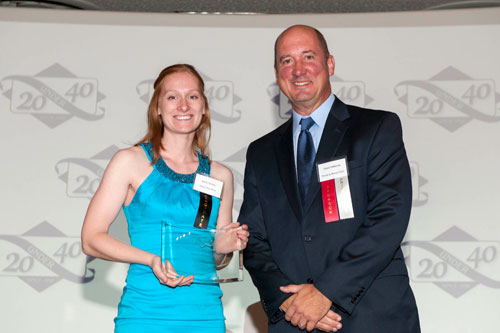
Sarah Ottney, newly appointed Editor in Chief for Toledo Free Press, received a 2014 20 Under 40 Leadership Recognition Award on Sept. 30 at the annual 20 Under 40 awards ceremony.  She was selected from a field of 115 candidates.

Sarah Ottney was named a 20 Under 40 winner at a Sept. 30 ceremony. Photo by Ted Bacho

Sarah Ottney was named a 20 Under 40 winner at a Sept. 30 ceremony. Photo by Ted Bacho

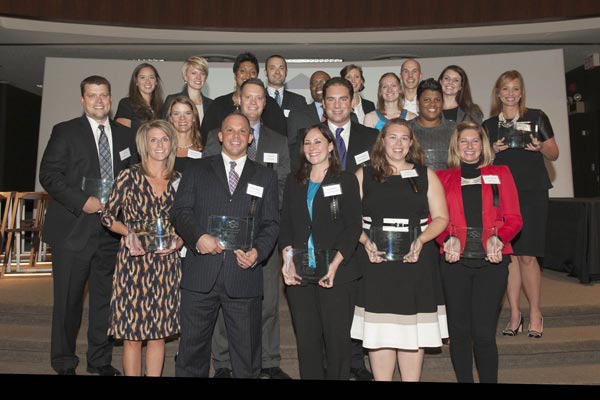
This 19th annual event showcased young leaders in Northwest Ohio and southeast Michigan under the age of 40. An independent panel of judges selected 20 candidates for recognition. The 20 Under 40 program focuses on individuals younger than 40 who have distinguished themselves in their career and/or in the community.

It is intended that the program will further motivate young leaders in our area. Since 1996, 380 young community leaders have been recognized through the 20 Under 40 program.

Ottney was nominated by Dave Schlaudecker of Leadership Toledo and Chris Kozak of Columbia Gas of Ohio.

The group of 2014 20 Under 40 Toledo winners. Photo by Ted Bacho

The group of 2014 20 Under 40 Toledo winners. Photo by Ted Bacho


Lott Industries expanding into food service industry

0

By Michele Jurek, Toledo Free Press Staff Writer

After 58 years, Lott Industries is expanding into the food service industry. Lott employs individuals with developmental disabilities and is affiliated with the Lucas County Board of Developmental Disabilities (LCBDD). Nearly 500 people currently work at its two facilities on Hill Avenue in Toledo and Holland Road in Maumee. The nonprofit also trains employees to work on site at businesses throughout the community. Over the years, Lott has placed thousands of workers into jobs in the community in a variety of industries.

Lott Industries Chief Operating Officer Dan Clemens, center, with Pat Howard and Angela LaPlante at Lott Industries’ kitchen. Toledo Free Press photo by Christie Materni

Its building on Hill Avenue has a kitchen that was originally built as a training center, but Lott employees were too busy working with Ford and other businesses to use the kitchen for training. Instead,  it has been used as a regular kitchen by an outside vendor who comes in to prepare lunch for the employees. But in October, Lott will begin training some of its employees to prepare and serve lunch to other employees.

“Our goal is to be more of a training facility where we teach individuals different jobs to build their skill sets so we can hopefully find them a job in the community,” said Tim Menke, Lott Industries’ sales manager. “With the kitchen, we will be training people in things like food preparation, cleaning, doing dishes — everything they would need to know to work at a restaurant so they can be placed there.”

Lott has hired a consultant to guide it through the licensing and nutrition aspects and a kitchen manager to oversee the business side of this venture. It is also bringing in habilitation coordinators from the Lucas County Board of Developmental Disabilities to train personnel.

“The kitchen was built and opened a decade ago with the intent of training our individuals in the food services,” said Dan Clemens, chief operating officer of Lott Industries. “In-sourcing the entire operation to combine the recently hired Lott food experts with the current LCBDD staff that successfully trains individuals every day at Lott Industries will guarantee success.”

Eventually the food service training will branch out to feed outside guests. Lott hosts some community events and small conventions at its facilities, and they would like to train employees to serve the people that attend these events.

“We are very excited to initially offer nutritious meals at a competitive price to both our staff and individuals,” Clemens said. “In the near future, we are hoping to increase our food services to the other Lucas County Board of DD facilities, which will allow us to train and employ even more individuals. Eventually, Lott Industries will be ready to maximize the capacity at the Hill facility kitchen, providing food to local charter schools or boxed lunches at local conferences/venues. Our discussions over the last year with local business leaders and community leaders have been met with optimism. The continuing needs of the community and the mission of Lott Industries will provide a viable future for the individuals that we serve while providing a valuable service to the community.”

Another recent endeavor is Lott’s partnership with Mobile Meals of Toledo. Employees pack weekend lunch bags for students in six Toledo Public Schools and two Toledo Catholic Diocese schools. Mobile Meals has been preparing healthy weekend food packages for these schools for several years, and now Lott Industries is providing the employees to pack the meals. Lott already packs shelf-stable meals for school systems in California and Arizona, so employees had prior experience in this area.

Lott is also beginning a partnership with Sustainable Local Foods, which utilizes science and technology to grow produce in hydroponic indoor gardens 365 days a year. Hydroponic gardens grow plants in a stream of nutrients and water, but without soil, and it’s called hydroponics.

Lott will start by sending 34 employees to work at Erie Street Market from there Sustainable Foods is harvesting, and they will help with the cleaning and sanitizing of the hydroponic planting channels.

The next step will be for Lott employees to grow basil in a nursery-type setting inside the Hill Avenue facility; where Sustainable Local Foods will harvest, pack and send it to local stores to be sold. Within the next 30 days, Lott’s goal is to have Sustainable Local Foods construct a 30-foot by 80-foot hoop house, which is similar to a greenhouse but not quite as hot, on the Hill Avenue property to begin growing lettuce and other vegetables.

After they learn the system, Lott will probably buy its own hoop house and eventually grow vegetables to be used in its own kitchen. These initiatives will help create more local jobs and bring more healthy foods into local markets.

For most of its existence, Lott Industries has worked in light assembly and document destruction, and until 2008 was also heavily involved with the Ford Motor Co. When the economy took a downward turn, hitting the auto industry hard, the Maumee Stamping Plant one of the larger plants Lott Industries worked with, was forced to close.

About 80 percent of Lott’s revenue at the time came was from the auto industry, so the facility had to reinvent itself in 2008. It began partnering with a variety of other businesses in the community to offer services to increase their productivity and profits.

Some of the diverse employment opportunities Lott Industries has taken on over the past few years include sorting hangers for Aramark, making traffic barrels, cones and signs for the construction industry, sorting cardboard for United Container Corporation, sorting pallets for Pepsi, assembling packaging for the pharmaceutical industry, assembling garage door parts for Service Spring Corporation, labeling and sorting fertilizer and lawn care products for The Andersons and many other services for a variety of industries.

Lott Industries continues to look for new businesses to partner with in order  to find more jobs in the community for individuals with disabilities.

Branching out into the food preparation and service industry and partnering with other food providers allows Lott to create more jobs and to benefit the community.

For more information, visit www.lottindustries.com.

Eastwood Theater open for $5 movie screenings

0

The Eastwood Theater is screening movies again.

Josh Harnegie, Toledo Free Press photo by Matt Liasse

The announcement was made via Facebook on Sept. 18, a post shared and commented on more than 200 times. Josh Harnegie, the theater’s outreach coordinator and one of the people behind the opening, was impressed by the excitement.

“It had as many shares as it had likes within the span of 20-something hours,” he said. “Personally, I’ve never seen anything like that.”

The opening provides a safe entertainment option for the surrounding communities, Harnegie said.

“A lot of people, in my research, don’t really cross the bridge to go to Franklin Park,” he said. “It’s not that far away but it might as well be on the other side of the world.”

Framed articles from 1921 hang in the front lobby detailing the theater’s early history. The Eastwood Theater shuffled between different owners and churches over the years, once showing pornography only. The theater is currently shared with Cornerstone Church, which holds services there.

Toledo Free Press photo by Matt Liasse

“I didn’t really understand the rich history of East Toledo until I started looking into the project,” he said.

The theater has been renovated and repainted. Upgrading a single-screen theater like the Eastwood Theater can cost anywhere from $130,000 to $500,000 — “quite a significant investment,” Harnegie said.

Of the many renovations, the ticket window in the front was kept even though it probably won’t be used.

“We wanted to keep that old-time feel without making it historic,” he said.

Able to seat 342 people, Harnegie hopes to sponsor additional events like political debates at the venue, or to rent to local charter schools without access to an auditorium. The venue is currently having a “soft open” with weekend showings for “Maleficent” and “Transformers: Age of Extinction.” All showings cost $5.

Weekday showings will eventually be added for family-friendly films and blockbusters, Harnegie said.  A grand opening is also being planned and will take place within the next couple weeks.

The theater is at 817 E. Broadway St. For more information, call (419) 720-5199 or visit eastwoodtheater.com.