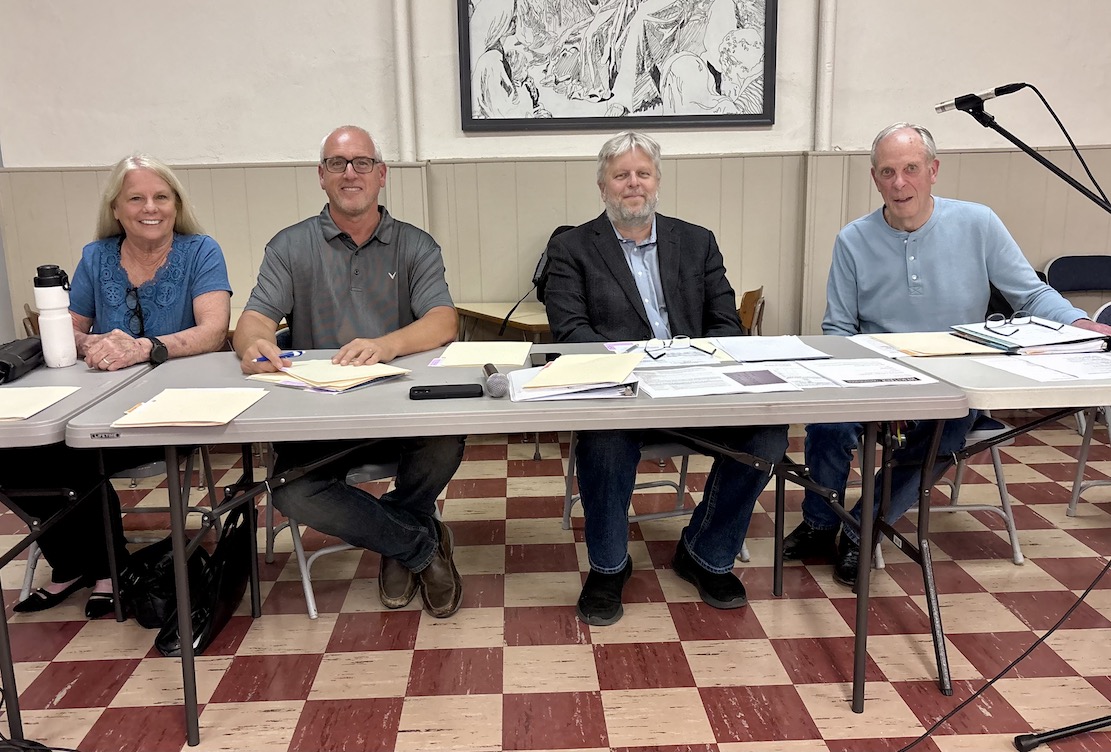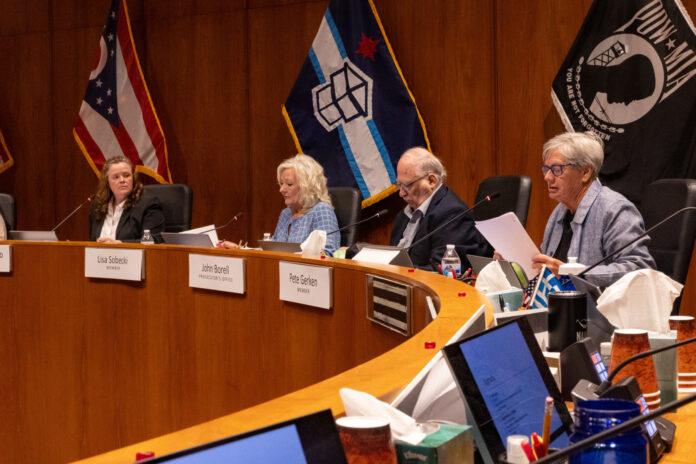
TOLEDO – Pressure continued to mount on Lucas County Treasurer Lindsay Webb over the roughly $5 million investment the county has in Israel bonds during the county’s latest Investment Advisory Committee (IAC) meeting on Friday, May 22.
Since the IAC meeting on Aug. 22, 2025, during which the IAC gave guidance to Webb to divest from Israel bonds, Pro-Palestine protesters have shown up to make their voices heard.
Protesters demanded Webb invest the 1 percent of county funds – $5 million, invested in Israel – elsewhere, but no action will take place until the bond reaches maturation in Dec. 2026.
Over the past three IAC meetings, Pro-Palestine protesters have clearly made the treasurer and members of the IAC uncomfortable, without significantly delaying the procession of the meetings or inhibiting their functions.
Regardless, a number of county sheriff officers were on hand at the meeting, yet the biggest delays were caused by elected officials, to the chagrin of those who would have expedited the formality of the IAC meeting itself.
Dave Yost’s opinion
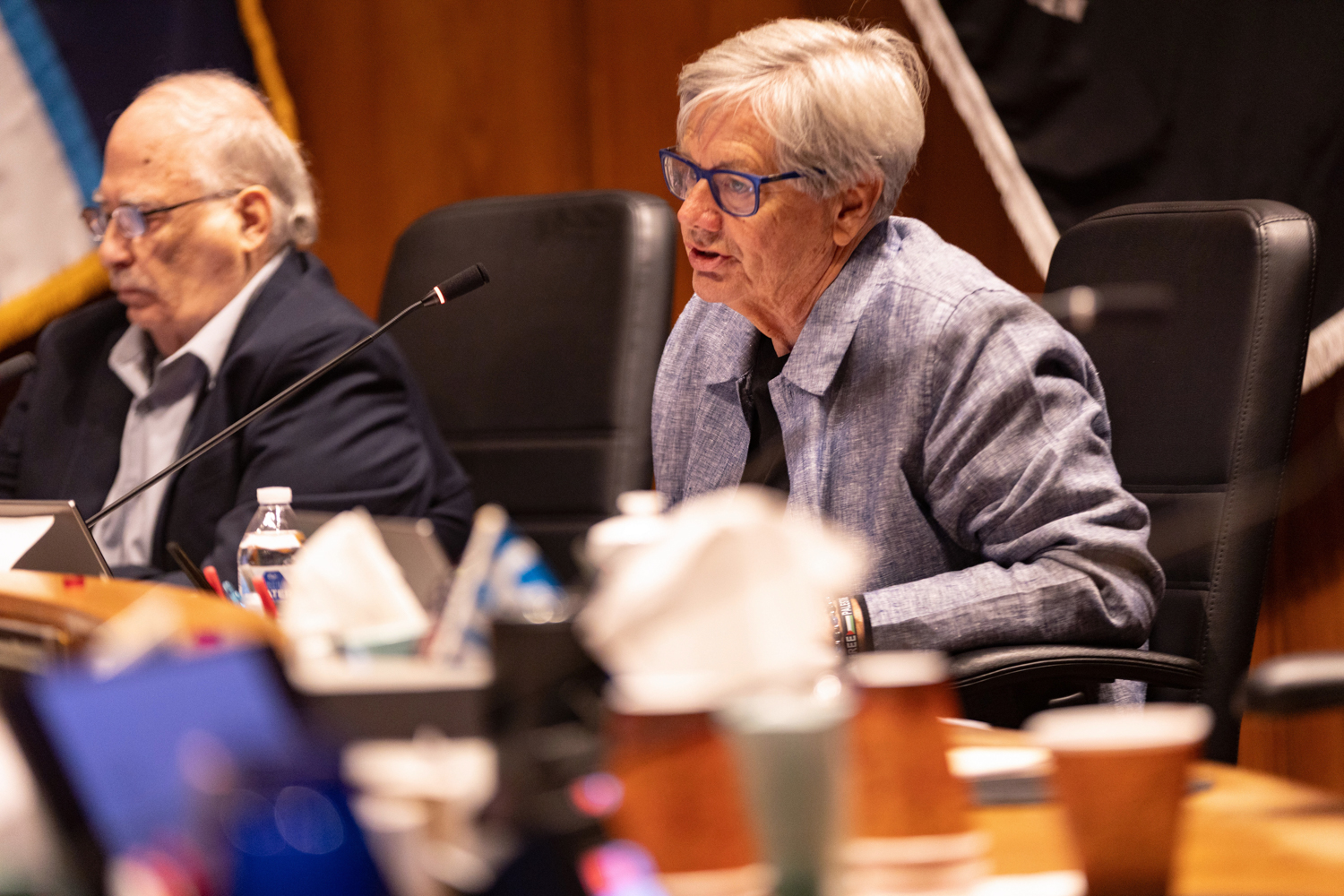
The 11 a.m. meeting dragged on for almost two hours because of an arduous back and forth between Commissioner Pete Gerken, Treasurer Webb and Commissioner Anita Lopez.
Much of the discourse between public officials was dominated by how Ohio Attorney General (AG) Dave Yost’s opinion, given on May 8, should be considered.
Yost’s 14-page opinion was requested to understand more about the legality of divesting from Israel after the IAC advised the treasurer to do so back in August.
Four main points emerged from the AG’s opinion, and foremost is that, “the county cannot make investment decisions ‘with the primary purpose of influencing any environmental, social, personal, or ideological policy.’ R.C. 135.35(O).”
Also highlighted by the AG was that the treasurer and IAC must “‘…ensure the best and safest return of funds.’ R.C. 135.341(C);” with their investments of county money.
Consequently the AG stated that the treasurer or investment power could not be stripped from Webb for her unwillingness to follow “unlawful” or “Ultra Vires” policy.
And finally, Yost cited the anti-boycott law in the Ohio Revised Code (ORC) 9.76, as it pertains to a state agency contracting with a company that actively has a policy of boycotting Israel.
Statutes: what do they mean?
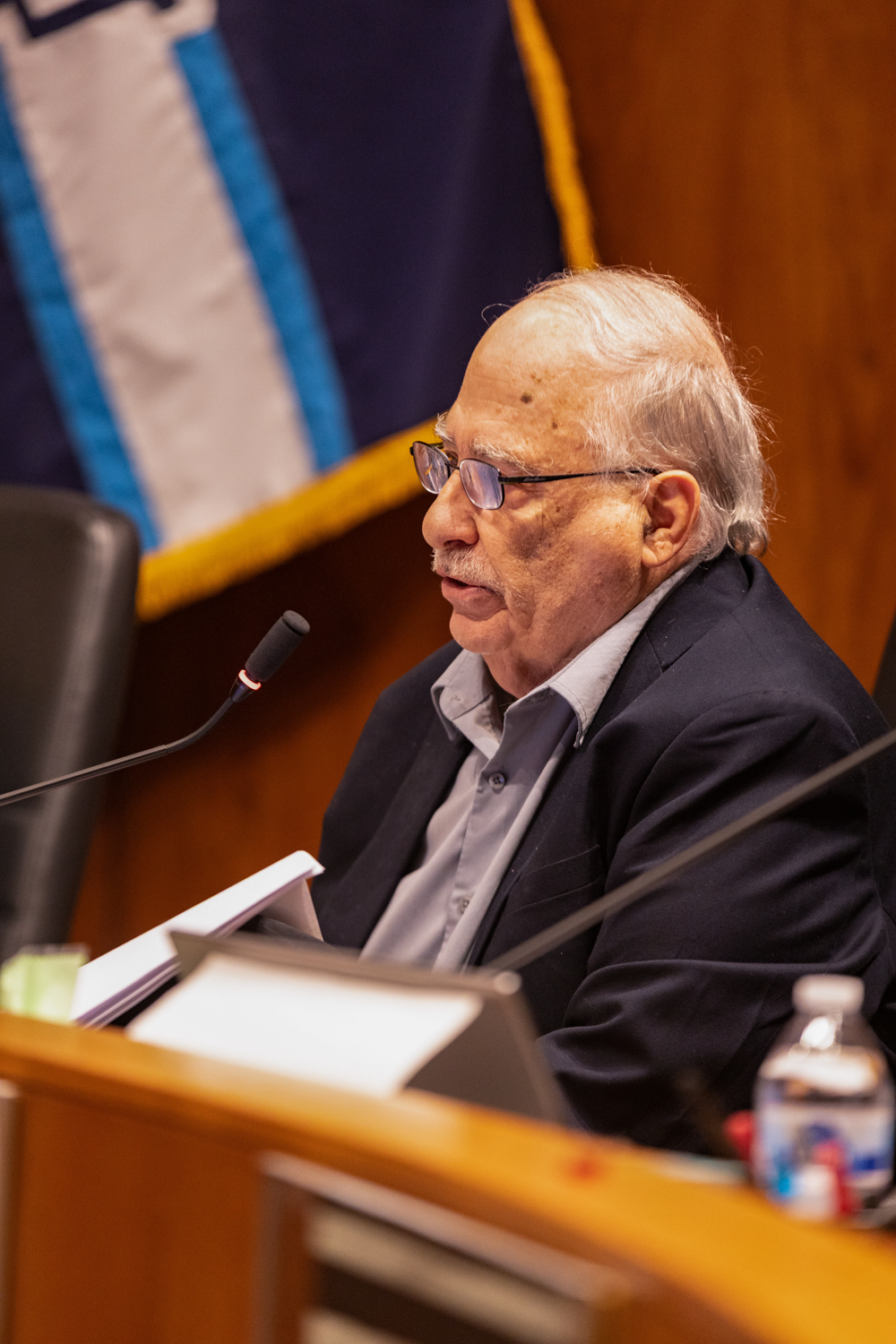
Treasurer Webb asked Assistant Prosecutor John Borell of the Lucas County Prosecutor’s Office to interpret Yost’s opinion. Borell replied that “noneconomic” factors could not guide the investment decision.
“Once again, that’s not David Yost’s opinion; he just quoted a statute,” Borell said, and told the IAC that this was part of a long tradition, going back at least four decades, of AG’s upholding this statute about investments.
Nothing explicitly advised the treasurer or committee to invest or not invest in Israel bonds, implying it may be lawful to do either, depending on the circumstances.
Borell explicitly disagreed with Yost on the final point dealing with the boycott, which he called “a red herring” and a “stretch” to claim the county as a “state agency.”
In the context of the county’s ability to invest its funds, Borell said the main guiding principle should be the viability of the financial investment, instead of minding a boycott law. He pointed to “safety, liquidity and yield” as longstanding investment determinants according to Ohio law.
“You don’t focus on what you can’t do; You focus on the three factors that the treasurer must use when determining an investment,” Borell said. “The boycott statute has always been to me a red herring, it’s never been a regulatory issue.”
Public comment
Preceding Borell’s assessment were five speakers from the Pro-Palestine camp, who were chosen at random by Webb and the Secretary of the IAC, Kaley Hall, to speak for three minutes each.
The random choices for comment did not change the viewpoint, because none in attendance were in opposition to the Pro-Palestine stance.
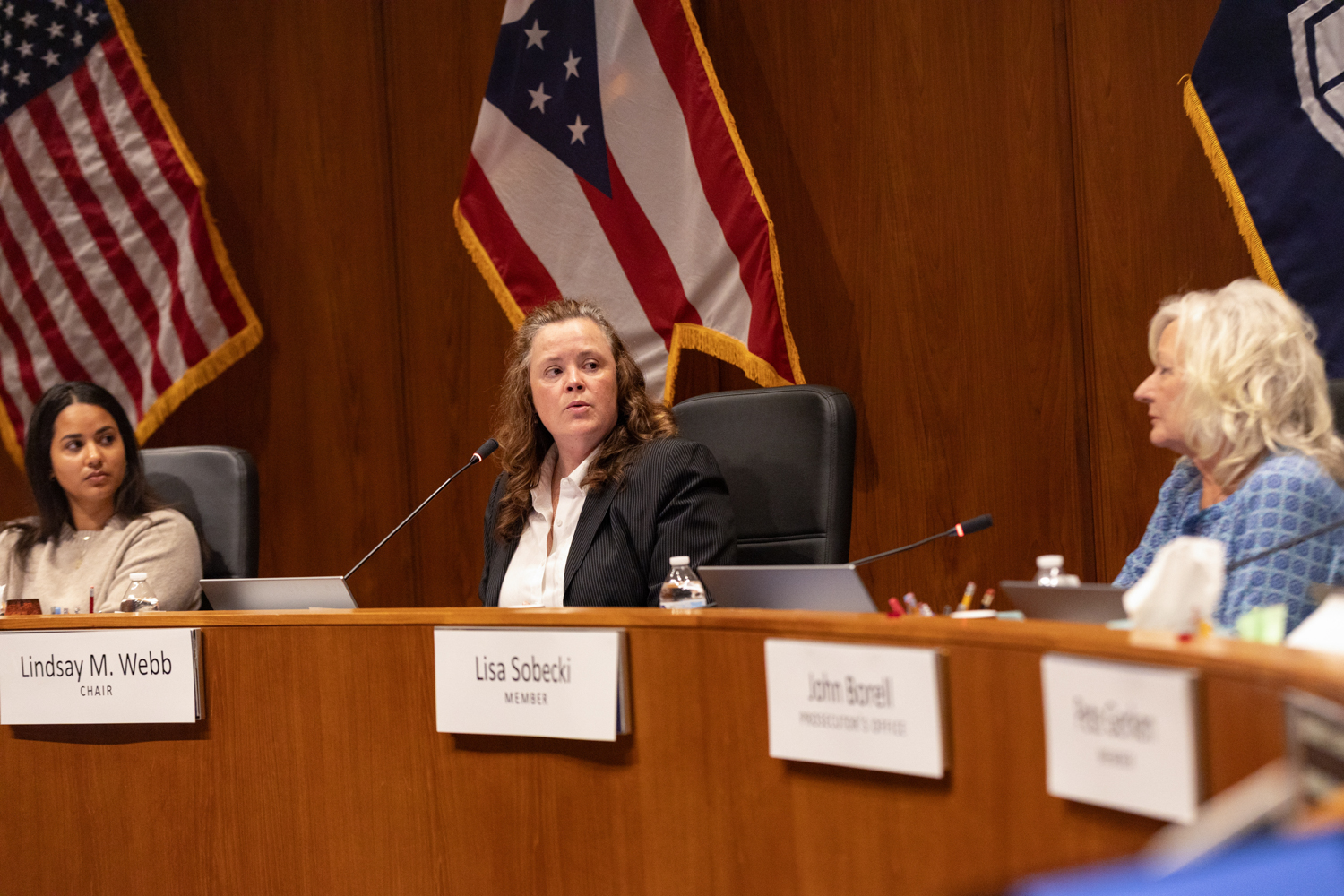
Patrick E. from the Northwest Ohio Democratic Socialists of America gave an incredibly brief comment, and said the county’s funds should be used for the community and not for “bombing civilians.”
Investment in the northwest Ohio community, rather than in a foreign country, seemed to be a strong through-line for all five speakers, including Selah Carter, who spoke about rising affordability costs, job options and homelessness, including their own experience with homelessness.
“Reinvesting $5 million into this foreign entity that is committing genocide and war crimes is not the best nor safest return available to Lucas County, especially in a time where SNAP and WIC benefits and housing resources and vouchers are not supported to the extent that they need to be,” said Nora Riggs.

A notable climax was reached during public comment with the fourth individual. “My name is Mike Stram. I am a Jewish resident of Toledo who proudly stands with the Palestinian people in their fight against ethnic cleansing and genocide. There is nothing apolitical about forcing the members of this community to pay for the wholesale slaughter of their family members.”
Then Stram talked about how history would look on people who did nothing to stop what is happening in Gaza, and how the decision to invest or not invest in Israel is inescapably political, regardless of the choice.
Stram called into question the financial viability of investing in Israel, and how the instability and war in the country had affected Israel’s economics. Most notably, Moody’s Investor Service downgraded Israel’s credit ranking from an A1 to A2 following Oct. 7, 2023, and Israel’s ranking was “Baa1 with a negative outlook,” in mid 2025.
Israel’s economy has been impacted negatively by the instability in the region, creating a high deficit due to military spending, and has increased volatility in its market, downgrading the credit ranking due to multiple conflicts and uncertainty.
Economists expect Israel to rebound with a 2-4.5 percent GDP growth for the next two years, with the main concern being escalations with the war with Iran destabilizing or destroying Israeli infrastructure.
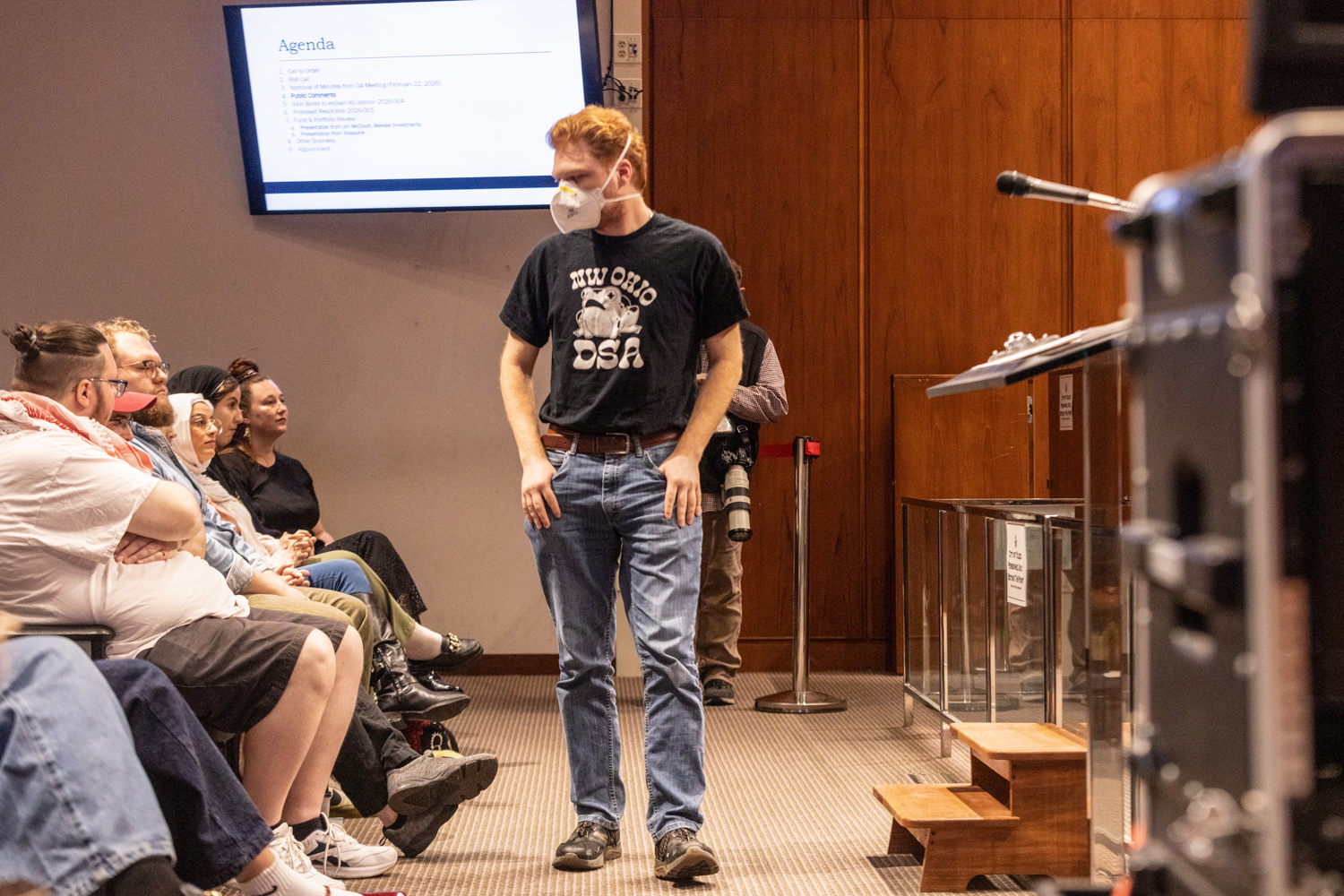
“Purely by financial standards, reinvestment raises serious concerns,” Stram said, and again appealed to the wider view of history. “History also judges public officials who ignore obvious warning signs and moments of instability, including financial warning signs, such as repeated rating fluctuations and shifting risk assessments that signal underlying uncertainty,” he said.
Finally, Stram pushed against AG Yost’s opinion, calling into question Yost’s morals. Three specific instances were referenced by Stram as to why the public should call his opinion into question:
*When Yost cast doubt on a 10-year-old rape victim whose perpetrator was later caught,
*When Yost tried to dismiss 77 cases of sexual abuse filed against Dr. Richard Strauss in The Ohio State University (OSU) Athletics Department,
*And when Yost attempted to stop a ballot measure to limit qualified immunity.
“No court has issued any order or injunction requiring counties to invest in Israel bonds, and no provision in the Ohio Revised Code obliges Lucas County to do so,” Stram said, ending his comment with a loud “Free Palestine!”
When he went to sit down, Stram was greeted with cheers and a standing ovation from the roughly 75-80 activists in attendance.
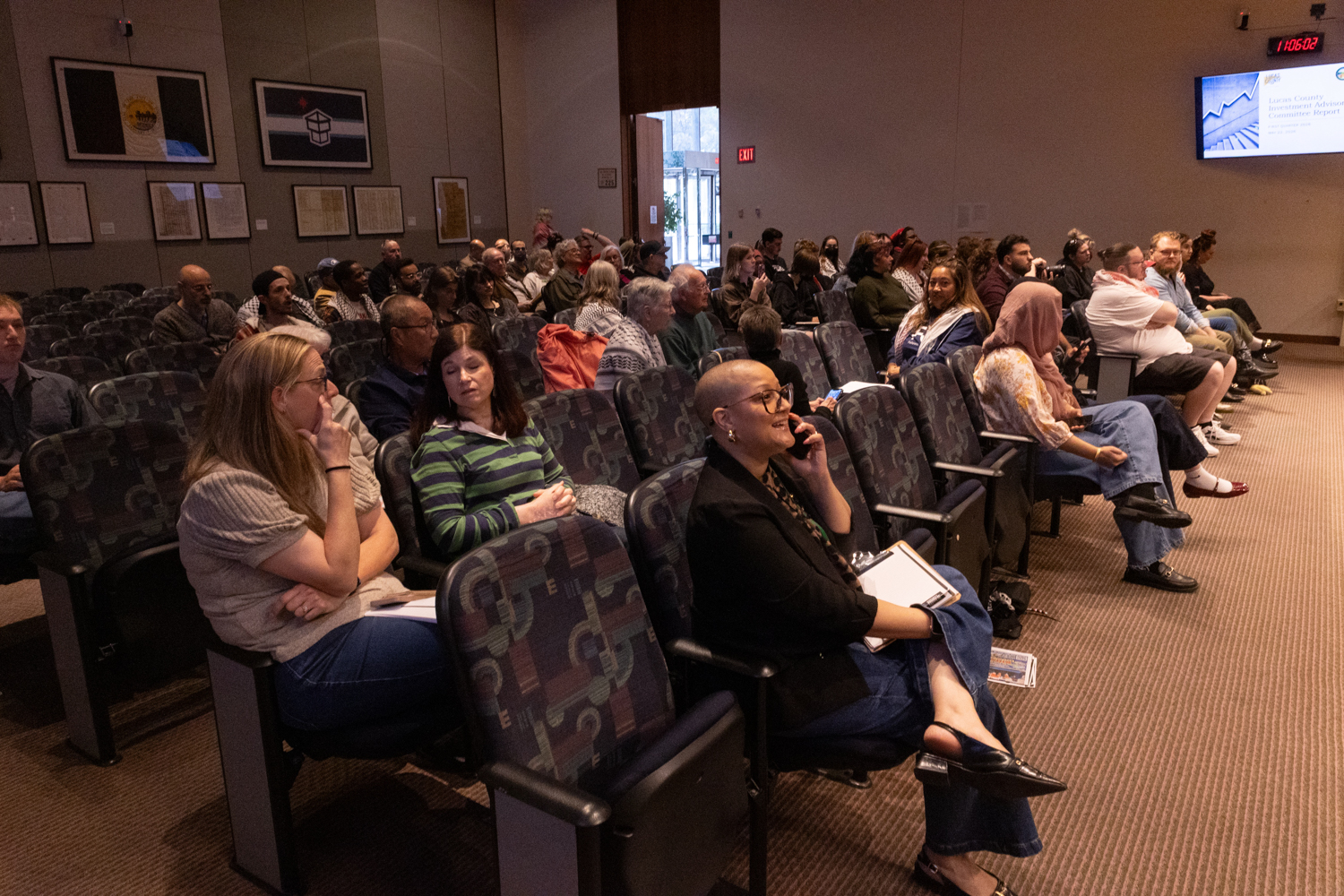
While not as passionate of a comment, Brianna F. presented a more detailed plan for local investment as an alternative to investing in a foreign country.
“I propose we place these funds into collateralized certificates of deposits or structured deposit accounts with local banks or credit unions that could then use our capital to support low-interest small business loans right here in Lucas County.
“We could expand the Lucas County Builds program, where these loans are paid back with interest, and the community benefits from more local jobs. We can invest into the state treasury asset reserve to maintain liquidity. This route has the highest possible investment rating, and often can outperform foreign bonds while being completely safe,” she said.
Notable attendees to the meeting included members of the Northwest Ohio Peace Coalition, Veterans for Peace, Democratic Socialists of America (DSA) and American Muslims for Palestine (AMP).
There were no overt supporters of Israel in attendance, like in previous meetings. Their arguments are laid out in previous reporting.
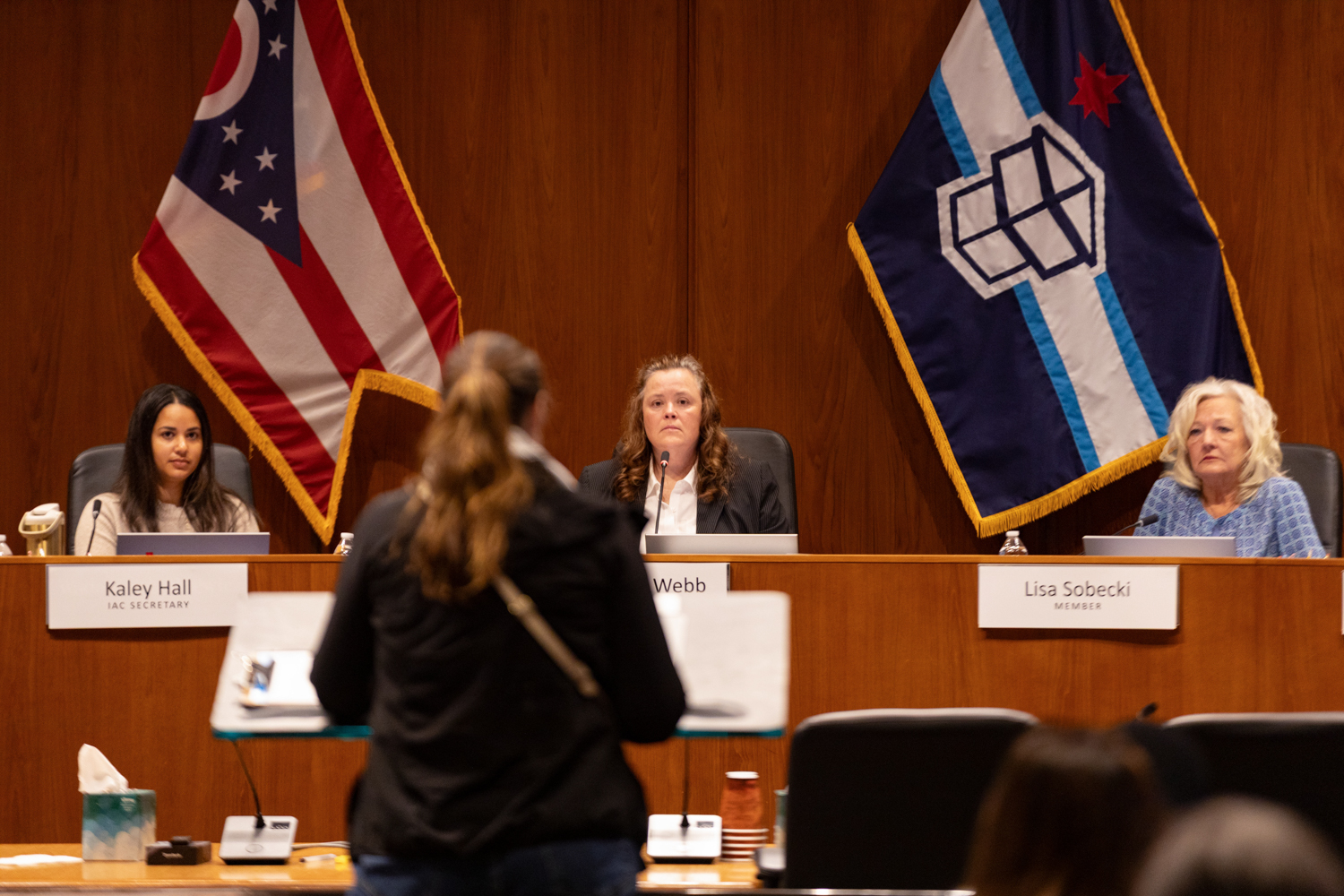
Officials question investments
Commissioner Gerken called into question Yost’s character, with some of the same points Stram made.
“Not investing cannot be considered a boycott,” Gerken said, and questioned the addition of the boycott statute in Yost’s opinion in light of Yost’s past actions. Gerken also rejected the premise that investments are purely fiduciary or purely political, and that the truth lay somewhere in-between.
“It’s ironic…to deny that the statutes on investment, BDS [Boycott, Divestment and Sanctions], socio-economical considerations are born from the fruit of a tree that’s entirely political.”
Webb’s rebuttal cited Yost’s opinion, that guidance from the IAC prohibiting investment in Israel bonds, without economic justification, would resemble a boycott, and could potentially open up the county to legal action.
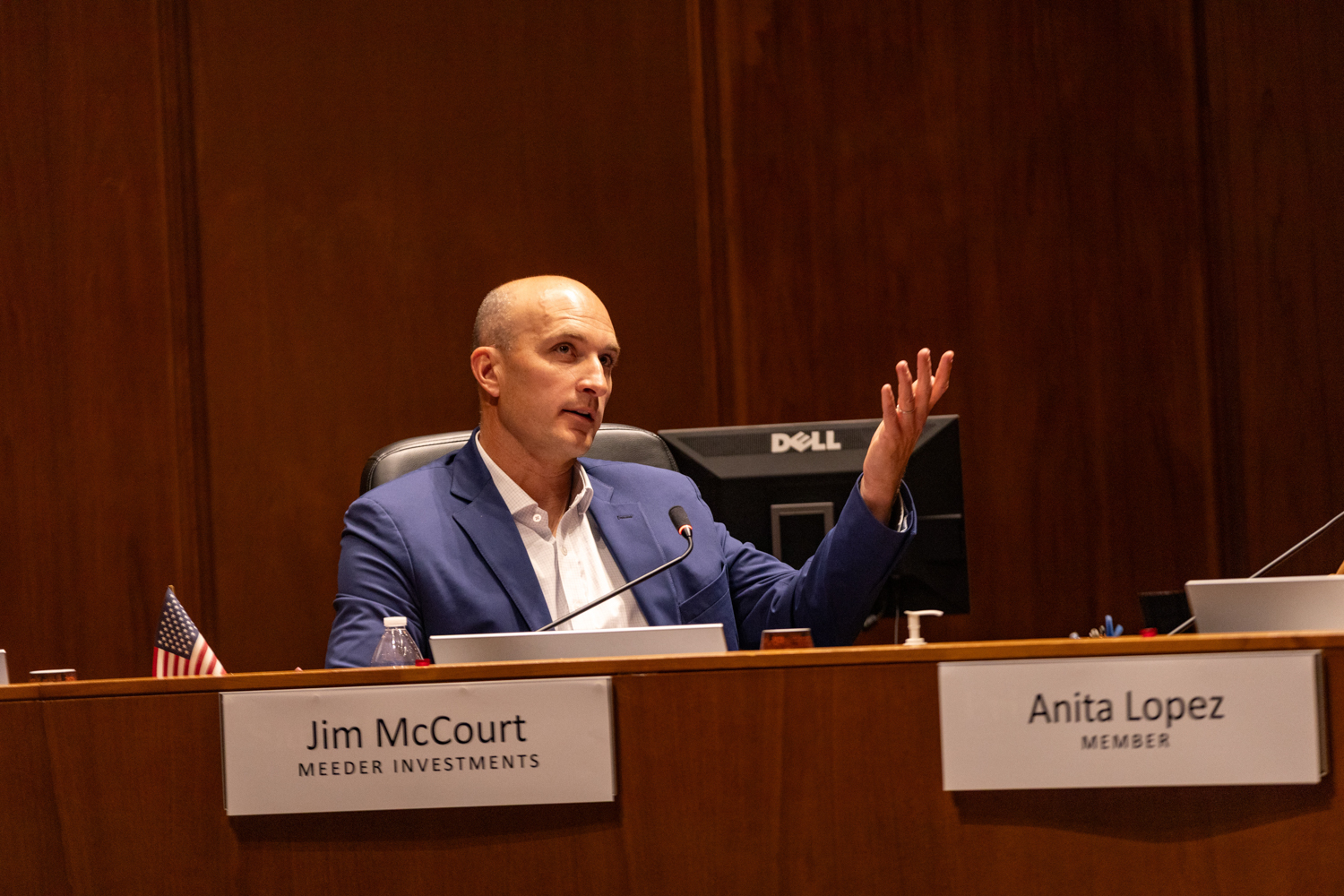
A quick detour by Lopez led her to ask Borell and Jim McCourt, the representative from Meeder Investments, what qualified as “best and safest return of funds,” from ORC 135.341, referenced in Yost’s opinion and resolution Webb would soon bring to a vote.
“Return on your principal is [the] number one [factor], the ability to get repaid by the issuer, McCourt said. “Then safety also refers to market risk or interest rate risk. So when you have investments tied up long term and interest rates move, the market value of your securities moves as well.
So you want to have safety in the sense that you have investments that will be returned fully, with the principle you put into them plus interest.”
Citing a former attorney general’s opinion from 1994, Borell backed up his statement on “safety, liquidity and yield.”
Lopez then asked about all of the investments by the county, and how they were evaluated.
Webb then said that she “constantly” engages in the “analysis” of all investments based on the criteria Borell and the ORC outlined, and further stated that since the investment in Israel does not mature until December, it is impossible to determine the safety, liquidity and yield at this time.
Commissioner Lopez then asked if there was a “written analysis” for the county’s investments.
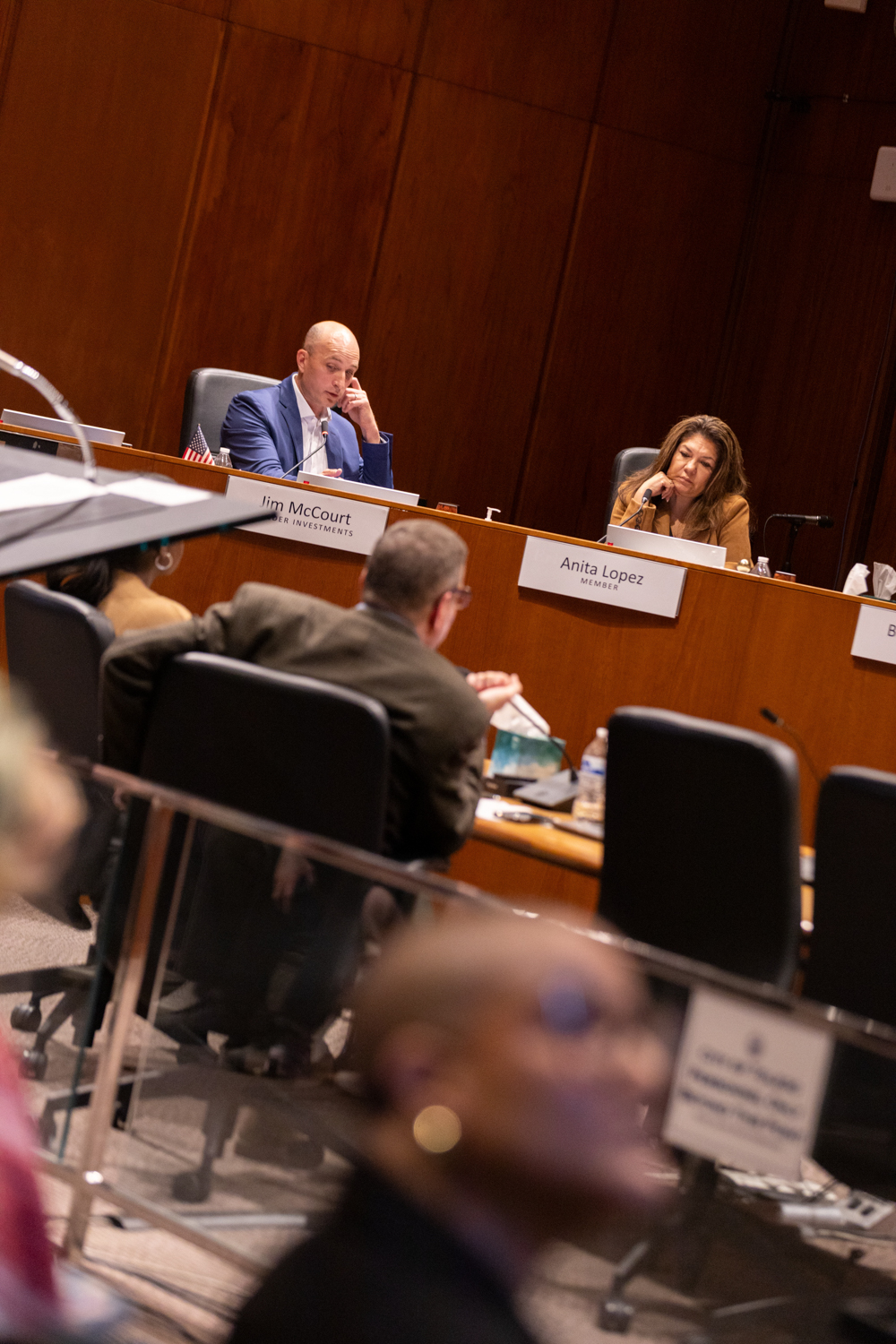
And Webb said she was in regular communication with the Office of Management and Budget to understand the needs of the county, whether to liquidate, invest or reinvest assets, according to the ORC and the IAC’s guidance.
Gerken then asked McCourt if all of the counties and municipalities McCourt advised were recommended to invest in Israel bonds.
After some hesitation, McCourt said he could provide a comprehensive answer to the question after looking at the data, which seemed to satisfy Lopez, but not Gerken.
“Is it your business entity’s philosophy to guide municipalities into Israeli bond investments?” Gerken asked.
To which McCourt said that Israel bonds were “eligible,” and that the determination would be made at the time of investment.
“Is that a ‘yes?’” Gerken pushed.
“At times, yes,” McCourt answered.
The treasurer then asked if there were further questions for Borell regarding the Attorney General’s opinion.
Resolution to affirm Yost
After a moment of silence, Webb introduced resolution 2026 001, which she said was “updating the investment advisory committee’s guidance regarding the investments in light of the Ohio Attorney General opinion 2026 004. It provides guidance for how the committee and the treasurer as investing authority should evaluate the lawful investment options going forward.”
She moved to vote on adopting the resolution, but Gerken immediately attempted to table the resolution.
“First of all, it’s unnecessary, and I believe, redundant,” Gerken said, and asked Borell to weigh-in. “This is an Attorney General’s opinion that you’re bringing into our policy,” Gerken said to Webb.
Webb attempted to silence Gerken.
“A motion to table is not debatable, Commissioner Gerken, so, I think I’ve given you enough leeway to express your opinion on this,” she said, trying to move past Gerken.
Gerken then made a motion to table, and Webb repeated that it was not debatable.
The Lucas County Clerk of Court and IAC Member Bernie Quilter then asked for clarification on the procedure of the meeting, because it seemed as though the IAC was going to vote to table and then vote on the resolution regardless of the motion to table.
A point of order was called by Gerken, who fought the claim by Webb that, “A motion to table is not debatable.”
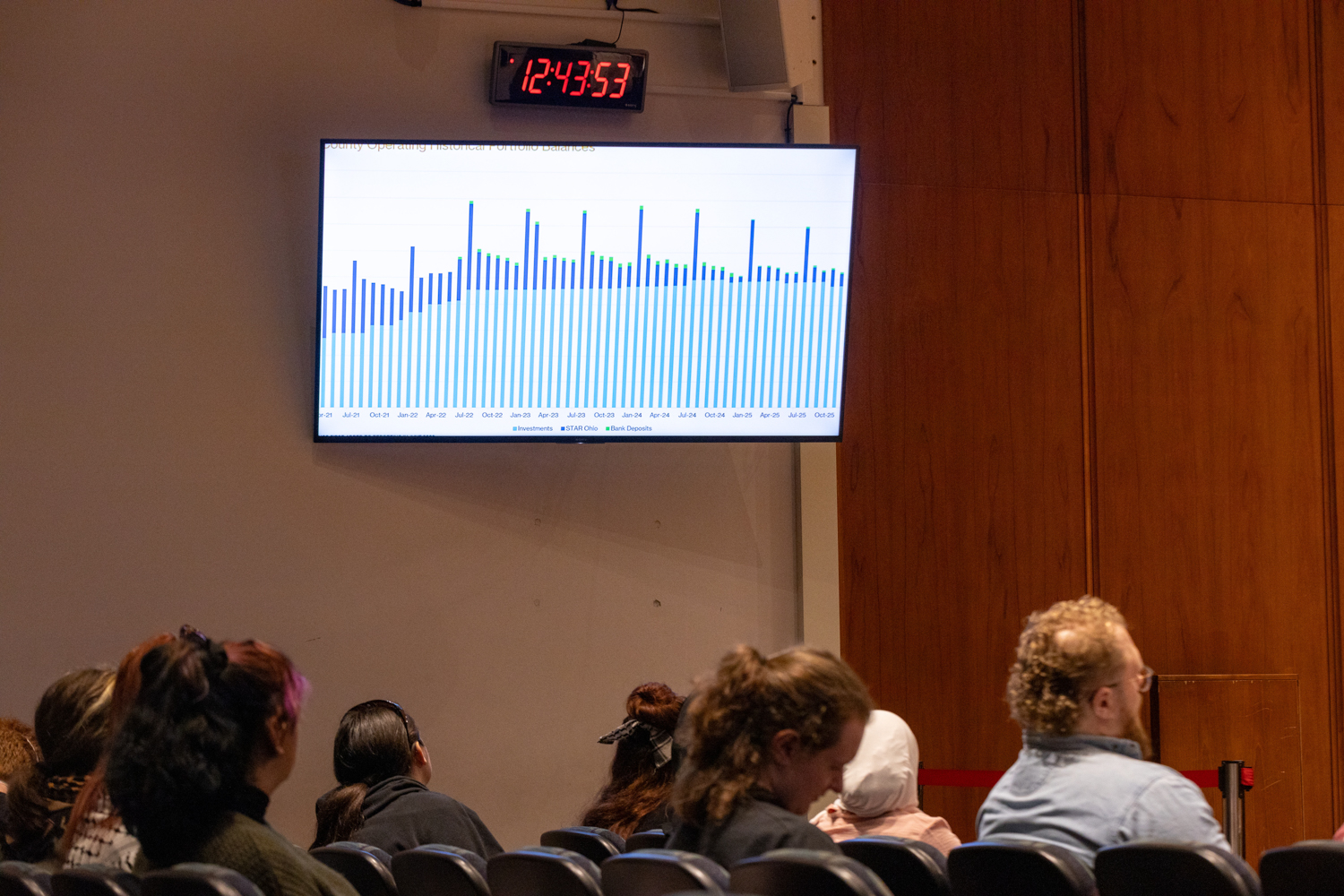
Because the Committee never voted on accepting Robert’s Rules of Order, Gerken said the procedural stipulations of Robert’s Rules of Order did not apply, unless the Committee first voted on accepting the rules of order beforehand.
“Robert’s Rules of Order is a natural reliance,” Webb argued. “We have effectively, de facto, relied on Robert’s Rules of Order as a way to maintain order through the meeting.”
At the end of Webb’s justification the IAC began to vote on whether to table the resolution, but Lopez interrupted, asking if Webb’s justification was legally sound.
Borell then weighed in with a legal framework, “Public bodies in Ohio do not automatically use Robert’s Rules of Order.”
“There’s no statute that requires either the county commissioners or the IAC to use Robert’s Rules of Order, so Commissioner Gerken is correct.”
Even with this ruling, Webb attempted to stop debate.
“It’s my decision that the motion to table is not debatable,” Webb said, and Gerken challenged Webb’s decision.
Unnecessary and redundant were the beginning complaints Gerken had against the resolution, and then he added that the resolution hadn’t been put before the IAC or discussed sufficiently.
“If you want to have legitimate policy debates over our role as an advisory committee, and what the policies say, we should all have an opportunity to weigh into that,” Gerken said.
Proceeding formally, Webb attempted to follow Robert’s Rules of Order, and asked Gerken to challenge her decision so they could vote on whether to have a debate.
Another attempt at a vote was thwarted by Commissioner Lopez, who wanted clarification on Robert’s Rules of Order.
The Assistant Prosecutor repeated that the body was not bound by Robert’s Rules of Order.
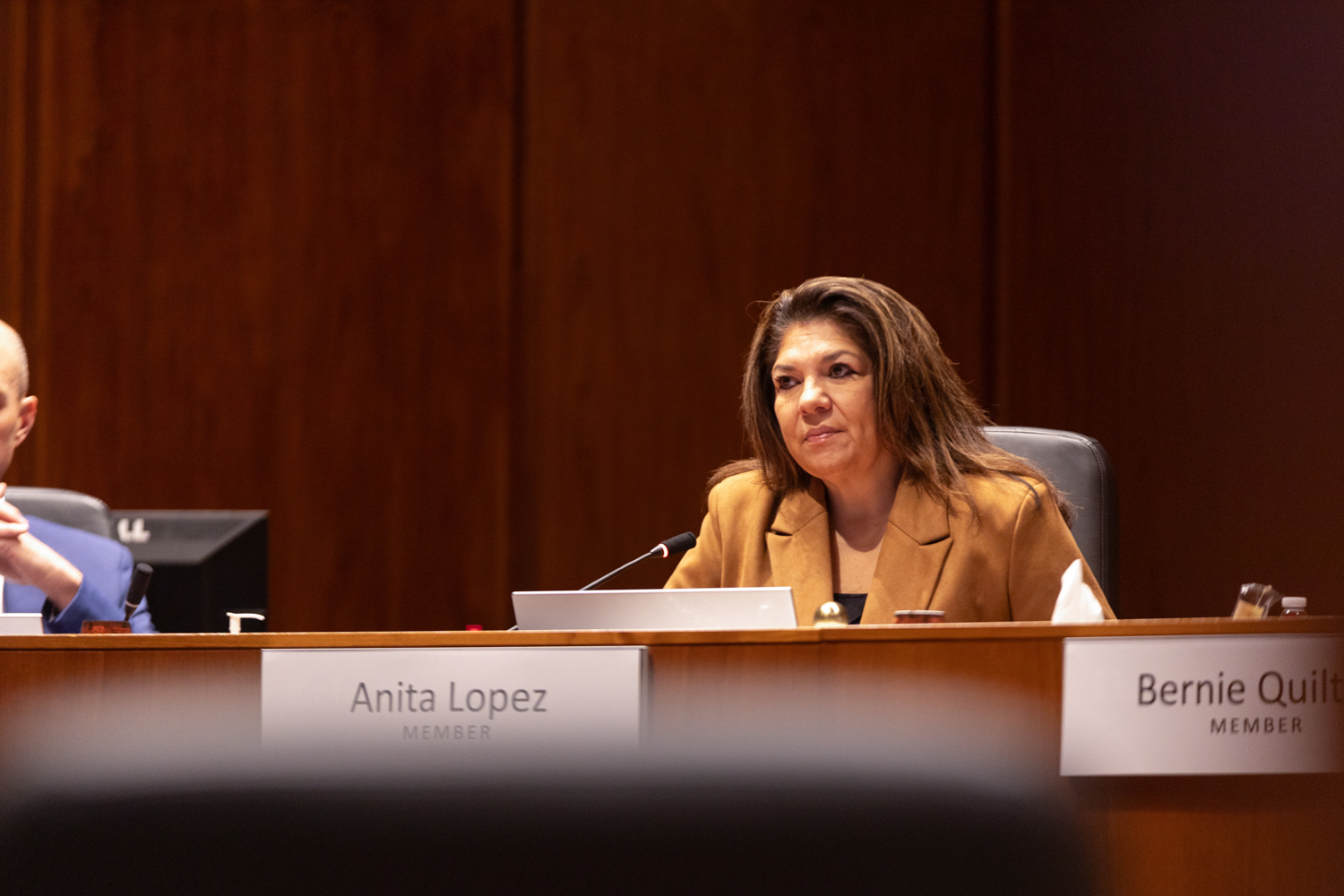
Lopez then asked Webb if she could ask Borell legal questions.
A noticeably frustrated Webb said, “The floor is yours. Ask your question.”
Trying to get clarity on the resolution, Lopez asked if the AG’s opinion and the resolution were the same legally, and if adopting the resolution might shield or open up the county to legal action.
Borell said the policy was a “summary of state law.” This answer created more questions for Lopez, and she asked Borell if he thought the IAC should adopt this resolution.
“Maybe this will be a good idea to pass this,” he said after telling Lopez he didn’t want to weigh in personally, but after multiple promptings, he relented. “Again, I wouldn’t have said that two years ago.”
“After listening to these meetings for two years, there seems to be a lot of misunderstanding about what this body does, what the treasurer’s obligation is, what her [Webb’s] duty is. For that reason, I would think it might be a good idea to pass this.”
Quilter then asked if Borell had helped draft the resolution, and Borell said he had.
Objecting to the resolution, Gerken pointed back to the boycott part of the AG’s opinion, and asked how the body could pass a resolution that upheld a portion of an opinion Borell disagreed with.
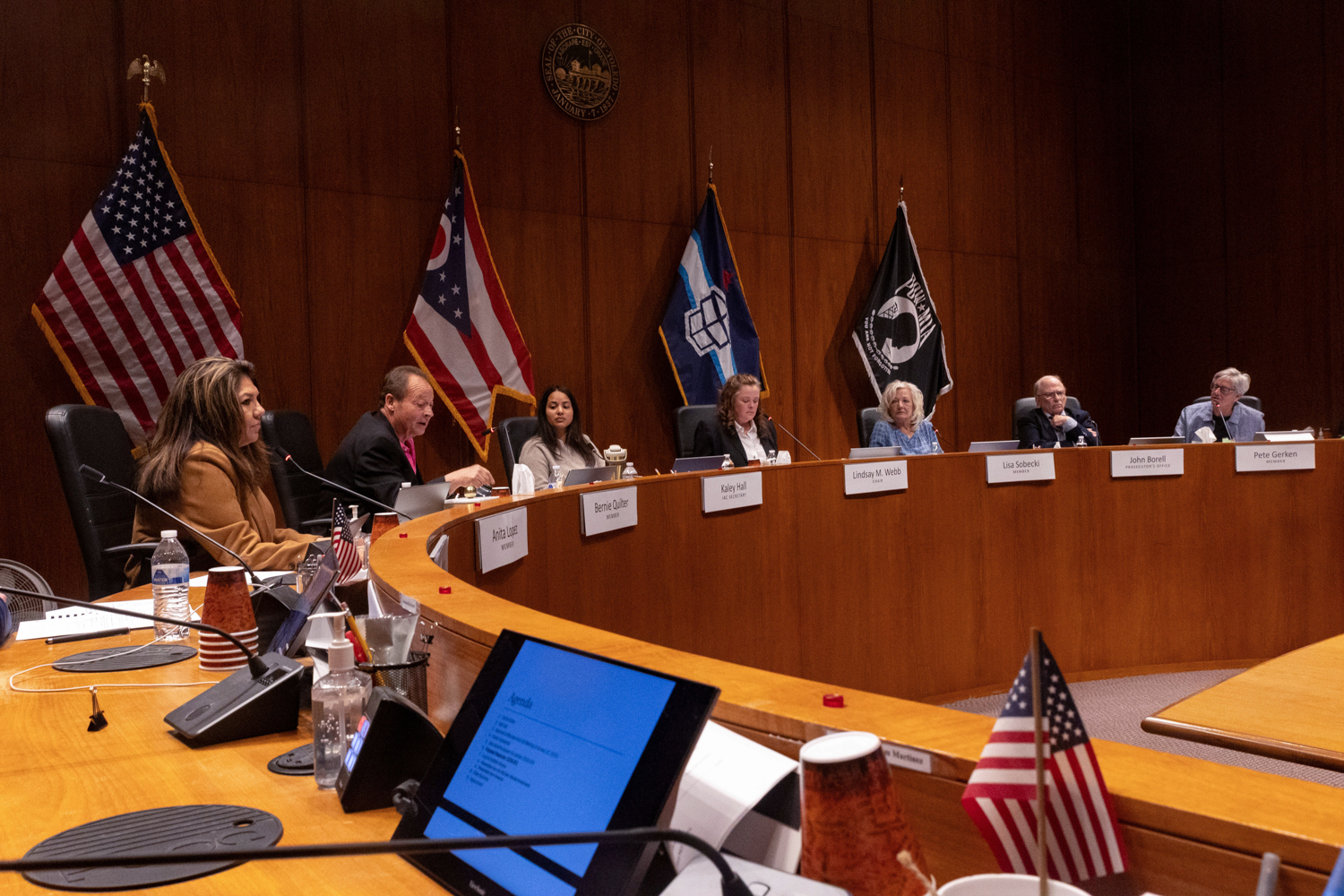
“With all due respect, Chair, we are in the middle of a vote,” said Lisa Sobecki, Lucas County Commissioner, trying to push the meeting forward.
Gerken interjected to explain himself. “We never took a vote, and she [Webb] shut down debate out of the false premise that they’re offering…” he said and then Sobecki and Gerken began talking over one another.
A call to order was issued by Webb.
In an attempt to clarify her objectives with the resolution, she said she put forth the resolution “to be very clear about what my responsibilities are as the treasurer.”
“Additionally, there was some preliminary discussion during the motion to advise me not to reinvest, that failure to reinvest could be construed as a rational basis to take my investing authority, which the voters have entrusted me with.”
“I just want to make it perfectly clear what my responsibility is under the code, and nothing more, and nothing less.”
At this, Gerken once again summarized his previous points of contention against the resolution, and again, made a motion to table the resolution.
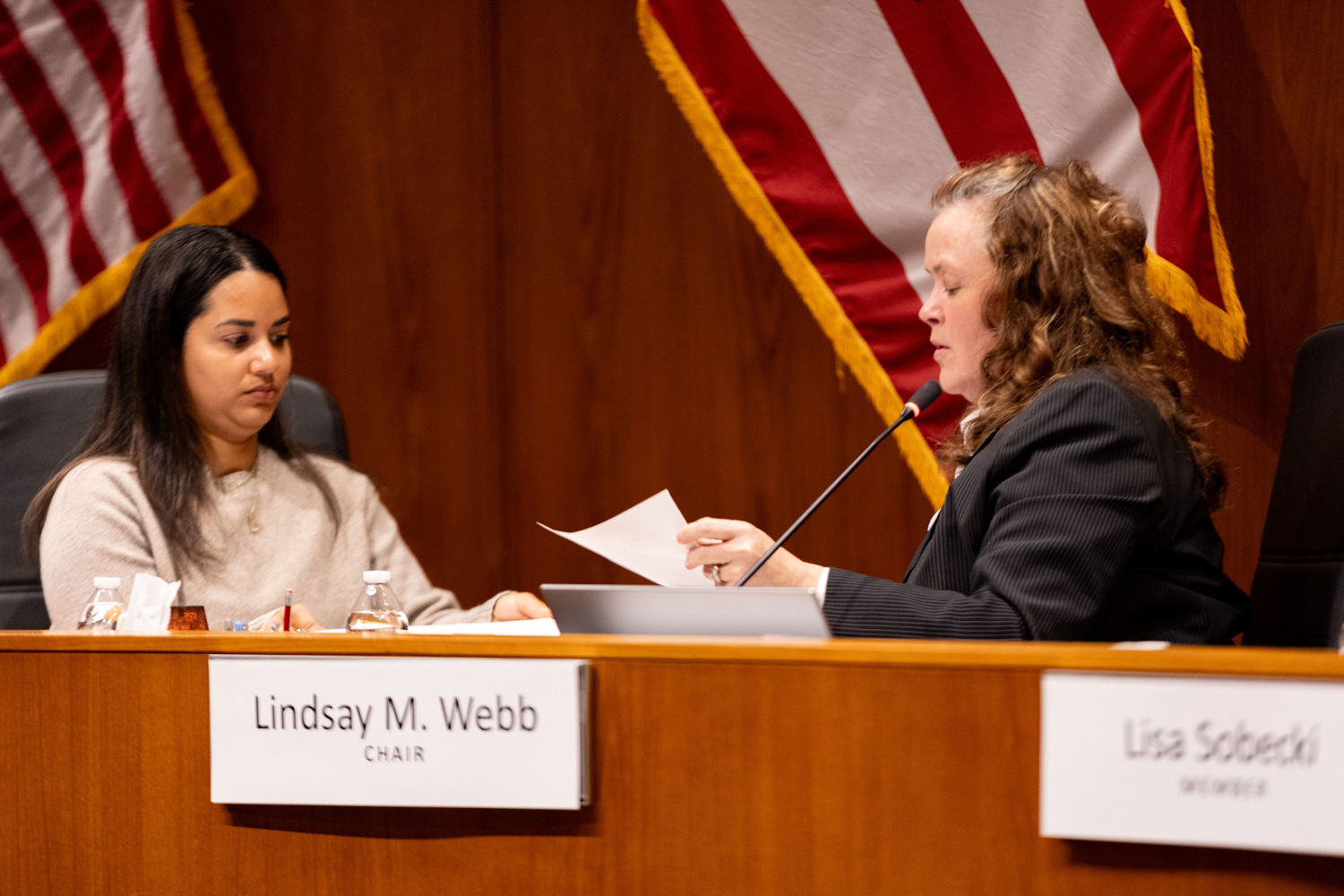
The votes were counted, with a split: Quilter and Gerken for tabling, and Sobecki and Webb against tabling the resolution.
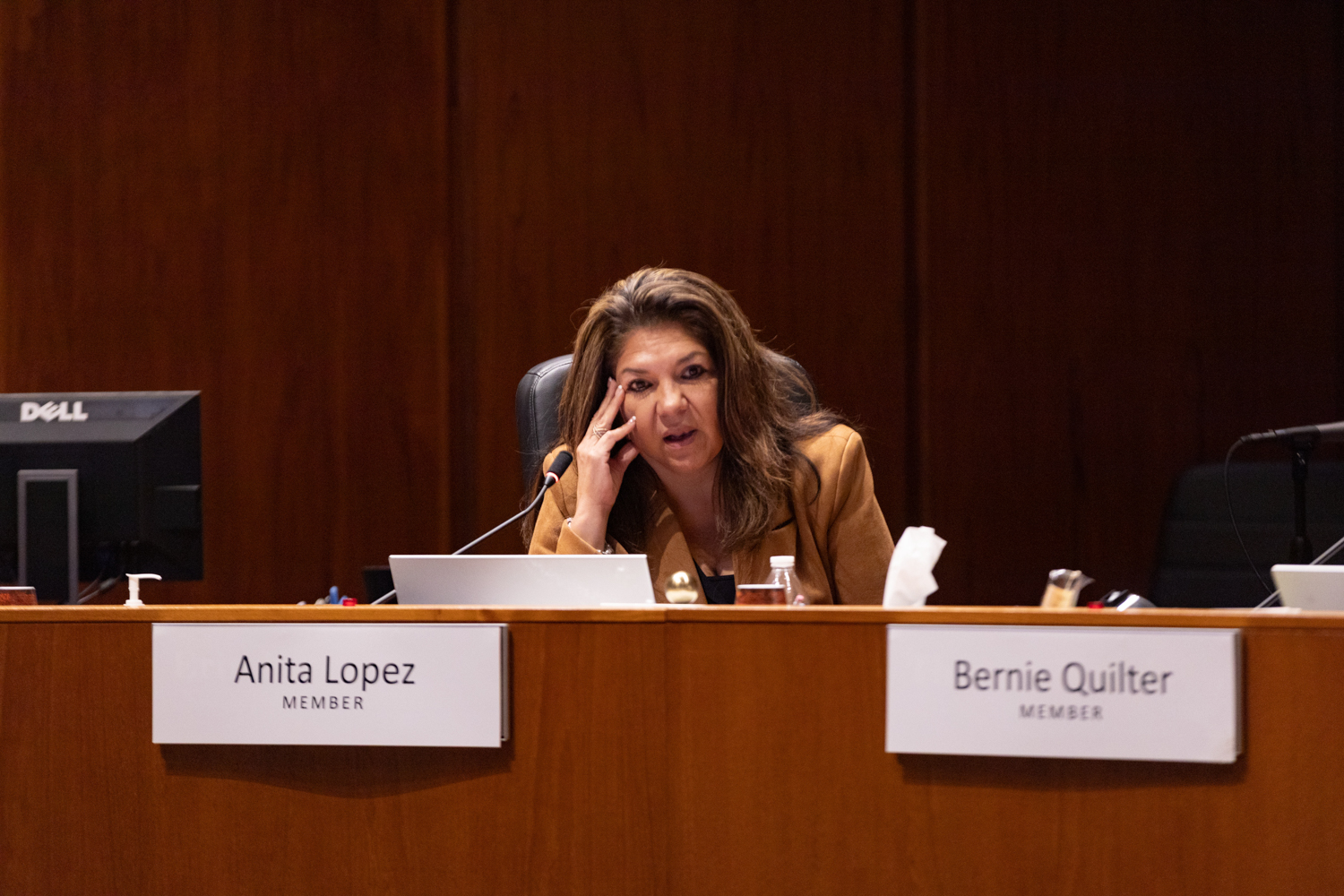
This gave the tie-breaking vote to Lopez, who had more questions before she voted.
“The resolution does not reference the boycott provision?” she asked the Assistant Prosecutor.
Borell told Lopez the resolution did not include the boycott provision, and Lopez voted not to table the resolution.
Further clarifications
Once it was determined the resolution would be voted upon during the meeting, Gerken made a motion for discussion.
As soon as the motion was granted by Webb, he said, “I have several amendments I’d like to make.” He pulled out printed copies of the resolution with his amendments and passed them to other members of the Committee.
“Guidance” was changed to “policy and advice” throughout the document, as was “reinvestment decisions” to include “all decisions” and the final addition was, “the written county policies and resolutions established by the Committee should be a guiding factor [to the treasurer’s decisions].”
Webb pointed out a passage, in section three of the document that stipulated that every investment should have a “fiduciary rationale consistent with Ohio law and the county’s investment policy.” Worried about expanding duties for her office, Webb asked, “Are you going to expect me to send you an email with every decision that we make?”
Both heated officials began to talk over one another.
Gerken continued to explain the language choices in the amendments as related to the principles of the resolution, and Webb continued to ask if these amendments required procedural differences in her job.
Her main concern seemed to be if she would be taking on more work, exhaustively informing the commissioners on the minutiae of the county’s investments.
A few minutes later, Lopez broke the deadlock of back and forth, and said, “I do think it is important that an analysis is presented [so that] we understand as the public why you are doing those decisions.”
An exasperated Webb listed aloud the procedural details associated with investment choices, implying that the reasons for investing are complicated, varied and difficult to explain. Continuing, as if she were counting, Webb invited Commissioner Lopez to come to the Treasurer’s Office, where she assured the commissioner that her office was already providing daily and monthly analyses of the treasurer’s investment decisions.
“I am fine with every investment… but what I am not okay with is creating something in my policies and processes that doesn’t already exist,” Webb said, fearing more work for her office.
Gerken said his amendment was simply stipulating that the IAC help consult on all investments, not just reinvestments.
By this time, about an hour in, all members of the IAC seemed a bit aggravated with the contention in the room.
Quilter questioned what Gerken’s contention was about, and defended Webb’s discretion in making investment decisions.
“That’s for the voters to decide,” Quliter said of evaluating Webb’s investments for the county.
Back on the “investments vs. reinvestments” stipulation in his amendments, Gerken continued to explain he wasn’t attempting to change the treasurer’s power.
Quilter seemed to ask why the entire discussion was happening at all, to which Gerken explained he was trying to define the role of the committee in guiding investments.
An exhausted Quilter said, “I’ve been on this committee for like 24, 25 years. We have never run into this situation.”
In reply, Gerken said, “The world changes.”
Voting
Webb and Gerken negotiated the specifics of a few lines of the resolution for a number of minutes, which eventually gave way to some of the previous arguments reigniting.
Eventually, a vote on amending the resolution was called, and slowly, Webb inquired how each member wished to vote.
After hearing Quilter’s vote in favor of amending the resolution, Webb audibly sighed.
Sobecki and Webb voted against the amendments, with Quilter, Lopez and Gerken voting for the amendments.
“Your motion carried,” Webb said toward Gerken.
Much more quickly, Webb called the vote for adopting the resolution, and the sides voted the same: Sobecki and Webb vs. Quilter, Lopez and Gerken for adopting the amended resolution.
Webb leaned into the work of the moment. “The draft resolution is adopted, and I thank you all for your…” and she searched for the words for a moment “…lovely debate.”
From this point, McCourt began going over the general trends in the American market.
Excerpt from Resolution 2026 001 without the amendments
“Whereas the Committee desires to update its prior guidance so that future investment decisions are reviewed consistent with Ohio law, the county’s investment policy, and the Treasurer’s fiduciary responsibilities;” —Resolution Updating the Investment Advisory Committee’s Guidance Regarding Investments in Light of Ohio Attorney General Opinion No. 2026-004
The resolution outlined these ten steps for evaluating investments:
1. safety of principal
2. liquidity needs of the county
3. yield and available market alternatives
4. credit quality and applicable credit ratings at the time of purchase
5. marketability
6. maturity limitations
7. diversification and portfolio composition
8. statutory eligibility
9. the size and needs of the county’s portfolio
10. and then-current market conditions.