Home Blog Page 18

Israel bonds: Yost’s opinion brings more debate

0
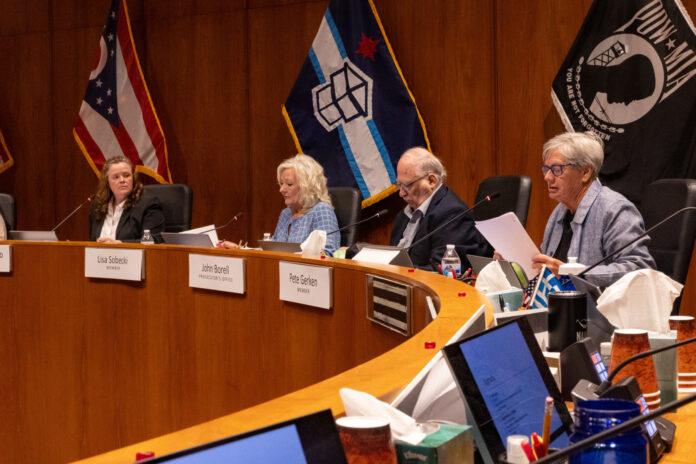
Pete Gerken, Lucas County Commissioner, unveils an amendment to Resolution 2026 - 001 after a failed attempt to table the resolution during the quarterly Lucas County Investment Advisory Committee Meeting in Toledo City Council Chambers on Friday, May 22. Gerken felt the resolution was redundant, and the language employed in the resolution might undo the previous recommendation back in August to divest from Israel bonds. (TFP photo by Stephen Zenner)

TOLEDO – Pressure continued to mount on Lucas County Treasurer Lindsay Webb over the roughly $5 million investment the county has in Israel bonds during the county’s latest Investment Advisory Committee (IAC) meeting on Friday, May 22. 

Since the IAC meeting on Aug. 22, 2025, during which the IAC gave guidance to Webb to divest from Israel bonds, Pro-Palestine protesters have shown up to make their voices heard. 

Protesters demanded Webb invest the 1 percent of county funds – $5 million, invested in Israel – elsewhere, but no action will take place until the bond reaches maturation in Dec. 2026.

Over the past three IAC meetings, Pro-Palestine protesters have clearly made the treasurer and members of the IAC uncomfortable, without significantly delaying the procession of the meetings or inhibiting their functions. 

Regardless, a number of county sheriff officers were on hand at the meeting, yet the biggest delays were caused by elected officials, to the chagrin of those who would have expedited the formality of the IAC meeting itself. 
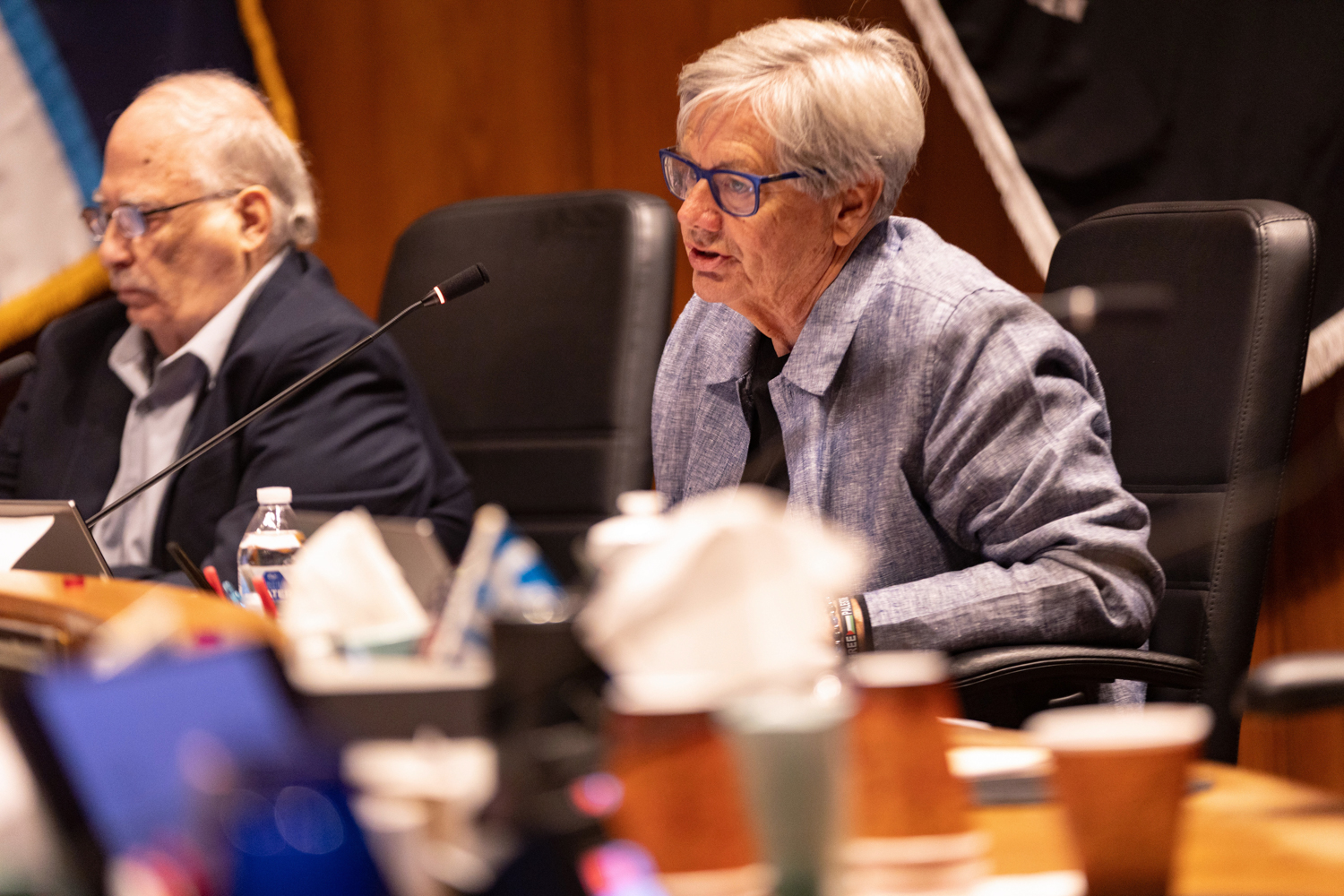
Pete Gerken, Lucas County Commissioner, openly showed support for Palestinians, and wanted the county to divest from Israel bonds. (TFP photo by Stephen Zenner)

Dave Yost’s opinion

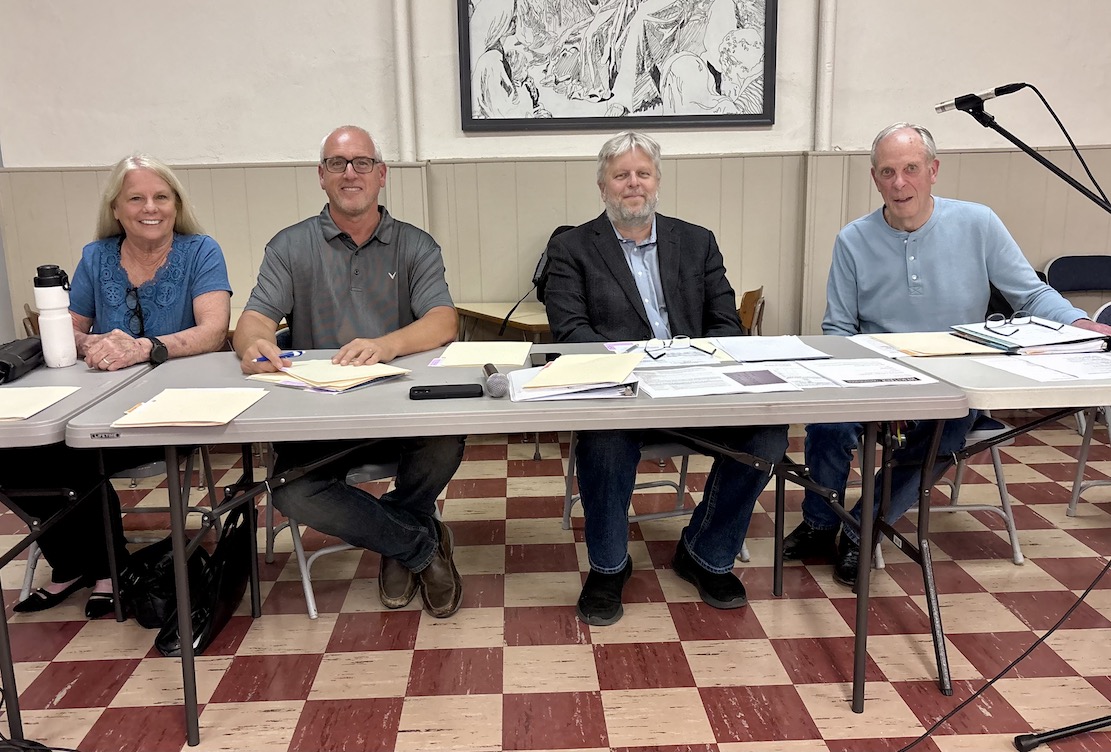
The 11 a.m. meeting dragged on for almost two hours because of an arduous back and forth between Commissioner Pete Gerken, Treasurer Webb and Commissioner Anita Lopez

Much of the discourse between public officials was dominated by how Ohio Attorney General (AG) Dave Yost’s opinion, given on May 8, should be considered.

Yost’s 14-page opinion was requested to understand more about the legality of divesting from Israel after the IAC advised the treasurer to do so back in August. 

Four main points emerged from the AG’s opinion, and foremost is that, “the county cannot make investment decisions ‘with the primary purpose of influencing any environmental, social, personal, or ideological policy.’ R.C. 135.35(O).” 

Also highlighted by the AG was that the treasurer and IAC must “‘…ensure the best and safest return of funds.’ R.C. 135.341(C);” with their investments of county money. 

Consequently the AG stated that the treasurer or investment power could not be stripped from Webb for her unwillingness to follow “unlawful” or “Ultra Vires” policy. 

And finally, Yost cited the anti-boycott law in the Ohio Revised Code (ORC) 9.76, as it pertains to a state agency contracting with a company that actively has a policy of boycotting Israel. 
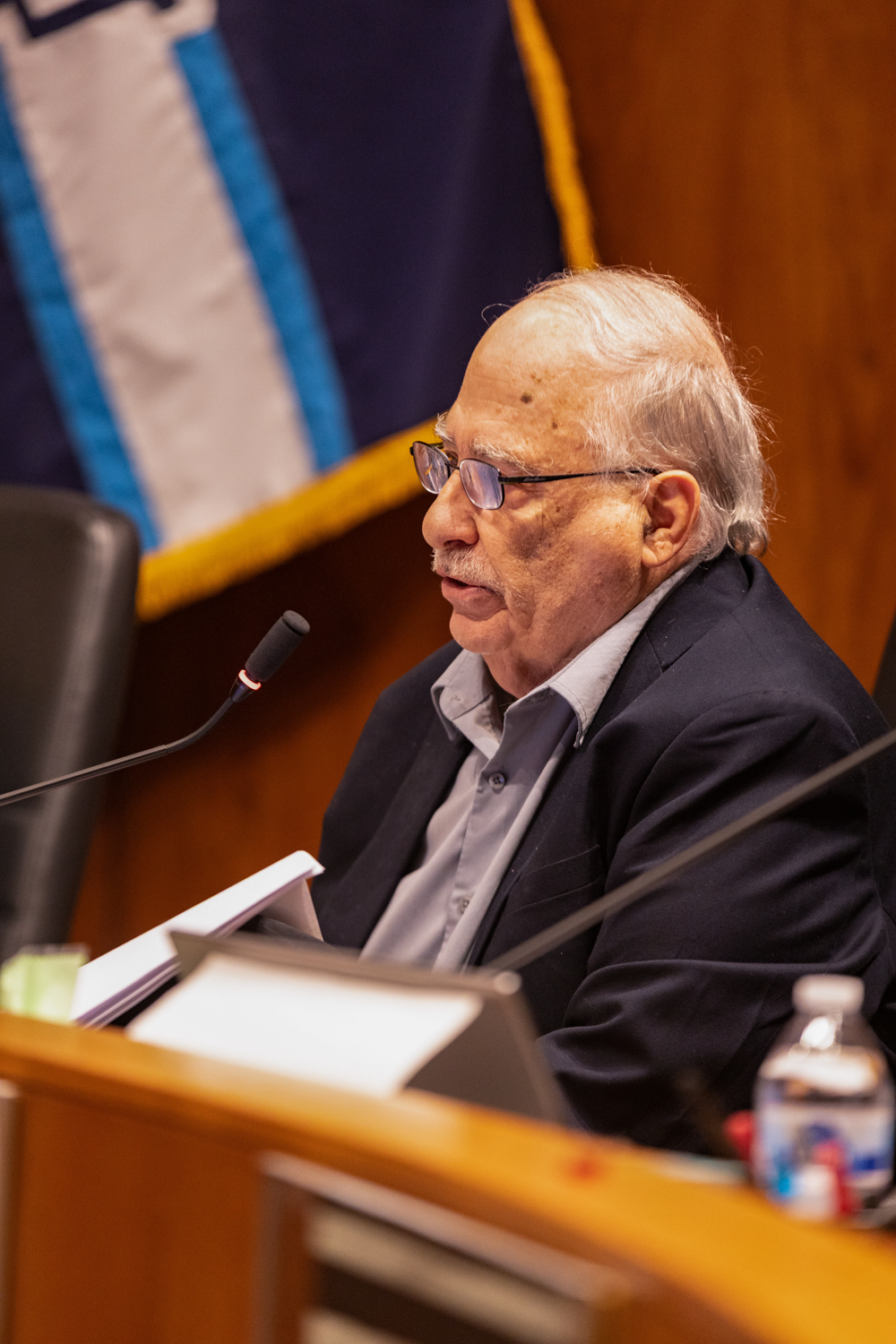
John Borell, assistant prosecutor from the Lucas County Prosecutor’s Office, was consulted multiple times to make sure the IAC did not divert from the Ohio Revised Code. (TFP photo by Stephen Zenner)

Statutes: what do they mean?

Treasurer Webb asked Assistant Prosecutor John Borell of the Lucas County Prosecutor’s Office to interpret Yost’s opinion. Borell replied that “noneconomic” factors could not guide the investment decision. 

“Once again, that’s not David Yost’s opinion; he just quoted a statute,” Borell said, and told the IAC that this was part of a long tradition, going back at least four decades, of AG’s upholding this statute about investments. 

Nothing explicitly advised the treasurer or committee to invest or not invest in Israel bonds, implying it may be lawful to do either, depending on the circumstances. 

Borell explicitly disagreed with Yost on the final point dealing with the boycott, which he called “a red herring” and a “stretch” to claim the county as a “state agency.”  

In the context of the county’s ability to invest its funds, Borell said the main guiding principle should be the viability of the financial investment, instead of minding a boycott law. He pointed to “safety, liquidity and yield” as longstanding investment determinants according to Ohio law.

“You don’t focus on what you can’t do; You focus on the three factors that the treasurer must use when determining an investment,” Borell said. “The boycott statute has always been to me a red herring, it’s never been a regulatory issue.”

Public comment

Preceding Borell’s assessment were five speakers from the Pro-Palestine camp, who were chosen at random by Webb and the Secretary of the IAC, Kaley Hall, to speak for three minutes each. 

The random choices for comment did not change the viewpoint, because none in attendance were in opposition to the Pro-Palestine stance. 
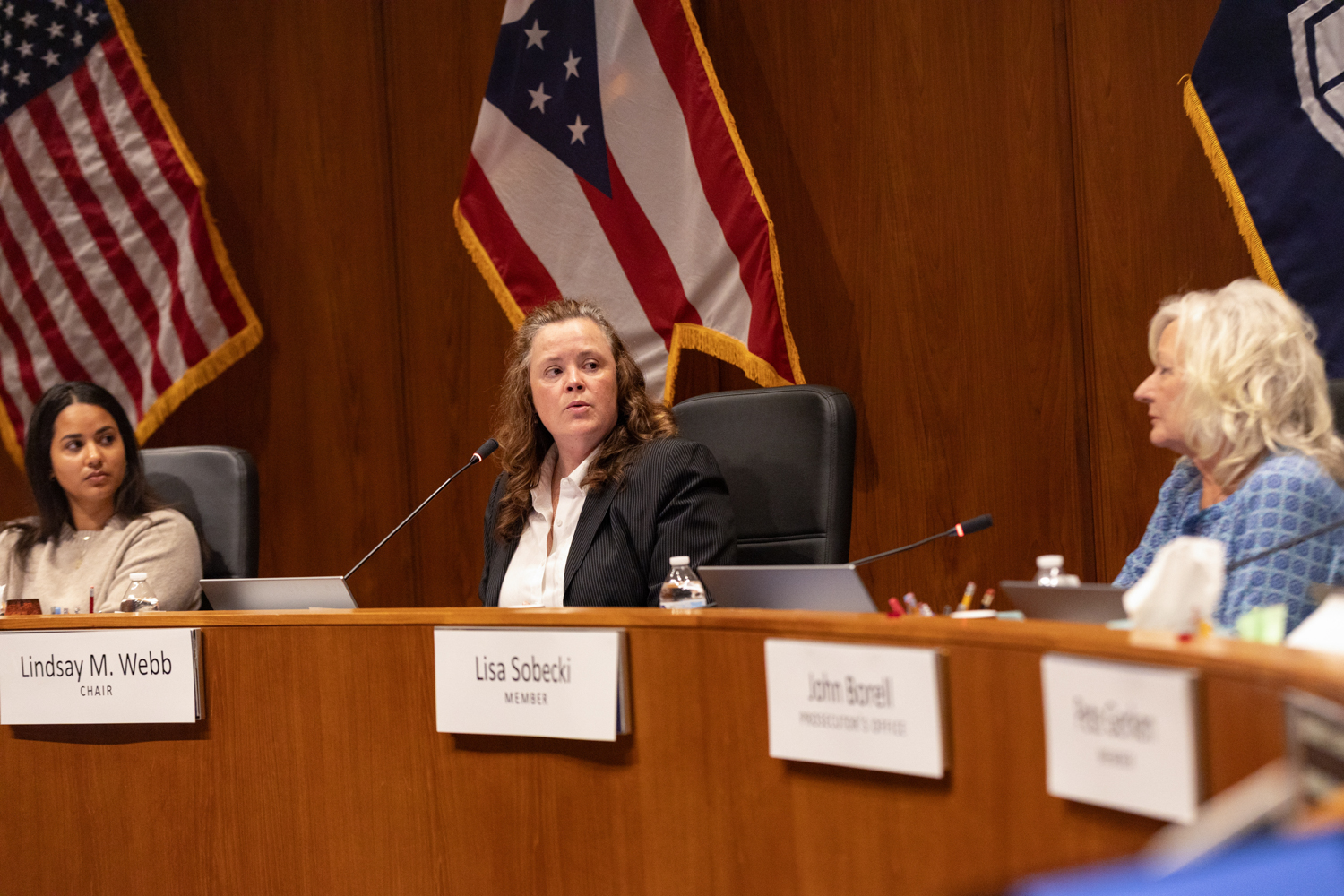
Lindsay Webb, Lucas County Treasurer, speaks to Commissioner Pete Gerken. (TFP photo by Stephen Zenner)

Patrick E. from the Northwest Ohio Democratic Socialists of America gave an incredibly brief comment, and said the county’s funds should be used for the community and not for “bombing civilians.”

Investment in the northwest Ohio community, rather than in a foreign country, seemed to be a strong through-line for all five speakers, including Selah Carter, who spoke about rising affordability costs, job options and homelessness, including their own experience with homelessness. 

“Reinvesting $5 million into this foreign entity that is committing genocide and war crimes is not the best nor safest return available to Lucas County, especially in a time where SNAP and WIC benefits and housing resources and vouchers are not supported to the extent that they need to be,” said Nora Riggs.
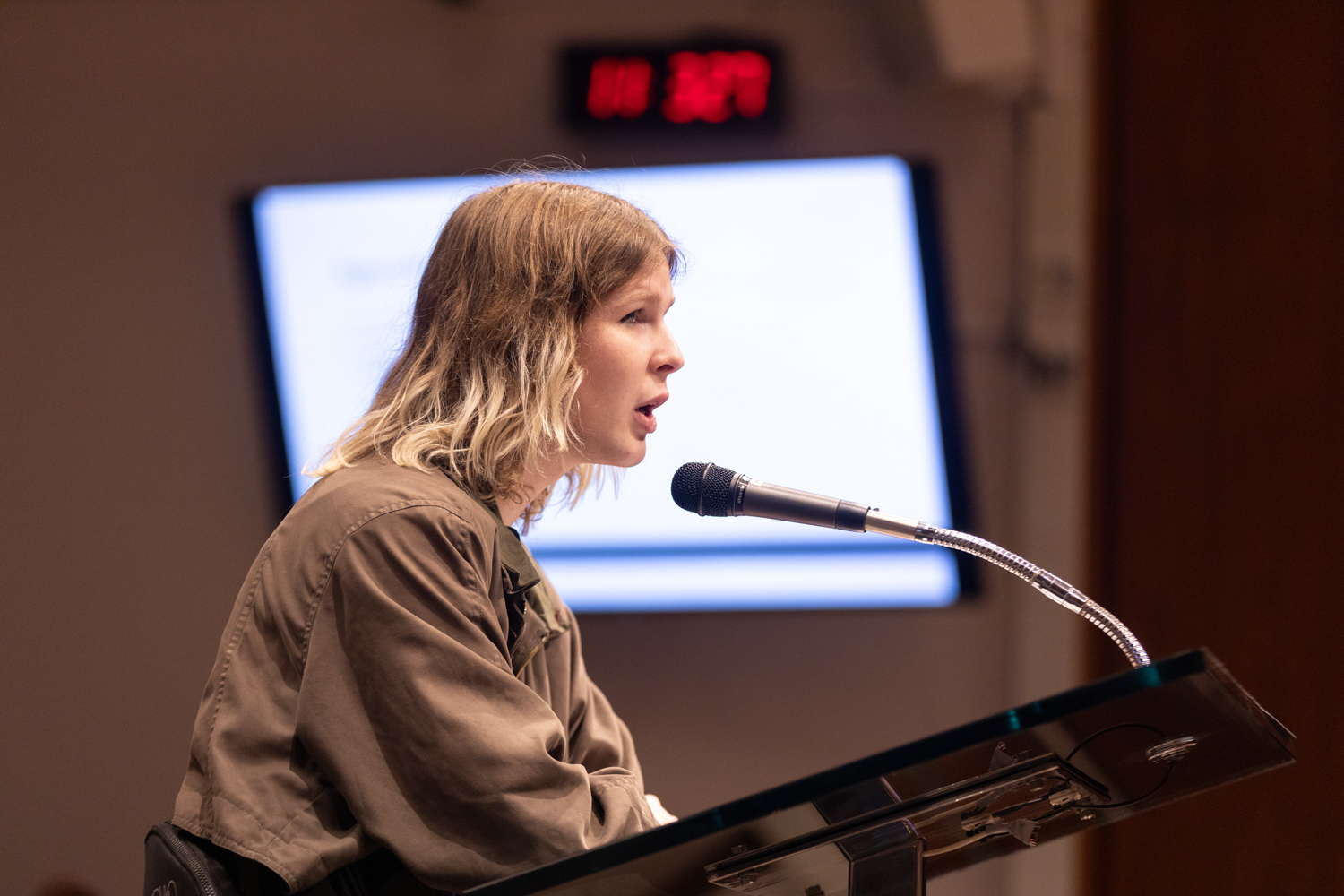
Selah Carter, a Toledo resident, talked about investing funds into local initiatives rather than investing in Israel bonds. (TFP photo by Stephen Zenner)

A notable climax was reached during public comment with the fourth individual. “My name is Mike Stram. I am a Jewish resident of Toledo who proudly stands with the Palestinian people in their fight against ethnic cleansing and genocide. There is nothing apolitical about forcing the members of this community to pay for the wholesale slaughter of their family members.”

Then Stram talked about how history would look on people who did nothing to stop what is happening in Gaza, and how the decision to invest or not invest in Israel is inescapably political, regardless of the choice. 

Stram called into question the financial viability of investing in Israel, and how the instability and war in the country had affected Israel’s economics. Most notably, Moody’s Investor Service downgraded Israel’s credit ranking from an A1 to A2 following Oct. 7, 2023, and Israel’s ranking was “Baa1 with a negative outlook,” in mid 2025. 

Israel’s economy has been impacted negatively by the instability in the region, creating a high deficit due to military spending, and has increased volatility in its market, downgrading the credit ranking due to multiple conflicts and uncertainty. 

Economists expect Israel to rebound with a 2-4.5 percent GDP growth for the next two years, with the main concern being escalations with the war with Iran destabilizing or destroying Israeli infrastructure. 
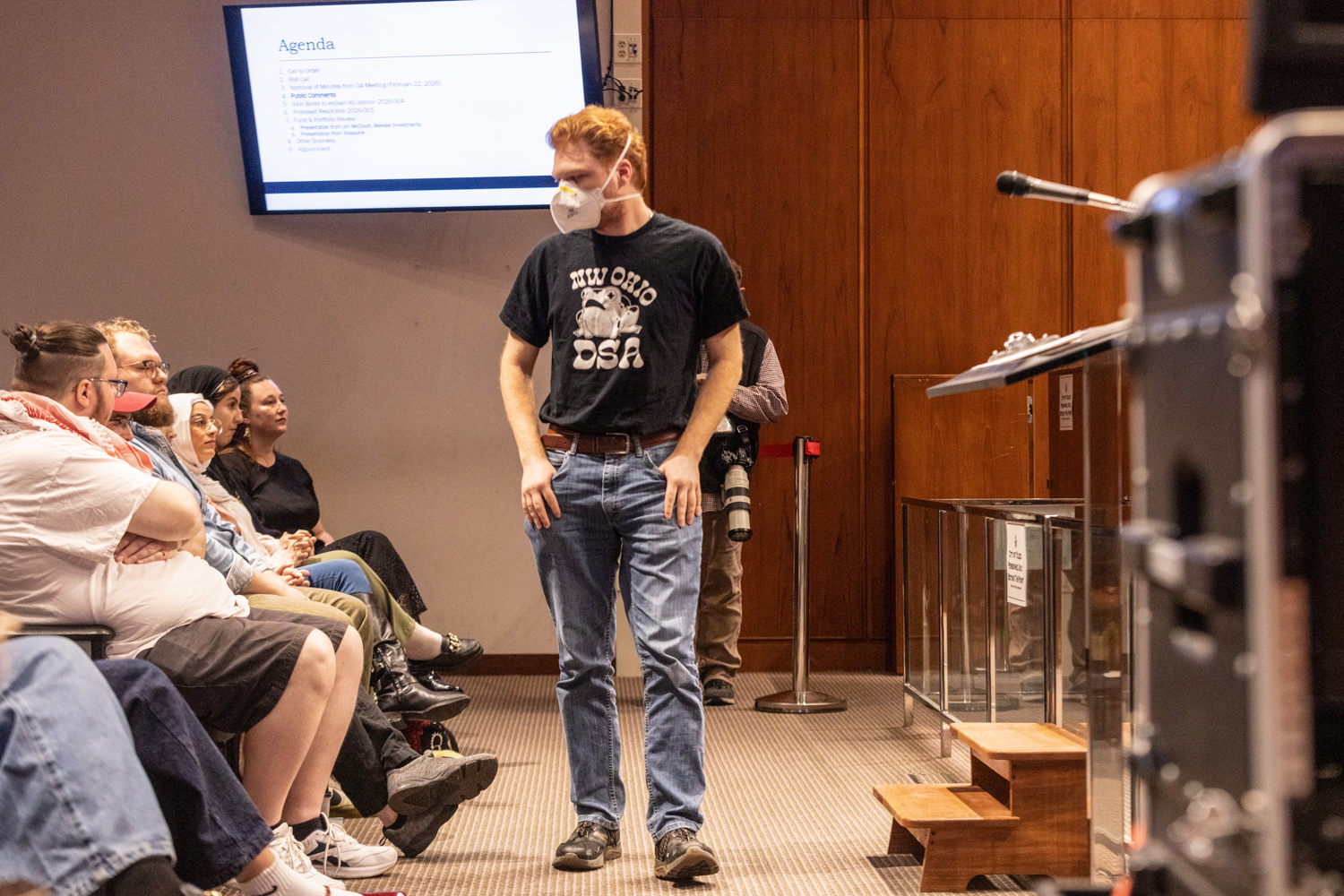
Patrick E. with Northwest Ohio Democratic Socialists of America walks to podium. He was the first to give public comment during the meeting. (TFP photo by Stephen Zenner)

“Purely by financial standards, reinvestment raises serious concerns,” Stram said, and again appealed to the wider view of history. “History also judges public officials who ignore obvious warning signs and moments of instability, including financial warning signs, such as repeated rating fluctuations and shifting risk assessments that signal underlying uncertainty,” he said. 

Finally, Stram pushed against AG Yost’s opinion, calling into question Yost’s morals. Three specific instances were referenced by Stram as to why the public should call his opinion into question:

*When Yost cast doubt on a 10-year-old rape victim whose perpetrator was later caught,

*When Yost tried to dismiss 77 cases of sexual abuse filed against Dr. Richard Strauss in The Ohio State University (OSU) Athletics Department,

*And when Yost attempted to stop a ballot measure to limit qualified immunity

“No court has issued any order or injunction requiring counties to invest in Israel bonds, and no provision in the Ohio Revised Code obliges Lucas County to do so,” Stram said, ending his comment with a loud “Free Palestine!” 

When he went to sit down, Stram was greeted with cheers and a standing ovation from the roughly 75-80 activists in attendance.
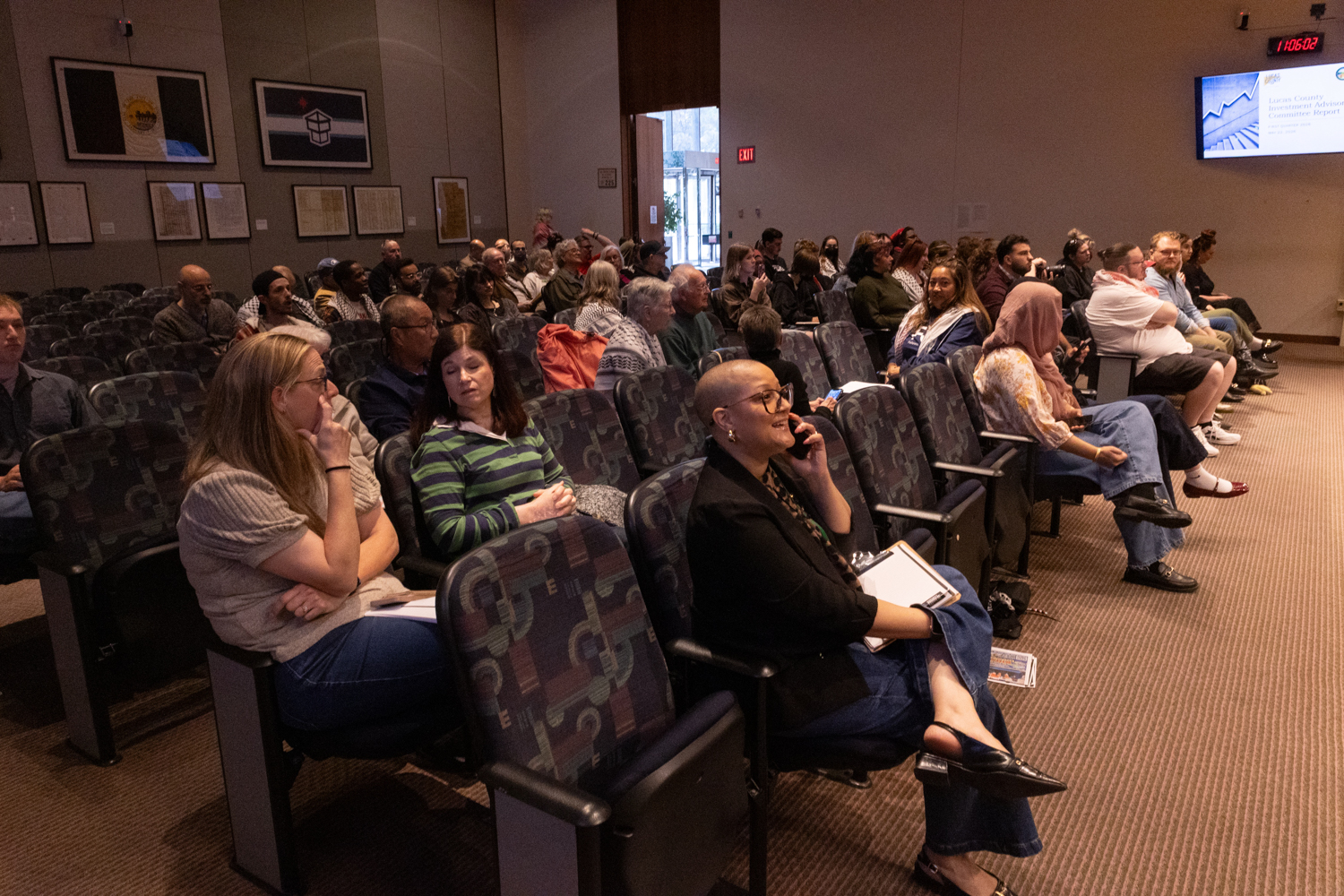
Most of the attendees were interested in supporting Palestinians and divesting from Israel bonds. (TFP photo by Stephen Zenner)

While not as passionate of a comment, Brianna F. presented a more detailed plan for local investment as an alternative to investing in a foreign country. 

“I propose we place these funds into collateralized certificates of deposits or structured deposit accounts with local banks or credit unions that could then use our capital to support low-interest small business loans right here in Lucas County. 

“We could expand the Lucas County Builds program, where these loans are paid back with interest, and the community benefits from more local jobs. We can invest into the state treasury asset reserve to maintain liquidity. This route has the highest possible investment rating, and often can outperform foreign bonds while being completely safe,” she said. 

Notable attendees to the meeting included members of the Northwest Ohio Peace Coalition, Veterans for Peace, Democratic Socialists of America (DSA) and American Muslims for Palestine (AMP). 

There were no overt supporters of Israel in attendance, like in previous meetings. Their arguments are laid out in previous reporting. 
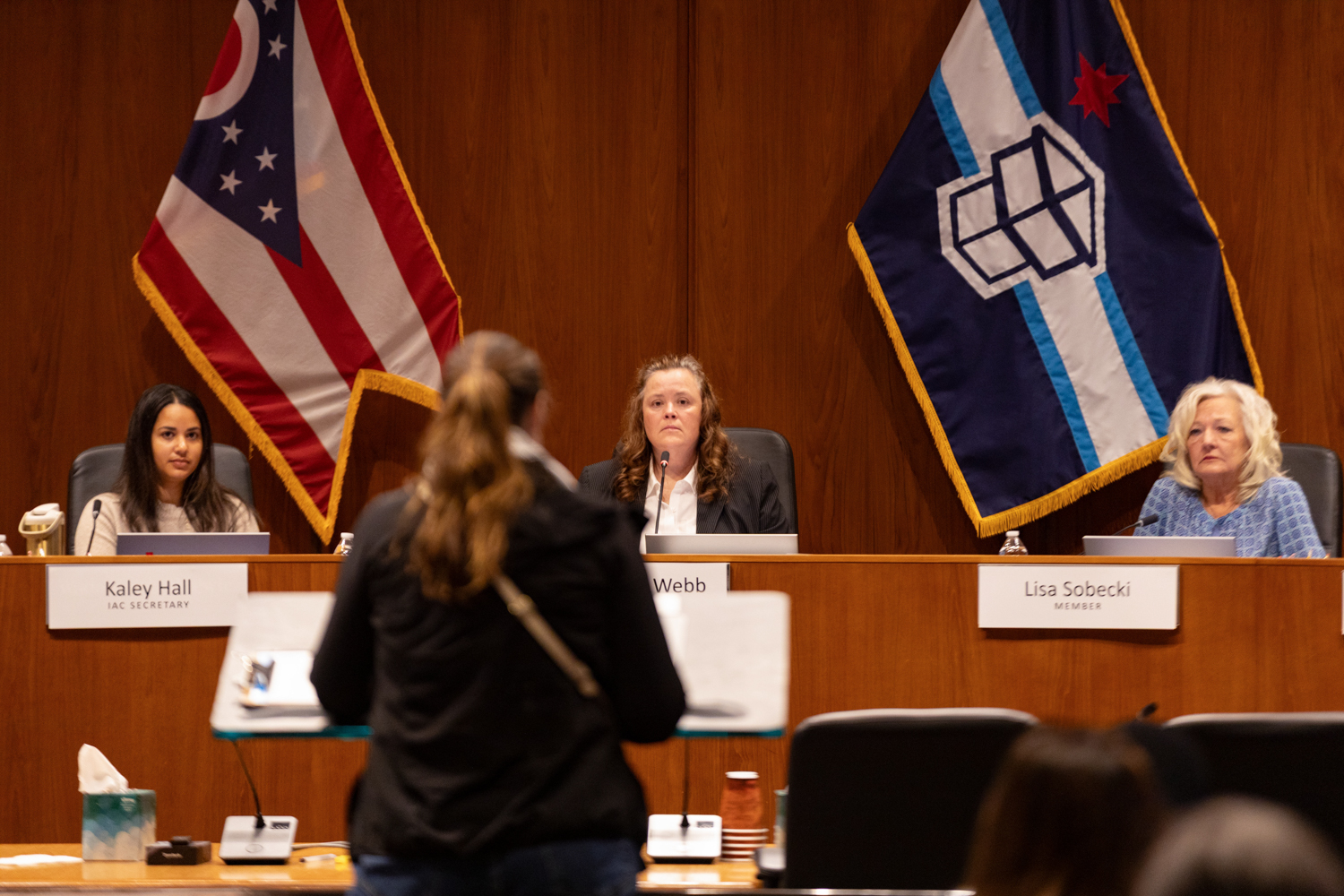
Nora Riggs, a Lucas County resident, addresses Lindsay Webb, Lucas County Treasurer, Kaley Hall, the Investment Advisory Committee (IAC) secretary, and Lisa Sobecki, Lucas County Commissioner and member of the IAC. (TFP photo by Stephen Zenner)

Officials question investments

Commissioner Gerken called into question Yost’s character, with some of the same points Stram made.

“Not investing cannot be considered a boycott,” Gerken said, and questioned the addition of the boycott statute in Yost’s opinion in light of Yost’s past actions. Gerken also rejected the premise that investments are purely fiduciary or purely political, and that the truth lay somewhere in-between.  

“It’s ironic…to deny that the statutes on investment, BDS [Boycott, Divestment and Sanctions], socio-economical considerations are born from the fruit of a tree that’s entirely political.”

Webb’s rebuttal cited Yost’s opinion, that guidance from the IAC prohibiting investment in Israel bonds, without economic justification, would resemble a boycott, and could potentially open up the county to legal action. 
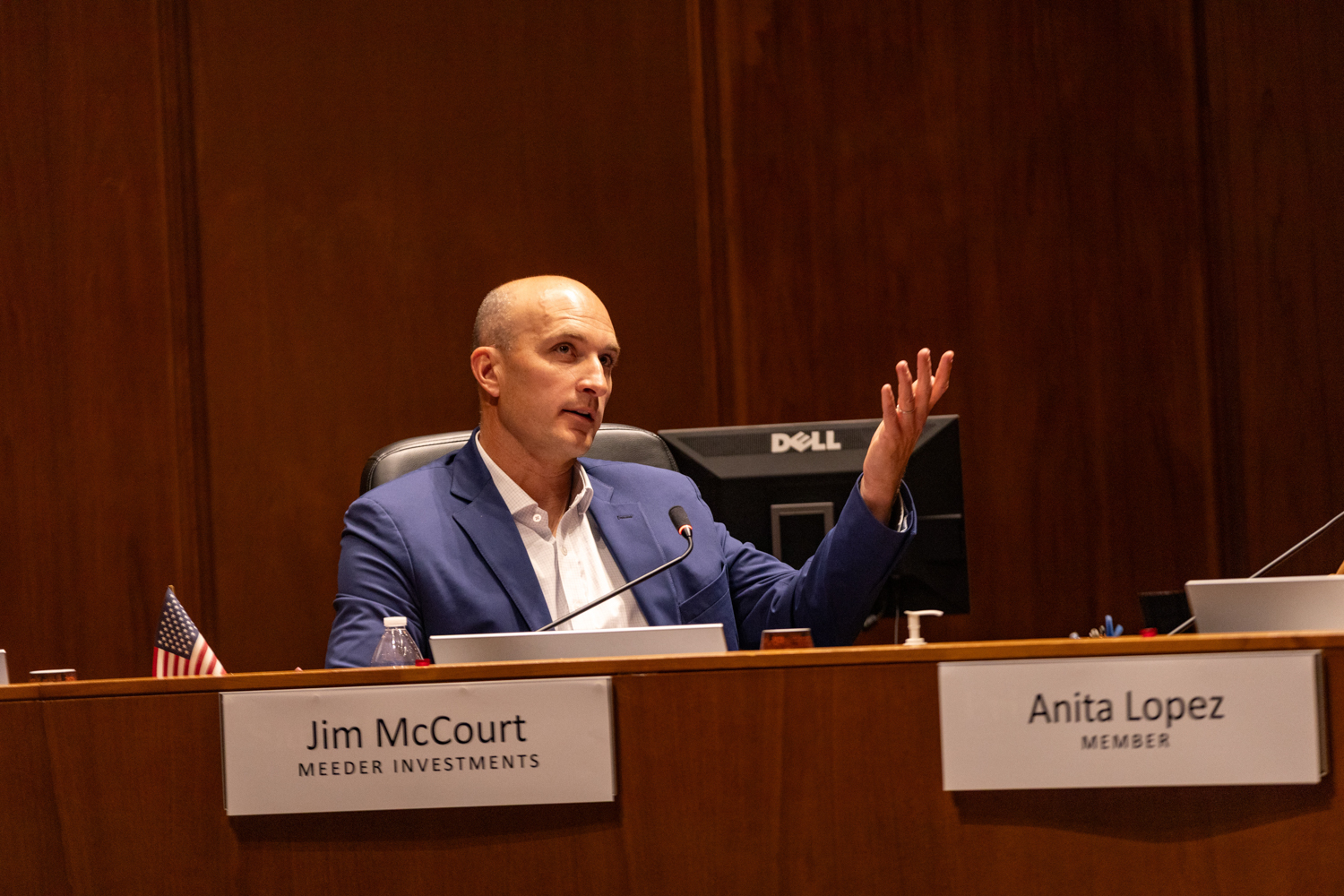
Jim McCourt, the representative from Meeder Investment, spoke on the county’s financial business. (TFP photo by Stephen Zenner)

A quick detour by Lopez led her to ask Borell and Jim McCourt, the representative from Meeder Investments, what qualified as “best and safest return of funds,” from ORC 135.341, referenced in Yost’s opinion and resolution Webb would soon bring to a vote. 

“Return on your principal is [the] number one [factor], the ability to get repaid by the issuer, McCourt said. “Then safety also refers to market risk or interest rate risk. So when you have investments tied up long term and interest rates move, the market value of your securities moves as well. 

So you want to have safety in the sense that you have investments that will be returned fully, with the principle you put into them plus interest.”

Citing a former attorney general’s opinion from 1994, Borell backed up his statement on “safety, liquidity and yield.”

Lopez then asked about all of the investments by the county, and how they were evaluated. 

Webb then said that she “constantly” engages in the “analysis” of all investments based on the criteria Borell and the ORC outlined, and further stated that since the investment in Israel does not mature until December, it is impossible to determine the safety, liquidity and yield at this time.

Commissioner Lopez then asked if there was a “written analysis” for the county’s investments.
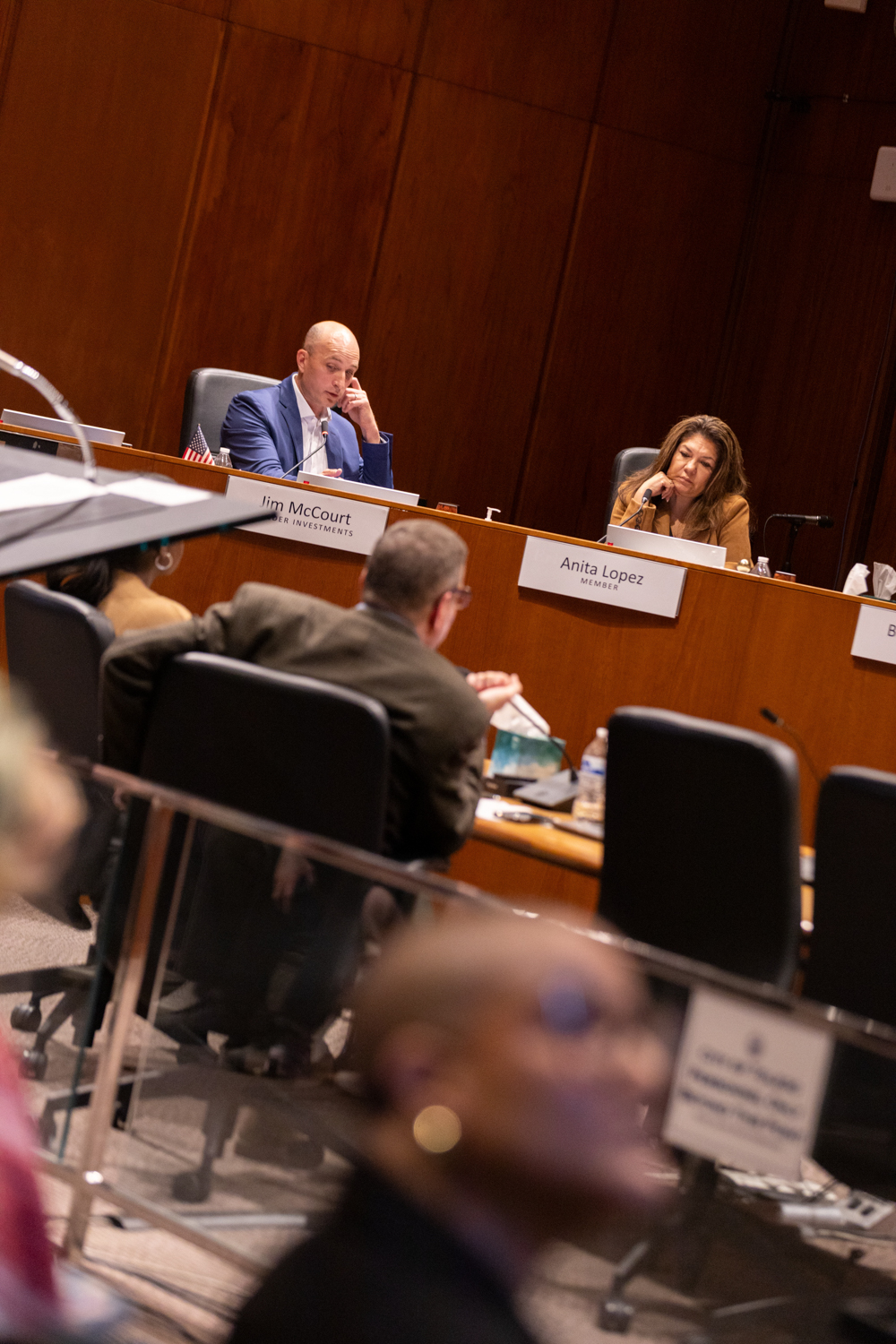
Jim McCourt, the financial representative from Meeder Investments, speaks with Anita Lopez, Lucas County Commissioner. (TFP photo by Stephen Zenner)

And Webb said she was in regular communication with the Office of Management and Budget to understand the needs of the county, whether to liquidate, invest or reinvest assets, according to the ORC and the IAC’s guidance. 

Gerken then asked McCourt if all of the counties and municipalities McCourt advised were recommended to invest in Israel bonds.

After some hesitation, McCourt said he could provide a comprehensive answer to the question after looking at the data, which seemed to satisfy Lopez, but not Gerken.

“Is it your business entity’s philosophy to guide municipalities into Israeli bond investments?” Gerken asked. 

To which McCourt said that Israel bonds were “eligible,” and that the determination would be made at the time of investment. 

“Is that a ‘yes?’” Gerken pushed. 

“At times, yes,” McCourt answered. 

The treasurer then asked if there were further questions for Borell regarding the Attorney General’s opinion.
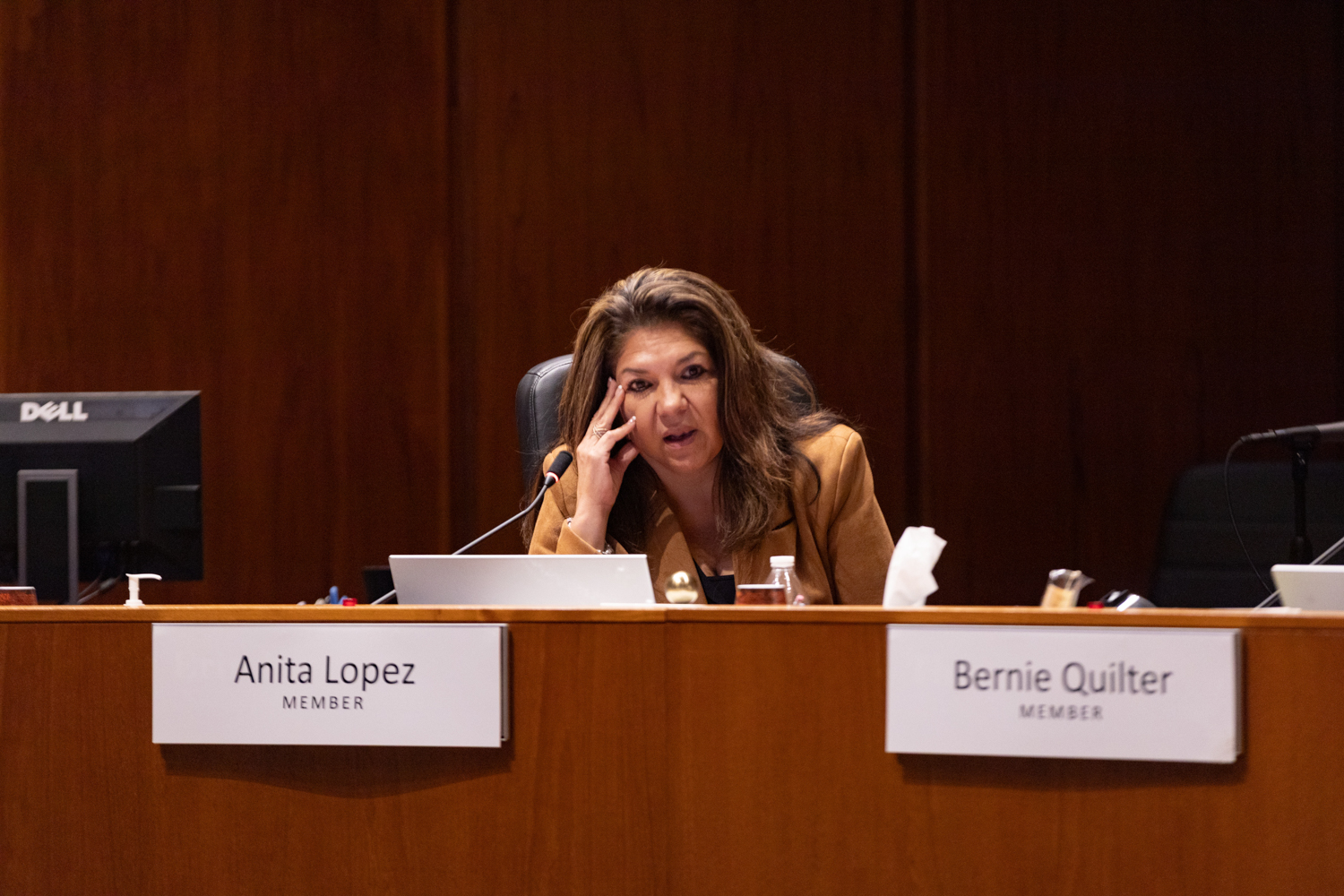
Lopez asks clarifying questions during the quarterly Lucas County Investment Advisory Committee Meeting. (TFP photo by Stephen Zenner)

Resolution to affirm Yost

After a moment of silence, Webb introduced resolution 2026 001, which she said was “updating the investment advisory committee’s guidance regarding the investments in light of the Ohio Attorney General opinion 2026 004. It provides guidance for how the committee and the treasurer as investing authority should evaluate the lawful investment options going forward.”

She moved to vote on adopting the resolution, but Gerken immediately attempted to table the resolution.

“First of all, it’s unnecessary, and I believe, redundant,” Gerken said, and asked Borell to weigh-in. “This is an Attorney General’s opinion that you’re bringing into our policy,” Gerken said to Webb. 

Webb attempted to silence Gerken.

“A motion to table is not debatable, Commissioner Gerken, so, I think I’ve given you enough leeway to express your opinion on this,” she said, trying to move past Gerken. 

Gerken then made a motion to table, and Webb repeated that it was not debatable. 

The Lucas County Clerk of Court and IAC Member Bernie Quilter then asked for clarification on the procedure of the meeting, because it seemed as though the IAC was going to vote to table and then vote on the resolution regardless of the motion to table.

A point of order was called by Gerken, who fought the claim by Webb that, “A motion to table is not debatable.” 
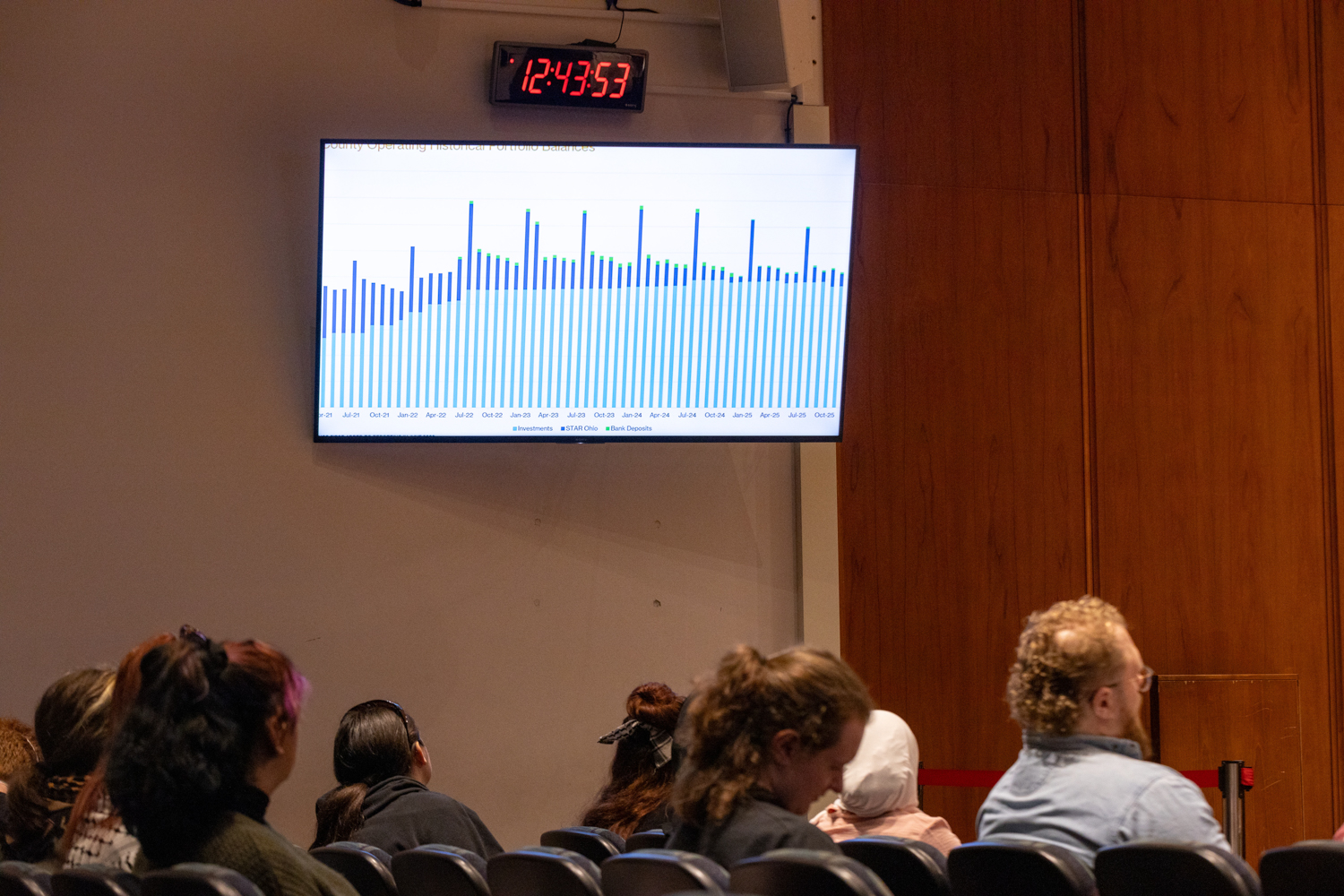
Jim McCourt, a representative from Meeder Investments, shows data for Lucas County’s investments. (TFP photo by Stephen Zenner)

Because the Committee never voted on accepting Robert’s Rules of Order, Gerken said the procedural stipulations of Robert’s Rules of Order did not apply, unless the Committee first voted on accepting the rules of order beforehand. 

“Robert’s Rules of Order is a natural reliance,” Webb argued. “We have effectively, de facto, relied on Robert’s Rules of Order as a way to maintain order through the meeting.” 

At the end of Webb’s justification the IAC began to vote on whether to table the resolution, but Lopez interrupted, asking if Webb’s justification was legally sound. 

Borell then weighed in with a legal framework, “Public bodies in Ohio do not automatically use Robert’s Rules of Order.”

“There’s no statute that requires either the county commissioners or the IAC to use Robert’s Rules of Order, so Commissioner Gerken is correct.”

Even with this ruling, Webb attempted to stop debate. 

“It’s my decision that the motion to table is not debatable,” Webb said, and Gerken challenged Webb’s decision.

Unnecessary and redundant were the beginning complaints Gerken had against the resolution, and then he added that the resolution hadn’t been put before the IAC or discussed sufficiently.

“If you want to have legitimate policy debates over our role as an advisory committee, and what the policies say, we should all have an opportunity to weigh into that,” Gerken said. 

Proceeding formally, Webb attempted to follow Robert’s Rules of Order, and asked Gerken to challenge her decision so they could vote on whether to have a debate.

Another attempt at a vote was thwarted by Commissioner Lopez, who wanted clarification on Robert’s Rules of Order.

The Assistant Prosecutor repeated that the body was not bound by Robert’s Rules of Order. 
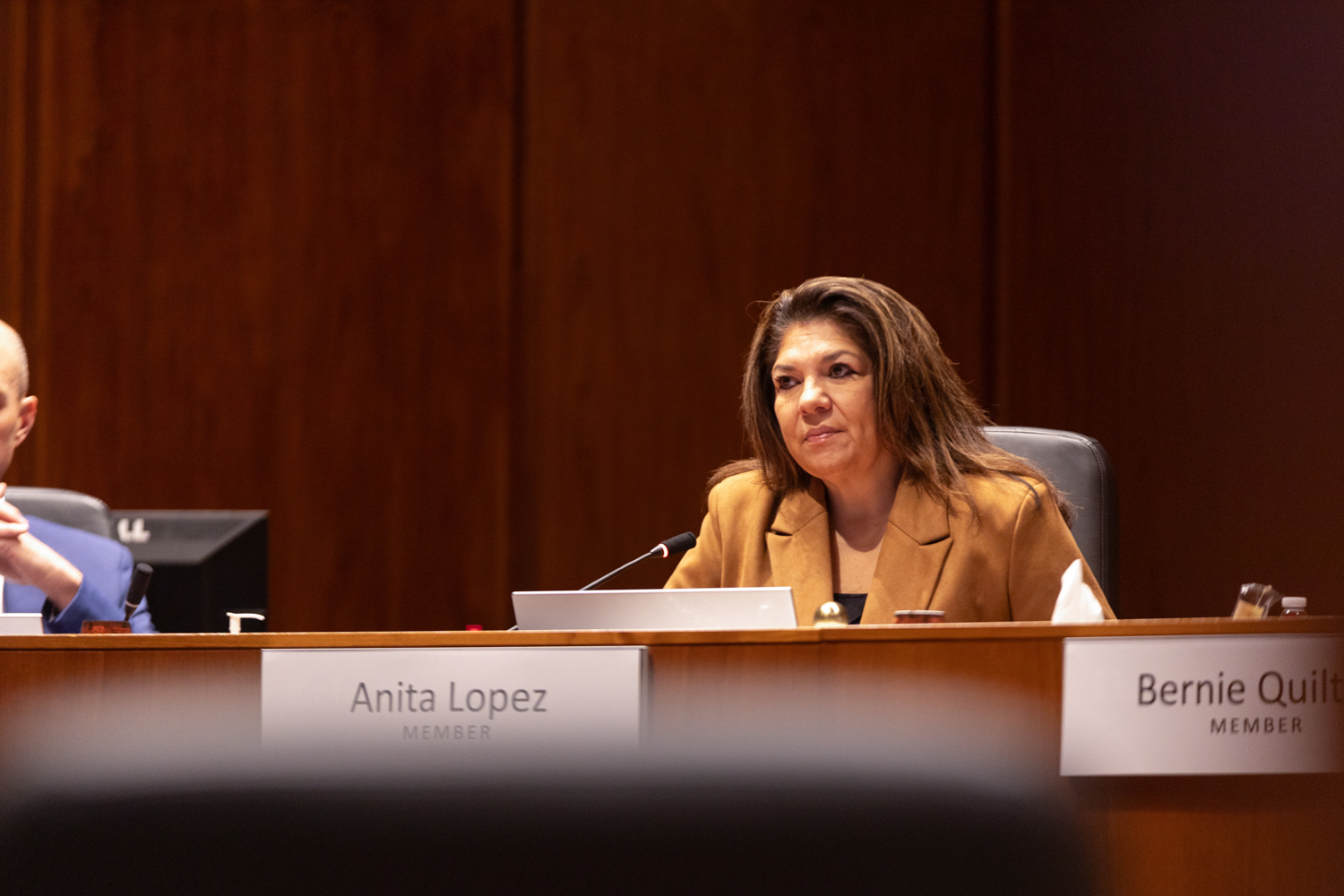
Lopez listens to public comment during the meeting. (TFP photo by Stephen Zenner)

Lopez then asked Webb if she could ask Borell legal questions. 

A noticeably frustrated Webb said, “The floor is yours. Ask your question.”

Trying to get clarity on the resolution, Lopez asked if the AG’s opinion and the resolution were the same legally, and if adopting the resolution might shield or open up the county to legal action. 

Borell said the policy was a “summary of state law.” This answer created more questions for Lopez, and she asked Borell if he thought the IAC should adopt this resolution. 

“Maybe this will be a good idea to pass this,” he said after telling Lopez he didn’t want to weigh in personally, but after multiple promptings, he relented. “Again, I wouldn’t have said that two years ago.”

“After listening to these meetings for two years, there seems to be a lot of misunderstanding about what this body does, what the treasurer’s obligation is, what her [Webb’s] duty is. For that reason, I would think it might be a good idea to pass this.”

Quilter then asked if Borell had helped draft the resolution, and Borell said he had. 

Objecting to the resolution, Gerken pointed back to the boycott part of the AG’s opinion, and asked how the body could pass a resolution that upheld a portion of an opinion Borell disagreed with. 

Bernie Quilter, an Investment Advisory Committee member, speaks during the quarterly Lucas County Investment Advisory Committee Meeting. (TFP photo by Stephen Zenner)

“With all due respect, Chair, we are in the middle of a vote,” said Lisa Sobecki, Lucas County Commissioner, trying to push the meeting forward. 

Gerken interjected to explain himself. “We never took a vote, and she [Webb] shut down debate out of the false premise that they’re offering…” he said and then Sobecki and Gerken began talking over one another.  

A call to order was issued by Webb. 

In an attempt to clarify her objectives with the resolution, she said she put forth the resolution “to be very clear about what my responsibilities are as the treasurer.”

“Additionally, there was some preliminary discussion during the motion to advise me not to reinvest, that failure to reinvest could be construed as a rational basis to take my investing authority, which the voters have entrusted me with.”

“I just want to make it perfectly clear what my responsibility is under the code, and nothing more, and nothing less.”

At this, Gerken once again summarized his previous points of contention against the resolution, and again, made a motion to table the resolution. 

The votes were counted, with a split: Quilter and Gerken for tabling, and Sobecki and Webb against tabling the resolution. 

This gave the tie-breaking vote to Lopez, who had more questions before she voted. 

“The resolution does not reference the boycott provision?” she asked the Assistant Prosecutor. 

Borell told Lopez the resolution did not include the boycott provision, and Lopez voted not to table the resolution. 
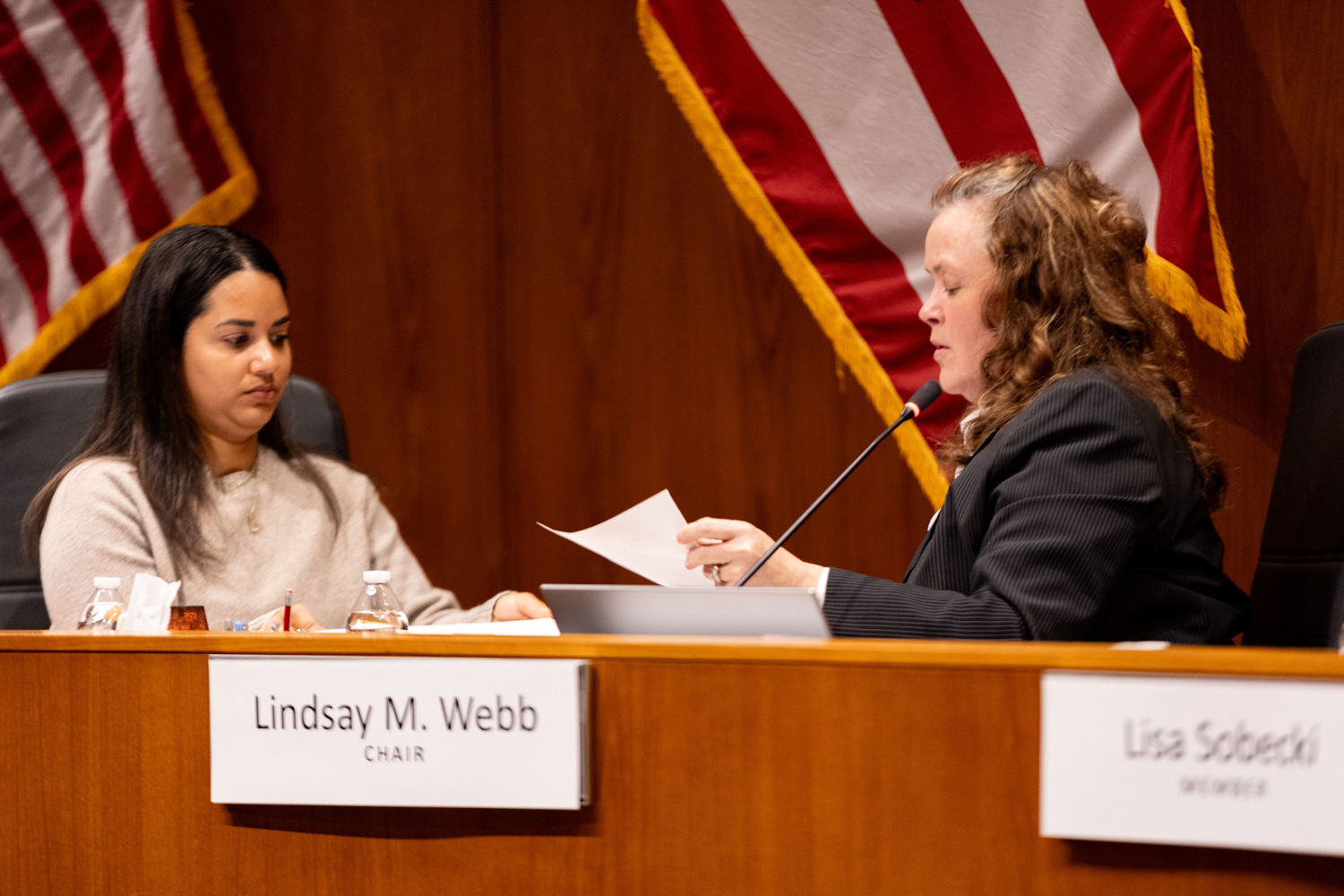
Kaley Hall, the secretary for the Lucas County Investment Advisory Committee, helps Lindsay Webb, Lucas County Treasurer, pick an individual at random to give comment. (TFP photo by Stephen Zenner)

Further clarifications

Once it was determined the resolution would be voted upon during the meeting, Gerken made a motion for discussion.

As soon as the motion was granted by Webb, he said, “I have several amendments I’d like to make.” He pulled out printed copies of the resolution with his amendments and passed them to other members of the Committee. 

“Guidance” was changed to “policy and advice” throughout the document, as was “reinvestment decisions” to include “all decisions” and the final addition was, “the written county policies and resolutions established by the Committee should be a guiding factor [to the treasurer’s decisions].”

Webb pointed out a passage, in section three of the document that stipulated that every investment should have a “fiduciary rationale consistent with Ohio law and the county’s investment policy.” Worried about expanding duties for her office, Webb asked, “Are you going to expect me to send you an email with every decision that we make?” 

Both heated officials began to talk over one another. 

Gerken continued to explain the language choices in the amendments as related to the principles of the resolution, and Webb continued to ask if these amendments required procedural differences in her job. 

Her main concern seemed to be if she would be taking on more work, exhaustively informing the commissioners on the minutiae of the county’s investments. 

A few minutes later, Lopez broke the deadlock of back and forth, and said, “I do think it is important that an analysis is presented [so that] we understand as the public why you are doing those decisions.”

An exasperated Webb listed aloud the procedural details associated with investment choices, implying that the reasons for investing are complicated, varied and difficult to explain. Continuing, as if she were counting, Webb invited Commissioner Lopez to come to the Treasurer’s Office, where she assured the commissioner that her office was already providing daily and monthly analyses of the treasurer’s investment decisions. 

“I am fine with every investment… but what I am not okay with is creating something in my policies and processes that doesn’t already exist,” Webb said, fearing more work for her office. 

Gerken said his amendment was simply stipulating that the IAC help consult on all investments, not just reinvestments. 

By this time, about an hour in, all members of the IAC seemed a bit aggravated with the contention in the room. 

Quilter questioned what Gerken’s contention was about, and defended Webb’s discretion in making investment decisions. 

“That’s for the voters to decide,” Quliter said of evaluating Webb’s investments for the county. 

Back on the “investments vs. reinvestments” stipulation in his amendments, Gerken continued to explain he wasn’t attempting to change the treasurer’s power. 

Quilter seemed to ask why the entire discussion was happening at all, to which Gerken explained he was trying to define the role of the committee in guiding investments. 

An exhausted Quilter said, “I’ve been on this committee for like 24, 25 years. We have never run into this situation.”

In reply, Gerken said, “The world changes.”

Voting

Webb and Gerken negotiated the specifics of a few lines of the resolution for a number of minutes, which eventually gave way to some of the previous arguments reigniting. 

Eventually, a vote on amending the resolution was called, and slowly, Webb inquired how each member wished to vote. 

After hearing Quilter’s vote in favor of amending the resolution, Webb audibly sighed. 

Sobecki and Webb voted against the amendments, with Quilter, Lopez and Gerken voting for the amendments. 

“Your motion carried,” Webb said toward Gerken.

Much more quickly, Webb called the vote for adopting the resolution, and the sides voted the same: Sobecki and Webb vs. Quilter, Lopez and Gerken for adopting the amended resolution. 

Webb leaned into the work of the moment. “The draft resolution is adopted, and I thank you all for your…” and she searched for the words for a moment “…lovely debate.” 

From this point, McCourt began going over the general trends in the American market. 

Excerpt from Resolution 2026 001 without the amendments

“Whereas the Committee desires to update its prior guidance so that future investment decisions are reviewed consistent with Ohio law, the county’s investment policy, and the Treasurer’s fiduciary responsibilities;” —Resolution Updating the Investment Advisory Committee’s Guidance Regarding Investments in Light of Ohio Attorney General Opinion No. 2026-004

The resolution outlined these ten steps for evaluating investments:

1. safety of principal

2. liquidity needs of the county

3. yield and available market alternatives

4. credit quality and applicable credit ratings at the time of purchase

5. marketability

6. maturity limitations

7. diversification and portfolio composition

8. statutory eligibility

9. the size and needs of the county’s portfolio

10. and then-current market conditions.

Cartoons by Don Lee: Kindergarten graduation

0
Cartoon by Don Lee.

Cardinal Stritch grad runner-up in Ohio Youth of the Year contest

0
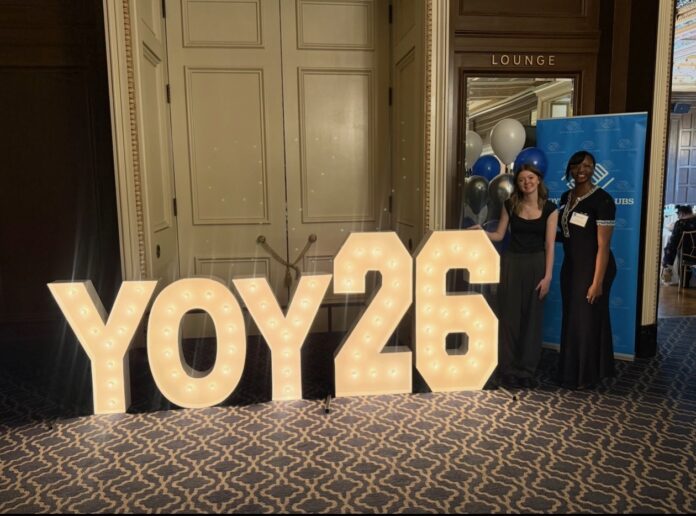
Olivia Ford of Point Place, left, a runner-up in the 2026 Ohio Youth of the Year competition, is pictured with Dominga Grace, program director of the Boys and Girls Club of Toledo. (Courtesy Photo)

TOLEDO — What started out as an obligation to meet her school’s graduation service requirements quickly turned into a much deeper commitment for Olivia Ford, who was named the 2026 Boys and Girls Clubs of Toledo Organizational Youth of the Year. 

The Point Place resident has worked with the Boys and Girls Clubs of Toledo since 2023, when she started out as a summer program volunteer with the Ottawa River Club. She quickly surpassed the school requirement and ended up with somewhere between 160 and 180 hours of service just that first summer.

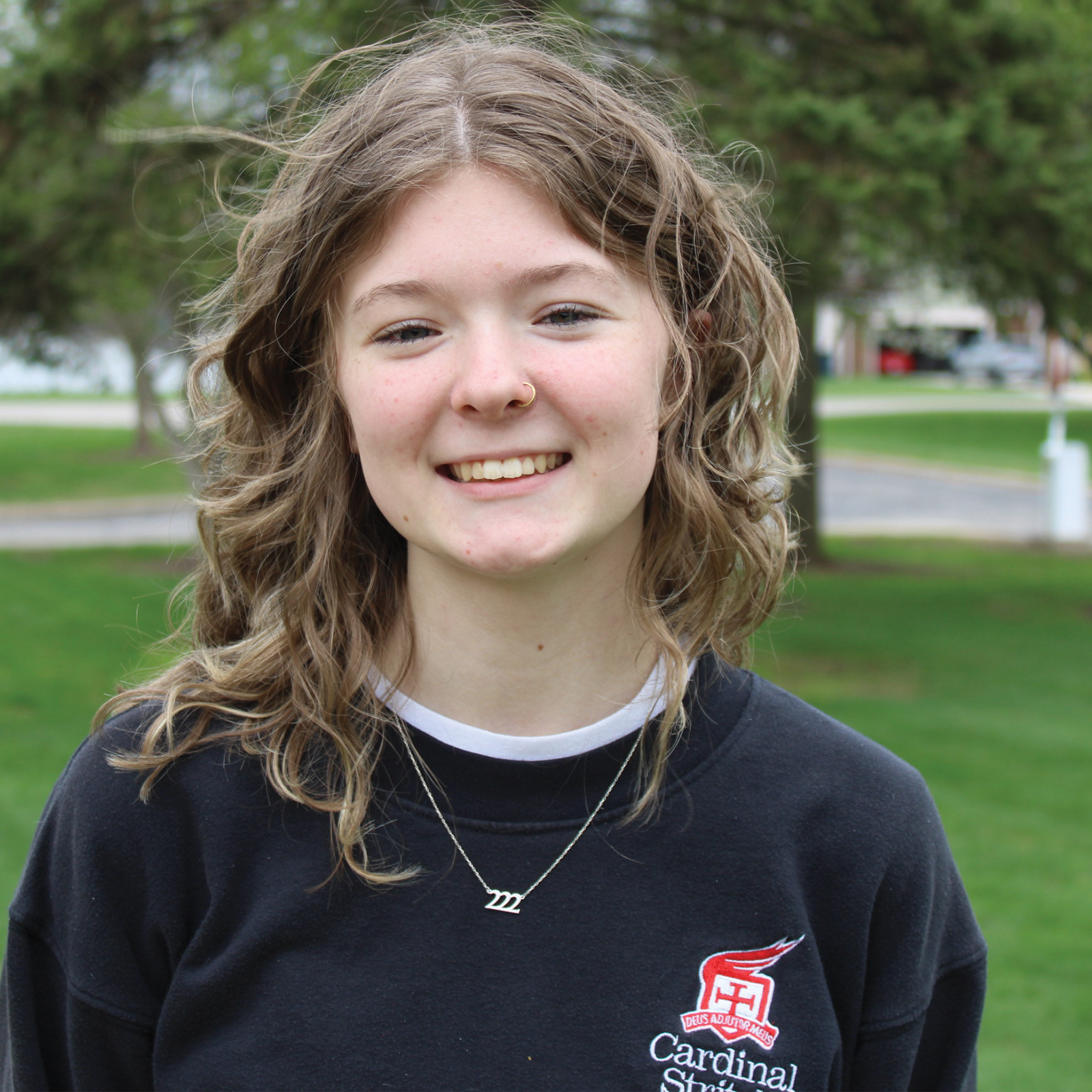
Olivia Ford. (Courtesy image)

“I just loved being with the kids and being in that environment. It was just really something special to me,” said Ford.

Boys & Girls Clubs of Toledo provides youth aged 7 through high school graduation with a safe place to learn and grow, fun and educational programs, caring mentors, and service and leadership opportunities at nine locations across the city.

Ford said it was the kids who captivated her and kept her coming back. She helped run a program called Brain Games where the volunteers read a featured book each week and led projects to engage the younger children in learning about different topics.

“It was just seeing what I could do to help bring these kids joy and happiness, and what projects I could come up with and lead with them, or what crafts I could do with them,” said Ford.

“Members connected well with Olivia right away,” said Hannah Fox-Lu, senior Club director at the Ottawa River Boys & Girls Club. “She is caring, compassionate and a great listener, which made her a strong leader who built meaningful and lasting relationships with members.”

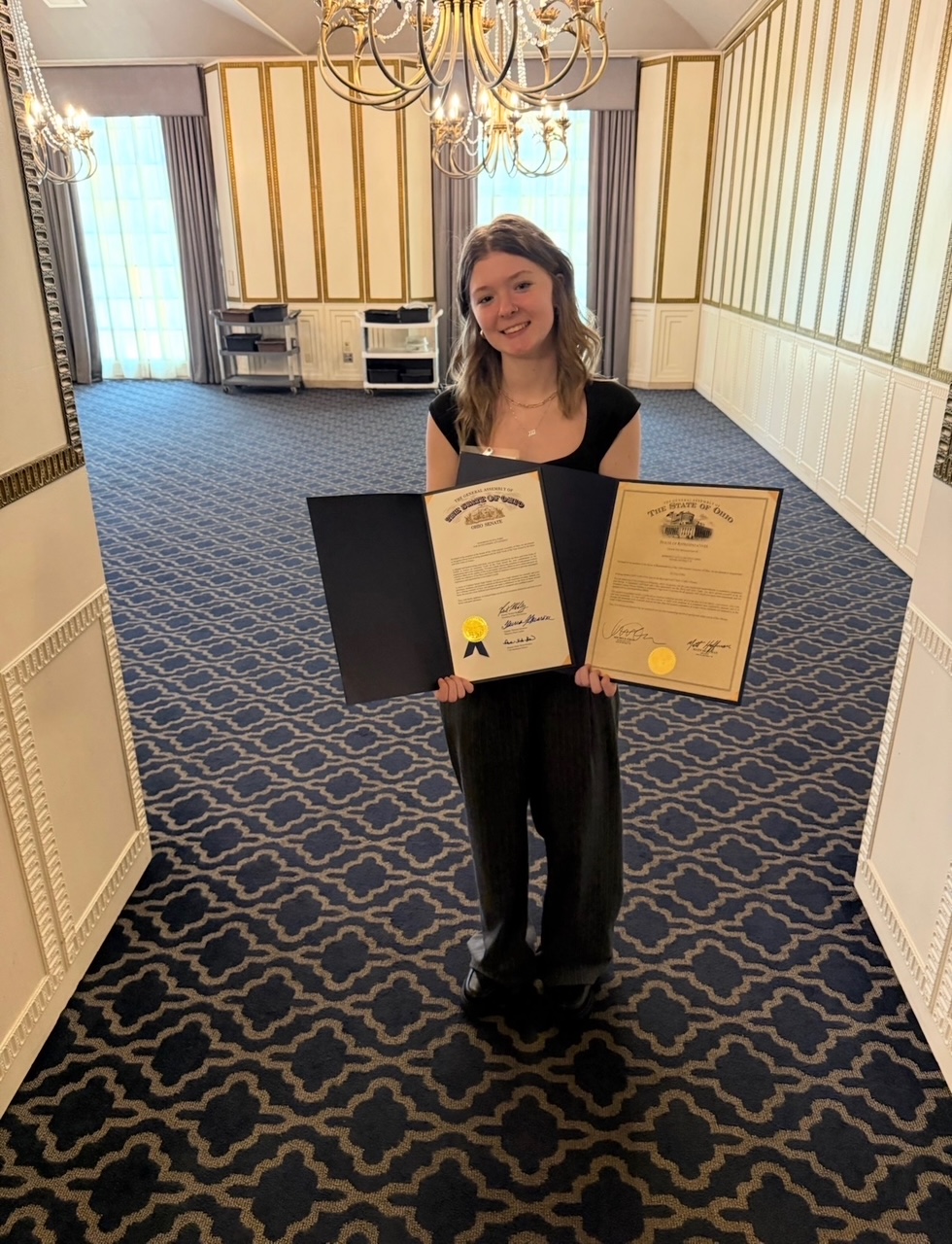
Olivia Ford received recognition from the Ohio House of Representative and the Ohio Senate for her achievements as a runner-up in the Ohio Youth of the Year Competition. (Courtesy Photo)

Ford later took on a paid position as a Teen Employment Corps junior staff member at the East Toledo Boys & Girls Club, where she mentors younger members and assists adult staff with implementing youth programs. In 2025, the Club recognized her with the John E. Gunckel Award for Service for community service, leadership and mentorship.

In April, the Point Place resident and recent graduate of Cardinal Stritch Catholic High School traveled to Columbus to represent Toledo at the 2026 Ohio Youth of the Year competition sponsored by the Boys and Girls Clubs of America. 

Ford was named a runner-up in the competition, which required candidates to deliver a memorized speech of less than three minutes and answer questions about their club service in an interview with the judges. Ford was also asked to give her speech at a luncheon during the competition, and had the opportunity to visit the Statehouse and exchange ideas with other youth candidates from around Ohio. 

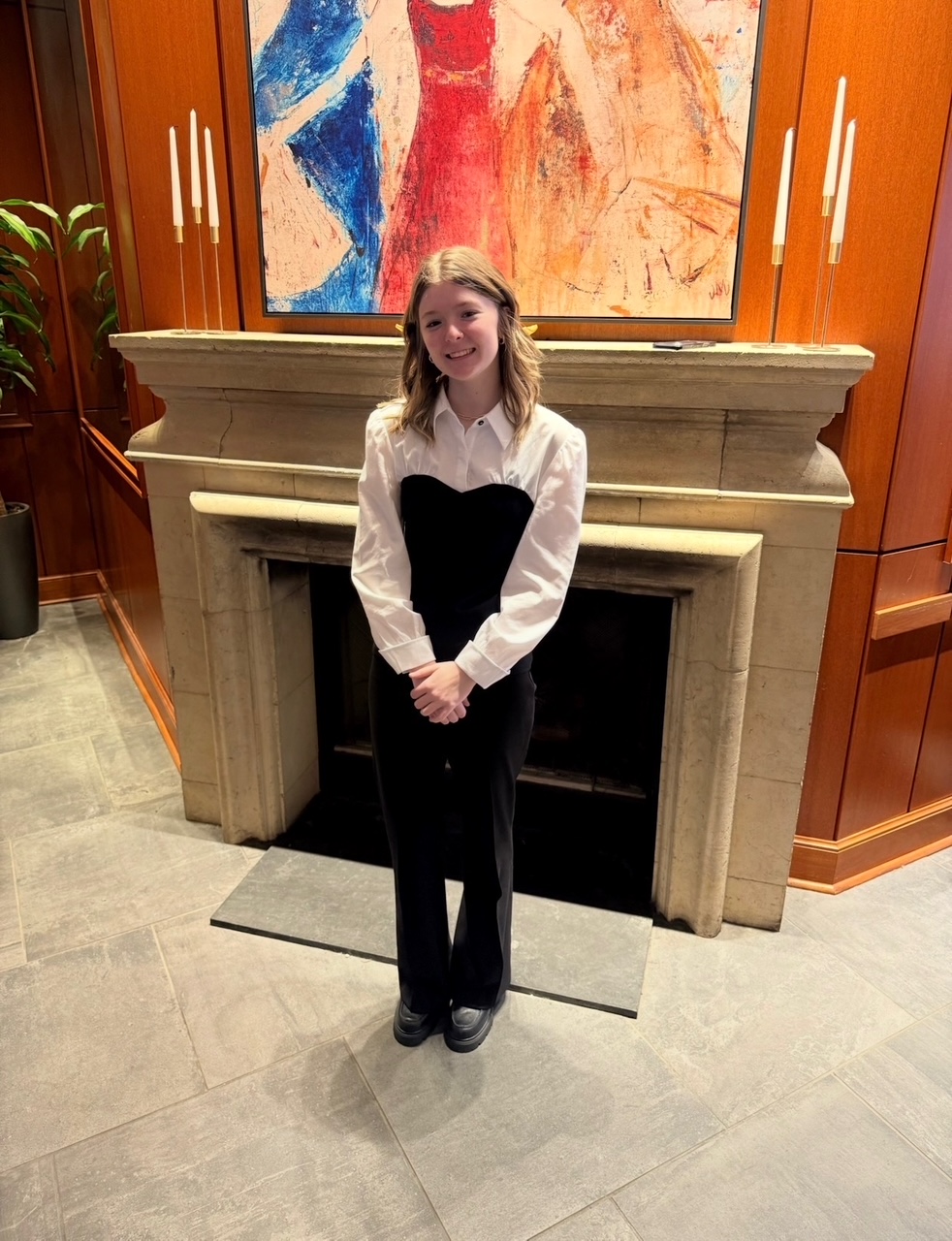
Olivia Ford. (Courtesy photo)

Ford credits her experiences at the Clubs for helping her discover a passion for working with children, and she plans to attend Bowling Green State University to study education this fall. She envisions herself one day working in her own classroom where she can come up with “new and creative ways I can get them engaged and make an impact.”

“That’s really what I want to do is just leave an imprint on anyone I can,” said Ford, who plans to remain involved with the Boys & Girls Club as a part-time instructor while she attends school. 

Ford said it is important for teens to get engaged in their communities. “Before I’d even got involved in volunteering, I just kind of moped around. I felt like I wasn’t doing anything,” she said. “This kind of gave me a sense of purpose.”

Along with working at the Club, Ford has served as a youth volleyball coach and was the Volleyball Team Captain at Cardinal Stritch. In her final season, the Toledo Area Athletic Conference recognized Ford as its Player of the Year. She was also involved with the National Honor Society, student council and the National Exchange Club. 

Principal Malinda Siers described Ford as an exceptional student. “She has not only achieved academic excellence while inspiring and uplifting her peers, but has also left a lasting mark on our school community through her creativity, leadership, and athletic success,” said Siers. “We are incredibly proud of the impact she continues to make both inside and outside the classroom.”

A graduation message for all high school students

0
(Courtesy photo by Jim Rush)

TOLEDO – This is the season of high school graduations and the activities that go with it. As students, parents, and families enjoy the accomplishment, it is also time to think about the next chapters of life. Graduates, this marks the completion of the first major chapter of your lives; you have worked hard, overcome challenges, and reached an important milestone that deserves to be celebrated.

As you move forward, the next chapter will lead you toward college, skilled trades, military service, entrepreneurship, or the workforce. Each new opportunity ahead of you will help shape your future and open doors to new experiences and growth.


Another import chapter in life will be building meaningful relationships and creating a strong support system of family and life friends who will encourage and stand beside you through every season of life.

Dr. Stredrick, Superintendent of Maritime Academy, marches in the graduation procession. (Courtesy photo by Jim Rush)


I also want to say that parents, families, teachers, and mentors have given guidance, encouragement, and sacrifices to help you as graduates reach this point. Dr. Misha Stredrick, Superintendent of Maritime Academy, reminds us that many of our high school graduates are first-generation graduate students.


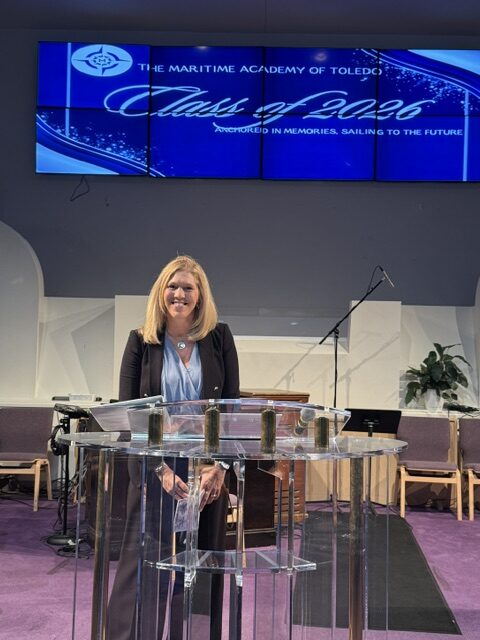
Kate Fineske, Executive Director of Museum of the Great Lakes, who was the graduation speaker for Maritime Academy told students that “success is rarely linear. Life is not a straight line; life is like water – you must navigate currents of change.” 

Fineske went on to advise students not to let social media guide their lives. Most people on social media are no smarter than you, she said, adding details about her own life’s challenges as a way of saying to students that life is not perfect.

Kate Fineke, the keynote speaker at Maritime’s graduation. (Courtesy photo by Jim Rush)


Additionally, I cannot end this article without encouraging these new voters to make their voices heard. I heard Xernona Clayton (who the first Black TV show) speak in Atlanta, and she talked about the need to vote. She also said students should always do the right thing and treat people right. She said that, in the past, Grady Hospital in Atlanta would only let Black women have babies in that hospital on Tuesdays and Thursdays. This is the kind of issue that reflects what voting is all about. Clayton had an impact on the Ku Klux Klan by treating the Grand Dragon as a person and not someone to fear. Her message about voting and treating people right will help graduates in their life journey.

Graduates of all schools, continue pursuing your dreams with courage and determination. Believe in yourselves, work hard, and never stop striving for excellence, because you absolutely have the ability to achieve great things in life.

Dr. Stredrick said that 24 seniors graduated from Maritime this year. Their salutatorian was Fernanda Fernandez and their valedictorian was Dontae Osley.

Maritime Academy offers career paths in culinary arts, arts, business, college preparation, and health care.

Northwest Ohio Innocence Clinic (NWOIC) works with UToledo

0

TOLEDO – Imagine that you are a participant in an experimental drug trial, leading to a severe reaction. You instinctively call 911 for help, but when they arrive, instead of taking you to the hospital, they put you in an overnight jail cell. This was the experience of Kay Anderson, the founder and executive director of the Northwest Ohio Innocence Clinic (NWOIC). 

Kay Anderson sits at her desk replying to emails. Kay works with numerous legal minds, including many professors from UToledo. (TFP photo by Lucas Sells)

While Anderson was never charged for the possession of the drug she was testing, she still faced a possible 20-year conviction. Many like her have much worse outcomes. Anderson had a friend who was convicted for a crime years later, and she saw that evidence used in his case had disappeared. After working with the Ohio Innocence Project, Anderson decided that Lucas County needed something similar.

NWOIC was founded as a non-profit organization with the goal of raising awareness to both prosecutors and the public of legitimate claims of innocence in Northwestern Ohio. Since its founding, the clinic has worked on 30 cases that warrant an investigation. The clinic works closely with the University of Toledo, where many law and criminal justice students get involved. Along with them, many individuals from outside the university also join the organization.

Kay Anderson has been involved in the legal world since her time as a private investigator. (TFP photo by Lucas Sells)

“We have people that are just psych majors, and people that aren’t even students,” remarked Esther Goldstein, a recent UToledo graduate. “We have an electrician… they’re just family members of people who have been wrongfully convicted, and they want to help out and learn what they can do on their own in their own time.”

The main focus of the NWOIC is to educate individuals in the community on the justice system and how to investigate potential claims of innocence. Anderson leads Zoom calls and in-person meetings where she teaches her students the basics. From public record searches, skiptracing (learn more about this in the video interview) and document requests, Anderson hopes to impart the knowledge that someone would need to find second chances for convicts. 

A stack of documents sits on a desk inside of Kay Anderson’s home office. The NWOIC is a place where anyone can learn to investigate wrongful convictions. (TFP photo by Lucas Sells
At the heart of investigating claims of innocence are Brady Claims, evidence that is found after a conviction that can alter a verdict. Anderson aims to teach her students how to find these, as they are the basis for overturning wrongful convictions. Many are found through public record requests, something that Anderson has found increasingly hard to do.
Along with finding claims of innocence, individuals who get involved in the NWOIC learn valuable life skills that will aid them long after they leave the clinic. Goldstein found that her experience would be put to good use in her career in public defense

“I’m gonna be an attorney eventually, and I’ll have to communicate with clients or all sorts of people, victims, you know? And it’s important to have those communication skills, especially in this type of field because you’re working with all sorts of people, different education levels, different backgrounds. So it’s important to be able to communicate on a wide variety and scale.”

A poster of known wrongful convictions in Lucas County adorns Kay Anderson’s wall in her home office. Kay founded the NWOIC after her experience with a potential wrongful conviction. (TFP photo by Lucas Sells)

Anderson also spoke about the Joel Terry case. In 2018, Terry was convicted on multiple counts of raping his daughter. DNA evidence that was tested pointed to a male, but no specific male. The way that the prosecution delivered the case, the jury convicted Joel, and he received multiple life sentences. A few years later, that same evidence was retested, and the new test showed that Joel was not a match. Due to this, Joel was released on bond last November. 

“His whole family was there and they all celebrated… his daughter, who’s one of our interns, was crying. Everyone was so excited and cheering and you could feel it in the courtroom,” reminisced Goldstein. “You could feel how powerful that moment was and how much it meant. His case isn’t resolved yet, but just being able to celebrate Christmas with his family meant so much to him, and it meant so much to us just to be able to be in the courtroom and share that moment. So, it’s those small victories or those small moments [that] are big victories. and we don’t get a lot of them.”

Fighting a system that seems to routinely work against those who are disadvantaged is something Anderson and her students are constantly engaging in. She feels that, recently, many steps have been taken to further limit the access the public has to records. To her, the deck is stacked against the truth, but she continues to make it her mission to bring wrongful convictions to light.

Learn more about the Northwest Ohio Innocence Clinic here.

TFP Weekend: Americans for Political Tolerance

0

On the return of TFP Weekend, Jaden Jefferson speaks to Brian Price, founder and CEO of the group Americans for Political Tolerance. Price shares his thoughts on how to improve civic engagement, make elected officials more accountable to their constituents, reduce polarization, and combat apathy toward the democratic process.

Jefferson also gets Price’s perspective on what “working together” looks like — in the current context — as political debate is increasingly shaped by differing views of morality, rather than policy.

Brian Price speaks with an interested attendee at a May Primary event about his organization, Americans for Political Tolerance. (Courtesy photo)

53rd Old West End Festival Guide

0
Last year's Old West End Festival parade. (Courtesy photo)

TOLEDO – Nothing sets the tone for summer like the parade, house tours and musical performances of the Old West End Festival (OWEF), on the first weekend in June. 

The evening of Friday, June 5, kicks off the 53rd Old West End Festival and it continues through Sunday, June 7

2025 Old West End Festival horseman at the parade. (Courtesy photo)

Friday, June 5

Arboretum Concert 

On Friday evening, three bands will play at the Agnes Reynolds Jackson Arboretum, at the intersection of Delaware and Robinwood Avenues, easing festival-goers into the OWE experience.

6 p.m. The Ready, Reaction, Dance Rock
7 p.m. The Sympathy Orchestra, Progressive Rock
8:30 p.m. The Zimmerman Twins, Rock

The Beer Garden at the Arboretum will be available for concert-goers

Glow Roll

Also on Friday night, there will be a 60-90 minute Glow Roll bike ride meetup at 8:30 p.m. at 2860 Glenwood Ave.; the ride itself begins at 9 p.m.

The annual King Wamba Parade is full of performers and elaborate floats. (Courtesy photo)

Saturday, June 6

Old West End Stampede 2026 (5K)

The Old West End Stampede 2026 (5K) walk/race will begin at 8:45 a.m. at 2499 Collingwood Blvd. Packet pickup and registration begins at 7:30 a.m. inside Black Kite Coffee, at the intersection of Collingwood Blvd. and Delaware Ave. 

The run is planned to end right before the most recognizable staple of the OWEF – the parade. 

King Wamba Parade

For two decades, the King Wamba Parade, an iconic procession for King Wamba and Queen Sancha, has been the crowning feature of the OWEF.

Two OWE neighborhood, community-minded individuals are chosen each year as the king and queen to lead the parade through the streets of the neighborhood. 

Starting at 10 a.m. the two set out from Robinwood Ave. and Collins St., and stop the procession at Collingwood Blvd. and Floyd St. 

The parade culminates with the couple’s coronation on the steps of the Toledo Museum of Art (TMA).

Following the coronation, a commemorative OWEF song, “Festival Time in the Old West End” by Eric Stihls, will have its first full-band debut on the TMA steps at noon

Saturday music schedule at the Arboretum (at the intersection of Delaware and Robinwood Avenues):

Noon Arctic Clam, Rock
1 p.m. Slacker Vibes, Outlaw Indie
2 p.m. Ryan Roth, Rust Belt Americana
3 p.m. Science Class, Rock/Hip-Hop
4 p.m. Horselover, Alt Rock
5 p.m. Goalpost, Alternative Rock
6 p.m. Tasty Bits, OH-CAL Reggae
7 p.m. Funk Factory, Feel Good Music
8:30 p.m. Flex Arcana and the Softshell Armadillos, Psychedelic Honky Tonk


Saturday music schedule at the Art Fair Stage (at the intersection of Parkwood and Woodruff Avenues):

1:00 Agele Middleastern Dancers, Dances of Egypt & N. Africa
2:00 Cheap Spirits, Grunge/Soul
3:00 Rick Flores, Solo Acoustic
4:00 Blake Lehman, Indie Folk
5:00 New Moon Folk, Rock, & Blues

The Arboretum and Marketplace will have many food trucks and vendors to choose from. (Courtesy photo)

Sunday, June 7

Sunday music schedule at the Arboretum (at the intersection of Delaware and Robinwood Avenues):

Noon Black Swamp Union, Grungy Blues
1 p.m. Elmhurst, Electronic
2 p.m. Chloe & The Steel Strings, Americana
3 p.m. Adrian J. Smith, Original Acoustic Rock
4 p.m. Sky Watchers, Alternative Psych-Rock


Sunday music schedule at the Art Fair Stage (at the intersection of Parkwood and Woodruff Avenues):

Noon Keen Garrity, Alt Country
1 p.m. Sankofa Sounds, Afro-funk Fusion
2 p.m. Refuge, Christian Rock
3 p.m. Rob Storm, Acoustic Rock
4 p.m. Chris Salyer, Country/Americana

Saturday and Sunday at the OWE Festival will feature many activities like a bounce house, clown, and crafts. (Courtesy photo)

Saturday & Sunday

General OWEF activities

Vendors will surround the TMA’s Glass Pavilion for the regular Art Fair, and in-between Scottwood and Robinwood Avenues on Woodruff Ave. will be the Marketplace. These groupings of vendors include various makers, food trucks and will include a performance stage, at the intersection of Parkwood and Woodruff Avenues.

The Art Fair and Marketplace will both run from 10 a.m. to 6 p.m. Saturday and 10 a.m. to 5 p.m. Sunday.

Yard sales and house shows

Separately, throughout the wood-named streets (i.e. Robinwood, Scottwood, Parkwood, etc.), yard sales will line the OWE neighborhood with various house shows for music. 

Arboretum

The other food and music hub will be at the Arboretum with the Beer Garden, an area with an assortment of food trucks. The list of those trucks and performances are listed below.

The Arboretum is open from noon-10 p.m. on Saturday and noon to 5 p.m. on Sunday.

Children’s activities 

From 10 a.m. to 4 p.m. on Saturday and Sunday, the TMA and Glass Pavilion will also have the following kids activities available:

Family Center Make & Take Art by the TMA, Science on the Road by Imagination Station, Jimbo the Clown of Herdsmen Puppets will be making balloon animals, Jude Arlo Hart will be face-painting and there will be an obstacle course bounce house

House Tours

House tours will be in full swing from 11 a.m. to 5 p.m. both Saturday and Sunday. Presale tickets before May 31 cost $20, and after the May deadline they cost $25 per person, with kids under 12-year-old touring for free with an adult. 

Houses available for tours:

The Lathrop Duplex
2308 Robinwood

A 1920 Arts & Crafts style home with 2 sunrooms, rounded walls and beautiful hardwood floors built for George W. Lathrop.

The Schaal/Miklovich House
2711 Robinwood

This 1907 build is a charming adaptation of a traditional four square home featuring original woodwork and coppered glass china cabinets.

The Delaware Revitalization Project
624 Delaware

624 Delaware

An eclectic 1902 Spanish Shake house that has been saved from demolition and is now ready to welcome its next owner.

The McCallum House
619 Acklin

This 1893 Victorian Folk design home was the first of the “quads’ and built as an investment property. Features include a fireplace and four bedrooms.

The Bissel/Walker/Cope House
624 Virginia

An 1887 Gothic, shake house with an unusual asymmetric layout. The diamond muntin windows and quirky attic space are truly original.

Collingwood Presbyterian Church
2108 Collingwood

This 1879 church is one of the few that remains active on what was once known as “The Avenue of Churches.”  The grand 1904 sanctuary together with the 1923 addition known as the Community House take up an entire block. 

Sunday tour hours at Collingwood Presbyterian will be noon-5pm.

Find more details at ToledoOldWestEnd.com 

Food

Marketplace (Parkwood and Woodruff Avenues)

Baba’s Eats

Better Than Yo Mama’s

Detroit Mini Donuts

Frankly PBK

Grumpy Old Man

Los Pollo Loco 419

Snowy Station 419

The Squeeze

Staks Chicken

Suzie Lynne’s Lemonade

Toledo Chuck Wagon

Arboretum (at the intersection of Delaware and Robinwood Avenues)

BD’s Lemonade King

Casero Kitchen

City Soda

Deet’s BBQ

Jamaican Spice on Wheels

K&K Funnel Cakes

The Loaded Chicken

Maumee Bay Brewing Company

Naan-Stop Kebap

Quinn’s Concessions

Rusty’s Road Trip

Swanky Scoops

Waterville Township to save 115-year-old barn with renovation

0
This 1911 barn at the corner of Dutch and Waterville Monclova Road was purchased by Waterville Township in April. The trustees agreed to hire a company to reside the barn in order to preserve its integrity. The barn will be used to store equipment. (AWFP photo by Karen Gerhardinger)

WATERVILLE TOWNSHIP – Exterior renovations to a landmark barn are set to start this summer.

The 1911 barn was among three Dutch Road parcels along U.S. 24 that were purchased by Waterville Township in April for a total of $138,385. The township plans to move forward with having the barn’s outer shell covered in metal in order to preserve a structure that is otherwise in good condition.

Trustee Toby Miller obtained quotes from three specialists – E & R Roofing and Heritage Construction and Renovations – who recommend the siding in order to make the building watertight and to keep animals out, he told trustees during their May 27 meeting. E & R Roofing also included a quote for replacing the exterior with wood,  which would be more authentic but would necessitate painting every five to seven years. 

All three quotes also include work on the doors, windows and roof, and range from $76,000 to $87,000. Trustees approved a budget of up to $80,000 and authorized Fiscal Officer Jeanne Taylor to obtain information on insurance and Workers Compensation and to negotiate a contract with one of the three.  

“I want to know potential uses and how it will benefit the township,” said Trustee Julie Theroux.

Miller said the facility can be used for the storage of equipment for the township, county and Klumm Brothers, which plows the non-county roads. But to allow its use for public gatherings would require extensive renovations inside, as well as adding fire protection.

“If you look at our comprehensive plan, there are a lot of folks who would like to see a public space that could be used by people in the township – like a park. We have to consider the cost. We can maintain the outside of the barn to keep it structurally sound. That will give us time to consider what else we could do,” he said.

Funds for the renovations will come from the gas tax and road funds, since the facility will be used to store road equipment, including a new $15,166 mower from D&R Outdoor Power Equipment and a trailer. The township contracts with the county to mow roadways, but instead can now contract with township residents to provide that service.

Trustees Julie Theroux, Kyle Hertzfeld and Toby Miller, along with zoning inspector Jim Fischer, prepare for the May 27 meeting. (AWFP photo by Karen Gerhardinger)

During the meeting, the trustees also:

-Heard that a draft of the Land Use Plan update is posted at watervilletownship.com and that a final version should be ready for review in June.

-Discussed the zoning fees, which the township Zoning Commission reviewed, and made recommendations on changes. The commission sent its proposal to the county for review, but is seeking input from trustees on what to charge for an off-premise electronic sign.

The current, nonrefundable application fee for such signs is set at $10,000, which the commission and zoning inspector think is unreasonably high. Dan Bollin and James Moline, who own Dutch Self Storage, would like to install an electronic billboard along U.S. 24 to promote other businesses and include safety alerts, but are awaiting news on what that zoning fee will be. Trustees agreed to wait for the county’s recommendations before discussing and voting on it.

-Learned that trustees are working with Whitehouse to amend its existing annexation agreement and to coordinate a joint economic development district. The annexation agreement is expected to be presented for a vote during the June 24 meeting.

-Heard Miller say that he and his neighbors received notices from the Lucas County Engineer asking to inspect ditches in order to charge an assessment for their maintenance. He learned that those notices went out by mistake, as the township is covering the cost of ditch maintenance in Swan Creek Watershed using the $62,000 remaining in stormwater maintenance fees. The township can do this maintenance themselves or hire someone to do it – or the county could use these funds to do the work. 

-Heard that the police department is set to receive a $5,000 Safety First Grant from Norfolk Southern. Chief Kevin Smith said that former officer Joel Turner – who now works for the railroad – alerted him to the grant opportunity. The funds will be used toward radio equipment.

-Learned that Anthony Wayne High School 2025 graduate Marissa Galton is interested in an unpaid internship with the township police. Smith will check with the insurance company on liability.

-Viewed a video taken by Miller from his back deck, showing a Nexus pipeline blow down – when a large quantity of gas is released into the air. Nexus or Enbridge are supposed to contact local public safety officials prior to the blowdown but did not. He called the hotline number on the township website, but that number and several others are disconnected. Eventually he found an Enbridge representative who promised to provide an emergency number. Enbridge owns the Nexus pipeline and the compressor station on Moosman Drive.

-Approved a $57,530 contract with Premier Patching to do crack repairs in 25 locations throughout the township.

-Learned that the Lucas County Planning Commission will review the township’s proposed zoning text changes governing data centers and other large facilities during its Wednesday, June 24 9 a.m. meeting at 1 Government Center in Toledo.

-Listened to Todd Heller, a member of the Data Center Advisory Committee, ask whether Bill Burkett – a member of the township zoning commission and an employee of Regional Growth Partnership – would be recusing himself from a vote on the zoning text amendments, especially in light of the fact that Burkett voted to forward the proposal to the county during a May 12 special meeting. Heller said that’s a direct conflict and asked trustees what they would do. Trustee Kyle Hertzfeld suggested he contact the Ohio Ethics Commission for clarification.

-Answered questions from Whitehouse resident Leslie Harper, who read the moratorium and proposed zoning language changes to govern data center and other large facilities. 

-Discussed Lyn Cox‘s question about what happens if an applicant makes a request to rezone a property to M-3 and only two trustees are voting. Hertzfeld has stated that he will recuse himself because relatives own land in the area that has generated interest from a data center developer. If Trustees Theroux and Miller have a split vote, no zoning change could take place. Two votes at a minimum are needed to pass a zoning change, Miller said.

Big names commit to the Memorial Tournament

0
Annually the Memorial Tournament selects an honoree and this year’s honorees are two-time major champion David Graham (pictured here) and former St. Andrews professional Allan Robertson. (Courtesy photo)

DUBLIN, OHIO – The Memorial Tournament is once again set to be contested at Muirfield Village Golf Club, June 4-7. The event, one of nine Signature tournaments on the PGA Tour with a $20 million purse, always draws a star-studded field. 

First played in 1976, the Memorial has seen 36 different winners, 85 honorees and generated more than $56 million for Nicklaus Charities and Nationwide Children’s Hospital. 

Thus far, they have received commitments from world No. 1 Scottie Scheffler, Hideki Matsuyama, Tommy Fleetwood and Gary Woodland. 

In his last four starts at the Memorial, Scheffler has recorded two third-place finishes and is working on a three-peat, having won the tournament in both 2024 and 2025. 

Matsuyama was the youngest winner ever of the Memorial, as well as the first Japanese player to win there, when he grabbed the title in 2014.

Fleetwood is one of the most elite ball strikers in the world. He has always been a solid performer for the European Ryder Cup Team and won the 2025 Tour Championship. 

Woodland earned an emotional fifth career PGA Tour victory recently at the Texas Children’s Houston Open. He publicly revealed in March at THE PLAYERS Championship that he had been diagnosed with PTSD following brain surgery he underwent in September 2023.  It was his first win since capturing his U.S. Open title at Pebble Beach. 

Other names that will probably be in Dublin for the tournament include Justin Rose, Matt Fitzpatrick, Cam Young, Rory McIlroy, Xander Schauffele and Collin Morikawa.

Annually, the Memorial Tournament selects an honoree; this year’s honorees are two-time major champion David Graham and former St. Andrews professional Allan Robertson

This year marks the 50th anniversary of the Memorial founded and hosted by golf legend Jack Nicklaus. Graham and Robertson will be honored at the presentation ceremony, Wednesday, June 3.

David Graham, from Australia, won eight times on the PGA TOUR, including the 1979 PGA Championship at Oakland Hills and the 1981 U.S. Open at Merion. Both major victories came on storied courses that validated his longtime goal of becoming a world-class player.

The Aussie won the 1980 Memorial Tournament beating another major champion Tom Watson by a single stroke, making birdies on three of his final four holes. 


Jack Nicklaus. (Photo by Fred Altvater)

“This is one of the greatest honors I have ever received,” said Graham, 79, who was inducted into the World Golf Hall of Fame in 2015. “I’m just tickled to death as a past winner of the Memorial and a proud Muirfield Village Golf Club member to have been selected by the Captains Club. It’s even more rewarding to know that this was a decision by such a distinguished committee. This is a really special honor, especially having a close relationship with Jack Nicklaus.”

A member of the World Golf Hall of Fame, Graham is credited with 36 professional wins on six different continents. He also won five times on the PGA TOUR Champions before retiring in 2004. He served as the captain of the International Team in the first Presidents Cup in 1994 and for years was a member of the Masters Tournament Cup and Tee Committee responsible for setting up the course at Augusta National Golf Club. He also has designed golf courses, predominantly in the U.S.

Among the honors he has received include the Order of Australia by Queen Elizabeth II in 1992 for contributions to the game. He is a member of the Australian Sports Hall of Fame and the Australian Golf Hall of Fame as well as the World Golf Hall of Fame.

Born St. Andrews, in 1815, Allan Robertson followed his father and grandfather into golf. Both men served as caddies at the Old Course at St. Andrews and were accomplished feathery ball-makers. His father, Davie, was one of Scotland’s top players.

Robertson became known as one of the finest feathery ball makers in Scotland. Old Tom Morris worked as an apprentice in Robertson’s shop. Ultimately, it was his skill as a player that set Robertson apart, and he reigned over the game for nearly two decades. He was known to be practically unbeatable in challenge matches, either alone or with Morris as his partner. Robertson also contributed to golf as a caddie, inventor, keeper of the green and course designer. Among his credits are improvements to the Old Course and 10 holes at Carnoustie Golf Links.

Charles Blair Macdonald, a trailblazer in American golf, once said, “Allan Robertson was the best-known golfer of his generation and generally thought to have been the greatest player of his day.”

Robertson died on Sept. 1, 1859, in St. Andrews at age 43 after an attack of jaundice. His prowess as a golfer was so profound that his passing inspired golfers at Prestwick Golf Club to institute a competition to determine who would succeed Robertson as the best player, or “Champion Golfer.” Thus was born The Open Championship.

A plaque in his honor was dedicated only a few weeks ago at St. Andrews. He was inducted into the World Golf Hall of Fame in 2001.


The 2026 Memorial Tournament presented by Workday will celebrate the Tournament’s 50th anniversary June 4-7. For ticket information, visit thememorialtournament.com or call 614-889-6700.

Campus Prairie serves as a living classroom

0
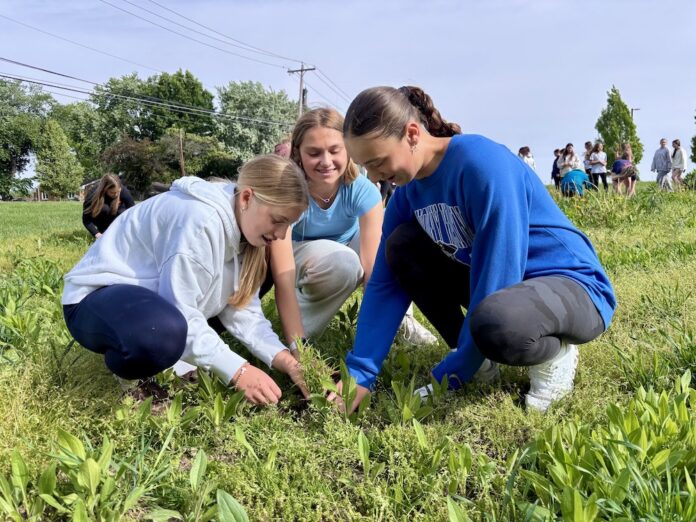
Morgan Lindsey, Izzy Geha and Kaleigh Glesser install a plant in the prairie. (AWFP photo by Karen Gerhardinger)

A section of land along Blue Creek – long used for overflow parking during Anthony Wayne football games – is being transformed into a living classroom.

Over the past several months, Anthony Wayne Junior High School students have planted and watched the progress of a prairie that will provide food and shelter for native animals. 

“I didn’t realize how much prairies helped,” said seventh-grader Crosby Caskey, watching on May 22 as his classmates fanned out onto grass that was planted in early March. “I have an interest in native plants. Just seeing them providing for animals is awesome.”

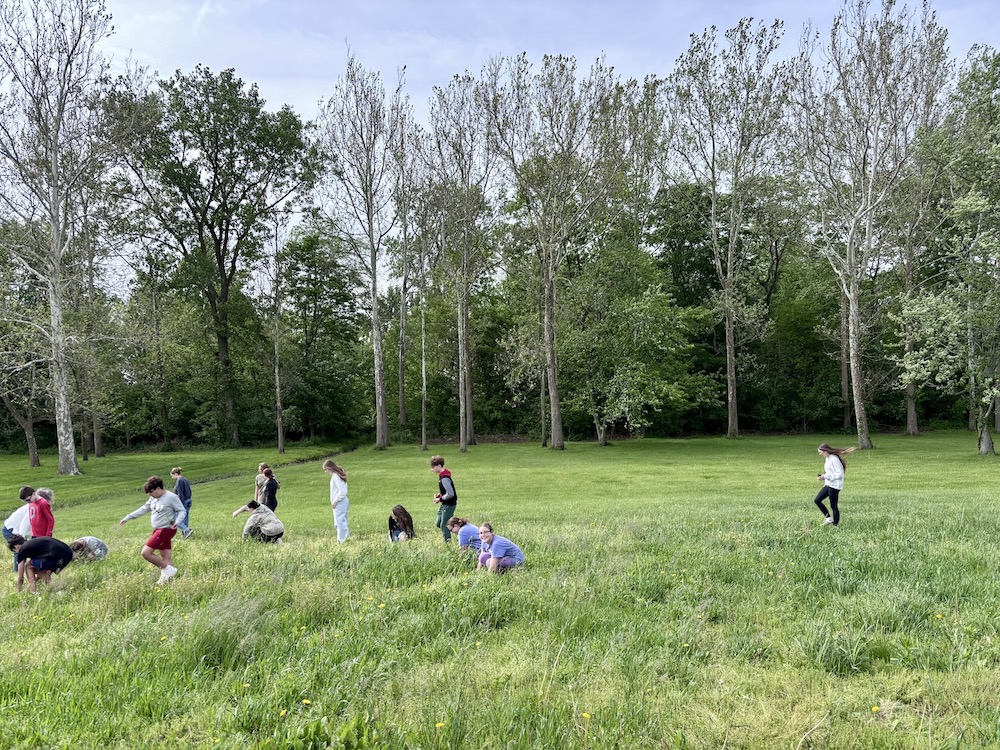
Anthony Wayne Junior High students search for pre-dug holes in which to place native plants in a prairie that is in its first year. (AWFP photo by Karen Gerhardinger)

Kneeling in the grass, Reece Bueher took an aster and tamped it into the ground. While he was a student at Waterville Primary School, Reece was often involved with that school’s land lab.

“It took a while for it to come together,” Reece recalled of the Waterville prairie, which now serves as an educational resource for students.

It was seeing the success of Waterville Primary’s land lab that inspired junior high principal Jordan LeFevre to apply for his school to be a part of Project PRAIRIE, which is made possible through the Toledo Zoo’s Education Department in coordination with Wild Toledo and a grant from Owens Corning.

Last year, LeFevre learned that the school was accepted into the program, which includes standards-based curriculum for teachers to use in educating students about the prairie. The junior high prairie is now one of 160 planted outside schools, businesses and communities throughout the northwest Ohio area in the last 13 years.

“Knowing how much Waterville uses their land lab, and seeing kids being able to get outside and experience it, I can see opportunities for science classes to do studies here,” LeFevre said. “It’s experiential type learning.”

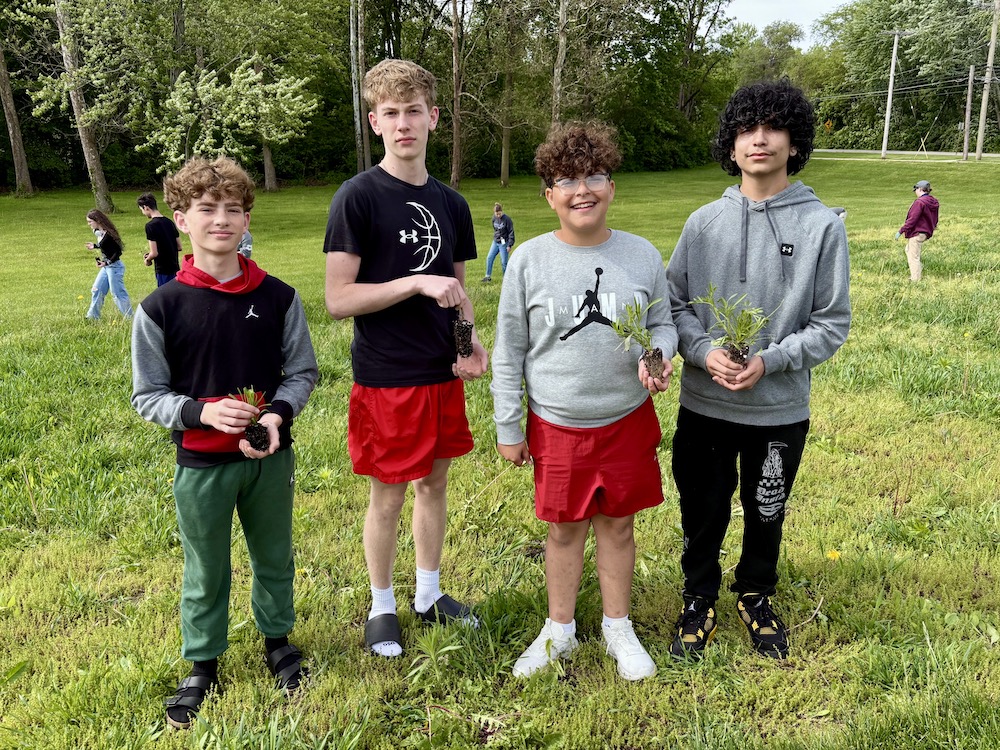
Nolan Barnaby, Caleb Duggan, Sammer Elmays and Gabe Mendoza prepare to put some native plants into the prairie. (AWFP photo by Karen Gerhardinger)

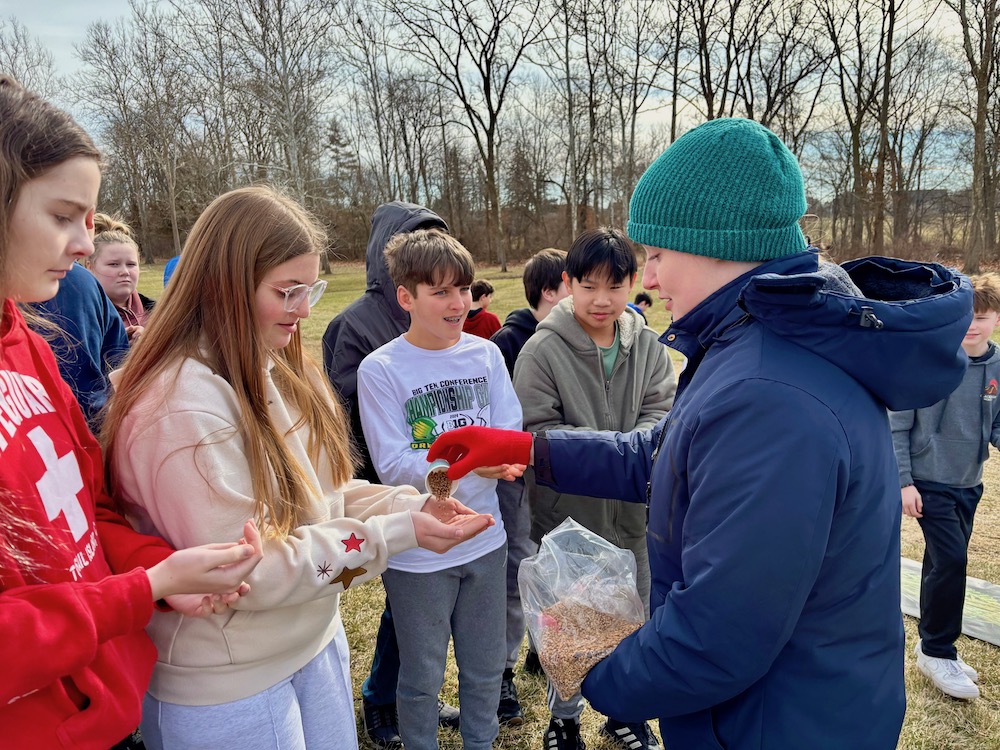
Last fall, a long patch of grass just south of the middle school parking lot was cleared. In early March, Toledo Zoo educators arrived with native grass seed for students to plant.

“With the freezing and thawing, the seed coating around the grass seeds will open up just like an egg for the grasses to grow nice and tall,” Toledo Zoo educator Alex Burris told the shivering students during that first visit. 

And grow tall it did. As the students returned last week to add wildflowers, milkweed and other native plants, they had to search for the pre-dug holes that Toledo Zoo educators had made among the grass. 

Bradley Dean, a self-described “green thumb,” has planted sunflowers, herbs and deep flowers that attract hummingbirds in his yard, but this was his first experience in planting a prairie. Just being outdoors during the school day is a bonus, said Bradley, who is a Counselor in Training for the Metroparks – helping with outdoor and nature education.

Even as Bradley and the other eighth-graders move on to the high school, they will have opportunities to visit the prairie to observe its progress. LeFevre said he can envision all students in grades 7-12 gaining insight from the prairie, including those interested in STEM, the environment and even Principles of Food classes. It’s also a prime example for the community to witness a change.

Audra Buckenmeyer accepts a handful of seeds from a Toledo Zoo educator during an early March planting of a prairie on the Anthony Wayne Local Schools’ Finzel Road campus. (AWFP photo by Karen Gerhardinger)

Native plants can absorb run-off and nutrients that would otherwise wind up in the water supply, said Ryan Walsh, Ph.D., director of plant conservation for Toledo Zoo. 

“The deep root systems of native plants stabilize soils and hep the plant absorb harmful CO2 that would otherwise contribute to climate change. Humans benefit from all of these ecosystem services provided by native plants as well as the positive psychological benefits that are known to come from exposure to natural areas,” Walsh said.

Native plants are adapted to the area and are easy to grow. Some native plants can serve as host plants for up to 10 different species at a time, he said.

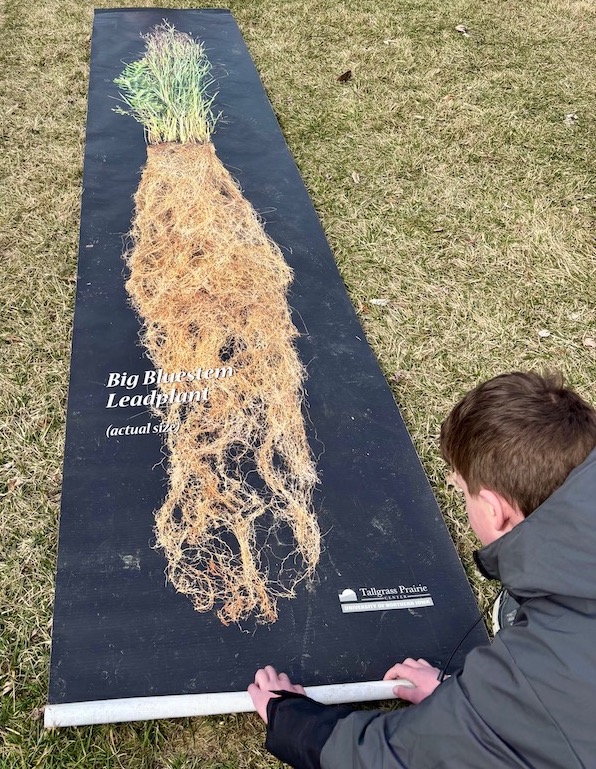
Max Kleiboemer checks out a sign that illustrates the actual size of a big bluestem and its roots – one of several native plants that make up prairies in our area. (AWFP photo by Karen Gerhardinger)

“Planting milkweed probably results in the biggest visible change. Even a single milkweed plant can attract breeding monarchs to a yard,” Walsh said. “Milkweed also plays host to the milkweed beetle and milkweed aphid, making them a tiny ecosystem in themselves.”

Even small changes, like a small garden, can have big impacts on local biodiversity, he said.

“We encourage our customers to watch their plants and listen. A prairie or native garden can actually be quite loud with all of the insects buzzing and the animals foraging. Native gardens quite literally buzz with life.”

For property owners who want to add native plants, visit wildtoledo.org.

Ryder Matney and Grant Klewer get their fingernails dirty while placing a native plant in the ground. (AWFP photo by Karen Gerhardinger)
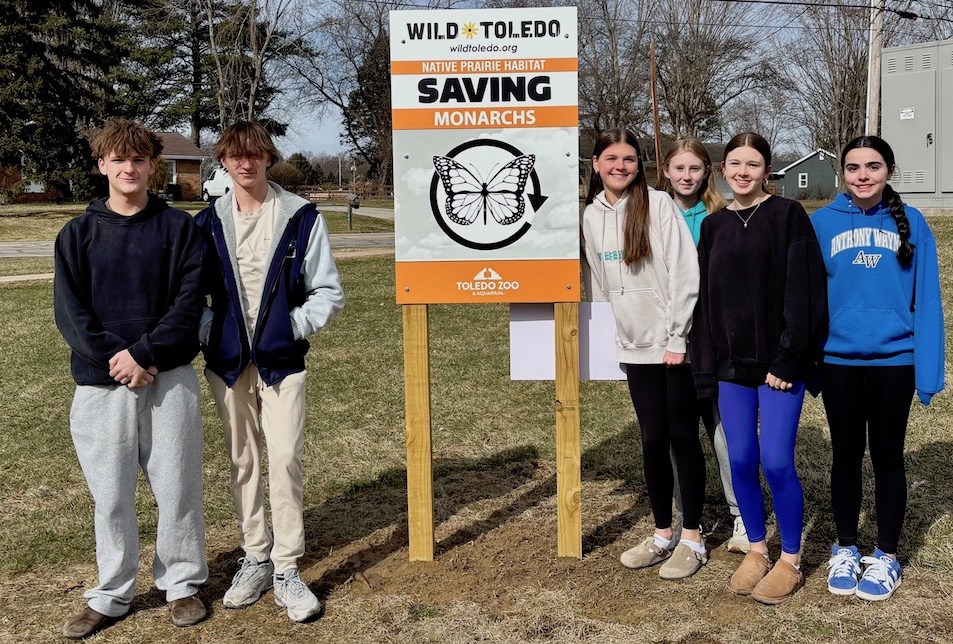
Standing next to a Wild Toledo sign announcing the prairie are (from left) Aiden Johnson, Enzo Cottier, Tenley Smith, Grace Holland, Bella Kerschner and Talya Tokmak. (AWFP photo by Karen Gerhardinger)