Home Blog Page 167

Groups help local women cope with ‘isolating’ infertility

0

Amanda Aldrich will find out Dec. 22 if she is pregnant.

She doesn’t expect good news.
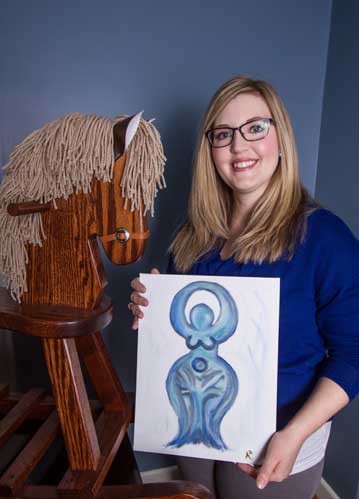
n   AMANDA ALDRICH, WHO STRUGGLES WITH INFERTILITY, SAID PEOPLE’S COMMENTS ARE OFTEN WELL-MEANING BUT HURTFUL.  TOLEDO FREE PRESS PHOTO BY CHRISTIE MATERNI

Amanda Aldrich, who struggles with infertility, said people’s comments are often well-meaning, but hurtful. Toledo Free Press photo by Christie Materni

A positive pregnancy test is not something the Toledo resident will probably get for Christmas, although it has been her wish for years.

But Aldrich, 34, doesn’t need a holiday to announce her pregnancy. She just needs a baby. Any time. Any month. Any year.

She and her 42-year-old husband have been battling infertility for six years. They are the faces of something that makes many people incredibly uncomfortable.

It isn’t something people like to talk about, and when they do, they usually say, “Just adopt,” Aldrich said.

“That makes me angry on a lot of levels,” she said. “Adoption is not a decision to be taken lightly and it isn’t an alternative solution to infertility, but I feel like people say it because they need to say something.”

Others make jokes about their own children without thinking: “Does anybody want a baby? Because we can’t handle it.”

Aldrich would like to say, “We would like one, thank you very much.”

Other well-meaning individuals comment, “It happens for a reason. It is in God’s plan.”

Aldrich used to believe that. She doesn’t anymore. After four failed embryo transfers, she doesn’t expect the fifth transfer, which occurred Dec. 11, to actually work. Sometimes God’s answer is “No,” she said.

“The hardest part of going through this is there is a really sincere possibility that it will never work.”

After the failed attempt in September, Aldrich and her husband decided they needed to use their frozen embryos before they made the decision to adopt or use donor eggs. If the most recent attempt fails to produce a pregnancy, their last transfer will be in the spring.

“There has to be a grieving that happens before you can move on to donor eggs or adoption,” Aldrich said. “You have to grieve the loss of your fertility because it is such an integral part of being a woman.”

Every time she meets someone for the first time, they ask, “What do you do? Do you have kids?”  Aldrich used to ask that as well.

Not anymore.

“I am kind of blunt about things. I think I catch people off guard at times when they ask if I have kids and I say, ‘I am infertile. I can’t have kids,’” she said. “It makes them uncomfortable. They don’t know what to say.

“It is a bad thing, but it is not contagious,” Aldrich said. “I just want people to understand how important it is to have empathy, not sympathy, for the couples going through this because it just destroys them.”

The clock is ticking


Aldrich and her husband, who asked not to be named, began their journey toward parenthood even before they got married in 2009. They knew it might be harder for them because of some health issues in Aldrich’s past, but they did not think it would be impossible.

“It is funny because even in our wedding video you can see my sister talking about us having children,” she said. “Everyone in my family has had children very young.

“My mom was a teen mom. My sister and brother were both teen parents,” Aldrich said. “I am the first in my family to go to college, move away and have a career and to aspire outside of our hometown.”

Yet she didn’t think her ambitions would mean she would struggle with having a baby. She figured it would happen for her like it did for everyone else in her family — just a little later.

Dr. Owen Davis, president-elect of the American Society for Reproductive Medicine, said between 10-20 percent of couples will experience infertility at some point in their lives. Conventional infertility is defined as the lack of pregnancy after one year of trying to get pregnant without protection, according to the New York City-based professor and doctor.

One of the growing reasons for infertility is women deferring child-bearing until their late 30s or early 40s.

“Age alone will affect infertility if for no other reason,” Davis said.

A woman trying to get pregnant at 40, who is otherwise healthy, only has a 50 percent chance of success.

However, there are pathological causes of infertility as well. A low sperm count, poor sperm mobility or complete absence of sperm in the man are reasons some couples can’t conceive. Women sometimes suffer from a hormonal imbalance that inhibits ovulation, while other women have tubal abnormalities.

In some cases, infertility is just unexplained, which is “not a satisfying diagnosis,” Davis said.

At first, most infertility doctors start with a less invasive treatment like intrauterine insemination (IUI), which puts the sperm directly into a woman’s uterus.

When this doesn’t work, in vitro fertilization (IVF) is usually the treatment of choice. This involves fertilization by manually combining an egg and sperm in a laboratory dish and then transferring the resulting embryo to the uterus.

“The quality of treatment for infertility has made huge strides, even if you go back a few decades,” Davis said.

However, no matter the technology, women are not going to have a great success rate if they are 45 years old, he said.

‘You better get started’


But Aldrich wasn’t 45 years old; she was 27 when she realized her fertility was at risk.

One night, she woke up with the worst pain she had ever felt in her life. She had no idea what was wrong. She was doubled over in pain and could not stand up.

“I need to go to the hospital. I need to go to the hospital,” she remembers thinking.

Doctors determined she had an ovarian contortion, which is when the whole ovary twists within itself. Most women with the condition end up losing their ovary.

Aldrich didn’t, but after doctors went in to fix it, she was told she had endometriosis.

Endometriosis occurs when the lining of the uterus (womb) grows outside of the uterus. It affects about 5 million American women, according to the Office of Women’s Health, U.S. Department of Health and Human Services.

The most common symptom is pain. The most heartbreaking symptom is trouble getting pregnant because the growth can block a woman’s fallopian tubes.

As Aldrich learned more about “endo,” she vividly remembers her gynecologist telling her, “If you want to have kids, you better get started.”

Aldrich wasn’t with her future husband at the time, but her doctor told her  plenty of women with endometriosis have had successful pregnancies.

“I knew that I wanted to be married. I never thought I would just meet some guy and get pregnant.”

She met her husband at work in 2007 and it became obvious that he would be the father of her future children.

Her husband, who has been tested and is perfectly fertile, said the world leaves you behind if you aren’t a parent, although he thinks it is easier for men.

“Every movie that you see every TV show that you watch. This is all this world really knows and if that isn’t possible, they don’t know how to talk about it and they don’t want to talk about it,” he said.

But Aldrich said they would not trade their relationship for a chance to try to conceive when they were younger. Everyone has something bad in their lives and “that is our joker,” she said.

“I am so thankful that I have the husband that I have. I am so lucky in so many ways. I really mean it,” she said. “Because of that reason, I am so happy that I did wait. I waited for the right one. That was important to me.”

The irony of the situation doesn’t escape her, however. “I spent my whole life trying to not get pregnant, so it is really funny to think about all the money you spent on that, and now here we are.”

‘We let it rule our lives’


Aldrich and her husband tried having kids the “old-fashioned way” from 2008-11, she said. Most doctors advise getting help after six months, especially if you are 35 or older.

“We tried on our own for probably longer then we should have. I think we tried for two years on our own because everybody in my family had three or four kids. We were like, ‘What is going on? This makes no sense.’”

She went to see Dr. Joseph Karnitis at the Fertility Center of Northwest Ohio, who put her on a fertility drug to help her eggs grow.

Since she was young, they thought this approach would do the trick when paired with intercourse at prescribed times.

Aldrich and her husband only tried that for six months, though, because they were spending $3,000-4,000 per month and nothing was covered by insurance. At one point, they ordered cheaper medication from England to save money, but it arrived in glass vials and the first time they did it, “We broke it and the medication went all over the place,” she said.

Aldrich said, “Enough.”

“I’d rather spend more money and know that we aren’t going to lose it,” she said. “It was $12,000-plus for IVF, and we thought, ‘Why are we spending all this money when we could spend a little more for more of a guarantee?’”

But it wasn’t that simple.

Aldrich had to go on Lupron Depot, a birth control medication, to try to shrink her endometriosis before the eggs could be retrieved. She and her husband lost months as the birth control stopped them from getting pregnant.

Meanwhile, she started a new job at a nonprofit in 2013 that offered infertility coverage, which was a relief because she said sometimes she feels like infertility comes down to a class system.

“If you can’t pay for it, you can’t have kids,” she said.

In June 2013, Aldrich underwent her first IVF and transferred two embryos. Her second round was in October 2013. Each time it looked like everything was in place to work out. She even had one chemical pregnancy, but nothing ever happened.

High hopes


The first time they did IVF, Aldrich allowed herself to get excited. She had Pinterest boards, an Amazon wish list and was picking out what the nursery would look like.

By late 2013, she was frustrated and wanted more guidance. She switched to Dr. Nicholas Shamma with IVF Michigan Fertility Center and had IVF for a third time.

This worked out, because the Fertility Center of Northwest Ohio will soon close. ProMedica spokeswoman Tedra White confirmed that 800 patients will be transitioned to the Toledo Fertility Center in Sylvania in 2015.

“Patients will have access to multiple physicians who will provide high-quality, coordinated and convenient care with high success rates,” she said in an email statement. “The majority of their treatment will be handled locally, but they will have to travel to metro Detroit for IVF.

“Similar to other health systems, ProMedica experienced many challenges with operating a fertility center,” White said. “These centers can be very expensive to operate. Additionally, recruitment is becoming more difficult due to a shortage of specialists.”

Aldrich said she once again had high hopes after switching doctors.

But once again, it didn’t work. IVF and the subsequent embryo transfers aren’t a guarantee.

“It is so hard to try to explain to people how difficult it is and to have them understand that it literally does encompass your entire life,” she said.

She and her husband second-guess vacation plans because what if she gets pregnant and they can’t travel? Should they remodel the guest room, because what if they need that room for the baby? They even traded in their car right before marrying to make sure they had something family-friendly.

Now they are trying to live life and if “it happens, it happens,” she said.

“We do get a little excited and have hope that it is going to work out and when it inevitably doesn’t, we are just as crushed as before.”

Her husband said, “Your expectations decrease as a defense mechanism. The first time we thought it was the end of the world; the second time the same. When the third didn’t work, we are like, ‘What is going on?’”

Aldrich said it destroys her self-esteem and while she tries to avoid alcohol in case she gets pregnant, the stress makes her want a drink. Without fail, she gains 10 pounds every time she goes through a treatment cycle because of the many medications she is on to aid the embryo transfer. For the Dec. 11 cycle, she has been taking an average of 12 medicines a day, from blood thinner to folic acid to estrogen.

Finding your resolve


One of the best ways to face infertility is with people who know what you are going through, Aldrich said. She belongs to the international Heels and Hormones Facebook group and Resolve Toledo, which is also online. The women from Resolve Toledo meet at Panera Bread once a month.

“They are my best friends. They are my confidantes. Oh my God, I love them like sisters,” Aldrich said. “They have changed everything. Infertility is so isolating in a lot of ways.”

The groups talk on Facebook about their medical appointments and obsess over pregnancy test photos. Aldrich has even met some of the members from out of town. In the summer, she went with a few other ladies to New Jersey as one woman went through an embryo transfer.

Ashley Schardt, 25, of Bowling Green said belonging to Toledo Resolve helps with the struggles of her infertility. Her body does not ovulate or have a monthly period.

“It is nice to have everyone around when I have an appointment or if I have a medical question.”

She recently underwent IUI, which involves placing sperm inside a woman’s uterus to help with fertilization. She thought she would be announcing at Thanksgiving she was pregnant. The IUI failed.

“You grow up believing you are going to get married, get a house and have kids,” she said.

Schardt didn’t even care if she got married; she just wanted children, she said, laughing.  She finds it so frustrating when people tell her to relax and she will get pregnant.

“I cannot force my body to do this,” Schardt said. “We tried.”

Elizabeth Sampson of Carmel, Indiana, belongs to Heels and Hormones because she is battling secondary infertility. She has three children, but has been trying for a fourth for five years.

“The group has really been able to band together and support each other through our infertility issues,” Sampson said. “We talk about medications, doctor’s appointments and sex with our husbands.”

Sampson, 38, said the group is nice because “there is no situation where your situation is worse than mine and mine is worse than yours. We are all in this hell together.”

Some of the women visit each other and even send gifts. When Sampson was in the hospital with a recent loss, she woke up to roses from the Heels gals.

Sarah Schwartz belongs to the Toledo Resolve group. She is saving up for IVF because her insurance doesn’t cover it.

“It is one of the few places that you feel safe. Your family and friends try to understand, but they will say things that aren’t helpful, even if they don’t mean it,” she said.

Schwartz suffers from polycystic ovary syndrome, which affects hormone levels, periods and ovulation.

“We have been trying for more than six years. We have been saving for IVF for two years, but we had a few setbacks. We had a death in the family and had to pay for a funeral,” she said.

Schwartz likes the group because everyone can talk about where they are in their journey. Some are doing IVF, while some are looking at adoption and fostering.

The women also vent. The holidays are one of the hardest times to be unwillingly childless, although Mother’s Day is the absolute worst.

“Every year, I put up the Christmas tree and think maybe next year will be the year,” Schwartz said.

A Christmas miracle


Christmas is hard for couples facing infertility, not that any day is particularly easy when the joys of children are plastered everywhere, especially on social media.

“It is amazing how many times everything seems to revolve around children,” Aldrich said. “Every single commercial that we see and every time we go somewhere, there is a pregnant belly or you see children playing or signs that say, ‘Make memories with your children.’ It is awful. It is enraging and frustrating and so sad all at the same time.”

On Thanksgiving, Aldrich spent time with her new niece. She was born on the day Aldrich found out an embryo transfer had failed.

“I spent all of Thanksgiving holding her and feeding her and it was so hard,” Aldrich said. “It feels good. And of course I love her. She is my niece and she is beautiful and it is an amazing thing. At the same time, it is also equally super heartbreaking to think we might not ever have that opportunity to experience what that is like.”

It is the hardest thing to express to people how hard it can be, she said. Once she went to dinner with a friend who told her to not consider IVF because of the moral consequences.

“They don’t understand what it really means. It is not a guarantee. You aren’t mixing it up in a petri dish, sticking it in and boom, you have a baby,” she said. “There is still a God or Allah or whoever, who says this is going to continue to grow and work.”

Aldrich said her infertility has made her an advocate for educating people who don’t know anything about it or say rude things.

Her infertility has also opened an opportunity for a bond beyond bonds. Her sister, Ashley Berger, recently offered to be a surrogate if the last rounds of embryo transfers do not work.

“I would do it in a heartbeat,” Berger said. “I have been waiting to see how her journey has unfolded. They have had multiple attempts and unfortunately we haven’t gotten that little niece and nephew we have been praying for.”

Aldrich said she and her husband would consider it, but they need to see what happens Dec. 22. There is always that tiny bit of hope.

We will never have a life without kids,” she said. “We will have kids. It just is a matter of how that happens. We just don’t know.”


Songwriter seeks funds for documentary-style film ‘Fulton Williams’

0

It’s a story 12 years in the making.

Ryan Roth, a singer-songwriter from Northwest Ohio, is making a film with friend Michael Cullen II based on the lives of both himself and his late father Britt, who died in 2000. PHOTO COURTESY SUNNY NEUENSCHWANDER

Ryan Roth, a singer-songwriter from Northwest Ohio, is making a film with friend Michael Cullen II based on the lives of both himself and his late father Britt, who died in 2000.

PHOTO COURTESY SUNNY NEUENSCHWANDER

And if you ask Ryan Roth, it’s a deeply personal story born out of the cornfields of Wauseon.

The 37-year-old singer/songwriter is currently in the midst of the production “Down Along the Road: The Life and Times of Fulton Williams,” a documentary-style narrative film chronicling the rise and fall of a local musician who mysteriously disappears while on the brink of fame.

The story of Fulton Williams is based off the lives of both Roth and his late father Britt, who died in 2000.

A writer and musician in his own right, Britt used Fulton Williams as his pen name as a tribute to his home near the Fulton and Williams county line. Before he died, Britt asked his son to carry on the name in whatever way he could.

“The character himself is loosely based on his life and mine,” Roth said. “It kind of shadows the same walk. Everything that happened in this guy’s life is true. Every story that’s going to be told in this film is a personal story to somebody telling it.”

“Fulton Williams” is a passion project for both Roth and Michael Cullen II, an aspiring local filmmaker and close friend of Roth who helped him come up with the idea back in 2002.

However, years went by and the project remained nothing more than an idea between friends.

Two months ago, the duo reconnected and finally decided they were at a place in their lives where it made sense to get the project moving.

“I think it was just about being at the right point in our lives,” Roth said.

For the project, Roth and Cullen enlisted the time and talent of nearly 40 area actors, as well as local musicians who will weave their own true-life stories into their “experiences” with Fulton Williams.

“Fulton Williams” has a budget of $2,500, which is being sought through Indiegogo.com, a crowdsourcing website. As of Dec. 18, the project has raised $1,974 with 30 funders. The fundraiser ends Dec. 29.

To donate to the cause, visit the Indiegogo page at https://www.indiegogo.com/projects/fulton-williams-film-project-documentary-style.

Baumhower: Hello … Santa?

0

When I was growing up, my mom’s favorite method for getting me to behave was the ol’ forward-leaning, outstretched arm toward the wall phone.

She used this maneuver anytime after September. This was a direct threat that she was going to pick up the phone, call Santa Claus and report me for being an asshole. (She also employed this tactic the rest of the year, but with the police instead.)

  .

.

As a visual reminder, my mom — with her perfect left-handed penmanship — would have Santa’s number written on a piece of paper, held by an oversized magnet that also served as a bottle opener for our bottled Pepsi, hanging on the fridge mere inches from our house phone.

As all kids figure out, I eventually started calling her bluff and would continue my behavior to see if she would actually pick up the phone and start the exhausting, drawn-out dialing exercise. As soon as I heard her finger dial a short-stroked “1,” I knew she wasn’t calling my grandparents; this was a long distance call being made.

With the phone straddled between her cheek and shoulder, my mom and I would have a staredown. Each ringtone, heard by her ears and mine, would raise the stakes of the our kitchen standoff.

As soon as my mom would say, “Hello … Santa?” the mood and scenario would change. I became instantly apologetic, promising to change my ways, flashing a very crooked smile to help peddle the half-truths I was trying to sell. I would start negotiating those things I could accept as punishment instead of the ensuing conversation with Kris Kringle.

Eventually I would say or do the right thing, prompting my mom to abruptly end the conversation with a “Never mind” or “I might have called you too soon, Santa.”

As you might imagine, I was not the easiest child to raise. I distinctly remember the mounting anticipation the month of December brought. Each day, I would be allowed to tear off another length of chain made of green or red construction paper, which we assembled every year at St. Clement School.

This chain was supposed to signify the countdown of days until we celebrated the birth of Jesus, but who were they kidding? It was a 7-year-old’s way of understanding how many days were left until the big man in a red hat would arrive and enter our chimney-less house with a bag full of toys.

With each fresh piece of construction paper torn came a brief moment of relief — for a boy who inspired near-daily correspondence between teacher and parent had somehow survived another day without Santa having to deal with my mother on the phone. At the time, I was convinced I was doing Mr. Claus a favor. It might have been the one act each year that kept my name off the “naughty list.”

I’ve been blessed to have children who act nothing like me, so I have never had to reach for an imaginary phone with 50 feet of cord. But I assume this parental holiday tactic has remained and evolved some. Maybe Santa has an email address or perhaps you can text him at will?

You should also know, especially coming from the child who was pleading, smiling and even dancing for another person to hang up the phone, that we do try our best to behave during the holidays. Maybe if you didn’t allow a 7-year-old to eat 10 sugar cookies at 8 p.m. with a chocolate milk chaser, we could “settle down” or “leave our little baby sister alone.” Just saying.

Parents aren’t perfect either in the month of December.

To every mom who never called Santa and to every child who forced his or her mom to keep his number on a nearby fridge: Merry Christmas.

Jeremy Baumhower can be reached at [email protected] or on Twitter @jeremytheproduc.

Lucas County Sheriff’s Office to get body cameras

0

Amid the growing backlash to incidents across the country of unarmed subjects being killed by law enforcement officials, Lucas County Sheriff deputies will soon be armed with body cameras.

Deputies have been testing several of the cameras on a trial basis for the past 30 days, but the sheriff’s office will soon be purchasing 15 of the $500 cameras for deputies to use.

Lucas County is set to pass its 2015 budget on Dec. 16, and officials said they wanted to be sure to set aside funds for the cameras.

A camera on the shoulder of Lucas County Sheriff's Deputy. Toledo Free Press Photo by Joel Sensenig

A camera on the shoulder of Lucas County Sheriff’s Deputy. Toledo Free Press Photo by Joel Sensenig

“In our budget there will be funds available to let Lucas County Sheriff John Tharp purchase and deploy body cameras,” said Pete Gerken, Lucas County commissioner, at a news conference Dec. 15 at One Government Center. “We are taking the step forward before there are incidents in Lucas County like there have been in Ferguson, Missouri, in New York City and in Cleveland, Ohio.

“We don’t want that for our community. What we want for our community is a safe, proactive community where everybody feels the transparency,” Gerken said. “We want no one to shoot, and we want everyone to breathe.”

“This is one more thing that talks about community policing, community safety and the partnership really that exists between the county commissioners, the sheriff’s department, the faith community and people who live in Lucas County,” said Carol Contrada, president of the board of commissioners.

Lucas County Sheriff John Tharp compared the body cameras to the speed cameras placed along the Anthony Wayne Trail in that they will cause all involved parties to think twice about their actions.

“It really forces law enforcement officials to be on our best behavior,” Tharp said.

“This will increase professionalism to another level and people in the community, they too will be on their best behavior. … We will be totally open with the community and provide all of the information that we have on the cameras.”

Tharp said the cameras will also help with criminal investigations, with footage potentially serving as evidence in trials.

Pending expected commissioner approval of the expenditure up to $20,000, Tharp said the cameras will be purchased by the office within the next 30 days.

Rev. Donald Perryman, pastor at Center of Hope Community Baptist Church, 1656 Dorr St., was at the news conference to represent the faith community.

“I want to commend Sheriff Tharp and the commissioners for their attention to this issue,” Perryman said. “Statistically, unarmed black men, women and children are killed by law enforcement at extraordinary rates compared to others. … The irony is that unarmed blacks are dying at record numbers, but seldom if ever are their killers held accountable in courts of law.”

Perryman said the cameras are not a solution, but a positive first step in improving relations between law enforcement and the community.

“While body cameras are not a panacea, today’s action represents an important first step in bringing more accountability to the criminal justice system,” he said. “I look forward to the ongoing fight and open dialogue that can lead to other policy changes that will improve relations between law enforcement and the community.”

Perryman noted that even though incidents such as the Eric Garner case in New York City were filmed, there were no criminal charges filed after he died following the altercation with police.

“I am looking to see what impact this might have on convictions,” Perryman said. “We need a comprehensive change in the entire criminal justice system. We have to bring accountability to officers. This might be a first step, but we need people being punished for doing wrong.”

Sgt. Richard Grove of the Lucas County Sheriff’s Office has been among those using the cameras for the past month.

“They’ve been great,” he said. “It gives a fair representation of what we do on a daily basis.”

Grove said the officers have been using the cameras on a case-by-case basis while on duty and to this point have not been informing citizens when the cameras are recording.

Tharp said the office will soon establish its policies regarding the cameras prior to their widespread use among deputies.

‘Socially conscious’ art gallery opens Downtown

0

Toledo’s art lovers can add “gallery opening” to their agendas 6-9 p.m. Dec. 13 as Delightful Art with Dee becomes Downtown’s newest space for socially conscious art.


The gallery, from local artist Dee Brown, is a project intended to bring art into the lives of underprivileged and underrepresented communities including veterans, people with disabilities and members of the hearingimpaired community.


A portion of proceeds from sales at the Delightful Art gallery will go toward organizing free art classes.


Delightful Art with Dee is located in the Davis Building, at 137 N. Michigan St., behind The Paula Brown Shop.


The Dec. 13 event will feature the work of local photographer Yvonne Moryc. Brown plans to feature a new artist in the gallery each month.

Youth-created art gallery opens at Juvenile Justice Center

0

The Juvenile Justice Center, 1801 Spielbusch Ave. in Downtown Toledo, opened a new gallery that’s being touted as the first of its kind in the country.

On the first and second floors, hung on the wall behind glass, are works of art created by juveniles while they were inmates at the center.

Many of the artists were not allowed to attend the opening ceremony Dec. 10 because they were still serving out their sentence except for Wayne Gaston, who was one of two inmates present. Gaston, 15, created a Native American-inspired sculpture of a snake, eagle, elk and wolf representing “life, freedom and the struggle” of his time at the Juvenile Justice Center.

“It’s just a little thing I put together,” Gaston said. “I feel proud.”

The 21-piece gallery is being upheld as an example of what troubled youth can accomplish with the right amount of support and encouragement.

“We finally have an avenue to see the great work these kids can do,” said assistant court administrator Kendra Kec, who has watched kids thrive in the art classes over many years. “This is a great outlet for (the youth).”

Lucas County Juvenile Judge Denise Navarre Cubbon said the center is charged with the responsibilty of helping children and their families make important changes in their lives, and the gallery is now a part of that. One of their goals is to create law abiding, successful citizens and art is one way to do that, Cubbon said.

“The art represents the process of learning,” Cubbon said. “It’s a positive activity to promote responsible behavior. Many children never had the opportunity to explore this talent.”

The gallery is a year and a half in the making and is the brainchild of teachers Joe Szafarowicz and Jan Revill, who instruct the art class. The classes are “integrated,” meaning they also teach another subject such as history, social studies and language arts.

Both Szafarowicz and Refill have been teaching for 10 years. They teach one female class and three male classes every day. They also teach at the Youth Treatment Center, 225 11th St., in the Discovery Art Program.

The art classes are based on state of Ohio standards and are classes you would find in a regular high school, Revill said.

Szafarowicz said he noticed after a period of time that the art classes had a great positive effect on the students and that would carry over into the atmosphere at the Juvenile Justice Center.

“It really engages them,” he said. “It makes them calmer and better.”

Students in the program were often hesitant about creating art. Many had never picked up a paintbruch or pencil before, Revill said.

The biggest benefit, she said, is the sense of accomplishment they feel.

“I’m really proud of them. Most of the students have never done anything like this before,” said Revill who has a degree in art therapy and psychology. She also teaches at Phoenix Academy, a charter school.

The gallery will turn over three to four times a year with new artwork.

ProMedica to build new hospital in Lenawee Co.

0

ProMedica has announced plans to build a new hospital in Lenawee County to replace ProMedica Bixby and Herrick hospitals.

The new 145,000-square-foot hospital will be located on M-52 on the site of the former Mission Pointe Golf Course. The location is between the current sites of ProMedica Bixby Hospital in Adrian and ProMedica Herrick Hospital in Tecumseh.

The facility will be a full-service hospital with up to 80 acute care beds, an emergency department, surgical capabilities that include orthopedic care, a women’s health center, a cancer center, a pain management clinic and an inpatient psychiatric unit, Pro-
Medica officials stated in a news release. The building will be developed following LEED Silver Eligible Certification standards to ensure sustainability and offer best-in-class design, construction and energy efficiency.

“The two facilities are only 12 miles apart. Both of them provide almost identical
services,” said Tim Jakacki, president of ProMedica Bixby and Herrick hospitals. “This will eliminate redundancy of those services, and by doing that it makes it much more cost effective, much more efficient and it concentrates all of those services in one location.”

ProMedica has owned Bixby and Herrick hospitals since 1999.

The project will begin in early 2016 and be completed 18-22 months later, Jakacki said. Staffing adjustments are uncertain, but Jakacki said the company will weigh whether to replace certain positions left empty due to attrition between now and when the new facility opens.

“Internally, we referred to this as a generational investment, because it’s going to be here for multiple generations and decades to come in the same way these two facilities have been,” he said.

For more information, visit www.promedica.org.

New company continues to make, sell Banner mattress brand

0

The well-known and respected Banner brand of locally produced mattresses is still available in Toledo from Banner Factory Direct which recently opened a new showroom in Toledo to sell mattress and furniture products.

“It’s a brand new company. We started a new company, bought the rights to use the Banner name and purchased the mattress factory,” said Bard Strand one of four former Banner Mattress employees who formed the new company.

Banner Factory Direct opened the 18,000 square-foot retail showroom at 2544 North Reynolds Road at Elmer just before Thanksgiving and Black Friday. The company is leasing the store, Strand reported.

The four owners include Strand who is responsible for sales and marketing; Wayne Leahy in charge of buying and merchandising; Chris Frybarger running the factory operations; and Ray Rygalski, responsible for delivery, service and warehousing. Including the four partners, the company currently has a total of 10 employees.

“We’re working owners who are involved in the business every day,” Strand said. “We want to thank the Toledo community for the tremendous support they have given us. It’s been very positive.”

Banner Factory Direct is the only retailer making and selling 2-sided “flippable” mattresses in today’s marketplace, according to Strand. The mattresses are produced in the former Banner Mattress factory locater at Bishop and Monroe Streets in Toledo.

“Nobody else makes them any longer but us so we’re the only retail outlet for these locally-made mattresses,” he said.

Strand said that the mattress selection in the new showroom is complete and they are working to expand the furniture selection there. He said they wanted to open their own showroom rather than be in one of the former Banner store locations which were being sold by the former company.

Strand reported that they are looking at possible locations for a second showroom in the Toledo area.

The new company is talking with several companies about making private label mattress products for other regional retailers due to the production capacity of the factory, according to Strand.

The Banner brand has been made and sold in Toledo since the original company was founded in 1929. It was operated by three generations of the Karp family and employed as many as 100 people until the business was closed earlier this year.  Strand served as general manager of the company at the time of its closing.

“Banner mattresses are made by and for people who live in this area with those dollars staying in the local community,” said Frybarger, who served as factory operations manager and worked for the former company for more than 30 years.

Banner Factory Direct’s showroom is open Monday through Friday from 10 a.m. to 6 p.m., Saturday from 10 a.m. to 5 p.m. and Sunday, Noon to 5 p.m.

BG Arts Council seeks ‘50+ Shades of Grey’ artists

0

The Bowling Green Arts Council is looking for a few good artists who may have a little grey up top.

The arts group, in its fourth year of existence, will host an art show in January entitled “50+ Shades of Grey.” 

The Jan. 9-28 exhibit will showcase work of artists age 50 and older. The show will be at the Myles Baker St. Gallery, 434 E. Wooster St., in the Dairy Queen building in Bowling Green. 

An opening reception is scheduled for 5-7 p.m. Jan. 9. This is the first year the council has tried the 50-plus show.

“This is something for the more mature artist, whether they’re new to art, maybe doing something in retirement,” said Beth Genson, vice president of the arts council. “It’s a good opportunity for them to find exposure for their work and find like-minded artists to show with.”

The exhibit’s theme is open and both 2-D and 3-D work will be accepted. The cost to participate is $25. 

“We’re keeping the theme open so whatever medium they work in, whatever style or subject matter, they’re welcome,” Genson said.

Artists within a 100-mile radius of Bowling Green who would like to participate can find a full prospectus and online entry on the website at www.bgartscouncil.com. 

Entries must be received by Dec. 22.

Genson said the venue is a welcoming space for those who may be intimidated of larger galleries and museums.

“You can walk into a coffee shop or a bakery, get a cup of coffee and go browse through the gallery, it’s a much more comfortable feeling for some people,” she said. “It’s a way for people to enjoy the arts in their own community without feeling uncomfortable.”

Information and registration for an open-call exhibit for February and the second annual Artists-4-Animals Show in April are also available on the website.

World War II project unites teens with the past

0

With World War II being a popular setting in video games and movies, many of today’s teenagers are familiar in a peripheral way with the war that ended seven decades ago.

A project undertaken by 33 Toledo high school students ensures the lessons of the war hit home.

As part of their semester-long studies in a WWII course, students from Rogers, Scott, Start, Waite and Woodward high schools will present the stories of Toledoans killed in the global conflict during the second annual Fallen Heroes Memorial Assembly, set for 10 a.m. Dec. 15 at the Waite High School auditorium.

For the past several months, these students have used a variety of national and local resources to research a fraction of the more than 1,000 veterans from Lucas County who died in the war. In that time, they’ve tracked down school activities, family names and addresses, career paths and military histories of their subjects.

Joe Boyle, a social studies teacher at Waite, got the idea for the project after taking part in a WWII project called the Normandy Scholars Institute, sponsored by National History Day. As part of the project, Boyle and a student from Rogers went to George Washington University in Washington, D.C. for a week to study with scholars about the war and for another week in Normandy, France, learning from the battlegrounds and ending with a visit to the Normandy American Cemetery, where students read graveside eulogies of the veterans they had been studying.

“For a number of reasons, it was one of the most powerful moments of my life,” Boyle said. His great uncle, Sgt. Paul Boyle, is buried at the cemetery.  “I grew up with stories of my uncle Paul, and that’s what got me involved in history in the first place.”

After thinking of ways he could duplicate the international experience back home, Boyle came up with the plan to have students learn about Toledoans who died in WWII, also writing eulogies for them which will be read at the assembly Dec. 15.

“The most important thing to me was the war became personal

[to them]

,” Boyle said. “I think pop culture is doing a better job than it did maybe 10 years ago, but a lot of WWII pop culture really glorifies the war. I hate to say it makes it look like a video game when we’re actually talking about video games here, but kids play ‘Call of Duty,’ and it’s fun and the war looks like it was a great adventure. What I want them to get out of this project is it wasn’t a video game for these guys. These were guys just like you and I from Toledo who went off and did extraordinary things and paid the ultimate price.”

Dylan Reed, a Waite senior, studied the life of Harry Brooks, a Toledo resident who died in 1943 after the B-24 named “Superman” he was in was attacked. The bombardier of the plane was Louis Zamperini, a man whose story was chronicled in the book “Unbroken.” The story will be released Christmas Day as a major motion picture produced and directed by Angelina Jolie. Brooks is a character in the movie.

Reed, a wrestler, said he admires the mental toughness Brooks showed in battle.

“He held on for nine days after he was hit in the head with two pieces of shrapnel,” Reed said. “He obviously didn’t lack the fighting spirit. Which makes him a true hero. I hope to carry some of that mental toughness with me, to help me get through life, in order to be successful. As a wrestler, you never stop going until you hear the whistle, and that seems like something Harry Brooks would understand.”

Sylvia Rombach, a junior at Waite, studied the life of Baird Brooks Jr., a Waite alum who was rejected from three different branches of the military four times. He died near Rome, Italy in June 1944, days before Rome was liberated by the Allies.

“This project really opened up a new interest for me,” Rombach said. “To learn all about someone who was sitting in the same place I do everyday, and had the courage to go into the military right out of high school to fight in a world war is extraordinary. This project was far more intriguing than any other project I’ve done.”

Rombach said the perseverance Brooks displayed will stick with her.

“He never gave up on anything,” she said. “I look up to my fallen hero, and I’m fascinated by the fact that he never gave up despite his flaws. I try to do everything with a can-do attitude and do my best in all of my endeavors. He is a great inspiration.”

Boyle’s passion for the Fallen Heroes project is easy to see.

“There is a spirit that moves behind the scenes that makes this project magical,” he said, noting the surprising facts learned about these subjects never ceases to amaze him. “It never occurred to me that there would be a Toledo connection to Zamperini’s story.”

For the instructor, seeing the students identify with local people who paid the ultimate sacrifice is most gratifying.

“I try to reiterate this to the kids again and again and again: You come from a city of heroes,” Boyle said. “This city gets run down so much. There’s so much negative about Toledo all the time, and it’s hard to find role models that aren’t sullied by something. “Every one of these kids has found a way to grab on to these guys from 70 years ago, from the same city, and find something to believe in. It’s my favorite thing about this.”