Home Blog Page 164

How to obtain a marriage license in Lucas County

0
Ambershaun Byrd / A Byrd's Eye Photo Productions

In Lucas County, both the bride and groom must be present when filling out an application for a marriage license. Couples have the option of completing their marriage license application online, printing it and then bringing it into the court for further processing.

A marriage license is valid for 60 days after it has been issued. An ordained or licensed minister of any religion within the state who is licensed with the Secretary of State or a judge in municipal or county court may solemnize marriages. Marriage licenses can be obtained, first come, first serve, at the Lucas County Probate Court, 700 Adams St., Suite 200, from 8:30 a.m. to 4 p.m. Monday through Friday. The cost is $50 and must be paid in cash.

What you need: government-issued photo ID (driver’s license, state ID, pass- How to obtain a marriage license in Lucas County port or military ID); birth certificate for those younger than 21; copy of final Decree of Divorce, Dissolution or Annulment for those previously married; and a copy of previous spouse’s death certificate for widows/widowers.

Ohio residents must obtain a marriage license in the county where either the bride or groom resides. There is no waiting period on marriage licenses and weddings may take place the same day.

For more information, call (419) 213-4361 or visit the website www. lucas-co-probate-ct.org.

— Source: Lucas County Probate Court

Visions: Toth: Port Authority will continue momentum into 2015

0

Editor’s Note: This guest column is part of an annual special section called Visions, in which Toledo Free Press asks local economic development and business leaders to share what they see ahead for Toledo and Northwest Ohio in the coming year.

Over the past year, the Toledo-Lucas County Port Authority has made great strides in the redevelopment of Overland Industrial Park and Ironville Terminal, passenger increases at Toledo Express Airport, cargo increases at the Port of Toledo, and fostering economic growth in Northwest Ohio through the Port Authority’s financing programs and its BetterBuildings Northwest Ohio (BBNWO) energy efficiency program.

.

.

Construction at Overland Industrial Park’s 100,000-square-foot spec building began this fall and is expected to be completed this spring. This building is anticipated to be a catalyst for future development at Overland.

RELATED: Ottney: Visions

The Port Authority and Midwest Terminals of Toledo opened the new Ironville Terminal at the Port of Toledo this spring. The first phase in redevelopment of this 180-acre former refinery site is a public-private partnership that has culminated in more than $20 million in infrastructure investment for the property, which has rail access via Norfolk Southern, myriad pipelines serving the Midwest petrochemical industry, deepwater port access via the Maumee River and heavy load truck access via Front Street. This property redevelopment represents a convergence of all modes of transportation, creating new and unique development opportunities for our region. The addition of the Ironville dock has been a catalyst for an overall increase in port tonnage of more than 15 percent in 2014, and an impressive 89 percent increase in general and miscellaneous cargos.

Toledo Express Airport continued its slow and steady rise in 2014 with an increase in passenger enplanements of more than 11 percent through November. This year’s increase, along with the 11 percent increase in 2013, will mark the first two consecutive years of increased passenger traffic at the airport since 2004. On-demand cargo activity also increased in 2014, and all buildings and hangars at the airport have been fully leased.

In spring 2014, the Port Authority’s Northwest Ohio Bond Fund received a Standard & Poor’s rating increase from BBB+ to A-. This marks the first A rating in the bond fund’s 26-year history, allowing the Port Authority to offer more competitive rates for borrowers looking for long-term fixed-rate financing to locate or expand their business in Northwest Ohio.

In 2014, the Port Authority provided $7.2 million in financing for projects from the Northwest Ohio Bond Fund, which included $4.9 million to Keller Logistics and $66.2 million in bond financing outside of the Bond Fund for two student housing projects at the University of Toledo. The Port Authority also had a record year for its SBA 504 and Ohio Regional 166 loan programs, providing more than $7.38 million to support various businesses in the region, including an SBA loan to support the construction of a new Hampton Inn & Suites hotel on Secor Road.

BBNWO, the Port Authority’s energy efficiency program, continues to finance and promote energy efficiency upgrades to buildings in Northwest Ohio. Several projects were completed in 2014, including a $1 million energy upgrade to Toledo School for the Arts, and installation of new rooftop units and a state-of-the-art control system for the 100-year-old Toledo Club. Since 2011, BBNWO has completed improvements on 100 buildings with an investment of more than $25 million, and has created the equivalent of 35 full-time jobs.

2015 is shaping up to be one of the most exciting years for Northwest Ohio in several decades. Interest rates continue to be extremely low, oil prices are half of what they were in 2013 and companies are starting to expand and invest some of the cash reserves they amassed over the past several years. Unemployment rates in Northwest Ohio have dropped from 13 percent in 2009 to less than 5 percent in 2014 — all signs our economy is moving in the right direction and that further investment in the region is imminent.

We have seen continued investment in transportation with the 2014 announcement of a $43-million expansion of the CSX Intermodal facility in North Baltimore, the current expansion of the FedEx freight facility in Perrysburg, the $20 million investment in the Ironville Terminal at the Port of Toledo that opened for business in the spring of 2014, and the anticipated expansion of Norfolk Southern’s Airline Junction Intermodal located next to the University of Toledo’s Scott Park campus. In addition, Norfolk Southern will complete the $160-million expansion of its Bellevue Yard in 2015, creating more jobs and economic impact in the region. Home Depot will open its 1.6-million-square-foot distribution center in Wood County in the first quarter of 2015, representing another $100-million-plus investment tied to transportation in our region. The Ohio Department of Transportation’s investment in road and bridge improvements in our region will exceed $1 billion and will provide much needed highway capacity to support the continued expansion of commerce moving through the area.

These positive trends and investments all point to a vibrant and growing Northwest Ohio economy, which is poised to continue its positive momentum into 2015 and beyond.

Paul Toth is president and CEO of the Toledo-Lucas County Port Authority.

Visions: Rosebrock: More collaborative economic development efforts needed

0

Editor’s Note: This guest column is part of an annual special section called Visions, in which Toledo Free Press asks local economic development and business leaders to share what they see ahead for Toledo and Northwest Ohio in the coming year.

2014 was certainly a year in which economic activity in the Northwest Ohio Regional Economic Development (NORED) region accelerated.

.

.

Significant office developments were announced for the Toledo area, including Dana, ProMedica and The Andersons headquarters projects. In the manufacturing sector, projects at Toledo Refining, Faurecia, GT Technologies and Allermuir U.S. represent noteworthy expansions of production capacity.  In the outlying areas, Standard Technologies of Fremont, TRW Automotive in Fayette, Webster Industries of Tiffin, Valfilm North America in Findlay and FirstEnergy Davis-Besse nuclear power plant near Oak Harbor made considerable investments.

RELATED: Ottney: Visions

FirstEnergy’s $600 million steam generator replacement and refueling project at Davis-Besse — which I had extensive involvement in — provides a perfect example of how large-scale private sector investments impact our regional economy. At the height of the project in February, 3,200 contract personnel were employed to install two 470-ton steam generators, complete ancillary work associated with these heat exchangers and refuel the plant’s reactor.

This project, along with the plant’s regular operations, provided a total economic impact of $944 million to the state of Ohio in 2014. This figure includes direct, indirect and induced impacts along with fiscal influences on state and local governments. Direct impacts include wages paid to employees and other inputs used directly by the plant. Indirect impacts, or what some economists term spinoff or ripple effects, result from direct purchases. As such, these businesses indirectly increase employees and wages by purchasing goods/services from businesses that supply them. Induced impacts include all household purchases made by Davis-Besse contractor and supplier employees. Total state and local tax impact is estimated to be $13.2 million.

As can be seen by this example, considerable monetary benefits are derived from such projects and this is exactly why collaborative economic development efforts are needed at the local, regional and state levels to help facilitate more like it.

If all commercial indicators can be trusted, similar economic development projects in the NORED region should continue unabated. GDP grew at an annualized rate of 3.9 percent in the third quarter of 2014. Ohio’s unemployment fell to 4.5 percent in November. Consumer confidence in November, as measured by the University of Michigan/Reuters, was the highest since July 2007. These trends combined with lower fuel prices and added automotive purchases, which are now predicted to hit close to 17 million units in 2015, bode well for the NORED region in the coming year.

Hans Rosebrock is president of  NORED and manager of economic development and external affairs at FirstEnergy.

Toledo Area Bicyclists: Group bikes through winter

0

Toledo Area Bicyclists (TAB) is an all-volunteer organization, active for over 30 years in Northwest Ohio. Our mission is “to promote cycling in our community.” We are active in community education and support the Metroparks, promote safety in group rides and mentor new riders.

.

I first joined as a newcomer to road riding, borrowing my father’s extra bike and building skills and fitness over the past seven years.

It was hard work at first, trying to stay with the experienced riders only to fall behind. A few nice souls came back to check on me and ride the rest of the route with the newbie. As time progressed over that first spring and summer, I saw that after each ride I was stronger on the next effort.

Each Sunday outing meant a better result on Thursday’s ride and soon I could keep up with the group. Now we have designated novice groups where newcomers can be tutored in ride and traffic etiquette, technique and training tips.

A few years ago, a group of women put together a Monday Night Ladies Ride, which was a great way to make new friends, exchange knowledge and have fun while getting some good exercise. It was so popular that the guys wanted in as well, and now the Monday Whitehouse Ride is our second-best attended group ride.

Our biggest ride is the flagship Thursday Night Ride out of Side Cut Metropark, featuring four groups at different levels, including a designated beginner group.

From May to October, TAB offers rides every day of the week except Friday. Weekend rides continue a little longer into the fall and a Winter Ride Series on Saturdays is attracting a good group during these cold months.

It features both road and off-road riding with points and prizes awarded. A spin class for TAB members was started at the Sylvania YMCA/JCC two years ago. It is one night a week and a great way to keep fit and in touch with cycling friends over the long winter.

TAB had a good year for community outreach this year, organizing riding clinics, safety training and helmet fittings for both young and adult riders.

We mentored Bike to the Bay riders before their big event, instructed our own members in group and traffic safety and instructed at several scout and school groups.

Our annual fundraiser is the Mad Anthony River Rally, an organized ride with several options for distances, from a 10-mile family ride to 100 miles. It is a huge volunteer effort led by two chairwomen and the numerous helpers needed at registration, food and rest stops. This event allows us the budget to contribute to the community efforts.

This year our annual banquet will be Jan. 25, featuring speaker Frankie Andreu, a former professional rider making news recently for his and his wife’s refusal to cave to pressure and lie in the doping scandal at the highest level of the sport. He will speak about the past and future of racing, both the good and the bad, and share his insights as a current Tour de France commentator on television. The banquet is open to both members and nonmembers and is a good way to get to know the club and see if it would be a good fit for you.

Please visit our website www.toledoareabicyclists.org for a summary of our ride schedule, club details and how to sign up for the banquet.

Hope to see you out on the road!

Cindy DiVitto is president of Toledo Area Bicyclists.

Visions: Commissioners: Lucas County focused on workforce development

0

Editor’s Note: This guest column is part of an annual special section called Visions, in which Toledo Free Press asks local economic development and business leaders to share what they see ahead for Toledo and Northwest Ohio in the coming year.

This past year, the Board of Lucas County Commissioners streamlined its economic and workforce development efforts with the creation of the Department of Planning and Development. With this step, economic and workforce development in our county began anew — focused on driving economic growth through a data-driven, results-oriented process with a special emphasis on matching employers’ needs with potential employees’ skills.

Work Ready Lucas County

.

.

While we are encouraged by lower unemployment figures in Lucas County, we recognize too many people are being left behind and too many businesses are having difficulty recruiting skilled workers. Businesses looking to improve, expand or relocate to Lucas County demand a strong workforce with demonstrable skills. That is why we were proud to launch Work Ready Lucas County.

RELATED: Ottney: Visions

It seems only fitting that the board begins its second decade of workforce development programming by ushering in this new initiative. The framework allows us to quantify and improve the skill levels of our workforce through a standardized skill credential and a robust data infrastructure that helps measure, identify and close skill gaps — part of a national strategy for work readiness.

Over the next two years, Work Ready Lucas County will endeavor to certify over 2,000 citizen job seekers and nearly 200 businesses. Once we hit that goal, our county will have earned its own certification. We will prove to the world that Lucas County has an excellent workforce with demonstrable skills — and businesses will take notice. Work Ready Lucas County is fully integrated into the county’s economic development efforts. We believe workforce development helps drive our region’s economic engine — and Lucas County isn’t going to step off the gas. For more information, visit OhioMeansJobs.com/lucas.

Urban revitalization

Lucas County has a proven track record when it comes to urban revitalization, having invested nearly $200 million in Toledo’s Downtown core. As the owner of Fifth Third Field and Huntington Center, we remain committed to the success of Toledo. Lucas County is proud to be a major partner of Hensville. We believe Hensville will help transform this rapidly growing neighborhood into a showcase for our region, which will attract even more residents, employees and visitors.

Most recently, the Lucas County Commissioners directed our community improvement corporation to purchase and demolish the former Hotel Seagate. We are busy forging a private-public partnership to ensure the elimination of this blighted building from Downtown’s skyline, provide a clean site for redevelopment and encourage further investment. We are also working with the Toledo-Lucas County Port Authority to attract a strong nationally branded hotel Downtown.

Growing local businesses

Lucas County has been working to facilitate the growth of local businesses in our community. Some recent examples include facilitating Allermuir’s new North American headquarters in Monclova Township, helping Matrix Technologies add dozens of engineers in Maumee and ensuring that The Andersons new corporate headquarters will be situated in Lucas County. We also supported less traditional economic development strategies such as playing a major role in connecting local businesses to cutting-edge technology through the NASA Roadshow, hosted by the University of Toledo in June.

Regional strategic planning

The modern global economy has ushered in a new era in which regions must work together to achieve their potential. As a means of enhancing our global competitiveness, Lucas County joined the Regional Growth Partnership, alongside Wood and Ottawa counties in Ohio, and Monroe County, Michigan, to create a Comprehensive Economic Development Strategy (CEDS) for our region.

The CEDS will provide our region with an effective means to coordinate infrastructure, workforce, business and other capital investments and policies into a regional vision and plan of action, whereby projects, activities and decisions are prioritized and integrated to maximize economic development outcomes.

Going forward in 2015

Lucas County and our region offer incredible opportunities for economic prosperity and an outstanding quality of life. We will continue to work with our local economic and workforce development partners to ensure we provide a unified, regional approach to development. We are committed to furthering economic prosperity by enhancing our workforce, investing in urban revitalization efforts, growing local businesses and engaging in regional strategic planning.

On behalf of the Lucas County Commissioners, we look forward to working on these and new opportunities, as resources permit, for the benefit of our citizens throughout the New Year.

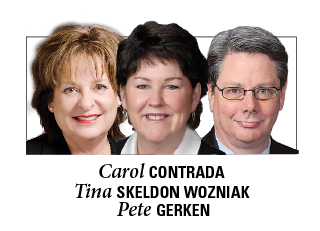
Carol Contrada, Tina Skeldon Wozniak and Pete Gerken are Lucas County Commissioners.

Toledo woman makes healthy strides via ProMedica wellness program

0

One year ago, Shelly Banet was dealing with several heavy life issues.

Stress came from nearly all corners of the 53-year-old Toledo woman’s life. She was struggling at work as she moved into a full-time position as a pediatric occupational therapist at ProMedica.
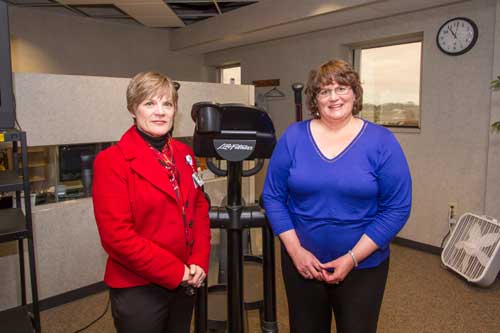
Becky Bouillon, a wellness nurse at ProMedica, left, with Shelly Banet. Toledo Free Press Photo by Christie Materni

Becky Bouillon, a wellness nurse at ProMedica, left, with Shelly Banet. Toledo Free Press Photo by Christie Materni

She was still reeling emotionally after her best friend’s death from cancer the year before. Her marriage was on the rocks.

The once physically fit woman was left with little energy to cater to her own needs. Her weight ballooned to nearly 250 pounds.

Several times each week, she pulled into the drive-thru lane of a fast-food restaurant.

“My husband used to call me the ‘fast-food queen,’ and I used to get so upset about it but he was right,” Banet said. “I was so stressed that I would subconsciously go through the drive-thru as a way of getting someone else to take care of me. Because I was taking care of everybody else.”

Then she got an email from ProMedica seeking employees to take part in the company’s six-month wellness program. She decided to give it a shot.

Faced with completing a health risk assessment with a slew of questions regarding health, diet and exercise, Banet came face-to-face with some of the sources of her unhappiness.

She got together with a wellness coach in February and put together a list of goals.

One of her goals was to lose 25 pounds. Another was simply to walk several flights of stairs at work each day.

In the spring, she saw a couple of female peers walking out of Powerhouse Gym and was taken aback.

“Are there really people in there like us?” she asked, surprised that anyone not looking like a bodybuilder would frequent such a place. “Well, yeah,” they told her.

In July, she worked up the nerve to walk in herself. That day, she met her fitness coach.

The pounds started coming off, and she started doing more things she actually enjoyed: sewing and spending time with girlfriends.

“The more I took care of myself and met my needs, the more energy I had for others,” Banet said. “I used to look forward to getting home and sitting on the couch. I never imagined I would be the person who says, ‘I’m sorry folks, I’m leaving. I’m going to yoga fusion and it starts at 6:30.’”

Becky Bouillon, a wellness nurse at ProMedica, said Banet is similar to many women she works with.

“They’ve always wanted to do these things, but they’ve never given themselves permission because they’re so busy taking care of everybody else,” Bouillon said.

The wellness program is now being offered to people outside ProMedica. It addresses a variety of health needs, from diet and exercise to smoking cessation and stress management, incorporating the expertise of nurses, dietitians and exercise specialists.

Today, Banet is 35 pounds lighter than she was when she filled out those survey questions. Now, when she’s having a hard time, she’ll choose the gym over the drive-thru lane.

“That’s why she is such a success story,” Bouillon said. “In light of all these huge life changes, she has made the commitment to herself that ‘I’ve got to do this.’”

ProMedica’s Wellness Coaching program is $260 per individual and consists of six months of coaching and education; a personal health risk assessment; one face-to-face meeting with a wellness coach; and 12 follow-up sessions that can be done over the phone or online.

For more information, call (855) 251-8615 or visit www.promedica.org/wellness-coaching.

Visions: Gramza: Attracting, retaining talent key for regional development

0

Editor’s Note: This guest column is part of an annual special section called Visions, in which Toledo Free Press asks local economic development and business leaders to share what they see ahead for Toledo and Northwest Ohio in the coming year.

In my new role with the Toledo Regional Chamber of Commerce, I had the opportunity to spend time with even more chamber members than usual in 2014.

.

.

Without fail, every company cited talent attraction and retention as one of its key challenges.

This came as no surprise, as people are the No. 1 asset of any organization. We must be able to grow local talent, recruit talent from other regions and hold on to talent when recruiters want to lure it elsewhere.

RELATED: Ottney: Visions

As a first step toward connecting with emerging talent, the Chamber created EPIC Toledo in 2007. EPIC, which stands for Engaging People, Inspiring Change, is based on the belief that a region that is influenced by diverse young professionals is a region that can attract and retain them.

In 2009, the  Toledo Region branding initiative was developed to promote the region’s quality of place and economic assets. Last year, the initiative enhanced its message with a new campaign: It Matters Where You Make It.

In 2015, the chamber’s main goal is to help companies in the region with their efforts to recruit top talent by promoting the diverse opportunities and benefits of working and living in the Toledo region.

We will accomplish this in two key ways. The first is to promote the diversity of jobs within the region, while the second is to showcase the quality of life that can be attained for those who relocate or choose to remain here. For those who wonder if there is a regional economic development strategy and if “all of those organizations talk to each other,” rest assured there is and we do.

While many groups throughout the region have economic development as a part of their mission, this does not necessarily mean that there is confusion or duplication. The business of growing our economy is complex and requires focus in key areas. When each organization focuses on what it does best and communicates regularly with the others, success is not only possible but likely.

The chamber is proud to play a key role in this regional effort through our advocacy efforts and member services. Our team is eager to move into this next phase of talent attraction and recruitment in 2015 as we illustrate for the world exactly why “It Matters Where You Make It.”

Wendy Gramza is president of Toledo Regional Chamber of Commerce.

Visions: Monske: RGP trumpets NW Ohio assets to domestic, international companies

0

Editor’s Note: This guest column is part of an annual special section called Visions, in which Toledo Free Press asks local economic development and business leaders to share what they see ahead for Toledo and Northwest Ohio in the coming year.

The Regional Growth Partnership  (RGP) is the lead economic development group serving the Toledo region and 17 counties of Northwest Ohio.

As a privately led organization, the RGP focuses on meeting the site selection needs of corporate clients in a confidential, innovative and time-sensitive manner.

.

.

The RGP offers a full range of traditional business development services, working in conjunction with our partners at the regional and state levels, to most effectively manage the site selection process.

RELATED: Ottney: Visions

These services include: comprehensive site and facility searches; incentive packaging; project development, planning and expediting; facilitating projects in collaboration with regional and state partners; and providing access to Northwest Ohio’s premier venture capital firm.

To support these business development efforts, the RGP serves as the network partner in Northwest Ohio for JobsOhio, a private, state-created corporation leading Ohio’s job-creation efforts. The RGP partners with JobsOhio to provide project management and administration resources throughout the 17 counties it serves.

The RGP’s business development efforts are focused on six cluster industries: advanced and alternative energy; advanced materials and manufacturing technologies; automotive; food processing/agricultural business; transportation and integrated logistics; and bioscience.

Site consultants are the primary audience for the RGP because of the central role they play in the site location process. Our business development team focuses on direct outreach efforts to this target group. This includes direct market visits and hosting consultants for special events.

The RGP’s business development efforts also include an international component focused on cultivating the region’s infrastructure to serve both foreign-owned businesses and companies looking to expand in the global marketplace. Much like domestic business attraction, the international investment strategy is geared toward site consultants and targeted industry executives.

As chief marketing arm for the region, the RGP takes a lead role in pitching and selling Northwest Ohio’s assets to a national and international audience. Our editorial marketing campaign has generated coverage for the region in such prominent outlets as The New York Times, The Wall Street Journal, ABC World News, CNN and Newsweek.

To help foster technology development, the RGP created Rocket Ventures, which serves as Northwest Ohio’s top resource for entrepreneurs and startups seeking capital and commercialization assistance. Client companies are eligible for funding consideration and access to a professional team which offers unparalleled knowledge and assistance and a track record of success in launching early-stage tech companies.

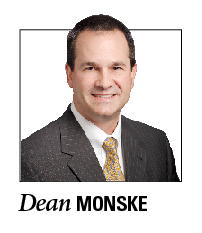
Dean Monske is president and CEO of the Regional Growth Partnership.

Visions: UT: UT innovation helps fuel economy

0

In recent years, The University of Toledo has stepped up to the plate to help drive economic development throughout Northwest Ohio and 2014 was no exception. This past year marked some exciting changes that impacted the entire innovation ecosystem in our region. In 2015, UT is poised to take its passionate commitment to innovation and entrepreneurship to another level.

.

.

At the core of this change is the newly branded UT’s Rocket Innovations enterprise (formerly UT Innovation Enterprises). Rocket Innovations consists of an investment fund, a technology transfer office and the LaunchPad Incubation program, which all work together to stimulate economic development.

Rocket Innovations’ focus is to invest in technology-based pre-seed companies in three sectors: IT, biomed and renewable energy. The new structure will enable UT to more effectively leverage assets and resources and collaborate with partners, including Regional Growth Partnership and Rocket Ventures to drive job growth, capital investment and wealth creation to Northwest Ohio.

LaunchPad Incubation, a program that provides intensive assistance to tech-based startups, underwent a complete makeover in 2014. The result was a 400 percent growth in clients that helped launch 20 new companies and generated over 30 new jobs.

LaunchPad also experienced two graduations. Roost, an IT-based push notification company that recently attended the prestigious Y-Combinator accelerator program in Silicon Valley, graduated in August. Nextronex, an alternative energy-based company that manufactures inverters for solar arrays, graduated in September. Both were also finalists in the Seed Financing category at the inaugural VentureOhio Awards event in September, which acknowledges significant milestones in early-stage startup firms in Ohio. Nextronex came out on top as the winner.

Another notable company in UT’s portfolio is Blue Water Satellite (BWS), an IT company that has developed a proprietary algorithm using satellite imaging to detect specific mineral contents in water and on land. This startup, now part of the LaunchPad Incubation program, was created at Bowling Green State University. Growing exponentially, BWS has been selected as a Trusted Tester by Google and has garnered some terrific press lately, partially in response to the Lake Erie water issues.

In addition to modest funding through investment (Rocket Innovations) and grant awards (LaunchPad Incubation), the focus in 2015 for both programs will be to provide business assistance, management services and mentorships to startups, and experiential learning through Student Entrepreneur In Residence opportunities. Through these activities, students and faculty are given the opportunity to receive hands-on experiential learning through active engagement in research, technology commercialization and economic development in our region.

UT was also chosen as one of the first four National Science Foundation-backed Innovation Corps (I-Corps) sites in the nation. The program allows interdisciplinary students from engineering, business and law to work collaboratively with industry to research the market and create new products through the use of a new maker space, which is a joint partnership with UT’s College of Engineering, the I-Corps program at UT and LaunchPad Incubation.

Our end goal for 2015 is to continue to leverage the assets available within UT and Northwest Ohio; develop essential resources such as time, talent and treasure (access to capital); foster engagement among students and the community partners who can help make the biggest impact to the companies we serve; and further build the programs and partnerships to provide the biggest impact to the region. O

Molly Reams Thompson is director of LaunchPad Incubation at University of Toledo, Rhonda Wingfield is interim CEO of UTs Rocket Innovations (formerly Innovation Enterprises) and Jessica Sattler is director of economic engagement and business development programs at UT.

Visions: Black: Supporting black-owned businesses helps stabilize communities

0

The Toledo African American Chamber of Commerce (TAACC) advocates and promotes the economic growth and development of African American-owned businesses by focusing on the development of business opportunities, business alliances and legislative advocacy.

.

.

There are several tactics that will help create an environment of economic stability and help create jobs for one of Toledo’s most underserved communities. If we can help our businesses grow and expand, they in turn will hire those within our community who want to turn their lives around and those whom mainstream businesses do not employ. These tactics have worked successfully in other communities around the country and can work here.

It is a well-known fact that our community has traditionally been among the most marginalized and underrepresented. It has the highest rates of unemployment, lowest per capita individual income, highest crime rates, highest teen pregnancy rates, lowest life expectancy rates, one of the highest rates of homelessness, the most uneducated and unhealthy group and the highest rate of underfunded businesses. As you can see from this list, the needs are great.

These conditions exist for a variety of reasons (including conditions we have caused within our community). The entire community will be strengthened as some of the issues that have plagued our community for decades are addressed and eliminated.  The tactics are as follows:

  • Recycle our dollars as many times as possible within our community by patronizing our businesses. We can help create jobs in our own community by helping our businesses grow. This growth cannot occur without consistent and sustained support of our local businesses.
  • Ensure that our businesses have the same level of access to public contracts as other groups.
  • Work with governments, public institutions and others to develop job creation strategies that include our community. For instance, the University of Toledo, City of Toledo, Lucas County Commissioners, Mercy, Toledo-Lucas County Port Authority, Neighborhood Health Association and the State of Ohio have all made commitments in writing to include minority-owned businesses in their procurement processes. These organizations understand the importance of granting underserved communities the opportunity to grow their businesses by doing business with them. Other organizations, like the Toledo-Lucas County Public Library and Metroparks of Toledo Area apparently do not. The library has refused to adopt similar written inclusion polices and has refused to release evidence of its procurement performance to underserved communities even though it is public information. The Metroparks have indicated for more than two years now that they intend to adopt a policy but have not.
  • Unite and work together to develop plans that address blight, safety, infrastructure improvement and the delivery of services in and to our community.
  • Refrain from aligning with people who do not have a proven track record of supporting economic initiatives that have benefited our community. This includes elected officials, political candidates and levy sponsors.
  • Require that politicians and organizations we support with our votes and dollars reciprocate by supporting initiatives that focus on investing their resources in our community.
  • Set the leadership tone by requesting that corporate welfare (such as tax abatements, development assistance, public grants and block grant allocations) be given only to those entities that have a proven track record of including underserved communities in their hiring and procurement processes.

    TAACC believes that if we do more to help ourselves, along with the support of those outside our community, the entire Northwest Ohio community will benefit, grow and prosper.

Jay Black is president of the Toledo African American Chamber of Commerce. He can be reached at (419) 407-6697 or [email protected].