Home Blog Page 160

Toledo Council approves Downtown ProMedica deal

0
A parking garage at Promenade Park, seen at left in the above illustration, remains a controversial part of ProMedica's proposed plan for its move downtown. Toledo City Council could vote as soon as Jan. 20 on the plan. Illustration courtesy ProMedica.

Toledo City Council voted 11-1 Jan. 20 in favor of a memorandum of understanding (MOU) with ProMedica, approving the company’s plan to move its headquarters downtown and build a garage at Promenade Park.

Councilman Jack Ford was the lone no vote, indicating he wanted clearer answers regarding the likelihood of getting minority inclusion and restoration provisions added to the agreement before he was comfortable  supporting the project.

ProMedica’s Robin Whitney said she hopes those opposed to building a garage at Promenade Park will be pleased with the park in the end. Toledo Free Press photo by Christie Materni.

Two amendments were briefly discussed at the beginning of the meeting — Ford suggested a minority inclusion provision and Councilman Mike Craig suggested giving maintenance responsibility of the park to ProMedica — but both men pulled their amendments.

Council also briefly discussed an email from former Judge James G. Carr, which asked Council to consider adding a restoration provision, which would return the park to the city and have ProMedica responsible for razing the garage if the company left the site within 25 years.

Council agreed to discuss those and other topics during the next stage of negotiations, which is a development agreement.

RELATED: Read the ProMedica MOU Toledo City Council voted on here.

Illustration Courtesy ProMedica

The next step is putting together a development contract, which is expected by April and must be approved by City Council. Construction could start as early as November, expected to be completed by 2017.

After the meeting, Robin Whitney, ProMedica’s vice president of property acquisition and development, said she appreciated hearing the perspectives of those who opposed a garage being built at Promenade Park, but hopes the end result will satisfy them.

“I hope one day when we get this project done they’re going to like it,” Whitney said. “That’s really still my goal. I think we’re going to be improving the park and really making it an amenity and I believe that we can still do that. I haven’t given up hope that I can get them converted and be supportive of what we’re doing.”

Before the vote, Ford questioned City Development Director Matt Sapara about Carr’s suggested “return, remediate and restore” proviso. Sapara said he had not yet seen the email.

“I’m not exactly sure what the development agreement will look like, but I know that there is still further discussions to be had,” Sapara told Ford.

Ford also questioned Sapara about his own suggested minority inclusion provision, which asked that ProMedica make “all reasonable efforts to meet and/or exceed a level of 15 percent of minority business enterprise participation in the selection of contractors and subcontractors in this project and to meet or exceed a level of 10 percent minority business enterprise participation in overall purchases, materials, supplies and services required as part of this project.”

“Can you tell us that the final agreement will have a strong minority inclusion plank in the agreement?” Ford asked.

“I can tell you, Councilman, there are other things that will be added to the development agreement that aren’t included in the memorandum of understanding,” Sapara said. “I know that ProMedica right now is working on that inclusion policy. I don’t know what the final agreement will look like, but I can tell you the development agreement will have to come back to Council for its consideration.”

“So is your answer you don’t know?” Ford shot back.

“The answer is there will be things in the development agreement that aren’t in the memorandum of understanding,” Sapara repeated.

“Neither one of his responses satisfy my concern,” Ford told Council. “I’m not going to bring them forward unless the majority of the Council is ready to say clearly they support minority inclusion in the first document and I was getting various reasons as to why now is not the time. When you look at the lack of minority inclusion in some of the big projects, I think it’s always the time. So I’m disappointed in that.”

Many Council members expressed support for such an amendment, but said it would be more appropriate during the next stage of negotiations.

During the vote, Ford started to explain — “I’m voting no till I see the development agreement” — but was cut off by the rest of the roll call.

ProMedica is already working on a diversity inclusion policy, Whitney confirmed after the meeting.

“We have a diversity office and we’ve already been working on what our diversity plan is,” she said. “We don’t have that ready to share yet, but we’re certainly thinking broadly. As was stated today, we want to include women’s business enterprises and minority business enterprises as well, so we will certainly be able to share our plan in the very near future.”

Regarding park maintenance, Whitney said she was satisfied with the current MOU language, which calls for the city to maintain Promenade Park, but allows ProMedica to step in and supplement maintenance at its own cost if the city’s maintenance isn’t up to its standards. However, she said ProMedica is open to further discussion.

“I think the park maintenance is something we can continue to discuss,” Whitney said. “We thought the language (in the MOU) was the best of both worlds. We feel the city probably should be maintaining the park since they will be controlling it and doing programming in it, but that also gives us the ability to add to that and supplement it if we like. But we’re open to further dialogue on it.”

Whitney said she hadn’t seen Carr’s proposal regarding restoration yet, so couldn’t comment.

During remarks before the vote, Council President Paula Hicks-Hudson called ProMedica’s move a game changer and a “magnificent change” for Downtown Toledo’s waterfront.  Councilman Tom Waniewski said he was “disappointed by the last-minute jockeying” with amendments, and evoked Edward Drummond Libbey and Michael Owens, two of the pioneers behind Libbey-Owens-Ford, and the impact their investment and development still has on Toledo.

“This is really an opportunity for us to make history today. It’s not a vote for ProMedica or against ProMedica. It’s a vote for Toledo,” Waniewski said. “If you look at history, the Libbeys and the Owenses saw our water as an asset for their commerce and we’re still reaping the benefits of Libbey’s and Owens’ investments. Now we have another corporate partner who is attracted to the water for the commerce and to make a great campus setting for them. … This is an opportunity for us to repeat the history that the Libbeys and the Owenes started for us using that water. It’s time to move forward.”

Councilwoman Sandy Spang thanked the green space advocates, some of whom were in attendance at the meeting, who had spoken on behalf of saving Promenade Park during previous meetings.

“To those who spoke to the importance of preserving and enhancing our waterfront I want to thank you for being a part of the conversation,” Spang said. “You shed light on a principle that is important and that we must keep before us as we continue to develop Downtown.”
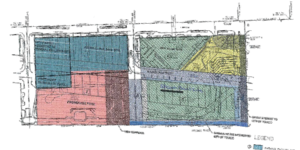

Revised site plan handed to Toledo City Council members for Jan. 20 meeting. Toledo Free Press illustration/image courtesy ProMedica.

Marvel’s secret won’t last long

0

Is it a reboot? Is it a melding? Or is it simply an event? Marvel Comics isn’t saying exactly, but their announcement this week of a new, all-encompassing project called Secret Wars has already brought comics fans to the brink of tears and in fear for the Marvel Universe they’ve loved for years.

The title Secret Wars stems from an incredibly successful Marvel miniseries from 1984, wherein most of the company’s popular heroes and villains were waylaid by an omnipotent cosmic entity to an alien planet called Battleworld to do –  yep, you guessed it – battle.

In many ways, it kicked off comic book publishers’ obsession with the “event,” cross-universe stories that pull out all stops to not only draw in readers, but also dollars. The latest Secret Wars, beginning this year, promises that and more – if Marvel plays their cards right and avoid angering their core customers.

In a news conference, Marvel told reporters that their main Marvel Universe would collide with their Ultimate Universe, a line of books about an alternate reality begun in 2000. This collision, which they claim has been planned out for years, will create a new Battleworld, yet this time on Earth, not on an alien world.

In effect, all realities, every alternate dimension the company’s created over the last several decades, is fair game for claiming a spot in the patchwork Battleworld.

The kicker to all this is that Marvel also notes that this meshed-up, mashed-up brouhaha will continue past the main Secret Wars story – and that’s what’s made fans nervous and noisy.

The world of comics is a cyclical one, feeding off past glories while trying to attract new readers and maintain a semblance of a status quo. Marvel’s success at the movie boxoffice gives them some street cred to uproot their universes and play with them a bit, but perhaps only to a point.

The company’s top brass are being cagey about all the details, but some suspect that not everything’s written in stone yet with Secret Wars, and things may change depending upon retailers’ attention, attraction, and yes, purchasing.

Soon, it will no longer be a secret whether Marvel fails, or flies with their newest event.

Finding the right school for your child

0

As Ohio prepares to commemorate National School Choice Week later this month at 485 events across the state, many parents will begin evaluating the educational opportunities available for their children.

Believe it or not, seats in schools are already beginning to fill up for the 2015-16 school year. Waiting until the spring or the summer to begin researching schools for your children could restrict your options.

Parents can start by making a list of the attributes that they hope to find in an ideal school. Ask yourself: What’s most important to you and to the academic, social and emotional wellbeing of your child? Is it the academic performance of a school, school safety, the instructional methods, the qualifications of teachers, the school’s educational theme, a school’s shared values or other factors?

Start looking into the options available to you. In addition to the local public school, you may be eligible to send your child to a school outside of your ZIP code, or in a different school district. Look into nearby charter schools and magnet schools. Don’t leave private and faith-based schools off your list! You might be able to find scholarships to cover the costs of tuition.

To find the options available to you, look at information from the Ohio Department of Education. For a directory of most schools in your area, along with parent rankings and some performance metrics, parents can visit greatschools. org.

Start making appointments to visit the schools. Ask to sit in on classes, and make sure to ask as many questions as possible of teachers, the administration and support staff. Ask yourself: Is this a place where I’d want to send my child for most of his or her weekday waking hours?

Finally, make sure to talk with other parents — and to your own children. Ask parents how the school’s administrators treat parents, and whether they welcome or discourage parental involvement. Finally, ask your children about their perceptions of the schools that you’ve visited before you make your choice.

Andrew Campanella is president of National School Choice Week, which runs Jan. 25-31.

St. Francis de Sales expanding to include 7th- and 8th-graders

0
Jim Neary, top left, is Dean of the new Seventh- and Eighth-grade program at St . Francis de Sales High School. Also pictured are Eric Smola, Principal, and Father Geoff Rose, President-elect, with students. Photo courtesy St. Francis de Sales High School.

St. Francis de Sales High School is expanding its educational program to include seventh- and eighth-grade boys.

With the permission of Bishop Daniel E. Thomas and the approval of the school’s board of trustees at its December meeting, St. Francis will offer enrollment to these younger students beginning with the 2015-16 school year.

Over the past several years, St. Francis has received an increased number of requests from current and prospective parents to offer these grades in concert with the school’s mission of providing a Catholic, college preparatory and Salesian education.

“In response to this demand, the Salesian emphasis on communitybuilding and friendship favors the college preparatory school model with six grades, 7-12, as opposed to a separate middle school or academy,” President-elect Father Geoff Rose said in a news release.

“There is a practice in education today to accelerate students; the addition of seventh- and eighth-grade students to St. Francis will enable them to take full advantage of the high school’s advanced offerings,” Rose said. “Providing access at an earlier age to these resources is consistent with the mission of St. Francis de Sales High School, where acceleration is already a reality as evidenced by having the area’s strongest AP program and the only dual enrollment program with the University of Toledo.”

The accelerated curriculum for the seventh and eighth grades will include a number of advanced classes to be taken for high school credit, some of which will be integrated with classes at the high school freshman or sophomore levels. Students will follow the same eight-period school day as the high school, including seven academic periods, homeroom and lunch.

The admissions process will focus on accepting students with a sound academic background who show the potential and motivation necessary to succeed in an accelerated environment.

Principal Eric Smola said, “The addition of seventh and eighth grades extends our ability to transform adolescents into outstanding Christian gentlemen. In addition, our ability to grant high school credit for middle grade students will afford them increased possibilities at the high school level.”

In addition to academics, a number of co-curricular activities will be offered to the students. These will include sports offered through the Catholic Youth Organization program, academic activities such as Power of the Pen, arts offerings in the areas of band and choir, and clubs such as robotics and yearbook.

James Neary, who teaches AP Economics and coaches varsity crosscountry at St. Francis, will become the seventh- and eighth-grade dean.

“Our school community is excited to welcome new students and share with them our passion for Salesian spirituality and education excellence as well as their physical and social development into Christian gentlemen,” Neary said in the news release.

There will be information nights for interested families at the school at 7 p.m. both Jan. 29 and Feb. 19.

More information can be found on the website at www.sfstoledo.org or by contacting Smola at (419) 531- 1618 or [email protected].

TPD seeks minority, female recruits to ‘answer the call’

0
Toledo police recruits in the 2013 academy class. TPD recruiters hope to increase the number of black and female officers in the next class. Exam registration is open through Feb. 7. Photo courtesy Toledo Police Department.

Over the past few months, police departments across the country have experienced varying levels of community unrest following the deaths of Michael Brown, Eric Garner, Tamir Rice and others.

These high-profile cases of unarmed black men — or in the case of Rice, a 12-year-old boy — killed by police officers caused backlash in many communities, including New York City, where NYPD officers Wenjian Liu and Rafael Ramos were shot and killed as they sat in a marked squad car on Dec. 20, apparently in retaliation for Garner’s death.

In the midst of this ongoing tension, the Toledo Police Department (TPD) remains focused on its goal to recruit those interested in a law enforcement career. Soon, these recruits will have the chance to sit for the civil service exam.

Sgt. Michael Koperski leads the recruiting unit for TPD and is optimistic his team can attract qualified candidates.

One tactic for encouraging new recruits is combating pessimism about police officers.

“I have the opportunity to help people. It could be clearing the scene of a traffic accident so no one else gets hurt. It could be catching a murder suspect,” Koperski said. “We have an opportunity to have a positive impact on people’s lives and that to me is the main reason I wanted to join this career.

“You can’t throw a blanket description on somebody over everybody,” he said. “If you’ve had nothing but bad experiences with police, I can understand that. But have you ever had a bad experience with me personally? Yes, I’m a police officer and a lot of people just see the uniform, but there’s somebody underneath there. There’s somebody inside the uniform that’s more than just a police officer.”


‘Answer the Call’

This year, TPD is using the slogan “Answer the Call.” A primary focus is attracting minority and female recruits, two demographics that typically see low recruitment numbers in Toledo and throughout the country.

“There are various reasons,” Koperski said. “Whether it’s perceived or real, depending on where people live, there tends to be a mistrust between the minority community and its police force. When people mistrust law enforcement, they don’t want to become a police officer.”

Koperski said a lot of the negative responses TPD receives from female candidates revolve around a fear of getting into a physical altercation with someone of larger stature.

“Can it happen? Yes. But we put you through a lot of training and if you learn to take care of yourself and you’re good with speaking to people, a lot of times that will diffuse the situation before it even becomes physical,” he said.

To help recruit minority candidates, TPD teams with the African American Police League to provide support and training.

Sgt. Anita Madison, leader of the minority recruitment program, said it’s important to increase minority presence in the police department. African- Americans make up about 27 percent of Toledo’s population but roughly 14 percent of the TPD.

“We’re trying to have our department, over the course of time, reflect the population in the community,” Madison said.

Of TPD’s 614 officers, 486, or 79 percent, are white; 83, or 13.5 percent, are black; 40, or 6.5 percent, are Hispanic; five, or 1 percent, are listed as “other,” according to TPD public information officer Sgt. Joe Heffernan.

When it comes to the perfect candidate, Koperski said the department looks for “honesty, integrity and people with an ability to think under pressure in stressful situations.

“We want people to be good, solid individuals that represent the police department and the city as best as they possibly can. And we encounter stressful situations a lot, so the ability to think clearly in any of those situations is very important because somebody’s life could be on the line,” he said.

Exam information

Exam registration opens midnight Jan. 24 and closes 11:59 p.m. Feb. 7. Once candidates register, study materials will become available electronically. Hard copies of the study materials will be available on the 19th floor of One Government Center beginning Jan. 24.

Candidates must apply online at toledo. oh.gov or toledopolice.com.

Access to a computer is available at the Scott Park District station, 2301 Nebraska Ave. Assistance sessions take place on 8:30 a.m. to 4:30 p.m. Jan. 24, 8:30 a.m. to 7 p.m. Jan. 29 and 8:30 a.m. to 7 p.m. Feb. 4.

In order to qualify for the exam, applicants must be between the ages of 20 and 34 years old on Feb. 28, per state law. Applicants must also have a high school diploma or GED certificate and be legally allowed to work in the United States.

The exam will be given at 9 a.m. Feb. 28 at the SeaGate Convention Centre, 401 Jefferson Ave. Exam results are typically released in six to eight weeks.

Applicants who score well on the exam must then pass a background check, psychological tests, a medical test and a physical fitness test, Heffernan said. Those with felonies are disqualified.

“From that pool of candidates, we will take the most qualified,” Heffernan said. “Things like level of education, diversity and military experience can help a candidate once it gets to this stage.”

“We’re excited to offer the exam and hope everyone who has ever given the thought about wanting to be a police officer at least takes this first test,” Koperski said. “If anyone wants to serve others and make a difference in their community, please come out and apply.”

For more information, visit toledo police.com or call (419) 245-1075.

5th Street Pub opening Sylvania location

0

Perrysburg’s 5th Street Pub has been bringing authentic Neapolitan pizza to Northwest Ohio diners for nearly two years.

This spring, it aims to expand its 150-year-old recipes and Italian baking techniques to a new location 16 miles up the road. The pizzeria and pub is expanding to a second location in Sylvania at 5577 Monroe St.

“Since day one, we’ve had people coming in from Sylvania,” said Geoff Kies, who owns the restaurant with his wife Melissa. “And every person from Sylvania would lament, ‘Man, I wish you guys were closer.’”

The owners had started looking in the Sylvania area for possible expansion when the opportunity arose to purchase the former Hamway’s on the Main and World Tea Company in the Promenade Shops. Together, the two businesses will become the second 5th Street Pub, with roughly the same square footage as the original.

With a complete gutting and renovation of the location in order, Kies is hoping to open in early April.

“People in Sylvania have a little bit more of an advanced palate than most places,” he said. “There’s a lot of good restaurants up there, so they’re used to good food. … I think it’s going to be a really good fit.”

Neapolitan pizzas are made a specific way, with specific ingredients — just like they were made in Italy in the 19th century. Less yeast is used in the dough, which must be stretched a certain way. The three primary toppings are tomato sauce, mozzarella cheese — much less than on most pizzas — and basil leaves. Wood-burning ovens reaching 1,000 degrees bake the pies in 90 seconds.

Kies and managing partner Bruce Rahe went to New York City several years ago to be trained in the process by Roberto Caporuscio, who owns Kesté Pizzeria. At the time, they were two of the just 35 people in the U.S. certified in making Neapolitan pies.

Kies said the reception to the Old World food has been enthusiastic.

“The kind of pizza we sell, it’s very different than the pizza people are used to around here,” he said. “We were hoping that people were going to eat this stuff up, and they have.

“I think people are smarter these days due to the Food Network and things like that, you have a more educated palate among the people,” Kies said. “They can get into the fact that the recipe we use to make this pizza is 150 years old.

“The ingredients that make the margherita pizza that we have comes from the same part of Italy that first margherita pizza came from. We don’t use any modern techniques in cooking the pizza, it’s all Old-World techniques,” Kles said. “We’re trying to preserve the history of Neapolitan pizza — Neapolitan pizza being the one that gave birth to pizza everywhere, all over the world. This is the one that started it.”

While the second location will mirror the look and atmosphere of the first, Kies is still determining if patio space will be possible in Sylvania. The Perrysburg pub added an enclosed, all-season patio last year after some neighbors complained of noise from the establishment. Kies is eyeing the front of the former World Tea Company property as the most likely candidate for patio space.

Kies said the second 5th Street Pub will employ about 40 people, with 35 of them being new employees. Those interested in applying may do so at the original location, 105 W. 5th St., Perrysburg. For more information, visit 5thstreetpub.com. O

Legacy project breathes new life into historic Cherry Street

0
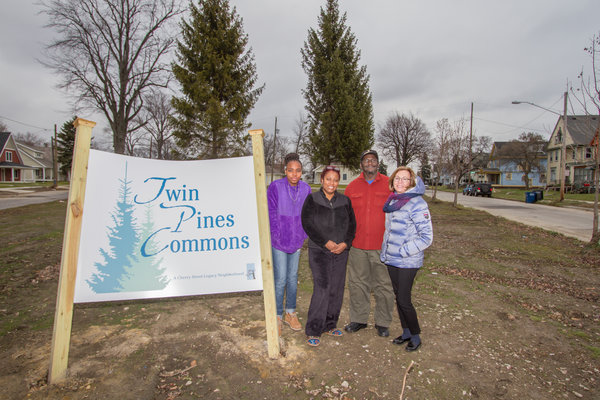
From left, Rhonda Cole, Keyah Lynch, Leo Brown and Karen Rogalski are among those working to clean up the Cherry Street neighborhood. Toledo Free Press photo by Christie Materni

The Cherry Street Legacy Project is a community partnership that began with the vision of creating a stronger and safer neighborhood for those along and around Cherry Street.

Focusing on the stretch between the Martin Luther King Jr. Memorial Bridge  (which many still call the Cherry Street Bridge) and I-75, the project preserves the neighborhood’s proud past as its residents forge together into the future.

“It’s amazing,” said Karen Rogalski, project coordinator. “It has changed the flavor of the neighborhood.”

From left, Rhonda Cole, Keyah Lynch, Leo Brown and Karen Rogalski are among those working to clean up the Cherry Street neighborhood. Toledo Free Press photo by Christie Materni

Several entities collaborate on the project, but it all began in 2005 with one of Cherry Street’s prominent occupants and Downtown’s only hospital, Mercy St. Vincent Medical Center.

At that time, St. V’s board members were discussing a potential move to the suburbs for the hospital, mainly in response to doctors who said they didn’t feel safe coming to work.

After much discussion, the board decided to stay, but not without a neighborhood improvement plan. They knew as the value of the neighborhood rose, so would the hospital’s. After a detailed written strategy was put together, it sat untouched for several years until Rogalski was recruited to put it into action around 2008.

Rather than call a community meeting, she immediately started hitting the pavement.

“We went out and we interviewed 200-plus houses,” Rogalski said. “Out of that we interviewed 100 ‘man on the street’ people and asked ‘What are the perceptions of people coming in the area?’ We looked at each individual parcel, and during that period of time I physically mapped parcel by parcel and really got to understand the neighborhood.”

Rogalski found the single largest issue was crime, followed by blight and empty lots. While qualitative data would drive what work to do, Rogalski knew the strategy had to come from the people.

The group began to work with the city on code enforcement, no easy task due to numerous historic homes in the area that couldn’t be immediately demolished. They helped landowners next to blighted properties purchase them for $100, thus facilitating their demolition and providing an end user to care for the land.

New houses were erected on some lots, with builders working with the group and NeighborWorks Toledo Region to develop new homes that blended well with historic properties.

Interviewing residents also helped the group realize there was growing concern about Moody Manor, resulting in increased block watch participation. Originally there was just one block watch group in the area; now there are three, all of which have generated ideas to keep youth out of crime.

“Police come to our crime meetings,” Rogalski said. “We’ve started to talk the same language, and there’s no magic answer, but we have reduced crime and changed crime.”

Knowing that improved lighting is one way to mitigate misconduct, Rogalski spent some early morning hours driving the streets and found that not only were 80 street lights out, but that residents didn’t know how to report them. After talking with FirstEnergy, the group developed a plan whereby residents merely place duct tape on poles to signal a bulb needs to be replaced.

Another group involved with the collaboration is the Cherry Street Development Organization, whose members include St. V’s, Central Catholic High School, United North and various nonprofits.

“Karen Rogalski knows this project inside and out, and I’m just along for the ride and to support it in any way I can,” said president Mike Boyle. “She’s done a phenomenal job.

“There’s a lot of different groups that are doing good. There’s just too much negativity in the media, and I’m tired of it. They’re throwing it in your face constantly, and it’s like there’s an agenda to bring down our city.”

For now, the Cherry Street Legacy Project will continue to play its part in facilitating a massive group effort.

“We’ve done some really interesting things to reduce crime,” Rogalski said. “There’s these little things we continue to build on.”

For more information, visit Cherry Street Legacy Project on Facebook.

Mahler: Terroir: It matters where it’s from

0

Terroir. It’s a term used in the wine world that has bled into everyday wine small talk.

It’s a French term that has no direct translation, into most languages, but it’s perhaps at the crux of understanding one of the most important factors in determining a wine’s greatness where it comes from.

Terroir (pronounced ter-wahr) refers to, as you may suspect, the land, but not just the land. It also means the soil, the climate, the altitude, the latitude, the flora and fauna, basically every single variable that makes that piece of land unique.

It applies to everything we grow in or on land. It applies to livestock, their products like cheese and milk, all fruits and vegetables, and most importantly, it applies to wine grapes.

The Europeans got a head start on us. They have been growing grapes and making wine for a very long time, but continuously recorded for about 1,000 years. It’s taken every bit of those 1000-plus years for them to realize and refine what grew best where.

Without historical records, they couldn’t learn from the previous generations. They learned what to plant where, what to cross-breed and the best methods to use. I believe the process is called “unnatural selection,” which is, basically, human-assisted Darwinism.

So where does terroir fit in? Great wine comes from the rarest and most perfect circumstances of grape growing.

The grapes live on a knife’s edge of circumstances. You want factors that include the following: a dormant winter but not too cold, a steady and undramatic flowering season (tornadoes and hail are bad), a long growing season lasting 100-plus days, long warm days and cool dry nights.

When all of these factors line up, you can start to see the reflection of where the grapes come from in the wine.

Terroir is reflected in every wine differently and in every grape. Wine professionals can discern where a wine comes from with just a few clues and a fair amount of experience.

For example; Chablis is chardonnay grown in the northern limits of Burgundy, France, the home of chardonnay, but it tastes unlike chardonnay from anywhere in the world. Chablis is at the 47th parallel, very close to the northernmost growing limit for most wine grapes. Because it’s so far north, the days are longer and the nights are shorter during the growing season.

The soil is called Kimmeridgian which is 180-million-year-old limestone, clay and tiny fossilized shellfish. It’s white, like in the famous White Cliffs of Dover. This extremely rare set of growing circumstances that is materialized in the form of wine with very high minerality and equally high acidity. You can’t make wine like this anywhere else in the world; it took 1,000 years to figure it out, and Chablis is the absolute apex of this type of wine.

Terroir is why you see names of places on the European labels instead of the names of grapes. Calling Chablis chardonnay is like saying The Beatles were a band in the ’60s.  You’re leaving a lot of information on the table. When you say Chablis, you impart what that wine will be like regardless of who the producer is (producers are important, but that’s a different discussion).

What about non-European wines? Well, they all have varying degrees of terroir.

In most countries, the place the grapes come from is listed on the label, but there is some confusion in these parts and many people mistakenly believe wine from certain places will be automatically good, like Napa Valley. In reality, the term Napa should really just tell you what that wine will be like, not how good it is.

So we have a ways to go to refine what our terroir means. Not all great wine is a reflection of terroir and not all terroir-driven wines are good, but digging into that concept is a pretty fascinating exercise.

In the meantime, take a chance on some wines “of a place,” ask your wine merchant some good questions and try something new. Always try something new.

Adam Mahler is the founder of Ampelography, a wine sales and marketing company based in Toledo (ampelographywines.com). He can be reached at [email protected].

Wine and beer: Recommended selections from Matt Snyder of Veritas Cork & Craft

0
Wines recommended by Matt Snyder of Veritas Cork & Craft include Clos du Val 2011 Napa Valley Merlot, 2009 Ehlers Estate One Twenty Over Eighty Cabernet Sauvignon and Oracle Minor 2009 Napa Valley Red Wine. Photo courtesy Veritas Cork & Craft.

Wines recommended by Matt Snyder of Veritas Cork & Craft include Clos du Val 2011 Napa Valley Merlot, 2009 Ehlers Estate One Twenty Over Eighty Cabernet Sauvignon and Oracle Minor 2009 Napa Valley Red Wine. PHOTO COURTESY VERITAS CORK & CRAFT
Wines recommended by Matt Snyder of Veritas Cork & Craft include Clos du Val 2011 Napa Valley Merlot, 2009 Ehlers Estate One Twenty Over Eighty Cabernet Sauvignon and Oracle Minor 2009 Napa Valley Red Wine. Photo courtesy Veritas Cork & Craft.

This month I’m on a Napa kick and enjoying some great juice from California.

  • For an everyday drink, I really like Clos du Val 2011 Napa Valley Merlot, composed of 76 percent merlot, 16 percent cabernet sauvignon, 5 percent petit verdot and 3 percent cabernet franc. Usually $35, it’s on sale for a limited time for $20.
  • This truly is a cabernet sauvignon lover’s merlot. It has a silky smooth mouthfeel with a nice lingering finish, and is great with food or by itself.
  • Also from Napa Valley is the 2009 Ehlers Estate One Twenty Over Eighty Cabernet Sauvignon. This wine is composed of 85 percent cabernet sauvignon, 9 percent cabernet franc, 3 percent merlot and 3 percent petit verdot.
  • Retailing at $50 a bottle, I really like sharing this kind of juice with friends that understand the beauty of such a well-crafted red blend.
  • Tasting notes:  It’s a dense, rich, full-bodied cabernet sauvignon. The wine is plush and juicy with flavors of blackberries, truffles, black plums, toasted coconut, raspberry jam and cocoa.  Great structure and balance, fine tannins, this wine, with proper cellaring, has the potential to age for decades.
  • The Oracle Miner 2009 Napa Valley Red Wine is a big blend of 50 percent cabernet sauvignon, 25 percent cabernet franc, 15 percent merlot, 5 percent malbec and 5 percent petit verdot.
  • The Oracle is an exceptionally balanced, full-bodied red blend made from grapes grown at Stagecoach Vineyard in the eastern hills of Napa Valley. Retailing at $100 a bottle, I would suggest serving this robust blend with a lightly seasoned beef ribeye steak. Consume with friends that understand and appreciate the complexity of such a great bottle or lay it down in your cellar for a special occasion. Please remember though, life is short, we should celebrate many special occasions on a more frequent basis.

Beer

When it comes to beer, my go-to style is usually IPAs, but for this time of year, I absolutely love a beer such as Third Coast Old Ale from Bell’s Brewery Inc., brewed in Kalamazoo, Michigan.

Rich and boozy at 10.2 percent alcohol, it’s an ale for those who appreciate complexity and vintage character. Fill a snifter and enjoy it now or commit some bottles to the cellar and age them out for the next couple of years, or more. Sorry Bud drinkers, no “born on” dates or best by dates on such a libation here! Available from Veritas’ retail shop to go for $15.99 a six pack.

  • From the great state of Ohio, I’m also enjoying Jackie O’s Brick Kiln Barleywine-style ale brewed and bottled in Athens.
  • Brick Kiln Barleywine-style ale is brewed in the English tradition and its deep mahogany hue is accompanied by rich caramel and raisin notes.  Light herbal jabs from European hops round out this complex brew.
  • Similar to the Bell’s Third Coast Old Ale, as much as I enjoy this style of beer now, I would recommend laying this beer down in the cellar to see how it changes over the course of the year. Available from the retail shop to go for $5.99 bottle.
  • We will soon put the North Coast Brewing Co.’s Old Rasputin Russian Imperial Stout on our nitro tap. This will be available by the glass only and served in our lounge (Veritas Lounge opens at 4 p.m. Monday-Saturday).
  • Produced in the tradition of 18th century English brewers who supplied the court of Russia’s Catherine the Great, Old Rasputin is a rich, intense brew with big complex flavors and a warming finish. With an ABV of 9 percent and a 97 point rating, from Beer Advocate, this will be stout nirvana in a glass!

Matt Snyder is the Beer and Wine Guy at Veritas Cork & Craft, 505 Jefferson Ave., Toledo.

Toledo woman on furniture reality TV show ‘Framework’

0

It’s not every day you get instructed by a Grammy Award-winning rapper on how to make a stylistically appealing ping-pong table.

Toledo resident Lacey Campbell will star in “Framework,” a reality TV show about furniture designers

Toledo resident Lacey Campbell recently found herself in that position while she was starring in “Framework,” a reality TV show about furniture designers currently airing on Spike TV (Tuesdays at 10 p.m.). The series made its debut Jan. 6.

“Framework” is a nonscripted show that takes 13 budding furniture designers and gives them assignments, such as building a piece of furniture out of boat materials or transforming an item as mundane as a ping-pong table into a work of art.

Hip-hop star Common is host of the show, which also features professional furniture designers Nolen Niu and Brandon Gore. One by one, contestants who don’t impress the judges are kicked off the show.

The last designer standing wins $100,000.

While Campbell, 32, is contractually bound to keep mum on exactly how long she lasts, she hinted that she will have her eyes glued to Spike for a while.

Being on the show was an experience Campbell said she won’t soon forget.

“‘Framework’ was the hardest thing I’ve ever done in my life,” she said. “Being on a reality TV show, they try to throw every sort of twist or turn that you couldn’t possibly see coming.”

Campbell applied on the final day the show was accepting applications. To tape the show in California, she had to leave her job of four years at Sauder Woodworking Co. in Archbold, where she had been a designer.

Females are still a considerable minority in the furniture design world. Of the show’s 13 contestants, three were women.

Campbell’s appeal to producers? Not only can she both design and build furniture, she was willing to be on TV and could spend as much time as necessary in Los Angeles. Plus, she has personality: The former roller derby girl was a member of the Glass City Rollers, competing under the moniker “Rita Disassemble.” She had to hang up her skates after hurting her shoulder due to excessive body-checking collisions.

“I loved it, but I just kept getting hurt,” Campbell said of her time in roller derby. “It was making it really difficult for me to draw. … I miss it so much. It’s like guys who play football, there’s this [desire] to do it. There’s just something amazing about knocking someone on their butt.”

Being on the show gave Campbell a boost in confidence and vision for her future as a furniture designer.

“It’s interesting being around 12 other people that have the same passion and drive,” she said.

“The energy alone with these people, it just makes you not able to sleep. You’re vibrating with energy because you’re so excited about going into the shop and seeing what tools are going to be there and what kind of wood they have stocked and what sort of work bench we get to be at, and ‘Oh, my God, there’s so many clamps!’

“Just being in an environment like that, it’s hard to focus. It was one of the most amazing things that I’ve ever done in my life. It was … epic,” she said, giggling with excitement.

Campbell’s shop is located in her detached two-car garage in south Toledo. There, she has a number of furniture pieces ready to be repaired, refinished, stained, welded, upholstered or in some other way made ready for purchase. Last year, she constructed her own spray booth in the garage.

Some pieces she sells online via Craigslist or Etsy, and other projects are commissioned works for private individuals or businesses.

Soon, Toledoans will have a chance to drink locally produced craft beers or ponder their next tattoo on one of Campbell’s pieces. She is working on a community table to be placed inside Black Cloister Brewing Company, set to open Downtown in February.

“It’s supposed to look like it was pulled out of the 16th century,” Campbell said.

She’s also working on a coffee table to be used at Ink and Iron Tattoo Parlour and Gallery, 1505 Adams St.

For more information, visit laceycampbelldesigns.com.