Editor’s Note: This column was originally published at 1matters.org on Feb. 7, the day after Toledo Mayor D. Michael Collins died.
I cried yesterday, just as many of you across the community cried, because we lost a dear friend. Not a friend, but a dear friend. That’s Mike. He had the ability to make us feel like dear friends, didn’t he? We just knew he cared.
And he was a very dear friend to those in need. For the past six years, there has been turmoil in local funding policy for the unhoused. One group felt we should close the shelters, and the other group felt the shelters needed to be there to act as landing pads for all citizens who fall through the cracks.
Mike was one of the heroes who stood up for the unhoused, who stood up for the shelters, who fought — and I mean fought — to ensure all Toledoans have a place to go when times get desperately tight.
He fought hard in standing up with Renee Palacios of Family House, Denise Fox of Aurora House, Toledo City Council members Paula Hicks-Hudson, Steve Steel, Lindsay Webb, Tom Waniewski and others to provide the funding the shelters needed to continue operations. This is all public knowledge. But it is the behind-the-scenes things he did that proved his campaign slogan, “Collins Cares.”
One day I got a call from then-Councilman Collins that the city had found a man camping in the woods in South Toledo. Mike wanted me to know so we could go out there and see if there was any way we could help him. On another day with another call, Mike alerted us that the city would need to bulldoze an area where one of our friends had been camping out. He wanted to give one week’s notice so we could help the man relocate, hopefully to a shelter. When it became apparent we needed another week to get that man mentally ready to go into St. Paul’s Community Center, he got us that other week.
There were other calls like that because, well, Collins cares.
I told a friend after one of those calls that Mike was just a true prince of compassion. Most of the time when politicians call asking for help, it’s for one of their family or friends. But with Mike, all citizens, housed or unhoused, were his family and friends.
When we went to the White House last summer, he told everyone we talked to how special Toledo is in compassion. But I guess they already knew; that was why we were there.
If you distill politics to its essence, it is nothing more than a group of allies working to get another ally elected to execute policy to benefit business, the environment, personal gain, public welfare or another agenda. With compassion as one of our strongest values and assets as a community, we knew “Collins Cares” was not just a political slogan, but a statement of fact. And after he was elected he executed his policy of caring. Those who had chosen policy over compassion quietly resigned and our community returned to what it has always been: a compassionate community working together for all citizens, housed and unhoused.
He appointed a director of neighborhoods with an amazing ability to bring people together for the greater good. All of the shelters and programs started working together without acrimony. Funding decisions are again being made based not on favoritism, but rather a laser-like focus on what’s best for the people we are trying to serve.
I consoled a friend yesterday with the words, “Remember, the degree of pain for the loss equals the degree of joy from the love. More love equals more pain. It is in the love that we all win.” But imagining the degree of pain Mike’s family and closest friends feel hurts even more. We lost a dear friend yesterday, but others lost a husband, a father, a grandpa and best friend. We pray for their peace. All of us lost a champion who fought for every one of us while he served in the Marines, on the beat or in government.
I love you, D. Michael Collins. You taught me and our community so much. I loved fighting alongside you. I loved caring with you. Tonight someone is sleeping in a warm bed in a warm shelter that may have been closed and cold but not for your power of compassion.
You will be remembered as a true prince of compassion. Thank you so much, Michael. Thank you.
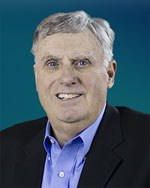
Ken Leslie is the founder of 1Matters and Veterans Matter.
From Maroon 5 to Lady Gaga, those tuning in to this year’s Oscars might think they’re watching the Grammy Awards, which honors the best in music.
Or, with this year’s host Neil Patrick Harris, viewers might think they’re watching the Tony Awards, which honors the best in theater.
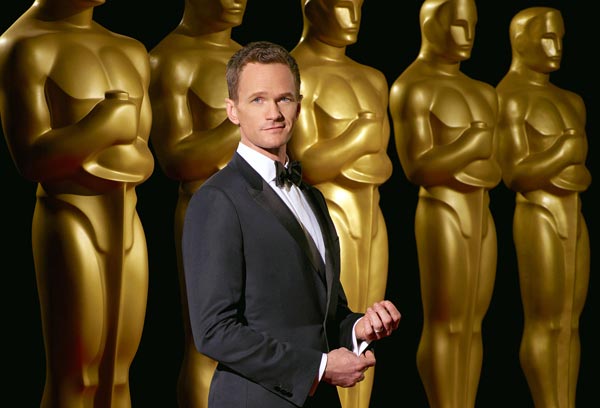
Regardless, viewers should prepare themselves for a very musical 87th Academy Awards on Feb. 22, honoring the best of film in 2014.
Ceremony producers Craig Zadan and Neil Meron, in their third year producing the Oscars, have been announcing presenters and performers for the past few weeks to build excitement for the show.
Harris announced Jan. 27 that he will perform “an original multimedia, musical sequence” written by Kristen Anderson-Lopez and Robert Lopez, the Oscar-winning songwriting team from “Frozen.”
Other performers include Anna Kendrick, Oscar winner Jennifer Hudson, Jack Black and pop music superstar Lady Gaga.
These appearances add to already-announced performances of the Oscar-nominated original songs. Adam Levine will perform “Lost Stars” from the film “Begin Again” with his band Maroon 5. John Legend and Common will perform their nominated song “Glory,” from “Selma.” Rita Ora will perform “Grateful,” written by Diane Warren, from “Beyond the Lights.” Tim McGraw will perform “I’m Not Gonna Miss You” in honor of friend and nominee Glen Campbell, from the documentary “Glen Campbell: I’ll Be Me.” And finally, pop duo Tegan and Sara and comedy-music trio The Lonely Island will perform the nominated song “Everything Is Awesome” from “The Lego Movie.”
Paula Hicks-Hudson is still getting used to the title, but wants to assure Toledoans she’s ready and able to step into the role of mayor.
“People are saying ‘Mayor,’ and I’m still looking behind me for D. Michael Collins,” Hicks-Hudson said Feb. 10.
She admitted it’s taken some days for reality to sink in.
“It kind of did this morning,” she told media Feb. 9, after addressing a new class of Toledo Police trainees and then discussing funeral details for Collins. The mayor died Feb. 6, five days after going into cardiac arrest while driving.
“It’s not so much the recognition of the role I have to play, because as president of Council you have to do many of the same things,” she said. “The magnitude is different, of course. And Council is part time; this is full time. So that’s sinking in.”
As City Council president, Hicks-Hudson was sworn in as acting mayor Feb. 1 at University of Toledo Medical Center, where Collins was being treated. Upon Collins’ death, she became Toledo’s first black female mayor.
Toledo Mayor Paula Hicks-Hudson, photographed at One Government Center Feb. 10. Toledo Free Press photo by Christie Materni
Hicks-Hudson, a lawyer who focuses on juvenile issues, said she plans to close her private practice in order to focus on the full-time role of mayor.
A special election in November will determine who takes the office. Hicks-Hudson, a Democrat, declined to discuss if she planned to run, saying it was too soon to think about. Right now, she said, she’s just focused on running the city.
“We’re going to make the necessary changes to keep the agenda going forward, to keep the city going forward, to do those projects that we agreed upon.”
Among major development projects Collins was working on were talks with Fiat Chrysler over the future of the Jeep Wrangler in Toledo, ProMedica’s move Downtown, the search for an end user for the former Southwyck site and the city’s budget.
“There’s been some discussion that there will be some major changes, but if you look at the record from Council we stand together about the Jeep project, we stand together about the ProMedica project, we have to stand together for the budget,” she said. “It’s not like there will be a big shift or anything. It’s just that I’m me and D. Michael Collins is D. Michael Collins and that’s the change. But the fundamental things that we’re to do, those have not changed.”
Hicks-Hudson brushed off further questions about changes, but said one area that’s important to her is city pools and recreation.
“That’s something we’re going to work on,” she said. “But that was also something we were just beginning to have conversations about with the administration, about ways we could make recreation just as important as job development and job growth.”
She praised Collins’ staff for their support during her transition.
“This is a remarkable staff. The city runs not by those at the top but those who are mid and lower,” she said. “They are having to make changes and trying to get used to me.
“It’s been a transition and it’s going to be a further transition. But we just have to do the things that we need to do, for the citizens as well as to honor D. Michael and what he stood for.”
Collins’ Chief of Staff Robert Reinbolt said he is dedicated to helping ease the transition.
“I think we’re still developing our relationship,” he said of Hicks-Hudson. “But I’m here to help whoever the mayor is. I think continuity is an important factor now. Eventually Paula, or whoever the next mayor is, they are going to want their own team of people and that’s fine. The important thing is we all need to work together right now.”
Hicks-Hudson was appointed to Toledo City Council in January 2011 to the District 4 seat vacated by Michael Ashford when he was elected to the Ohio House of Representatives. She retained the seat in the November general election. In 2013, she was elected Council president to fill the vacancy left by Joe McNamara, who was running for mayor.
“It’s an opportunity to serve the people,” Hicks-Hudson said at the time. “Not that we will always agree, but we want to be working toward a common goal. I think most of us that work in this particular position are doing it because we care about the city.”
“We may not always agree on things, but she’s very logical in her thinking,” then-Mayor Mike Bell said at the time.
Hicks-Hudson has a bachelor’s degree in political science and journalism from Spelman College in Atlanta, a master’s degree in communications development from Colorado State University and a law degree from the University of Iowa.
She came to Toledo in 1982 to work for Toledo Legal Aid Society. Other positions include assistant Lucas County prosecutor, an assistant public defender and assistant state attorney general. She was the City of Toledo’s legislative director from 1998 till 2002, as well as director and deputy director of the Lucas County Board of Elections and chief legal counsel to the Ohio Office of Budget and Management in Columbus under Gov. Ted Strickland. She’s married with two grown daughters.
Councilman Tom Waniewski described Hicks-Hudson as likeable, open to other opinions and respectful. Councilman Mike Craig said he finds her inquisitive and thorough. Councilman Larry Sykes said he and Hicks-Hudson have worked together for decades.
“She will do well,” Sykes said. “She’s very articulate, knowledgeable. [With her background in litigation] she’s obviously going to be thorough. In terms of leadership … the fact that she was elected president by the bulk of men [on Council] show they have trust and belief in her leadership. You’ll never see her angry or lose control. That’s just the way she is.”
Lucas County Commissioner Pete Gerken said Hicks-Hudson will be different from Collins, but he’s confident in her abilities.
“Paula brings a whole different style to the office, and that’s OK,” Gerken said. “I look forward to working with her. She has a style that’s pretty easy to approach and open. Now, you’re not going to push her around. This woman is smart, tough and isn’t going to get pushed around by anybody and is highly confident to do the job.
“I was meeting with her as acting mayor an hour before the news came of Mayor Collins’ [death], and I’ll tell you what, she had her legs firmly under her. She was taking everything quickly but judiciously.”
Matt Sapara, the city’s development director, said his “marching orders are clear: Keep going in the direction we’re going.”
“There’s a lot going on and we just want to keep heading in that positive direction,” Sapara said. “I have confidence in her. I know she has the best interests of the community at heart. That is very obvious and that’s something she shares with Mayor Collins.” O
The seventh annual Toledo Golf Show taking place Feb. 20-22 features all of the links-related offerings you’d expect, plus a few surprises.
In addition to nearly 200 booths featuring the latest golfing equipment and technology, presentations and lessons on improving one’s game, this year’s event at the Sylvania Tam-O-Shanter, 7060 W. Sylvania Ave., will also feature a craft beer tasting and beer pong tournament.
Treu House of Munch is presenting a craft beer tasting from 7-8 p.m. Feb. 20. Attendees may sample five beers for $5. The beer pong tournament will be 5-6 p.m. Feb. 21. Sign-up begins at 4:30 p.m.
LPGA golfer Carling Nolan will appear at the show at 1 and 4 p.m. Feb. 21 to sign autographs and meet fans. The Toledo Walleye’s Spike mascot will be at the show 11 a.m. to noon that same day, while the Toledo Mud Hens’ Muddy will be present noon to 1 p.m. Feb. 22.
Another new feature of the show will be $5 fantasy golf scratch-off cards, with individual winners being named both Feb. 20 and 21. The show is 5-8 p.m. Feb. 20; 9 a.m. to 6 p.m. Feb. 21; and 10 a.m. to 4 p.m. Feb. 22. Tickets are $6 at the door or $5 in advance at locations listed on the show’s website. Admission for children younger than 12 years old is free.
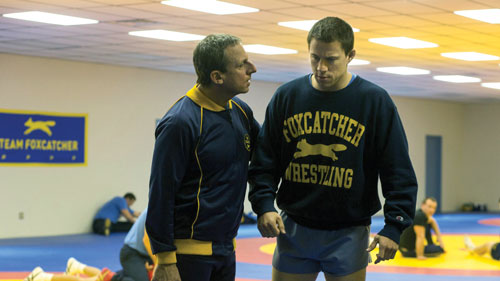
Steve Carell and Channing Tatum star in “Foxcatcher,” nominated for five Academy Awards. Photo courtesy Sony Pictures Classics
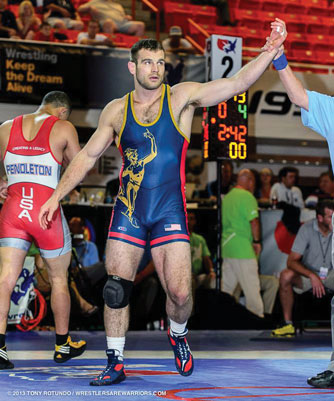
On Feb. 7, JD Bergman came home. The celebrated wrestler — a former NCAA All-American for Ohio State, a man with 10 national championships who had two stints on USA’s world team, not to mention a cameo in the Oscar-nominated wrestling drama “Foxcatcher” — returned to his alma mater, Oak Harbor High School, to speak and share his story with a crowd eager to listen. It’s something Bergman said he loves to do more than most anything.
“I think that the No. 1 thing is truth. I think that it’s pretty hard to come by, in our world, in our culture,” Bergman said in an interview with Toledo Free Press. “Truth is not relative. And really, truth and love. With all the things that have happened in my life thus far, I feel like it’s just the beginning. And it’s become pretty clear in the last year, too, that I want to help as many people as possible become healthier, physically, mentally and spiritually.”
That desire to communicate his passion for wrestling, for his faith, for honesty and commitment is indicative of Bergman as a whole, especially as he faces a crucial time in his career on the mat. The 30-year-old athlete stands at a bit of a personal crossroads as he approaches what may be the final two major events of his career — the 2015 World Championships in Las Vegas, and his ultimate goal, the 2016 Olympics in Rio de Janeiro. After that, Bergman will be 32, and his career will be over, probably.
Steve Carell and Channing Tatum star in “Foxcatcher,” nominated for five Academy Awards. Photo courtesy Sony Pictures Classics
“There’s really no way to tell for sure, because I thought — almost without a doubt — that I would be finished after 2012. And the things that I’ve learned with health and wellness, and the preventative measures I’ve taken … by the way I live, it’s almost like a fountain of youth, in a way. But really, I’ve just removed interferences in the body’s natural healing process.”
Bergman was never pressured to get into wrestling, even though it runs in his blood. His dad was a former Ohio State champion, and his uncle trained him at Oak Harbor High School. Eventually the wrestling bug bit then-10-year-old Bergman, though he still had his eyes set on other athletic pursuits.
“I remember doing pushups when I was 8, saying I wanted to play for Lou Holtz. I always wanted to play football, even after I wrestled,” Bergman said. “Everything I did, I had kind of a perfectionist mentality. … Everything I do, I want it to be excellent.”
Even when he earned a scholarship to wrestle for Ohio State University, Bergman still had an eye on the gridiron. “I took the full ride to Ohio State but I had a meeting with Coach Tressel, and I was a preferred walk-on and first team all-state running back. I wanted to play football in my offseason — as soon as they allowed me to redshirt wrestling, I wanted to play football. And then in my mind, I would have started on the football team and never wrestled again.
“It was pretty clear God took me in a different direction, and I’m totally fine with that.”
But don’t get the impression that Bergman isn’t 100 percent committed to being the best wrestler in the world — far from it. He has sacrificed years to training and suffered innumerable injuries in pursuit of his Olympic dream, which almost came to a sudden end when he placed a disappointing third at the 2012 U.S. trials, narrowly missing the chance to compete in front of the world.
Shortly after that, though, another opportunity arose when Hollywood came calling. He learned of auditions for the film “Foxcatcher,” a wrestling drama based on the story of John E. du Pont, starring Steve Carell and Mark Ruffalo.
“I immediately thought, I don’t know who else would be a good extra for a wrestling movie. Because I’ve always wanted to act. I’ve just always had that desire for entertainment.”
JD Bergman
Bergman had already committed to a three-week trip to Canada, leaving him unavailable to audition. But one day, on a whim, he made an impromptu audition tape featuring a bunch of impressions — “Family Guy,” Droopy Dog, Will Ferrell characters and more.
“I sent that to him, and they gave me a call back without me even being at the audition. And actually, [director] Bennett Miller actually wrote a part in the movie for me. We filmed the whole thing in, like six or seven hours. … It obviously ended up not making the final cut, it ended up on the editing floor. But it was very cool.”
Bergman said he was thrilled to get the chance to work with talents like Ruffalo — who he’s remained in contact with, and who has supported Bergman’s “Road to Rio” Olympic fundraiser — and Carell, who has long been one of his favorite performers.
“We hadn’t really officially met, but we had shot a few scenes together,” Bergman said of Carell. “And he’s doing a really, really challenging role. And I just said, ‘We just shot a whole scene all day, I’m just going to go and introduce myself.’ And I just said, ‘Hey, Steve, it’s a huge honor to work with you, I’m a big fan. I think I’ve watched every episode of ‘The Office.’ And he said, ‘Yeah, it was my pleasure, too. You were hilarious.’”
Is a career in Hollywood a long-term possibility? Bergman said he’d love the chance to do more movies. For now though, his passion to be the best in the world on the mat takes precedence over all.
“I know I can be. I’m not being optimistic — and I am very optimistic as a person — but I’m not being unfair or optimistic. I know for a fact that I can do that, and it’s very much an attainable goal. And it’s very much a realistic thing,” he said. “I’ve wrestled the best guys in the world. And I know I can be that guy.”
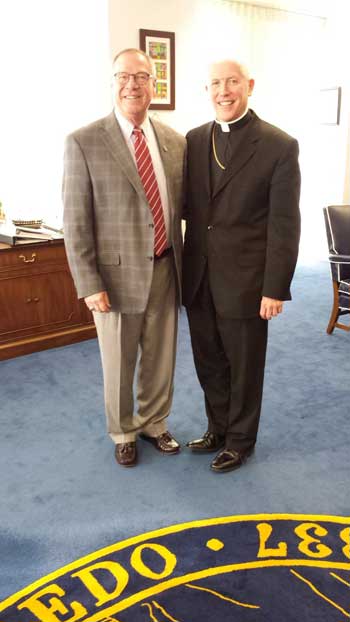
Toledo Mayor D. Michael Collins with Toledo Biship Daniel Thomas, was a devout Catholic whose faith informed his compassionated outlook. Photo courtesy Catholic Diocese of Toledo
As the City of Toledo noted in a statement following his death, Mayor D. Michael Collins had titles aplenty: Marine, police officer, City Councilman, husband, father and grandfather.
Toledo Mayor D. Michael Collins with Toledo Biship Daniel Thomas, was a devout Catholic whose faith informed his compassionated outlook. Photo courtesy Catholic Diocese of Toledo
Another that was listed may have arguably guided the rest: devout Catholic.
“He was a faithful parishioner here,” said the Rev. Marty Lukas, pastor of Gesu Roman Catholic Parish on Parkside Boulevard. “You just got a sense that when he came to Mass on the weekends, that he came to pray, to worship, to build community.”
Lukas came to Gesu three years ago, where he encountered Collins regularly. The late mayor typically attended the 11:30 a.m. Mass on Sunday, or the 4 p.m. Mass on Saturday, depending on his schedule. Though Collins also worshipped at Our Lady of Perpetual Help Church near the Anthony Wayne Trail — which was closer to his residence — he called Gesu home.
“He always went to coffee and doughnuts (after Mass), and stayed and talked to people,” Lukas said. “You didn’t know he was the mayor, unless you knew he was the mayor. He and [his wife] Sandy had a pew they usually sat in, and sometimes he would get recruited to take up the collection. They often would tap Mike to do that, and he’d walk up the aisle just like an ordinary parishioner.”
Although he may have looked ordinary, Lukas said fellow parishioners thought it was neat having the Mayor of Toledo attend Gesu.
“I think everyone was really respectful of Mike and as to why we were all at church, as a fellow Christian and parishioner,” Lukas said. “That was his time, not as mayor, but as a parishioner.”
That didn’t mean some people didn’t try to bend his ear. However, longtime Gesu member Dennis Isabell Sr. of Ottawa Hills said Collins tried to avoid mayoral talk.
“He wanted to engage with people more as a parishioner, and not as mayor,” Isabell said. “He seemed like he was under too much stress for one guy, and he would always say, ‘It’s just part of the job.’”
Isabell said he immediately connected with Collins when they met about six years ago. The two always talked after Mass about things they had in common, including their Irish ancestry and how they had both lost a child.
“He always acted like he had time to listen to you,” Isabell said. “I really didn’t know him other than at Gesu, and he was very engaging and incredibly kind.”
Collins attended the October installation of Toledo Bishop Daniel Thomas, and the two once met at Collins’ office. Lukas said the two were beginning to forge a relationship.
“I think they were both very much of the same ilk, both men that were going to be very good for Toledo and Northwest Ohio in their respective roles, and I think they resonated together,” Lukas said.
Thomas also offered a statement reflecting on Collins’ faith.
“Mayor Collins often spoke of the importance of his Catholic faith and the many ways the Lord had blessed his life,” Thomas said. “I will count among my blessings the opportunity to have come to know him, to have met his family, and to have prayed with his wife at his hospital bedside.”
Isabell believes Collins’ religion positively influenced his work as mayor, where his day-to-day public decision-making often revealed his devout faith.
“Every article you’d pick up talks about his compassion,” Isabell said. “You could just tell by the aura around him that he was a very caring and compassionate guy. He cared about people and that was very obvious. When he found out I lost a son, there was a real sense of commonality, even though I wasn’t a politician.”
The Rev. David Ritchie, pastor at Our Lady of Perpetual Help, who distributed communion to Collins at Mass the morning of his cardiac arrest, saw Collins’ religion impact his work.
“I think he probably did bring God into it a lot,” Ritchie said. “But he was not perfect, and could be feisty, but the biggest thing was how unassuming he was. He didn’t walk into church and say, ‘Hey, the mayor’s here.’ And I’ve seen politicians not do that, they walk into a room and think everything should stop. So I think the humbleness is very important.”
Gesu Parishioner Bob Savage of Toledo also noticed that Collins’ faith influenced his public life.
“I think he had great personal respect for all people, and I think that is really a reflection of his Catholic faith,” Savage said. “I always noticed his gentle manner, and you don’t always see that in public officials often.”
Savage said Collins was well-liked and respected by all.
“In leaving he would always linger in the back in the vestibule, and usually we’d have a chance to talk,” Savage said. “There’s no question he was very sincere as a person and that carried over certainly into his religious life. He enjoyed the tranquility that the sanctuary offered. He was easy to talk with, and he fit in very well with the congregation. Mike was just a great guy.”
Lukas recalled a recent story from a parishioner, who noticed Collins smiling at Mass while a baptism was taking place.
“For some reason, [this parishioner] focused on Mike,” Lukas said. “And [Collins] was just beaming. He was just so happy and so proud that there was this new member of our Catholic community. [The parishioner] said he couldn’t get that out of his mind, that [Collins] was just so into it, that this baby was baptized. I think that represents the interior of Mike’s faith life, because it was very private and yet it was very real.”
Lukas said Gesu has lost a good member of its faith community.
“He was an ordinary man, a great member of our parish family,” he said. “And we were proud of him.”
Richard and Andrew Brown are a father and son team that is deeply immersed in the golf culture of Northwest Ohio.
They host the Toledo Golf Show annually, author the BW Golf Newsletter every week and can be seen at many area outings or just enjoying a casual round of golf at one of Toledo’s many public courses.
Fred Altvater
Richard has a unique story of his first experience in golf. As a young man, he was involved in sports car racing and never had time to play golf. Most weekends were spent traveling to road courses, zipping through hairpins and chasing checkered flags in a Porsche.
His first encounter with the game came at the Holy Grail of golf, Augusta National. The company he was working for had traveled to Augusta, Georgia, for a construction job, but when they arrived the company was not ready to begin the project.
The owner of the company was apologetic and offered to pay for the crew to play golf for two days at a local golf course. It turned out he was a member of Augusta National Golf Club, the home of the Masters Tournament, and the crew was allowed to play the course.
At the time it meant nothing to Richard, who was more concerned about the 24 hours at Sebring than the Masters. After a couple of days of shanking, skulling and slicing golf balls through “Amen Corner,” he decided golf was not in his immediate future.
For most golfers, an opportunity to walk the hallowed grounds of Augusta National and take a few divots out of the pristine fairways would be a once-in-a-lifetime story passed down through generations. For Richard, it was just another ho-hum day at the office.
Oh, how times change. As Andrew grew and took up the game, Richard found golf to be a perfect venue to spend more time with his son and a replacement for the competition he received from racing.
“I love the spirit of the game, the camaraderie with your playing companions and the ability to enjoy playing a sport with my son. Each hole is a new beginning, past trials and errors are forgotten and every new hole holds the promise of improvement,” he said.
The Browns’ passion for golf grew over the years and turned into a partnership hosting the Toledo Golf Show each February.
Andrew travels the country as the sales director of Industrial and Manufacturing Accounts for UPS, but still finds time to meet with local golf businesses and work at growing the game of golf in the Toledo area.
In addition to the golf show, the Browns created Buckeye Wolverine (BW) Golf, www.buckeyewolverinegolf.com, which endeavors to unite area golfers with local golf courses.
With the number of golfers dropping since 2009 and the overall suffering of the golf economy, Andrew and Richard both understand the need for communication between golfers and golf facilities.
BW Golf strives to provide updated information to Toledo-area golfers and communicates via a newsletter that is sent out every Monday morning. The newsletter is packed with outing information, discounts and a general recap of the national and local golf scene.
In the early years, they worked with Maple Hill Golf to build the Toledo Golf Show. Richard and Andrew assumed total ownership of the show in 2011.
The Toledo Golf Show attracts both local and nationally recognized golf vendors. Representatives from area golf courses attend, offer discounts and answer questions to attract new golf leagues and outings to their course. Check it out Feb. 20-22 at Tam-O-Shanter in Sylvania.
Find more golf information from Fred Altvater at NWO Golf Links, nwo.back9mediagroup.com, and on Back 9 Report at http://bit.ly/1lOvJjN.
When the city of Toledo lost its mayor, I lost a friend.
My friendship with D. Michael Collins started 15 years ago, when I was the executive producer at 1370 WSPD and Collins was president of the Toledo Police Patrolman’s Association.
.
It was the golden era of news-talk radio in Toledo, as we had Carty Finkbeiner as our mayor. There was one proven method for generating great content: Agitate Carty enough that he felt compelled to call in. If I had done my job right, Carty would ring the studio hotline at 8:45 a.m. and request to speak to morning show host Mark Standriff. The on-air conversations that would follow are the stuff of legends.
Collins was one of the best at making Carty pick up the phone. It was a simple formula: Book Mike, expect Carty.
During our earlier conversations, Collins would act as a personal teacher. I would ask him to explain his various points and why they mattered and by the end I would understand. He was straightforward, articulate and did his research. Our phone conversations continued through the rest of his life — something I will forever miss.
I choose not to write about local politics because it is too divisive and unproductive. Our city has been its own worst enemy for decades. The negativity generated from infighting has taken a toll. We often worry about things bigger than Northwest Ohio and it causes arguments that muddy up our progress and stop our growth.
But mud sells newspapers and generates ratings. I made a living by giving mud a radio home.
In 2013, our conversations were centered around one thing: I wanted Collins to run for mayor. I knew then-mayor Mike Bell was vulnerable because of his support of Senate Bill 5.
I even predicted a split in the Democratic party that could deny him an opportunity to be on the November ballot.
I expressed a fear that resonated within him. Why would I choose to raise my four children in Northwest Ohio where there are few jobs in any flourishing industries? Where my reward later in life will be getting to spend my weekends in a car or on a plane, traveling to see my grandchildren? Collins’ girls and most of his grandchildren live in different cities. I knew he had the skill set and desire to precipitate change.
Collins was the best hope for this city’s future. He often got emotional, as he did any time he spoke about Toledo’s fallen firefighters Stephen Machcinski and James Dickman, but he also had this amazing ability to argue analytically in strategic situations. Imagine that, a son of an Irishman could win debates with his words while never expressing his internal feelings.
There were other key factors that had me convinced he was the right man — his dedication to education and his personal evolution. At 70 years old, he was not against change and he was not afraid of trying new things. He even signed up for Twitter.
Collins didn’t claim a political party because he wasn’t interested in politics. His reason for running for political office was to better serve the people of Toledo. He had no ambition for a larger office. But back when he policed the streets on foot, he imagined what he would do differently if he were in charge.
Mike’s lifelong dream was realized in November 2013, when his fellow citizens elected him as their mayor. They rewarded his lifetime commitment to public service with Toledo’s highest honor and their future.
Collins was officially labeled an independent, a man without a party. He did what he felt was best for the city. From snow emergencies to the water crisis, he put our safety first. He made decisions based on the thought of children drinking from the kitchen sink or being a passenger in a car.
Mike was very deliberate with his words; he never spoke one he didn’t mean. He wasn’t a used car salesman trying to sell us an agenda. He didn’t enter the city in meaningless competitions, nor did he travel the world looking for magical jobs. He stayed home, did his research and went to work.
In 13 months, he had ProMedica moving their headquarters Downtown, was looking for land to expand Jeep to keep the Wrangler line and had listed the Erie Street Market for sale. He even made a change with our welcome signs, which now proudly state “You Will Do Better in Toledo.” He chose not to muddy up the message with his own name, as past mayors have done.
By the end, he had annoyed The Blade, most of City Council and the Lucas County Commissioners — a sign he was doing something right. You can’t make everyone happy all the time.
The last time I saw Collins was at the “You Will Do Better in Toledo” anniversary party in December. The city had just begun placing the new signs around town, and the room was packed with unfamiliar but excited young faces. The mayor’s smile never left his face, nor was it forced. He could not remember a time when our city’s morale was so high that young people were wearing clothing that reflected their love of Toledo.
It was quite unbelievable after the year he’d had.
Collins did have a political party after all. He was a Toledoan: stubborn and loyal as a mule, strong and smart as an elephant but with a heart the size of a blue whale.
The “You Will Do Better” celebration did not take place at an upscale venue like The Toledo Club, but rather at Wesley’s, in UpTown. The bar was packed with people excited about the Glass City, optimistic and hopeful about its future. It was filled with dreamers and doers, mostly younger than me. I think Mayor Collins saw the future of his political party that night. I know I did.
Collins was a South Side Irish cop who loved his family, his co-workers, the occasional drink, his Kelly green sweater and his fellow residents. He believed in the fabric of our character and in our future. His greatest gift to this city, the thing for which he should be remembered most, is he has us believing too.
We Will Do Better in Toledo.
#RIPDMC
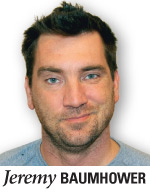
Jeremy Baumhower can be reached at [email protected] or on Twitter at @jeremytheproduc.
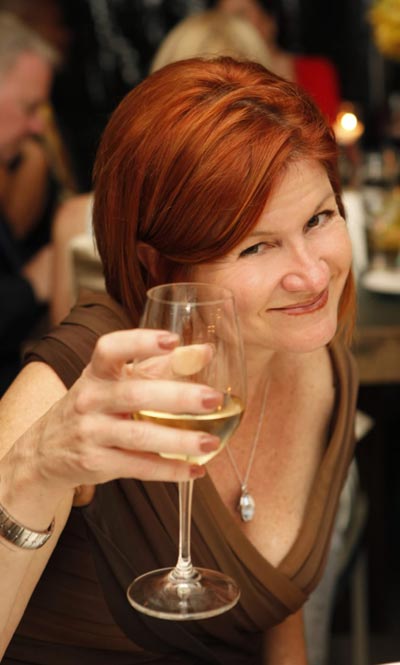
It may be surprising to read that Hollywood event planner Cheryl Cecchetto is an award-winning accordion player.
Then again, the accordion just may be the perfect instrument for Cecchetto.
The go-to event planner for the post-Oscars Governors Ball is adept at multitasking, a needed skill to the play the Germanic instrument.
“It’s very much a multitasking situation.” Cecchetto said in an interview with Toledo Free Press. “That’s truly what a director and producer does.”
The Canadian-born Cecchetto actually gave up her career as an accordionist to become an actress.
“For me, even though I loved the instrument so much, it wasn’t expressive enough,” she said. “I needed to use my voice and my arms and my legs and run around and talk and wave and whatever.”
But she said music will always be in her blood.
“Music hasn’t let go,” she said.
Her new book, “Passion to Create: Your Invitation to Celebrate,” offers another way for Cecchetto to express herself. Published Dec. 30 by New Holland Publishers, it details her life, her career and some fantastic behind-the-scenes stories from inside Hollywood’s biggest parties.
Cecchetto and her team at Sequoia Productions are currently putting the finishing touches on the Governors Ball, which will take place immediately after the Academy Awards on Feb. 22. Reached with just a quick walk upstairs to the ballroom at Hollywood & Highland Center in Los Angeles, this exclusive party for Oscar nominees, winners and invited guests is as glamorous as it gets.
This year’s ball, Cecchetto’s 26th consecutive year as producer, will celebrate the history, glamour and artistry of Hollywood, with tributes to icons of cinema past.
A rendering of the 2015 Governors Ball for the Academy Awards. Photo courtesy A.M.P.A.S.
While planning big events in Hollywood and around the world in 2014, Cecchetto was also busy finalizing her book.
Cecchetto’s manager, Steven McArthur, suggested finishing the book as soon as possible, to coincide with her company’s 25th year.
“It was a lot of work,” she said. “It nearly killed me.”
Over 25 years, Cecchetto said, her career has been quite the journey and evolution.
“I think that my events have gone from — oh my goodness, 25 years ago — tablecloths and florals and now, they’re into full-out productions and now they’re theatrical and now, [I have] the book,” she said.
“Passion to Create” focuses on four concepts, according to Cecchetto: How she got here, ideas and inspiration, great Hollywood stories and giving back.
‘Passion to Create’ book cover.
In the book, she shares details about being an assistant for Shelley Winters for a year, as well as appearing as an extra in TV shows like “The Golden Girls.”
To pay her bills while an unemployed actress in Los Angeles, she took catering jobs. Nearly three decades ago, she started managing events for one company, Ambrosia, and that’s when she landed her first Oscars gig.
She helped plan and manage her first Governors Ball.
“It was a beautiful evening,” she writes. “That first Governors Ball created business relationships and friendships among us, lasting to this day.”
One of the 10 chapters in this coffee-table book aims at helping readers plan their own events. From weddings to parties, Cecchetto shares tips, tricks and timelines. Each chapter also ends in a recipe that is representative of the preceding theme.
Need Oscar party planning tips? Cecchetto provides 10 must-haves for your celebration on page 247.
“With a little ingenuity, and the readily available reference points that are out there, the red carpet on Hollywood Boulevard is as close as the end of your own driveway,” she writes.
Juxtaposed against her tales of planning lavish parties, Cecchetto also writes about paying it forward.
Her parties help employ skilled craftsmen, technicians and waiters. Food overages are donated. This was important to her, especially during the recession.
“We are, all of us, honored with the opportunity to share our blessings whenever and however we can,” she writes.
The book also explores lessons learned and wisdom gained.
In Chapter 9 titled, “What’s It All About?” Cecchetto touches on technology and the need to live in the present.
“Time flies so hang up your (not so) smartphone! Your life is calling,” she writes.
Talking about the future, Cecchetto writes that time is a mindset.
“Is the best yet to come?” she asks. “I believe the best is here today and in this moment.”
Every day is a celebration for Cecchetto. A celebration can simply be having a conversation.
“Celebration doesn’t have to be a cake and a fork and a glass of Champagne,” she said. “It can be so much more, on so many levels.”
But it’s also about giving back.
“If we’re going to celebrate, let’s celebrate for someone else, somewhere else, somehow else — to make it all worth it,” she said.
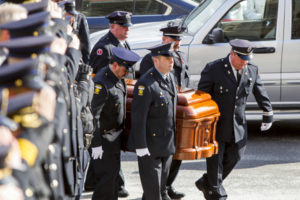
Local first responders serve as pallbearers, carrying Toledo Mayor D. Michael Collins’ casket into Rosary Cathedral for his funeral mass on Feb. 12. Photo by Scott Grau
The city of Toledo’s two-day farewell to its late Mayor D. Michael Collins concluded Feb. 12 with a funeral mass at Our Lady, Queen of the Most Holy Rosary Cathedral.
Prior to the service, a funeral procession from Coyle Funeral Home to the cathedral on Collingwood Boulevard passed many spots important to Collins for personal and professional reasons, including the former Southwyck Mall site, Heather Downs Country Club, Wixey Bakery, Walbridge Park, Toledo Zoo, the former St. James School, the future Downtown site of ProMedica headquarters and the Toledo Police Patrolman’s Association building.
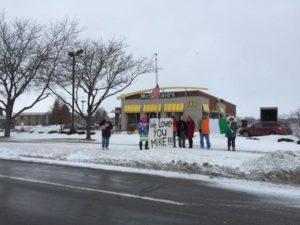
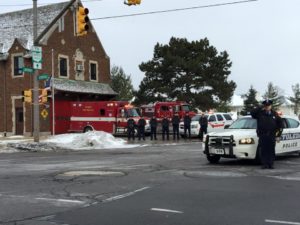
Along the route, the roadways were lined with city vehicles, police and fire personnel, schoolchildren and members of the community paying their respects as the procession made its way from South Toledo to Downtown and into the Old West End.
Bishop Daniel Thomas of the Diocese of Toledo celebrated the funeral Mass.
Local first responders serve as pallbearers, carrying Toledo Mayor D. Michael Collins’ casket into Rosary Cathedral for his funeral mass on Feb. 12. Photo by Scott Grau
During the homily, Thomas discussed Collins’ work ethic, which has been widely praised by those who knew him.
“I dare to say that those who worked with him in the Marines, in the police force, in city government, perhaps even in his family, knew how hard he worked and how hard he encouraged others to do the same,” Thomas said.
He referenced the slogan Collins used during his 2013 campaign for Toledo mayor, “Collins Cares,” saying that everyone could implement that in their own lives.
“Today, we make his campaign slogan a new slogan, because we can say, ‘Toledo cares.’”
Following the mass, private burial services were conducted at Toledo Memorial Park.
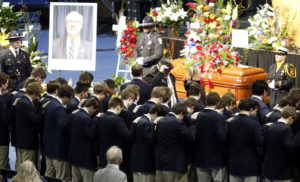
On Feb. 11, the University of Toledo’s John F. Savage Arena hosted the public visitation and memorial service for Collins, who died Feb. 6 at the University of Toledo Medical Center after experiencing cardiac arrest Feb. 1 while driving.
Collins’ widow, Sandy Drabik, and the rest of his family were joined by city and state officials, former colleagues of Collins with the Toledo Police Department, friends and members of the public in honoring his life of 70 years.
In the arena’s reserved seating section above the crowd, Collins’ Toledo Rockets season ticket seats were illuminated and adorned with Irish regalia in a tribute to the heritage he was so proud of.
“Look at the numbers of people who are present in this facility,” said Imam Shamsuddin Waheed, of Toledo Masjid Al-Islam, who gave the invocation at the service. “This gathering, as well as the funeral Mass to come tomorrow, is a testament to Michael Collins, not only as the mayor of Toledo, Ohio — but as a man, as a human being.”
WTOL-11 news anchor Jerry Anderson and 13abc news anchor Diane Larson served as masters of ceremony for the service.
Larson pointed out that service attendees included Evelyn Johnson and Andra Crisp, the two members of the public who helped administer CPR to Collins prior to the paramedics’ arrival to the vehicle accident. After being identified, the two received a standing ovation from the crowd.
“Ladies and gentlemen, ours is a community that D. Michael lived for, he breathed for, he loved,” Anderson said. “And I mean, a lot. This tremendous turnout tonight shows that the feeling is mutual, Mr. Mayor.”
Members of the St. Francis De Sales High School Choir bow their heads Feb. 11 during visitation for Toledo Mayor D. Michael Collins at the University of Toledo’s Savage Arena. Toledo Free Press photo by Kristen Norman.
Nagi Naganathan, interim president of UT, was the first to give remarks during the service. He mentioned Collins teaching criminal justice classes at UT for more than a decade just a few hundred feet from the arena.
“He was passionate about education,” Naganathan said. “He truly believed that education is the solution to poverty.”
Naganathan also addressed the commitment Collins had to the city in which he was born and raised.
“He truly loved the city of Toledo and its people, and his only goal was to make the lives of people in this community better,” he said. “He didn’t want the credit, was happy to take the blame and focused only on achieving the results that benefited the citizens of Toledo. And that is the profile of a leader, someone who truly places the issues and responsibilities to his community first, at all times.”
Ron Scanlon, a retired Toledo police detective, remembered happy moments he shared with Collins, his former partner with the Toledo Police Department.
“I knew from the moment we started working investigations that Michael was something special,” he said. “His demeanor, his tenacity, and his ability to work an investigation from start to finish was always thorough and aboveboard. He was truly one of the best.”
Toledoans lined the streets to say goodbye to Toledo Mayor D. Michael Collins during his funeral procession Feb. 12. Photo by Jeremy Baumhower
He told of going ice fishing on Lake Erie with Collins and his late son Michael. After Collins talked Scanlon into driving his vehicle out onto the ice, they heard the ice cracking while about a mile and a half off shore.
“It just scared the blank out of me,” he said. “But Mike laughed and he told me, ‘That sound is traveling miles away. Don’t worry about it.’” The next day, several fishermen in the area had to be rescued by the Coast Guard.
Scanlon told of another time fishing with Collins in the Toledo Police Walleye Tournament when the weather took a turn for the worse; they were miles away from shore.
“Mike said, ‘Don’t worry, I know the lake. I’ll get us back to shore.’” The two ended up in Canadian waters and had to be towed to shore.
Collins was the anti-politician, Anderson said.
“He always ran with that ‘I’ behind his name,” he said. “In 2013 when Mike Collins pulled off a win that some didn’t see coming, he did so impressively. … He was to be independent, but he did so surrounded by the legion of young Toledoans who believed that, ‘Oh yeah, you will do better in Toledo.’”
Next to speak was Robert Reinbolt, Collins’ chief of staff, who said Collins’ love and respect for his family was present in everything he did.
“He was always talking about them, expressing his pride in a latest accomplishment,” Reinbolt said. “He always encouraged staff to keep their family first. … I can still hear him saying, ‘Go home, it’s getting too late to still be in the office. Work will still be there in the morning.”
Although conversations with Collins were rarely short, Reinbolt said he enjoyed them.
“His desire to make Toledo a better place was contagious and made all of us better staff members,” he said.
Reinbolt said the challenges faced during Collins’ first year on the job — the death of two firefighters, the record-breaking snowfall and cold temperatures of the winter and the August water crisis caused by algae toxins in Lake Erie, among them — did not deter Collins.
Toledo Police officers and firefighters say goodbye to Toledo Mayor D. Michael Collins during his funeral procession Feb. 12. Photo by Jeremy Baumhower
“Most people would be very frustrated faced with all these challenges,” Reinbolt said. “But not Mayor Collins. It challenged him to make him stronger and more determined and work harder to accomplish the goals outlined in his campaign commitments and make Toledo a better place to live.”
Matt Sapara, director of development for the city, was the last to speak during the remarks section of the service.
Sapara said one of Collins’ management philosophies was to let managers run their respective divisions.
“He had enough respect in our collective abilities to let us manage our teams to ensure that if the unthinkable happened, an unplanned change in leadership for example, there would be a seamless transition and would not impact the services the citizens of Toledo expect and deserve,” he said.
Sapara said one of Collins’ legacies will be solidifying the future of Downtown Toledo by landing the ProMedica deal approved last month by City Council.
“Certainly ProMedica should get the lion’s share of credit for demonstrating its leadership to the community, but it was the mayor who shaped the deal,” he said. “The mayor firmly believed that the key to a successful region is a strong and vibrant Downtown. This will be one of his legacies.”
Sapara also said the ProMedica deal will help cement Collins’ place in the city’s history books.
“History will show that Mayor Collins was the catalyst for the city of Toledo’s renaissance,” he said.
Collins’ successor, Mayor Paula Hicks-Hudson, spoke before presenting the City of Toledo flag to Drabik.
“We come to this place collectively to pay our respects to a man who willingly and eagerly went anywhere and everywhere, to talk with anyone, about anything, always, always, striving for the betterment of this great city,” she said.
After Toledo Chief of Police George Kral read the record of Collins’ accomplishments, a video presentation of Collins’ life was shown, followed by a performance of “Amazing Grace” by Toledo Fire & Rescue Department’s Pipes and Drum Corps.
Benediction was then read by Monsignor Christopher Vasko, of The Historic Church of St. Patrick.
Collins was hospitalized in critical condition for five days after suffering cardiac arrest Feb. 1 while driving in South Toledo. He was taken off life support and died at 1:25 p.m. Feb. 6.