Home Blog Page 141

New LCCS grant will help parents work through past trauma

0

Lucas County Children Services (LCCS) is preparing to implement what it calls a game-changing, systemwide training program this summer, thanks to a $72,800 grant from the State of Ohio.

The grant will allow the agency to pinpoint areas of trauma in the lives of parents and children and develop individualized treatment plans.

Behind antisocial behaviors, including crime, sexual abuse and the abuse of drugs and alcohol, is often a trauma the person suffered early in life, said Laura Neal, assistant manager of family services at LCCS.

RELATED: LCCS urges Lucas County to wear blue April 8

Parents who were traumatized often pass their pain to their children. LCCS wants to help nip issues in the bud by helping parents heal their trauma so they don’t repeat it, Neal said.

“Now we’re taking that next step and looking at what’s going on behind the problem,” said Julie Malkin, LCCS public information officer. “We’ve become so much more attuned to the needs of our families.”

LCCS, a countywide social service agency based in Toledo, works with families to place children in foster care, facilitate adoption, prevent child abuse and offer a host of other treatments through its partners in the children services sector.

LCCS wants all its supervisors, managers and caseworkers to be trained under the new grant. Multiple partner agencies, including the courts, mental health services, substance abuse prevention and counselors for emotional and physical abuse, will also undergo the training.

There are two types of trauma — acute and chronic, Neal said. Acute may be the loss of a loved one, whereas chronic might be ongoing physical or emotional abuse.

Neal said most parents who come to the agency have unresolved trauma issues and have learned to cope with them through maladaptive behaviors including criminal behavior, physical or sexual abuse or substance abuse.

“I’m really excited about this. We’re the only county in Ohio who is embracing this and trying to be a trauma-informed agency and the benefit is to the family,” Neal said. “The federal government is recommending that trauma is a huge part of child welfare. We’re ahead of the game here.”

The training is offered by the National Child Traumatic Stress Network, which has worked with the Chadwick Center for Children & Families out of San Diego. They were the first to implement the training program 10 years ago and it’s now being implemented across the country, Neal said.

“Traditional counseling doesn’t work,” Neal said. “We need counselors to understand. Traditionally, we see parents using drugs and it’s because they have some problem in their life. Now we’re going to be able to delve into what drove this parent to be using drugs.”

Training will occur in phases starting this summer and ending in December, Neal said. A kickoff two weeks from now will feature a trauma survivor based out of Washington, D.C., who wrote a book based on her experiences. A communitywide kickoff will happen June 23, and will include court employees and foster parents.

The training will change LCCS’s current practices, Neal said. The agency may have more pre-placement visits where children use art therapy in addition to a “whole continuum of things” they will do differently, she said.

“It’s more like a deepening empathy and a deeper level of understanding,” Neal said. “Once they become trained they will have a deep understanding for the parent and patience for them as well.”

Gone are the days of the stereotypical social welfare agency that only swoops in and takes away children, Malkin said.

“Our goal is that we have children going home and staying home in a safe environment,” Neal said.

As part of the grant, a trauma coalition is being formed and its committee will meet at 2 p.m. the second Tuesday of every month at United Way of Greater Toledo, except for April 14 when it will meet at the EMS Building. The meetings are open to the public. Coalition and committee members will include those from the schools, LCCS, courts and mental health providers.


Toledo stories: Live storytelling events, archival projects gaining ground in Glass City

0
Maggie Dziubek, left, of Glass City Stories and Silke Goudos of 419 Tales are part of the growing movement of those interested in sharing and archiving the stories of Toledoans. Toledo Free Press Star Photo by Christie Materni

Over the past few months, Toledo has started to open up and share its stories.

Taking cues from public radio programs and podcasts like “The Moth,” “This American Life” and StoryCorps, creative residents of Toledo have begun establishing their own live storytelling events — opportunities for people in the community to congregate, converse and connect through shared experiences.

Organizers say the aim is to gain glimpses into the lives of others, creating a unique emotional experience for storytellers and audiences alike.

Glass City Stories

Inspired by live “Moth” storytelling events she attended while living in Chicago, Glass City Stories founder Maggie Dziubek said her program is based on making storytelling fun.

Maggie Dziubek, left, of Glass City Stories and Silke Goudos of 419 Tales are part of the growing movement of those interested in sharing and archiving the stories of Toledoans. Toledo Free Press Star Photo by Christie Materni

“I want to keep it accessible to everyone,” Dziubek said. “People can be a part of it without having some kind of qualification as a storyteller.”

Held once a month at The Moxie on Adams Street, each Glass City Stories event is based around a theme. The inaugural Glass City Stories took place on Valentine’s Day with a theme of New Love. On March 13, the theme was Good Luck/Bad Luck and an April Fools event is set for 7 p.m. April 16.

Dziubek said the best moments are the most unexpected.

“We’re always up for spontaneous storytelling,” she said. “It’s really exciting when someone takes a leap of faith and tells a story off the cuff.”

Dziubek, a Toledo Free Press contributor, said she sees the rising popularity of storytelling as an important development for Toledo, offering new creative and social opportunities for the city.

“It’s different from your usual night out,” she said. “There’s a real sense of intimacy because it’s people sharing something about themselves. That vulnerability makes it unique.”

Spoken

Spoken Toledo held its inaugural event March 12 at the Ohio Theatre and Event Center. Co-creator Ryan Bunch said he is pleased with how the evening went.

“People really opened up and got into the spirit of things,” he said. “Some of the speakers I had known for years, but hadn’t heard their stories.”

Ryan Bunch

The program featured four guest speakers and six volunteers, all sharing stories loosely based on “beginnings and endings.”

Attendees were treated to stories of first heartbreak, journeys to new places and disastrous hair-dye jobs. Bunch said another edition of Spoken is in the works.

“If not this summer, definitely in the fall,” he said. “The great thing about these events is that they don’t need to be too overthought or grandiose. Keeping the focus on the people and their stories will always make it fun.”

All proceeds from Spoken go directly toward programming at the Ohio Theatre, and Bunch encourages anyone with an idea to get involved.

“We welcome any support we can get,” he said. “It’s inspiring for me to see people come together. I hope people continue to support the space so we can put on more events for the community.

Frogtown Storytelling Guild

Founded in 1994, the Frogtown Storytelling Guild is Toledo’s oldest collective of storytellers, dedicated to perfecting and preserving the ancient art of storytelling. The group meets every second Saturday at Reynolds Corners Branch of the Toledo-Lucas County Public Library. Member Tari Miller said anyone interested is welcome.

“We are open to people of all walks of life,” she said. “You can come listen to our members or practice telling a story of your own.” A retired educator, Miller joined the guild in 2004 after reading a call for story enthusiasts in the paper.

“My heart dropped when I read that,” she said. “I had found a marvelous group of people that loved stories. It was exactly what I needed.”

Once a year, the guild partners with the National Storytelling Network to put on Tellabration!, a large-scale event bringing in guest storytellers from around the country. Miller said events like this keep the tradition of storytelling alive.

“Something happens when you share a story face to face,” she said. “Being able to take someone on a journey where they never expected to go. What’s more powerful than that?”

419 Tales

In addition to live events, creators are looking to showcase Toledo’s stories using other mediums as well. 419 Tales is an upcoming podcast series dedicated to exploring and archiving the city’s oral histories, featuring personal interviews as well as candid recordings from community happenings. Creator Silke Goudos, who was a recent finalist for a Toledo SOUP microgrant, said her goal is to inspire curiosity in the everyday.

Tari Miller, left, of Frogtown Storytelling Guild and Josh Nagel of Tribute to Toledoans are part of the growing movement of those interested in sharing and archiving the stories of Toledoans. Toledo Free Press Star Photo by Christie Materni

“I’m interested in the town I live in,” she said. “We’ve got a lot going on here. I want to fight apathy toward Toledo.”

Goudos is currently running a GoFundMe campaign to fund professional audio equipment to produce the podcast, which she hopes to launch in the next two to three months. She said programs like hers will always be in demand.

“Storytelling is how we preserve history,” she said. “It’s an art form that stimulates conversation and allows us to connect with others, something that we are craving nowadays.”

Tribute to Toledoans

Utilizing moving pictures to capture the city’s stories, Tribute to Toledoans is an ongoing video series produced by Charles Boyk Law Offices. Videographer Josh Nagel said the videos are a way to highlight the positive aspects of the city and bring stories of exceptional residents before the public eye.

“When I was a kid, Toledo was the go-to place,” he said. “It’s still that go-to place. This is our way of showing what Toledo is all about.”

The short, documentary-style pieces feature interviews with people who have impacted the community in different ways. Nagel said the series has received overwhelming positive feedback, and he is proud to see the city beginning to recognize its storytellers.

“It’s getting people excited about Toledo again,” he said. “We have so many great things that we often overlook. These events change the way people feel about being Toledoans.”

With so many projects popping up at once, Toledo is quickly gaining acceptance into a much larger creative network of storytelling. Dave Sabol, founder of Cleveland-based storytelling event Told, said it’s exciting to see more cities embrace the art form. “As humans we have an innate ability to tell stories,” he said. “We are forming a community of storytellers. It’s something that won’t go away.”

Altvater: Senior golfers needed for Toledo retiree league

0

The Toledo Retiree Golf League has organized a golf league for senior golfers since 1971. They travel to several courses around the Toledo area and compete as two-man teams.

Fred Altvater

Fred Altvater

Golf is great exercise and walking nine holes can be one of the secrets to a long and healthy life. Hitting that perfect drive, sinking a long putt and taking a couple of bucks from your buddies are also good for one’s mental health.

Gary Player is a 79-year-old poster boy for an active healthy lifestyle, with golf as the centerpiece of his physical activity. He still competes regularly in exhibitions ­— why not you?

The Toledo Retiree Golf League allows you to walk in the great outdoors on verdant fairways and at the same time enjoy the companionship of your golf buddies. What could be better?

The league pits two-man teams in weekly nine-hole matches from May to September. Various local golf courses are included in the rotation throughout the summer — Bedford Hills, Detwiler Park, Giant Oak, Heather Downs, Maple Grove, Ottawa Park, South Toledo and Whiteford Valley will all host matches in 2015.

Don’t say you are too old. The average Toledo Retiree Golf League participant is in their 70s.

Any golfer aged 55 years or older is encouraged to sign up. Space is limited to the first 160 golfers. You can bring your own partner for your two-man team or be assigned a partner.

A scramble, followed by the annual banquet that recognizes the winning teams from the four divisions, is held at the end of each season.

To sign up or to get more information on the Toledo Retiree Golf League, contact one of the following individuals:

Sign up today. You are never too old to take a few hacks and have some fun playing golf.

Find more golf information from Fred Altvater at NWO Golf Links, nwo.back9mediagroup.com, and on Back 9 Report at http://bit.ly/1lOvJjN.

Civil War exhibit ‘Through Artists’ Eyes’ opens at TMA

0
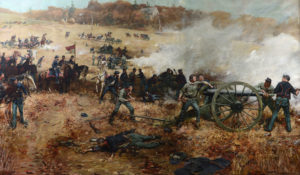
Gilbert Gaul’s ‘Battery H 1st Ohio Volunteers Light Artillery in Action at Cold Harbor,’ depicts Northwest Ohioans in battle. The oil painting is on loan from the Oregon Jerusalem Historical Society. Photo Courtesy Toledo Museum of Art

As battles waged between Northern and Southern troops ­— smoke clogging the air, muskets firing and artillery shells booming — artists sat amidst the carnage with their sketchbooks, capturing the images to send back to communities eager for information about the Civil War.

These artists and photographers, called “specials” in the 1860s, worked for newspapers and magazines to give Americans an accounting of the war and were often embedded with the troops.

To mark the 150th anniversary of the Civil War’s end, the Toledo Museum of Art (TMA) has gathered renderings, photographs and artifacts created by Civil War artists for a free exhibit called “The American Civil War: Through Artists’ Eyes,” which opened April 3 and runs through July 5.

Gilbert Gaul’s ‘Battery H 1st Ohio Volunteers Light Artillery in Action at Cold Harbor,’ depicts Northwest Ohioans in battle. The oil painting is on loan from the Oregon Jerusalem Historical Society. Photo Courtesy Toledo Museum of Art

The exhibit’s curator, Ed Hill, has spent nine months collecting works from the William L. Clements Library at the University of Michigan, the Rutherford B. Hayes Presidential Center in Fremont and the Oregon-Jerusalem Historical Society as well as works from private collectors. The exhibit also contains 50 objects from TMA’s own collection.

“I wanted to do a show not to celebrate the war, but to acknowledge and remember it,” said Hill, who also curated the museum’s 2013 exhibition, “Perry’s Victory: The Battle of Lake Erie.”

“I wanted to show how many different ways artists look at the Civil War,” he said.

During a reporter’s tour of the exhibit March 31, Gallery 28 and 29 still contained boxes of artifacts waiting to be placed. Sketches and renderings adorned the walls.

The focal piece of the exhibit is a large 1893 painting titled “Battery H 1st Ohio Volunteers Light Artillery in Action at Cold Harbor,” by Gilbert Gaul, on loan from the Oregon-Jerusalem Historical Society. The piece, commissioned by the soldiers years later, depicts Northwest Ohio soldiers in a brutal clash with Southern troops.

The soldiers paid $2,000 to commission the painting, Hill said. They didn’t want a granite monument like many of the battalions and regiments of the time.

Other objects in the exhibit include a portrait of President Hayes when he was a colonel, a sword he carried in battle, a bronze cast of President Abraham Lincoln’s hand, “Gardner’s Photographic Sketch Book of the War” and a Civil War toy made about 20 years after the war.

The exhibit is divided into subjects that include hospitals, prisons, Lincoln, artists’ drawings, satirical prints, music, photography and people from Northwest Ohio, Hill said.

Photography was an important medium of the time, although photographers were limited because they couldn’t take live action shots, Hill said. Oftentimes, the dead soldiers were posed in the field to create the image the artist wanted.

Manuscript letter to “My Dear Wife Mary” from “Your Loving Fritz,” Philadelphia, June 1, 1861. Lent by the William L. Clements Library of the University of Michigan. Photo Courtesy Toledo Museum of Art

Photographer Alexander Gardner’s “Gardner’s Photographic Sketch Book of the War” from TMA’s collection will be on display in the exhibit. It was published in two volumes, becoming one of the most important books published in American history and one of the most significant works of photojournalism, according to a news release. The fragile volumes are rarely on display.

The museum is also hosting several free events during the exhibit, including two military re-enactments, performances by an old-fashioned American brass band, lectures and a film series.

On June 6, the Fifth United States Colored Troops Co. G, a local group of African-American re-enactors, will visit. Eight soldiers and eight women “camp followers” will be on the museum grounds from 10 a.m. to 5 p.m. to discuss the lives of black soldiers and the black women who followed them.

On June 19 and 20, the modern Battery H Civil War re-enactors will be at the museum to give cannon demonstrations. They represent the artillery battalion in Gaul’s painting in the exhibit. Eighteen re-enactors will set up and demonstrate an authentic Civil War cannon.

For museum hours and more information, visit toledomuseum.org.

Eye on Health: When joint pain refuses to go away

0
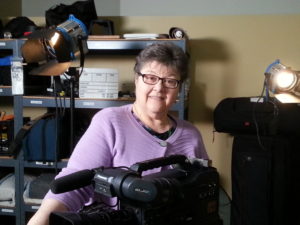
Sister Judy Zielinski decided to have joint replacement surgery on both of her knees in January after dealing with arthritic pain for a decade. Dr. Craig Assenmacher performed the surgeries within the same week. Photo Courtesy Judy Zielinski

Sister Judy Zielinski’s knees hadn’t felt right for a decade.

But during the past two years, they began intruding on her personal life more than the 66-year-old Sylvania Franciscan sister was willing to simply chalk up to old age.

“I had a couple arthroscopic surgeries, and they gave me some relief but I knew they were a Band-Aid,” Zielinski said. She is currently stationed in South Bend, Indiana, working for a TV production company, a job that requires her to travel frequently from city to city and also from site to site while working on a particular assignment.

“I was struggling to keep up with the crew from point to point,” she said. “Last spring and summer, I knew I had to do something. [The pain] was affecting not only work, but also my personal life.” She found herself putting off simple errands like going to the grocery store because she didn’t want to go through the pain.

Sister Judy Zielinski decided to have joint replacement surgery on both of her knees in January after dealing with arthritic pain for a decade. Dr. Craig Assenmacher performed the surgeries within the same week. Photo Courtesy Judy Zielinski

She began seeing Dr. Dennis Assenmacher, who operates Assenmacher Orthopaedics with his sons, Drs. Joseph and Craig Assenmacher out of locations at ProMedica Bay Park Hospital and ProMedica Wildwood Orthopaedic and Spine Hospital. She tried Synvisc-One shots, meant to provide up to six months of osteoarthritic pain relief by lubricating knee joints. The injection was successful on her right knee, but largely ineffective in her left knee.

Dennis Assenmacher referred her in October 2014 to his son, Craig Assenmacher. After seeing him, she discovered she had no cartilage remaining between her upper and lower knee bone plates in the left knee, nor was her ACL tendon intact.

“He wasn’t sure how I was working,” Zielinski said.

Although her left knee was in far worse shape than the right, Craig Assenmacher told her both knees would be candidates for joint replacement surgery. The surgeries could be performed three days apart, putting her in the hospital for about one week.

Although it would be her first hospital surgery experience, Zielinski decided to go for it.

“My schedule is very complicated,” she said. “I wanted one-stop shopping. I wanted to do rehab for both at the same time.”

Dr. Craig Assenmacher

She had the complete knee replacement surgeries Jan. 27 and 30 at ProMedica Bay Park Hospital.

Assenmacher, who also performs hip-replacement surgeries, said Zielinski’s understanding of the procedure and her willingness to get back a part of her life she had lost made her an ideal candidate for joint replacement surgery.

“The main reason we do joint replacement is to try to keep them active and even improve their ability to maintain an active lifestyle,” he said.

“Usually by the time patients have come to me, they have tried injections, steroids, lifestyle modifications such as weight loss, braces, cane, walker and physical therapy,” Assenmacher said. He said he advocates patients trying a number of nonoperative measures before considering joint replacement surgery.

Obesity is often the single largest factor in the need for joint replacement operations, he said.

“Most of our epidemic in this region is larger patients,” he said. “It’s a simple biomechanical thing — [more weight, more wear]. … “My whole thing is always ‘intake/output.’ Count your calories. Try to burn more than you take in, but that’s not easy for a lot of people.”

Unfortunately, for those carrying extra weight and suffering from arthritis, exercise is not easy.

“If someone comes in and they have horrible arthritis and they’re a larger patient, it’s highly unlikely they’re going to lose weight,” Assenmacher said.

He prefers to perform surgery on patients with a body mass index of 40 or below.

While the target range of joint replacement patients is in patients 50 to 70 years of age, Assenmacher has performed one on an 87-year-old woman.

“Most patients say they wish they would have done it earlier,” he said of those on the upper reaches of that age range. Most knee replacements will last 20-25 years, depending on how active the patient is. Innovations with the plastic used in the knees are extending that timeframe, he said.

Zielinski is pleased she opted for the surgeries when she did.

“Recovery has been so smooth and almost seamless,” she said seven weeks after the surgeries. “I’m delighted I did it and delighted I did both at once. It was not easy to spend five days in the hospital. Now that it’s done, I’m very, very happy I don’t have to go back.”

One month after surgery, she was walking around without assistance. After five weeks, she was back to work.

“I’m very aware I don’t have any of the arthritic pain in my right knee,” she said. “Not that I’m completely pain-free — I can feel [soreness] when I get up in morning.” She is able to manage the pain with Tylenol.

Zielinski is not shy about crediting her doctor for any success she’s experienced with her new knees.

“I’m really very pleased with the experience,” she said. “I just feel he’s an extremely competent, reflective surgeon.”

Assenmacher’s goal is for his patients to make the decision that is best for them and their life.

“I usually give them the pros and cons, and the percentages of what the risks are with surgery and say ‘You have to make an informed decision,’” he said.

“The patient should feel comfortable with their surgeon and be able to discuss what they want.”

LCCS urges Lucas County to wear blue April 8

0
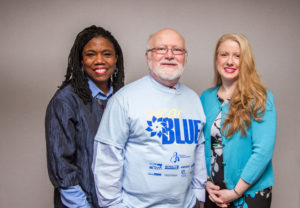
Among those supporting Wear Blue Day are, from Left, Marian Brannon, strengthening families coordinator with Lucas County Family Council; Lucas County Children Services Executive Director Dean Sparks; and Christie Jenkins, CEO of Family and Child Abuse Prevention Center. Toledo Free Press Photo by Christie Materni

April is National Child Abuse Prevention Month and April 8 is Wear Blue Day. The gesture is meant to raise awareness and acknowledgment that it takes a whole community to keep kids from being abused or neglected, said Dean Sparks, executive director of Lucas County Children Services (LCCS).

In 2014, LCCS received 4,271 referrals for suspected child abuse involving 6,419 children. Physical abuse allegations accounted for 51 percent of those reports, followed by neglect (35 percent), sexual abuse (12 percent) and emotional abuse (2 percent).

LCCS substantiated 40 percent of all reports received for physical abuse in 2014. That’s up 7 percent from 2013.

Among those supporting Wear Blue Day are, from Left, Marian Brannon, strengthening families coordinator with Lucas County Family Council; Lucas County Children Services Executive Director Dean Sparks; and Christie Jenkins, CEO of Family and Child Abuse Prevention Center. Toledo Free Press Photo by Christie Materni

Memorial service

As part of National Child Abuse Prevention Month, LCCS also hosts a memorial service for Lucas County children killed by abuse, neglect or street violence during the past year.

This year’s ceremony, set for 11:30 a.m. April 29 at LCCS, 705 Adams St., will memorialize four children: Kevin Troutman, 2 months, and Delayno Oliver, 2, who both died of traumatic injuries, and Tyler McIntoush, 16, and Carter Coley Jr., 17, who were both shot.

Corporal punishment

One topic LCCS is focusing on this year is discouraging corporal punishment, Sparks said.

“We’re not going to say people can’t use corporal punishment on their kids,�? Sparks said. “[However,] we draw the line between child abuse and discipline.�?

LCCS does not advocate spanking children and believes parents should use other, more effective alternatives to deal with their child’s behavior, Sparks said.

“There’s always been that line between how much is discipline and how much is too much,�? he said. “When does this become child abuse? We need people to think about that when using physical discipline — how much danger there is. For example, if you use a cord to spank a child, it’s probably abuse. You’re risking that line between abuse and negligence.

RELATED: New LCCS grant will help parents work through past trauma

“There’s smacking versus hitting,�? Sparks said. “We have to help people figure it out. To pat on the bottom is a different thing than hauling off and hitting them in the face. You get a smart aleck at 13 and you have to really help people think about what the consequences are.�?

Sparks had his own personal experience with corporal punishment. His father was raised in Kentucky “the old-fashioned way�? and spanked Sparks when he was growing up in Columbus. However, Sparks did not spank his own children, he said.

“It’s not against the law. You’re allowed to spank children. I don’t think it’s the best way to teach things, personally,�? Sparks said. “I never spanked my kids and they all turned out to be responsible adults.�?

Spanking actually teaches about the ways in which adults deal with their frustration, anger and stress, he said. Parents who spank often “put up barriers�? between themselves and their children, he said.

Marian Brannon, strengthening families coordinator with Lucas County Family Council, agreed.

“Corporal punishment is when parents don’t have the skills or nothing has been modeled for them as a way to affect the child’s behavior,�? Brannon said. “A lot of folks are raised with that: ‘This is what my grandmother did.’ But we don’t do anything else your grandmother did so why are you holding on to that? Everything has to evolve.�?

Brannon’s work at Family Council focuses on parents because “children don’t abuse themselves,�? she said. The group’s ACT Raising Safe Kids programming comes into play when parents are abusing their children through discipline, she said.

The programming helps parents identify what violent discipline is and includes a piece on self-reflection to discover in themselves why they are being violent toward their children, Brannon said.

Brannon said she has run into many professionals who say, “I was spanked and I’m OK,�? but “they’ve been through three marriages,�? and have a host of other issues that may affect their children.

Christie Jenkins, CEO of the Family and Child Abuse Prevention Center, focuses on trauma, cognitive therapy and advocacy. In her 20 years working with survivors of abuse, she said she has witnessed some pretty horrific sights concerning violence against children.

“A little boy was beaten with an extension cord. Because of the nature of his injury, his clothes were seared to his wounds,�? Jenkins said. “Many times we as counselors, as teachers, as social workers have suspicions but we really can’t prove it. If you feel that way, it’s important to report it. We don’t have to prove it; we just have to report it.�?

An important aspect of her work  getting resources and education to the parents. One way she does this is through the public library. The other part of her job is training people how to protect children.

Adults generally put the responsibility on the child for their own safety, as when telling a child “don’t talk to strangers,�? but her program teaches the parent how to keep children safe.

There are a number of conscious actions parents can take to avoid corporal punishment.

First is simply to make a decision about how you’re going to discipline your kids, he said.

“I’ve always said you will raise your child exactly as you were raised unless you make a conscious effort to do it differently,�? he said.

One way is to use positive reinforcements. You have to teach children how to act properly, and when you catch them doing something the correct way, praise them. What is “absolutely critical�? is leading by example, Sparks said.

Parents can give timeouts to their children or redirect their child’s behavior, Jenkins said. Parents say they don’t have enough time or that they work too much, but Jenkins says five or 10 minutes with a child makes a big difference in their behavior. Play cards or watch a YouTube video together.

“Show you are invested in them,�? she said.  “Find out what is behind the behavior. They’re acting out because negative attention is better than none at all. Spend time with your children.�?

Part of the problem is that many parents in today’s society are under great amounts of pressure, Brannon said. They are struggling at work, living in poverty and lack education.

“We don’t talk about [parents] until the child does something. They need support,�? she said.

Family Council’s programing considers five pillars: social connection, resiliency, knowledge of child development, social and emotional competency and concrete support. Brannon works to support parents in each of the categories.

“My whole umbrella is about building supports,�? she said. “[Parents] need resources. They’re on a hamster wheel of trying to get their needs met. … We just really help parents understand there’s other ways to affect behavior. [Abusers] are essentially modeling bullying. And we wonder why we have problems with bullying.�?

Local monument companies donate time to repair cemetery

0
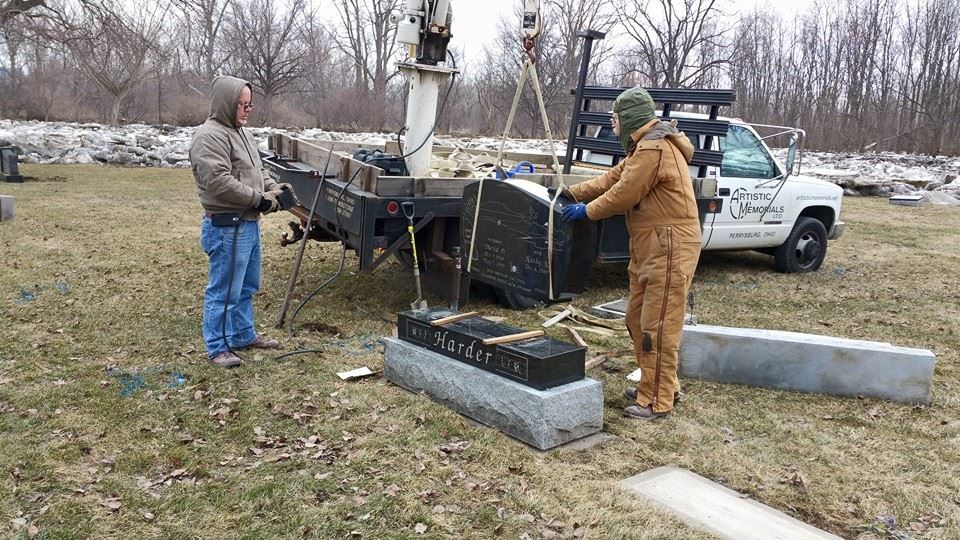
Workers with Artistic Memorials of Perrysburg help reset monuments March 23 at Riverside Cemetery, which was damaged by ice from the Maumee River. Free Press Photo by Fred Altvater
Workers with Artistic Memorials of Perrysburg help reset monuments March 23 at Riverside
Cemetery, which was damaged by ice from the Maumee River. Free Press Photo by Fred Altvater.

When the Maumee River flooded two weeks ago it sent huge chunks of ice careening into Riverside Cemetery in Maumee, knocking over monuments, destroying trees, fences and anything in its path. In all nearly 90% of the 1,900 monuments in the cemetery were toppled over, moved off their foundation, or require some repair. Area residents were amazed by huge sheets of ice covering River Road from Side Cut Park to Stitt Road as the total damage has been estimated at over $1 million.

Two local monument companies, Artistic Memorials from Perrysburg and Maumee Valley Memorials from Waterville are volunteering their equipment, manpower and time to reset the monuments and restore the cemetery to its original condition.

On Monday both companies sent crane trucks and crews to the cemetery to upright headstones and identify those in need of repair. Some stones had been moved as much as 25 feet from their original locations, while a small percentage remain untouched.

Jeff Pettit, owner of Artistic Memorials, told the Toledo Free Press,

“This work will take several days and may even span months to complete. On Monday the two crews were only able to upright approximately 100 of the nearly 1,700 monuments dislodged.”

“The work is also hampered with nearly 50% of the cemetery still covered in 3’-4’ of ice,” he added.

Alan Taraschke, Supervisor of Operations for the City of Maumee expressed his gratitude for the additional help from Artistic Memorials and Maumee Valley Memorials,

“The time and effort they have donated to the city of Maumee thus far has been invaluable. The city normally only uprights 10-15 stones annually. A job of this magnitude requires the expertise of these two companies. I cannot express how much their help means to the city.”

There is still much remaining to accomplish at Riverside Cemetery and the two local companies have committed to continue to help restore it to the original condition.  

Fishing, boating, picnicking and hiking the many trails along the banks of the Maumee River provide many hours of outdoor recreation for area residents. Every few years the river reminds us of the awesome power, hidden behind its normal tranquility.

Letters to the Editor, Mar. 29, 2015

0

Tax rate column on point

I am adding my congratulations on a well-written commentary regarding the increased sales tax rate for Lucas County sales transactions (“How does new Lucas County sales tax rate really compare to other urban Ohio counties?,” March 8). The information, as written, appeared well researched and presented in editorial form. I am in perfect agreement with the guest columnist Gary Kiss; could not argue on one point. I look forward to future guest column commentary on your opinion pages.

— Chuck (Richard) Schlageter, Sylvania

No to Strickland

Let’s take a look back at November 2010. Ted Strickland was in the political fight of his life. In that year, jobs lost under him increased to 350,000, education cuts equaled $380 million and he told the National Guard to stand down when Millbury needed them to come in after the city had been devastated by an EF4 tornado, which killed seven and destroyed nearly 50 homes.

The fact is, Ted Strickland was an extremely flawed governor and would be an equally flawed senator. As Gov. Strickland begins what I believe will be a laughable campaign in a quest to become the next U.S. senator from Ohio, I ask you all to remember the days when he reigned as our governor: the jobs lost, the education cuts and the failed leadership. Thankfully we had Gov. John R. Kasich to come in clean up the mess that Strickland left behind him.

I urge you to do your research. Sen. Rob Portman is a middle-of-the- road politician who will always listen to both sides of an argument. Portman fights for Ohio, whereas Strickland seems to fight against Ohio. Vote no against Ted Strickland in 2016 so we can continue the progress Ohio has made, and not return to his failed policies.

— Byron Swartz, Millbury

McGinnis: Misadventures in theater

0

Having the chance to interview local theater legends like Jennifer Rockwood always brings to mind how much I love theater, and have almost all my life. I love acting, I love directing, I love watching other people perform. Theater is as big a part of my soul as almost anything you can name, which is somewhat odd when you consider that my first memory of being on stage was a feeling of utter humiliation.

.

.

Like most everyone, my first show came in the form of an elementary school “pageant” during first grade. I was a proud attendee of Luckey Elementary in rural Ohio, a wonderful three-floor brick building that I believe hasn’t changed in all its decades of existence. I visited there a few years back and the place seemed exactly the same, apart from feeling incomparably smaller than it had during my youth.

My elementary school days were largely spent daydreaming. I was a notoriously lazy student when it came to actual schoolwork. How could I concentrate on math problems and parts of a sentence when the world was in peril and only I, along with my trusty pals Optimus Prime and He-Man, could be counted on to save it?

One of the few classes I could be counted on to pay attention in was music. In a small room in the school’s basement, we would while away hours practicing scales and singing songs while perched on tiny squares of carpet. It was in music class that we learned of our big stage debuts in the upcoming Christmas pageant.

Grade school shows, at least in my childhood, can only be called “theater” in the loosest sense of the word — dozens of kids crammed onto a small stage, singing with terrified smiles plastered onto their faces. When time came for “dialogue,” a member of the young “chorus” made their way down to one of the two stand-up microphones on the stage, said their line and then shuffled back to their place in the menagerie, the big moment of glory over before it began.

There were no tryouts or auditions for these shows; you earned a part by simply existing. My role for my theatrical debut was a jack-in-the-box in a show where toys came to life; decades of separation have dulled my memory of the remainder of the “plot.” I do, however, remember my first line with terrifying clarity: “Jumping for joy! Oh, this is so exciting! First the star, and now, Sammy!”

Please note that “Jumping for joy!” was not actually part of my line. It was a stage direction, meant to instruct the actor on what he or she was supposed to be doing — jumping about being a rather natural activity for a jack-in-the-box. However, I assumed that since it was written there, I was supposed to say that too, and my long-suffering music teacher gave up on correcting me about 10 minutes into the first rehearsal.

The night of the pageant arrived, and I was ready. I had a wonderful costume lovingly crafted by my mother out of an old television box, with my head poking out the top and hands barely peeking out the sides — less a jack-in-the-box than a jack-IS-the-box. I had my lone line memorized and my choreography (Jumping for joy!) down pat. There was no trace of stage fright in my mind.

Finally, my time came. I strode to the microphone and with every eye in the auditorium on me, began my line: “Jumping for joy! Oh, this is so exciting! First the star and now — BWAAAAANG!!!”

That last bit was not a word I said. It was the sound of feedback made when, as I was “jumping for joy!,” the corner of my costume/box slammed directly into the microphone in front of me.

Pandemonium. Literally EVERYONE in the auditorium exploded into laughter. I looked dumbfounded at a sea of faces roaring at my blunder. I looked down at my kindly music teacher, and even she was doubled over and covering her face. Bewildered and embarrassed, I turned back to one of my fellow chorus members/toys: “Should … should I do it again?”

So yeah, it’s a little remarkable that I still have such a fondness for the stage, what with my first memory of the spotlight ending in such utter humiliation. Maybe it’s simple practicality. Really, what could possibly happen that could be worse than that? Or perhaps, like the old phrase, I laugh, that I may not cry.

Or jump for joy.

Jeff McGinnis is Pop Culture Editor at Toledo Free Press. He can be reached at [email protected].

Retirement Guys: Is your income in retirement protected adequately?

0

We’ve been discussing in recent columns the importance of creating a written retirement income plan.

.

.

Identify what is important in life and use the right investment tools to accomplish those goals by producing as much cash flow as possible. Stocks, bonds, mutual funds, annuities, bank products and alternatives such as real estate and precious metals are all various tools that investors use to accomplish their goals. Remember, there can be no retirement without income, so increasing predictable income is the goal of creating a written plan.  The next step is to identify and eliminate risks that could blow up that plan.

  • Will another major crash in the market destroy your financial future?

    For some investors, this is one of their primary fears when it comes to their current plan. In our experience, that is an extremely valid concern. In the past 15 years, as countless current retirees and baby boomers were working in their peak earning years to save for retirement, they saw two major stock market downturns that destroyed their confidence in the financial markets.

  • Is a buy-and-hold strategy the right approach for retirees?

    The traditional investment approach is to buy and hold on to investments, because over time the stock and bond markets should go up in value.  Often, that investment approach works out great.  Yet, as people draw close to retirement or retire, does that same approach always make the most sense?  In several cases, we would say no.

  • Are you counting on stock market growth to fund your retirement?

    In the past 117 years, there were four periods of time that the Dow Jones went years with flat to negative cumulative returns.  The shortest of these periods was 11 years in the January 2000 to December 2010 stock market and the longest was 25 years from September 1929 through November 1954.  Thus, if the retirement plan is based upon the growth of the stock market, can the average retiree afford to risk the lottery of the returns of the stock market?

  • Use circuit breakers to try and avoid major losses.

    We are not saying baby boomers and retirees should not own stocks.  In fact, stocks can be a great investment and we like dividend-paying stocks.  Once an income plan is created and enough predictable income is generated from Social Security, pensions, annuities, dividends and interest to cover the monthly cash flow needs of a retiree, the daily noise of the stock market becomes less important.Still, a lot of investors would want to avoid seeing a major decline in their account values due to a dramatic drop in stock prices.  That is the goal behind using circuit breaker technology.

    In our homes, we all have circuit breakers. Next to the sink, a GFCI switch is designed to protect someone who is washing their hands.  If too many appliances are plugged in and it becomes unsafe, a breaker should trip, shutting off power to that area.  Or heaven forbid there is a major problem, the main switch can shut off power to the whole house.

    A circuit breaker can also be used when it comes to investing in stocks and bonds. It is designed to be a safety net with the goal of protecting investors.  When risks grow too high, the breaker trips and moves the account to an area that could have lower risk, like cash. Occasionally, people think of this as trying to time the stock market.  That is not the focus of our recommendation.  The goal is first and foremost to limit against significant losses and protect profits based upon an individual’s risk tolerance.

  • When should investors add circuit breakers?The best answer would be right before a stock market crash occurs. The problem is, no one controls the stock market and predictions by even the smartest economists are often wrong.  Oil embargoes, wars, assassinations of a president, terrorist attacks, the gold rush, even back to the Black Death — unexpected events should be considered the norm when it comes to investing.  Just when everything seems fine, unexpected events will shake the foundation of the economy and the markets.

Focus back on your own individual plan.  Is your retirement income plan generating enough predictable income? At what point do you want to protect your accounts against a decline in value?

Using history as a guideline, as today’s markets reach record highs, now is the time to consider adding in more protection with circuit breakers.

For more information about The Retirement Guys, tune in every Saturday at 1 PM on 1370 WSPD or visit www.retirementguysnetwork.com. Securities and Investment Advisory Services are offered through NEXT Financial Group Inc., Member FINRA / SIPC.  NEXT Financial Group, Inc. does not provide tax or legal advice.  The Retirement Guys are not an affiliate of NEXT Financial Group. The office is at 1700 Woodlands Drive, Suite 100, Maumee, OH  43537. (419) 842-0550