TOLEDO – Imagine that you are a participant in an experimental drug trial, leading to a severe reaction. You instinctively call 911 for help, but when they arrive, instead of taking you to the hospital, they put you in an overnight jail cell. This was the experience of Kay Anderson, the founder and executive director of the Northwest Ohio Innocence Clinic (NWOIC).

While Anderson was never charged for the possession of the drug she was testing, she still faced a possible 20-year conviction. Many like her have much worse outcomes. Anderson had a friend who was convicted for a crime years later, and she saw that evidence used in his case had disappeared. After working with the Ohio Innocence Project, Anderson decided that Lucas County needed something similar.
NWOIC was founded as a non-profit organization with the goal of raising awareness to both prosecutors and the public of legitimate claims of innocence in Northwestern Ohio. Since its founding, the clinic has worked on 30 cases that warrant an investigation. The clinic works closely with the University of Toledo, where many law and criminal justice students get involved. Along with them, many individuals from outside the university also join the organization.
“We have people that are just psych majors, and people that aren’t even students,” remarked Esther Goldstein, a recent UToledo graduate. “We have an electrician… they’re just family members of people who have been wrongfully convicted, and they want to help out and learn what they can do on their own in their own time.”
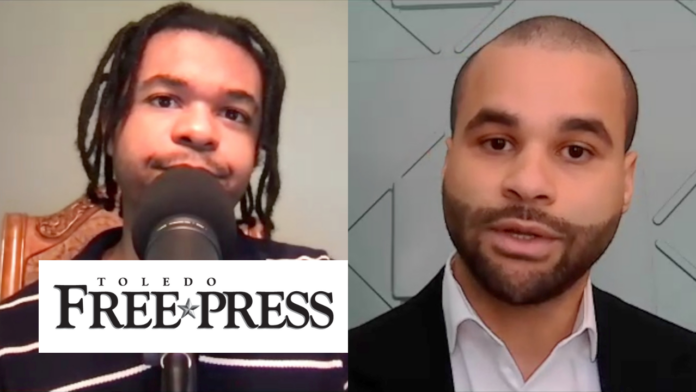
The main focus of the NWOIC is to educate individuals in the community on the justice system and how to investigate potential claims of innocence. Anderson leads Zoom calls and in-person meetings where she teaches her students the basics. From public record searches, skiptracing (learn more about this in the video interview) and document requests, Anderson hopes to impart the knowledge that someone would need to find second chances for convicts.

At the heart of investigating claims of innocence are Brady Claims, evidence that is found after a conviction that can alter a verdict. Anderson aims to teach her students how to find these, as they are the basis for overturning wrongful convictions. Many are found through public record requests, something that Anderson has found increasingly hard to do.
Along with finding claims of innocence, individuals who get involved in the NWOIC learn valuable life skills that will aid them long after they leave the clinic. Goldstein found that her experience would be put to good use in her career in public defense.
“I’m gonna be an attorney eventually, and I’ll have to communicate with clients or all sorts of people, victims, you know? And it’s important to have those communication skills, especially in this type of field because you’re working with all sorts of people, different education levels, different backgrounds. So it’s important to be able to communicate on a wide variety and scale.”
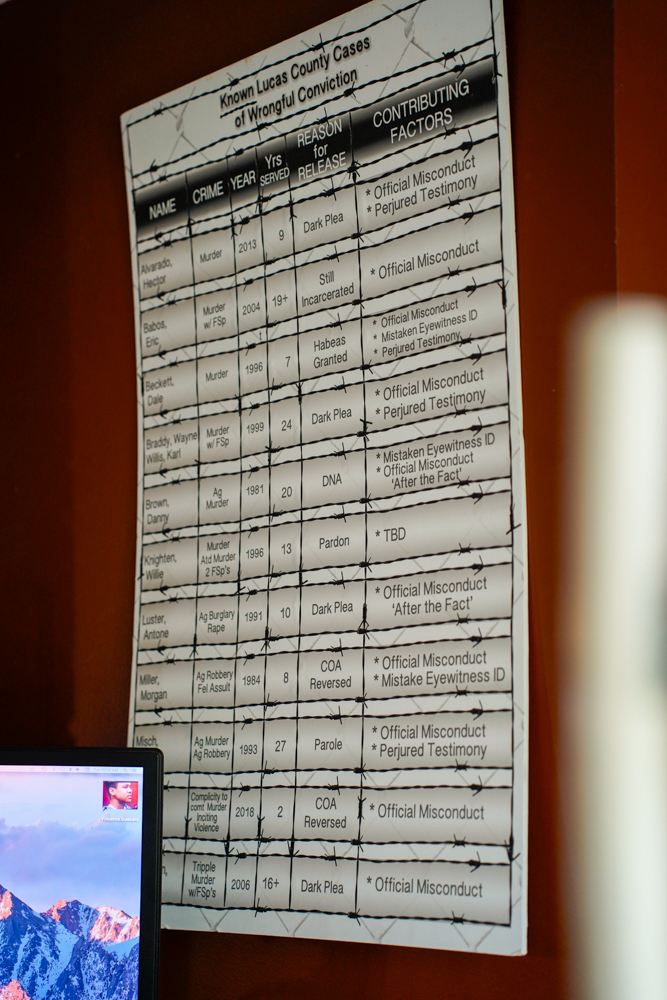
Anderson also spoke about the Joel Terry case. In 2018, Terry was convicted on multiple counts of raping his daughter. DNA evidence that was tested pointed to a male, but no specific male. The way that the prosecution delivered the case, the jury convicted Joel, and he received multiple life sentences. A few years later, that same evidence was retested, and the new test showed that Joel was not a match. Due to this, Joel was released on bond last November.
“His whole family was there and they all celebrated… his daughter, who’s one of our interns, was crying. Everyone was so excited and cheering and you could feel it in the courtroom,” reminisced Goldstein. “You could feel how powerful that moment was and how much it meant. His case isn’t resolved yet, but just being able to celebrate Christmas with his family meant so much to him, and it meant so much to us just to be able to be in the courtroom and share that moment. So, it’s those small victories or those small moments [that] are big victories. and we don’t get a lot of them.”
Fighting a system that seems to routinely work against those who are disadvantaged is something Anderson and her students are constantly engaging in. She feels that, recently, many steps have been taken to further limit the access the public has to records. To her, the deck is stacked against the truth, but she continues to make it her mission to bring wrongful convictions to light.
Learn more about the Northwest Ohio Innocence Clinic here.