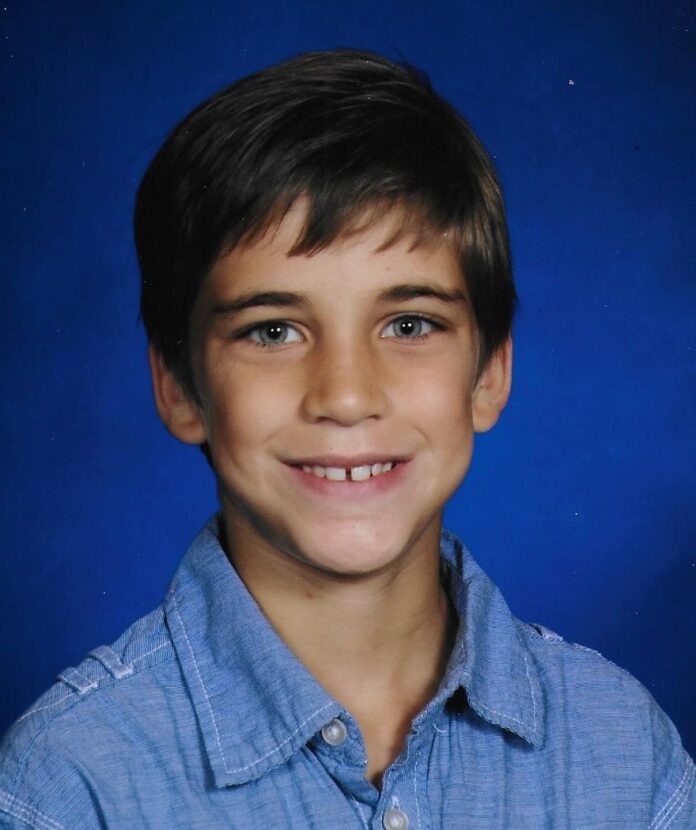
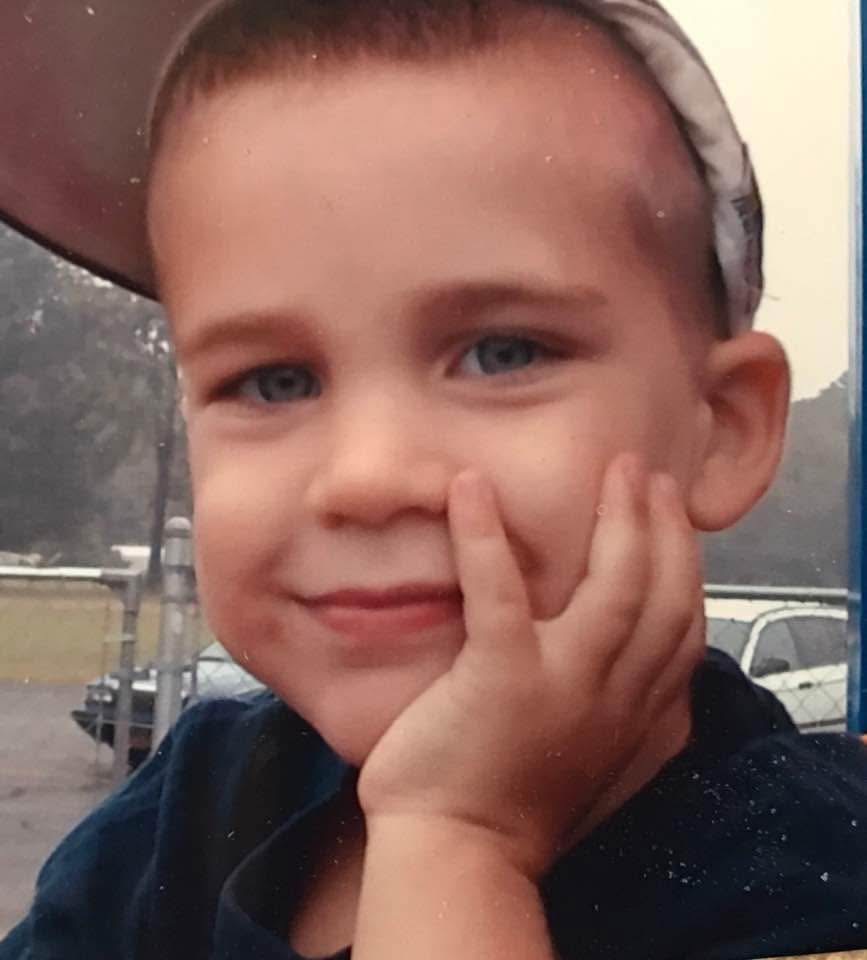
People often ask me who Luken was. I could tell them he loved football, basketball, baseball, golf, fishing, and riding his bike. I could tell them he had just finished eighth grade and was excited to start high school. All of those things are true. But what I want people to know first and foremost is this: Luken was kind.
He was the young man who noticed someone standing alone. He welcomed others, especially those who felt left out. He believed everyone deserved to feel seen, valued, and included. Luken was generous with compliments, spreading joy everywhere he went. Kindness wasn’t something he practiced occasionally—it was simply who he was.
On July 31, 2017, our lives changed forever.
After an incident of cyberbullying, my 14-year-old son made an impulsive decision that ended his life. In a single moment, our life as we knew it ended as well. I stepped into a nightmare. I had entered a world no parent ever imagines.
The hours that followed are forever etched in my heart.
I will never forget the first responders who rushed in to take over giving my sweet boy CPR. I will never forget the emergency physicians, nurses, respiratory therapists, and every member of the trauma team who fought with every ounce of their knowledge, skill, and compassion to save my son’s life.
They did not know Luken.Yet, in those moments, they loved him enough to give everything they had.
As a mother, I was overwhelmed by fear and unimaginable heartbreak. My family was living through the worst day of our lives.
Years later, I’ve come to understand something I couldn’t see in those first unbearable hours.
That day did not wound only our family. It also touched every paramedic who answered the call, every nurse who cared for Luken, every physician who refused to stop trying, and every member of the healthcare team who walked out of that room carrying the quiet ache that comes when a child cannot be saved.
Their grief is not the same as ours. But it is real.
As a mother, I want every first responder and healthcare professional who cared for Luken to know that our family has never forgotten their compassion, their courage, or their humanity. After the organized chaos of trying to save my son had come to a halt, I was brought in to sit with Luken.
As reality set in, the guilt hit me and I began to question everything that was said and done in the moments leading up to Luken taking his life. The details began pouring out of me as I shared what happened with the team of doctors and nurses who tried so hard to save his life.
In my mind, they had every right to judge me, and I felt I deserved to be blamed for Luken’s death. Instead they mourned with me. They told me that I handled the situation better than they would have and made me feel that we were in this moment together. They were with my son when he needed them most and they were there for me as well. They continue to carry the emotional weight of moments like these long after the rest of the world has moved on, and they will never know how their compassion helped bring me comfort when I needed it most. For that, they have my deepest gratitude.
Then came the grief.
There are simply no words that can describe the silence that follows the loss of a child. Birthdays become reminders. Holidays are forever changed. Empty chairs speak louder than words. Every milestone becomes another moment when you realize someone you love should still be here.
Like every grieving parent, I searched for answers. I wondered what I had missed. I replayed conversations. I asked questions that could never be answered.
Eventually, I realized that living in those questions would never bring Luken back. Instead, they led me to another question: What can we do to make sure another family never has to experience this heartbreak? That question became our purpose.
Our family made a promise that Luken’s story would not end with tragedy. If we could not change what happened to him, perhaps we could change what happens to someone else. That promise became the Luken T. Boyle Campaign for Kindness.
Today, our mission is to promote kindness, prevent bullying and cyberbullying, encourage conversations about mental health, and help create schools and communities where every child feels they belong. Over the past eight years, I have met thousands of students, parents, educators, healthcare professionals, and community members. Again and again, I hear stories that remind me one person truly can make a difference.
One encouraging text. One invitation to join a lunch table. One teacher who notices. One friend who refuses to laugh at someone else’s humiliation. One adult willing to ask, “Are you okay?”
Kindness changes lives.
Today’s children carry incredible power in the palm of their hands. Through a smartphone, they can encourage someone—or devastate them. They can make another child feel included—or completely alone.
Technology itself isn’t the problem. How we choose to use it is.
I believe we can do better. I believe kindness can become contagious. I believe we can teach our children that compassion is strength, empathy is courage, and every person deserves dignity—both online and in person. Most of all, I believe Luken’s legacy is not defined by how he died. It is defined by how he lived.
That is why I hope you will join us for the 9th Annual Luken T. Boyle Kindness Rally on Thursday, July 23, from 4 to 7 p.m. at Hensville Park in downtown Toledo.
Come with your family. Bring your children. Gather your friends. Meet the people who have become part of this movement.
Celebrate kindness. Leave inspired to make a difference. But don’t let your commitment end when the rally is over. Join our Campaign for Kindness. Make kindness intentional every day. Choose words that heal instead of hurt. Stand beside someone who feels alone. Speak up when bullying happens. Teach your children that every message they send, every comment they post, and every interaction they have is an opportunity to change someone’s life.
We cannot change what happened to Luken, but together, we can change what happens to the next child. That is my promise to my son. It is also my invitation to you. Please join us. Spread kindness. Protect one another. And together, let’s save lives.
*The Toledo Free Press has a story forthcoming with more details on the Campaign for Kindness and upcoming rally.
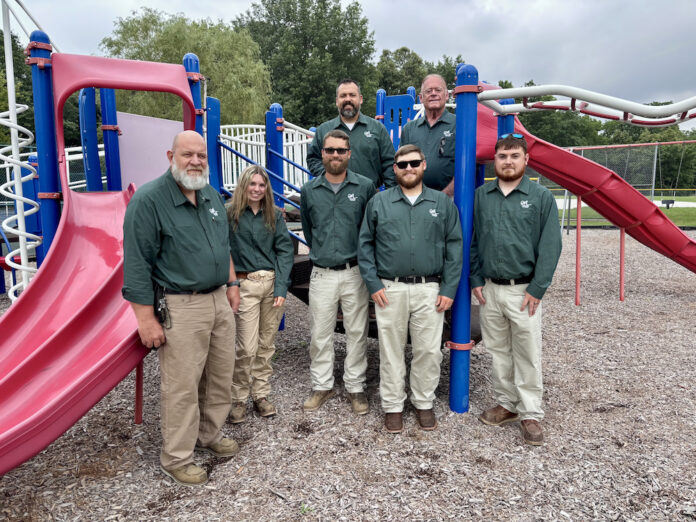
Members of the Monclova Township Public Works Department – formerly the Roads Department – including, front row (from left) EJ Miller, Patricia Borer, Greg Nye, Kyle Keifer and David Clark and, top row, supervisor Doug Holland and Todd Osborn. (AWFP photo by Karen Gerhardinger)
MONCLOVA TOWNSHIP – During their July 6 meeting, Monclova Township trustees approved a name change for the Road Maintenance Department and agreed to ask the Lucas County Board of Elections to put on the November ballot a question of whether the township should become a limited home rule government.
Public Works
Taking care of Monclova Township roads is just a fraction of what the seven-person Road Maintenance Department does each day. Storm water management, signage, parks and buildings within the township – in addition to plowing roads, picking up leaves and clearing right-of-way areas – are among the duties handled by the staff, said Supervisor Doug Holland.
Recognizing this scope of work, Monclova Township trustees voted to give the department a name that’s more fitting, and in line with similar-size communities: Public Works.
Staff members arrived in new khaki work pants and green Monclova Township shirts to hear the trustees vote in favor of the change. Todd Osborn is the most senior employee, with 27 years, followed by EJ Miller, who during his 24 years has become the head mechanic, taking care of vehicles and equipment. David Clark, Greg Nye and Kyle Keifer, along with Holland, have been with the department just under four years. Patricia Borer joined a year ago.
Limited Home Rule
During the meeting, the trustees voted to ask the Lucas County Board of Elections to place on the ballot a request to adopt a Limited Home Rule (LHR) form of government. This would allow the township to retain control over zoning and expand its ability to handle nuisances – such as noise, junk cars and tall grass – more effectively, said Administrator Michael Hampton.
“Township governments are limited by our state legislators on what we can and cannot do,” he said, explaining the LHR gives the township more “teeth” to enforce ordinances.
While the township can encourage residents to take care of their property and be respectful of neighbors, it’s difficult to enforce without a more punitive mechanism to enforce the nuisance laws, he explained.
While Trustees Barbara Lang, Chuck Hoecherl and Debbie Stevens-Laux voted in favor of putting it on the ballot, Stevens-Laux expressed reservations, stating that she’d like to see LHR being used to control gas plants, data centers and other industry rather than neighbor complaints.
Currently, 34 townships have LHR, including Perrysburg Township and Sylvania Township.
“By adopting Limited Home Rule, townships get a few additional authorities that are not permissible for statutory townships,” said Ohio Township Association Director of Communications Anne Beauch. “OTA believes that all townships should have the similar inherent authority afforded to villages and cities.”
LHR townships must have police protection, whether by a contract with the sheriff or their own police department, as well as an administrator and also a law director instead of the county prosecutor. LHR townships can also adopt building codes, supply water/sewer, impose civil fines, and have higher net indebtedness, she said. Monclova Township currently has its own police protection, administrator and law director.
While the township cannot spend tax dollars or resources proposing LHR, it can provide informational material to distribute, Hampton said.
During the meeting, the board also:
-Heard that Geddis Paving is moving rapidly on the Albon and Monclova roundabout, and expect to begin curb construction at the end of the week and intermediate paving next week.
-Heard that legal notices – such as announcements of zoning change requests or public meetings – are easily accessible on the township home page at monclovatwp.org, which has a “Legal Notices” tab. These notices will also be posted on the Anthony Wayne Free Press site: anthonywaynefreepress.com. All legal notices will be posted 10 days prior to a hearing. This satisfies the state’s requirements for notification.
-Approved hiring DGL to do a topographical survey of three properties on Monclova Road for $12,035. The township purchased two of the properties – .65 acres at 8040 and .93 acres at 8042 – for $290,000 each last year. The 2.8-acre 8032 is owned by Kerrent Properties, whose representative, Dave Kerscher, has waited for sanitary sewer lines to be installed in order to develop the land. Hampton said the township is in discussions with Kerscher about possibilities for the three adjacent properties on the north side, but a survey would be the first step. The township also owns .15 acres at 8006 Monclova Rd., but this is not included in the survey. Kerscher said the goal is to create a downtown development like one residents asked for during a township-wide survey for the Comprehensive Land Use Plan Update.
-Agreed to purchase two vehicles from Perrysburg Auto Mall: a 2026 GMC Sierra 1500 Crew Cab Pickup for $50,000 and a 2027 GMC Terrain for $35,000. These vehicles will be used by staff members who have been using personal vehicles for township business, which creates liability and insurance concerns, Hampton said. Currently three staff have been sharing one vehicle, and plans call for adding additional staff.
-Heard Fiscal Officer Gavin Pike say that a past due notice and a notice of audit has been sent to Baymont Inn owners, as the business is delinquent on its payments and not corresponding.
-Heard Hampton say that he and Zoning Administrator Eric Wagner attended the June 24 Lucas County Planning Commission meeting where Waterville Township’s proposed zoning text amendments were discussed. Even though the LCPC declined making a recommendation, Hampton said he and Wagner will continue to meet with Molly Maguire, senior planner for the county, to look for ideas on how Monclova Township can address data centers in its zoning resolution.
-Approved a conditional offer of employment for part-time firefighter Thomas Bland, and accepted the resignation of part-time firefighter/paramedic Nicholas Lishewski.
-Heard Dana Clark, business development administrator for the Toledo-Lucas County Port Authority, explain that Miller Diversified, owner of the Maumee Keystone building at 3410 Briarfield Boulevard, has applied to use Property Assessed Clean Energy (PACE) financing for energy efficiency improvements. Over 15 years, the Port has done 210 loans, including three in Monclova. The property owner will repay the loan through an assessment on property taxes.
-Approved T&J Excavating and Tree Clearing to remove two dead pine trees at Swan Creek Cemetery for $3,200 and 10 leaning trees on Lose Road for $7,800.
–Established a fund to collect donations for the 175th anniversary celebration in 2028, and to contract with Kristina White to facilitate the event and work with sponsors.
-Agreed to allow the administrator to spend up to $10,000 – the statutory limit – without seeking board approval.
Monclova Township Public Works employees David Clark and Greg Nye quickly responded when they saw a 14-year-old riding an e-bike that caught fire on Monclova Road on July 9. (AWFP photo by Karen Gerhardinger)
MONCLOVA TOWNSHIP – Monclova Township Public Works employees David Clark and Greg Nye were following one another out of Clearwater subdivision in a pickup and a chipper truck on July 9 when they saw something unusual: a teen on an e-bike that was billowing white smoke, then “fireballs” as he drove east on Monclova Road.
The two blocked the road to traffic with their vehicles and jumped out to assist the 14-year-old as he exited the bike. While Clark stayed with the teen – who was also assisted by two women who left before sharing their names – Nye grabbed an extinguisher from the truck and worked to put out the fire coming from the lithium battery.
“It was crazy,” Nye said.
The fire appeared to start as the e-bike rider was near the entrance to Olde Farm. Clark believes the teen was still riding 20 mph or more when the fire started, and it took until the Waterside entrance for him to slow down enough to exit the bike.
“He probably didn’t know what was going on. When he jumped off, it was a pretty big fire,” Clark said.
Public Works Supervisor Doug Holland credits the two for their quick thinking.
“It’s not really in the job description,” Holland said. “These two impressed the snot out of me. They handled it well. I think they deserve the keys to the city – except they already have them.”
With a background in fire/EMS, Holland understands how his two employees’ actions were beneficial. By blocking the roadway, they created a safe space for the Monclova Township Fire & Rescue that arrived minutes later. It also ensured that no one hit the teen, who at first was running in the road after exiting his bike. Holland also noted that both men exhibited the kind of “bedside manner” that is vital for working with patients in an emergency situation. As parents, both Clark and Nye immediately felt protective of the teen.
“Instincts just kicked in, because I’ve got three boys,” Clark said. “I did what I thought was right. I would hope people would do the same for my kids.”
Fire Chief Matt Homik said the two men were able to keep the fire down until crews arrived. The teen was transported to Toledo Children’s Hospital. Later, Holland learned from the boy’s family that he was taken to University of Michigan for burn treatments, noting that it’s not life-threatening. While the teen was wearing a helmet, which protected his face, he appeared to have burns on his hands and legs, as he was wearing shorts and no gloves.
“I wished he’d been wearing pants instead of shorts,” Holland said.
By Friday morning, as they prepared to start another day, Clark and Nye looked over the e-bike remains housed in the maintenance yard. Nye pulled up a picture of a Tuttio e-bike on his phone. The bike retails for $1,000 to $1,500. The model in the yard appears to have its off-road tires changed to road-worthy tires.
A representative from the State Fire Marshal’s office was set to arrive to do an investigation, which is required in any incident that involves injury or death, Homik said. An investigation could reveal if there were any product recalls or other issues, he said.
“We haven’t really had any e-bike issues, but we’ve had lithium battery issues in fires,” Homik said.
Working out of the Keener Road facility, Holland often interacts with park users, including teens and adults riding e-bikes. While he knows some adults complain about e-bike use by kids, Holland said 90 percent of the people he sees riding down the Wabash Cannonball Trail are older people who need the rider assist. But he does advise the younger riders to “not be stupid” as they use the trails.
“This is the new bicycle of our generation, whether we like it or not,” he said, adding that he’d like to see a focus on education and regulation on the multiple types of e-bikes that are out on the market.
For the 14-year-old riding on the side of Monclova Road, the incident turned his plans to take his girlfriend to the movie theater into a trip to the hospital. Holland said he plans to keep in touch with the family.
David Pepper, former Ohio Democratic Chair and Hamilton County commissioner, is the running mate of gubernatorial candidate Dr. Amy Acton. In an interview with Political Reporter Jaden Jefferson, following a recent press conference in Toledo, Pepper answered questions about how an Acton administration would approach property taxes & school funding, healthcare costs, and the rapid growth of data centers for artificial intelligence.
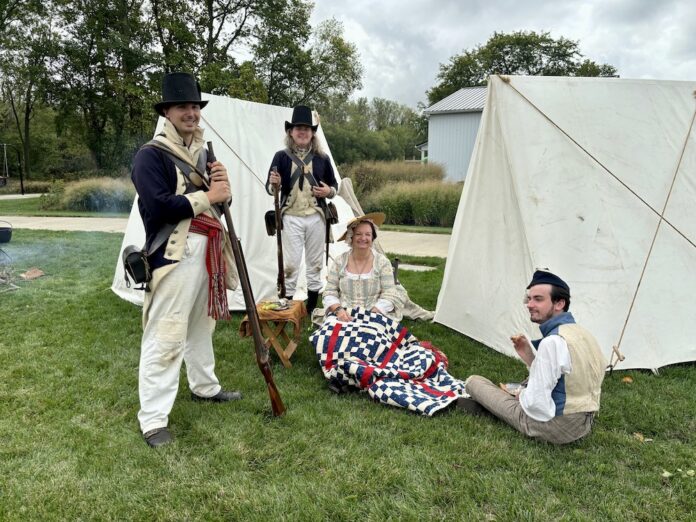
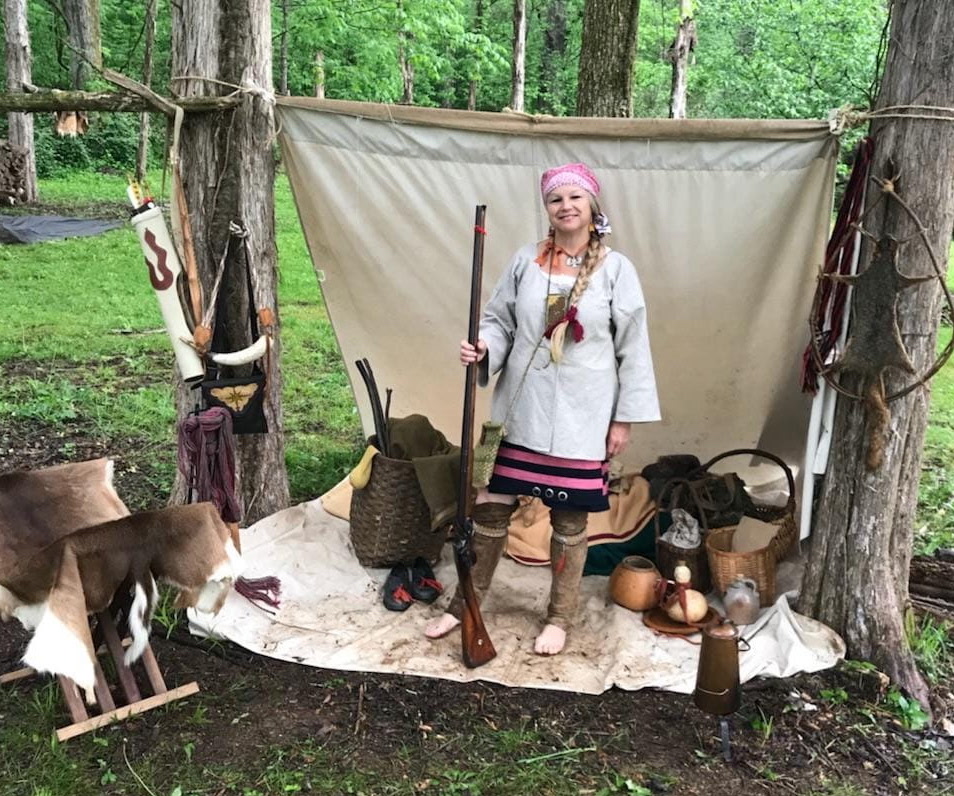
Among the historical reenactors in a camp set up in Parker Square during the 2024 Roche de Boeuf Festival are (from left) Alex Dishaw, Nathan Boerner, Kathy Dowd and Joseph Dowd. This year, reenactors have been busy sharing the stories of America's 250 years. (AWFP photo by Karen Gerhardinger)
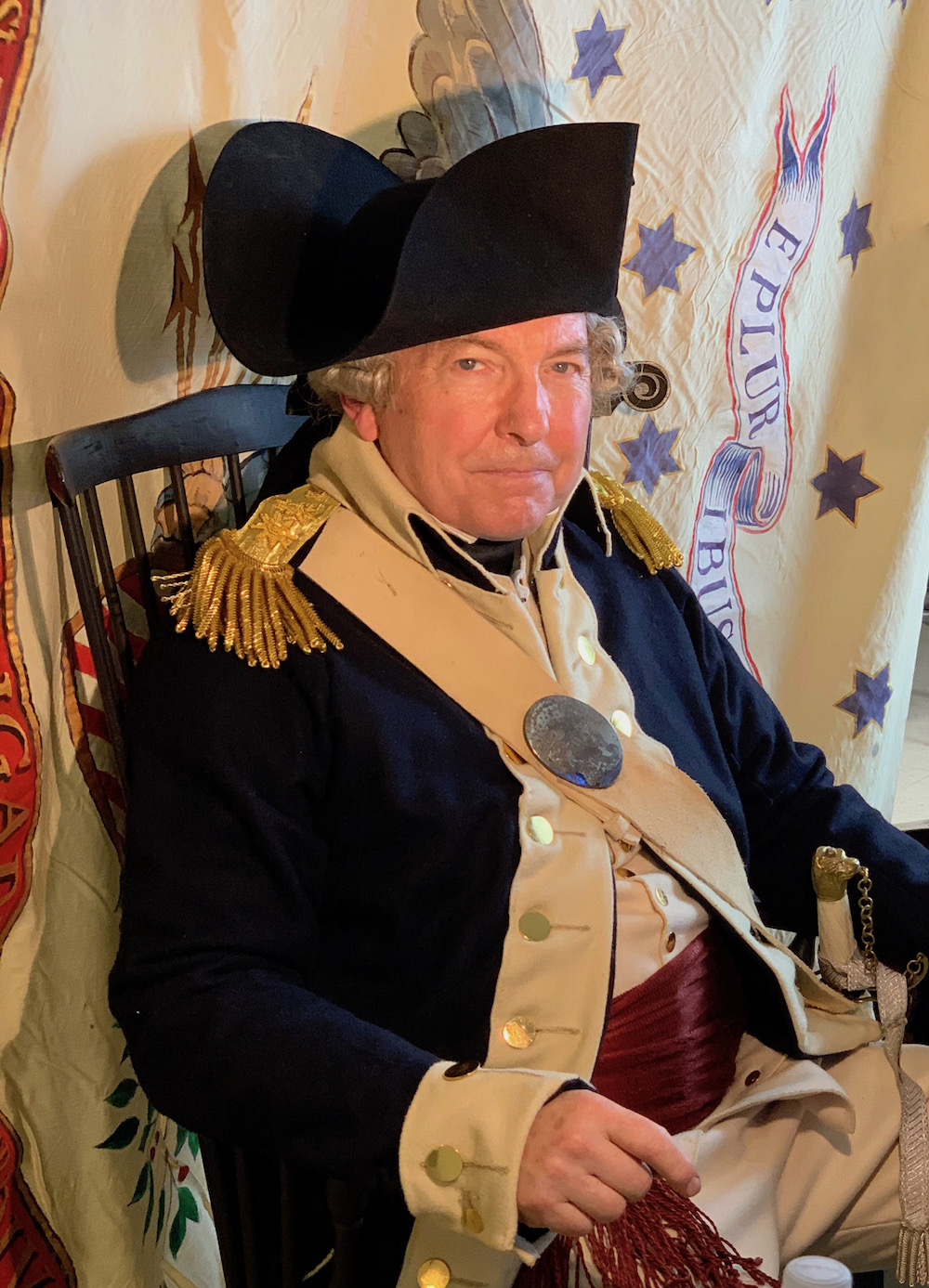
With America’s 250th anniversary, reenactors have been busier than ever, sharing the stories of those involved in the founding of this country – and those impacted along the way.
Representing pioneers, Native Americans, generals and soldiers, these reenactors don’t just buy clothing online and show up for an event. For many, these living history presentations are the result of years of continually updating research, assembling attire and accessories, and honing skills in order to accurately portray a person or a culture in a way that’s engaging, educational and respectful.
The Anthony Wayne Free Press caught up with a few of these reenactors ahead of two local events – the Saturday, July 11 Twilight on the Battlefield and the Tuesday, July 14 for Kids Dig History Day – which will feature living history presentations.
Joel E. Burg
“This year has been especially rewarding to share information pertaining to our 250th celebration,” said Joel E. Burg, who on July 11 will portray Antoine Lasalle, a French fur trader and member of the Volunteer Companies of Refugees, and fought with the Native Confederacy at the Battle of Fallen Timbers.
Growing up, his family vacations always included visits to historic sites. In the years since, he has participated in encampments, reenactments and historical presentations, representing men from the 1790s to the 1970s Vietnam era.
“Ohio is rich in history, and the Ohio territory played an important role in our national identity, he said. “History matters! We need to know our own, our local and national history to understand current issues and how they may affect the future.”
Taylor Moyer
Taylor Moyer, a member of the Black Swamp Intertribal Foundation, will dress in traditional regalia to share the history of Native people during the Northwest Ohio Indian Wars of 1790-1796 during both events.
“Native Americans do not believe in portraying ancestors,” said Moyer, who instead of focusing on one person, works to reflect the experiences of the Natives living in the Maumee River Valley.
His path to becoming a reenactor or living history representative started in 2003, when as a junior historian with the Henry County Historical Society (HCHS), he dressed for an Ohio bicentennial event.
“I was there with my two friends in the most unauthentic, worst-researched clothing you could have imagined,” he laughed, adding that the HCHS at the time didn’t have any reenactors or historians to guide him.
Michael McMaster, who was with the Wood County Historical Society at the time, was at the event and invited Moyer to come to Fort Meigs for a Memorial Day reenactment. With guidance from McMaster, and then Cherokee John Baer, Moyer gained the knowledge and skills to share the stories of the earliest settlers of the Ohio River Valley.
“John Baer was my mentor, guide and compass when it came to the work I do. I always carried the torch to tell the story,” said Moyer, who said he’s always known his own family’s history, which includes ancestors who took part in the American Revolution and Civil War.
With the 250th anniversary, he and the members of his group have focused more heavily on the Native American participation in the Revolutionary War and the period of the 1790s to 1812. Some are Native Americans and some are not, but all are focused on educating the public.
“We refer to ourselves as a traveling, living history exhibit,” he said. “To do the work right, to go out in the heat in wool clothing and part from family, you’ve got to love it.”
The reasons for getting into reenactments are as varied as the people, he said. Some like to camp, or the culture. Some are museum professionals, educators or fine artisans. Moyer teaches history and senior human cultural studies classes at Toledo School for the Arts, including world religions. Over the years, many of his students have come out to reenact with him; others have gone on to earn master’s degrees in history and work on Native American reservations or in museums.
Like many reenactors, Moyer sees what he does as a lifestyle and a continuation of his passion for history. At home, he’s growing and cultivating crops that date back to the first Native American people: corn, sunflowers, squash and beans.
“I’m an unwavering advocate for public history. A fierce advocate for the earliest stories of the early Ohio River Valley and the historic sites of Fort Miamis, Fallen Timbers and lesser known sites,” he said. “I have a great emotional connection to these places that’s hard to articulate. “
As he prepares himself for the Twilight on the Battlefield, Moyer knows he’ll think about what a Native Confederation member must have thought and felt as he prepared for the Battle of Fallen Timbers.
“I have twins and a five-year-old, a wife and sisters-in-law. What must it feel like to know I might not come back from this? I try to be incredibly respectful and advocate for all cultures and people,” he said.
Now 37, Moyer said he’s seen audience questions change in the years since that Ohio Bicentennial event. It used to be the questions were simple: What did they eat? What is that bow and arrow made of? What were the tribes? Now many in the audience are well-read, and he might get specific questions about the Northwest Ordinance and how it impacts life today, for example.
When he hears an audience member say, “I learned more today from you than I ever did in history class,” Moyer said he knows he’s made an impact.
Jan Lowe
Jan Lowe portrays Frances Slocum, who was a Quaker living in Pennsylvania when she was taken and adopted by the Lenape, and later the Miami tribe. Slocum chose to remain among the Miami throughout her life. (Courtesy photo)
During the 225th anniversary of the Battle of Fallen Timbers in 2019, Jan Lowe introduced visitors to Frances Slocum (1773-1847), who was taken by the Lenape, or Delaware, when she was five years old. While Slocum wasn’t present at the battle, her story – and way of life – resonates with that time period, Lowe said.
A Quaker, Slocum was living with her family in Wyoming Valley, Penn. when she was taken and adopted by a childless couple. She later joined the Miami tribe and given the name Maconaquah, or “young bear.” She married Shepoconah, a Miami chief, and they had four children, including two daughters who lived to adulthood. Her Quaker family found her in 1838, but Slocum chose to remain in Indiana.
Slocum probably had become too adjusted to life as a Native woman, enjoying much more freedom than other women at the time, Lowe said. Native women owned the tent, had clan mothers, and advised the men on when to plant or go to war, she said.
Lowe credits Jamie K. Oxendine, a member of the Lumbee Tribe of North Carolina who previously taught Native American studies at several universities, with giving her insight into the Native ways of gathering, hunting and preparing foods.
As she depicts Slocum, Lowe talks about the foods, the customs and the materials. To make her clothes, Lowe uses natural fibers like cotton, linen or wool, and dyes them with sumac, goldenrod, acorn, walnuts and even elderberries. She makes her own moccasins and leggings, tanning them in a process that includes brain or bark. She’s currently making a pair of moccasins with moose hide.
“I talk about the customs that I’ve learned from different Native people,” she said. “I’m white, but adopted by the Eastern Woodlands people – the people of the woods.”
Over the years, she’s gone to heritage days, encampments and powwows where she cooks over an open fire and sometimes participates in competitions. In some events, she even shoots a .62-caliber smooth-bore flintlock.
“I love to cook over an open fire. I’ve always loved being out in nature. My dad was a scoutmaster and my mom a Brownie leader, so I like camping, fishing and canoeing,” she said.
In the process, she’s learned a few phrases in the Wyandotte Shawnee language, including how to say “Come here, friend.”
“I love reenacting, because I can share what I love about the Native people,” she said. “And I meet people from all over.”
When she isn’t portraying Slocum, Lowe lives in a similar way – cooking all natural foods in cast iron, growing plants to use for dyes, and spending a lot of time outdoors.
Craig Fisher
Craig Fisher, who portrayed Gen. Anthony Wayne for a History Channel movie in 2000, will return as the general for the July 11 Twilight at the Battlefield event. (AWFP photo by Karen Gerhardinger)
When Craig Fisher was growing up, he knew that his ancestors were among the original settlers in Henry and Wood counties, but he was “fairly clueless” about what happened in the Maumee River Valley. After years of reenacting, including portraying Gen. Anthony Wayne, he’s gained a broad understanding of life in the area before the War of 1812.
Fisher’s first involvement in reenacting was for the 125th anniversary of the Civil War.
“We took great pride in researching what they wore in different regiments,” he said, noting that he and fellow reenactors passed around reproduction photographs of soldiers like they were baseball cards. By looking at photos, letters and other documents, they were able to better understand a soldier’s life as the Civil War progressed.
“They would start out fully equipped and, after marching hundreds of thousands of miles through the South, they would shed that stuff,” he said.
In 1976, Fisher headed to France with a group that toured France as Revolutionary War soldiers returning to commemorate the 200th anniversary of the signing of the Declaration of Independence. This was a way to thank the French, who heavily backed the war financially and spiritually, Fisher said.
In the late 1990s, Fisher was doing an interpretation of Rev. David Zeisberger, a Moravian clergyman ministering to the Lenape in what is now the restored Schoenbrunn site in eastern Ohio, when he was approached by film director Gary Foreman. He wanted Fisher to be Gen. Anthony Wayne in a movie for the History Channel. Fisher agreed, with the caveat that he wanted to do his own research. The show first aired on the History Channel in 2000, and Fisher was later tapped to play the role of George Armistead, the commander of Fort McHenry during a bombardment by the British in 1813, for another History Channel movie.
To portray Wayne, Fisher had an East Coast specialist create a 1790s hat, but the rest of the outfit he made himself, using a machine to sew anything that wasn’t visible and hand-sewing the rest.
“There’s a lot of science behind the hand-stitched garment and buttonholes,” he said, explaining that he sometimes uses 12 to 16 stitches per inch when making or repairing clothing.
Reenactors not only play the part in dress, but get close to what Fisher considers a form of acting. It’s forced him to test his limits as well, including riding on horseback.
“I am not a horse rider. You have to have a horse that feels good about having you on top of him, and doesn’t react to an explosion around its ears.”
During a Civil War reenactment, while carrying a sword, Fisher was heading toward the horse at full gallop.
“I pulled the reins and the horse reared up. The audience thought it was great. I was terrified – I didn’t think it was going to stop,” he said.
One of the aspects Fisher loves about reenactments is the opportunity to interact with the audience, as opposed to acting on a stage. As a fine artist who spends a lot of time alone, making etchings and original prints in his studio, being around people is a nice break.
After portraying Wayne this weekend, he’ll also be participating in the 250th program at the Navarre-Anderson Trading Post in Monroe, Mich. In August, he’ll travel to Sturbridge Village in Massachusetts to represent a civilian soldier who was loyal to the British during the American Revolution’s Battle of White Plains.
On Saturday, July 11, the Fallen Timbers Battlefield Commission will host Twilight on the Battlefield from 6 to 9 p.m. at Fallen Timbers Metropark, 4949 N. Jerome Rd. Participating reenactors include: Taylor Moyer, Abigail Simmerson, Craig Fisher, Xavier Allen, Joel Burg, Jackie Willman, Justin Kaiser and Jan Lowe. Tickets are available at watervillehistory.org.
On Tuesday, July 14 from 5:30 to 8 p.m. the Anthony Wayne Area Arts Commission, Waterville Historical Society and City of Waterville will host a special Eats and Beats Food Truck Tuesday with Kids Dig History activities for the whole family at Conrad Park, 798 Michigan Ave. in Waterville. Participating reenactors include Bill Grimes as John Chapman (Johnny Appleseed), Jim Conrad as Waterville founder John Pray, and Abigail Simmerson and Taylor Moyer as Native people during the Northwest Ohio Indian Wars from 1790-1796.
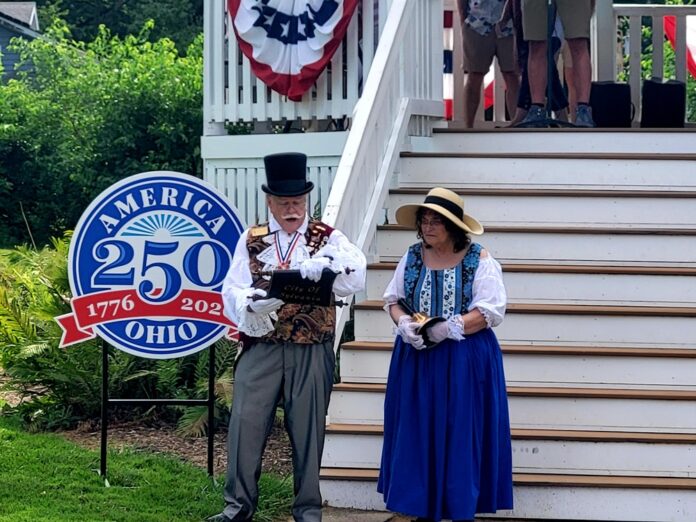
Sylvania Town Crier Mike Lieber reads an opening statement in front of the Gazebo in Burnham Park while Roz Carpenter stands beside him. (TFP photo by Steven Bieber)
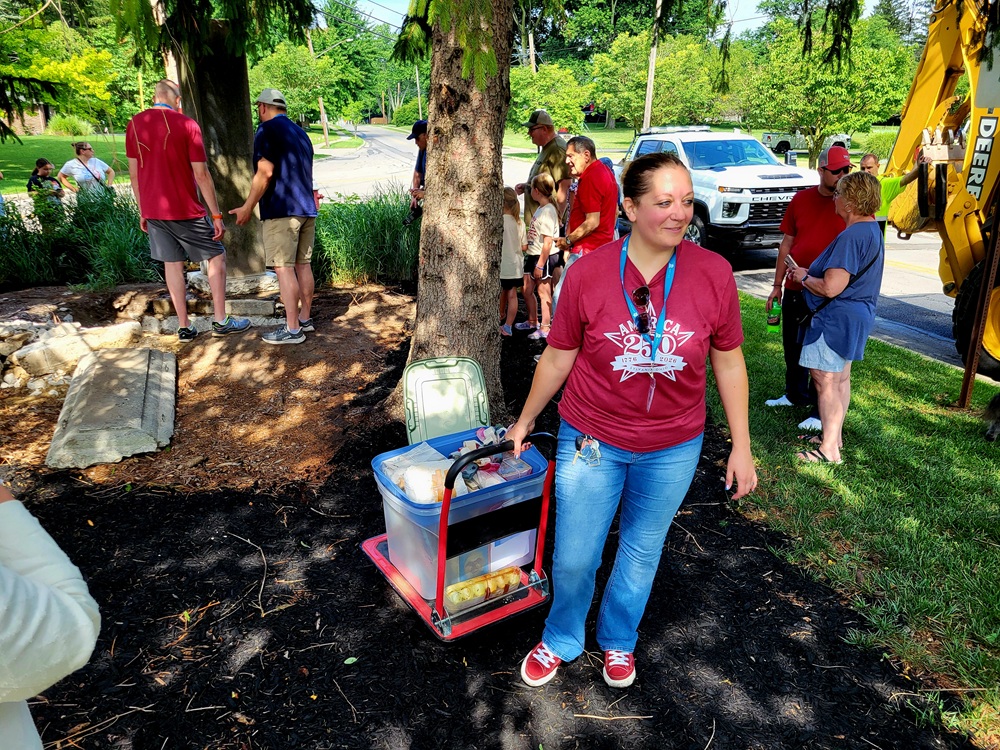
SYLVANIA – On July 4, hundreds of current and former residents of Sylvania gathered in Burnham Park for the Bicentennial Homecoming Picnic and Time Capsule Unveiling. Sylvania alumni traveled from as far away as Arizona to attend. Heritage Sylvania spearheaded the event with support from the Sylvania Recreation District, the City of Sylvania, and others. The capsule was originally buried on July 4, 1976.
A reading of the Declaration of Independence in the park’s gazebo preceded the picnic. After the reading, it was time to dig up the capsule. Once it was opened, items such as yearbooks, newspapers, books, and other memorabilia were removed and put on display.
Contents inside the time capsule at the intersection of Maplewood Avenue and Erie Street. (TFP photo by Steven Bieber)
Samantha Ayres, executive director of Heritage Sylvania, talked about the interest in and importance of reflecting on the past.
“It’s fun to see where we’ve been to do that comparison,” she said. “There’s a lot, I think, to learn. Of course, if you were there and you put things in the time capsule, you’ve seen that change in life.”
She emphasized, “You have to know your history or else you repeat it. I say that over and over. You got to learn from our past mistakes and grow from it. It’s very important to know our history.”
Ayres also believes it is important to preserve the stories about Sylvania. She noted that it was one of the first towns to receive a zip code and was the site of the first robbery committed by Charles “Pretty Boy” Floyd.
She said that one of the biggest attractions of the event is the desire to come together. She noted that since the pandemic, some people have been more inclined to stay home, but this gives everyone a chance to gather for a picnic and forget about the world’s current events.
Gayleen Gindy, Ayres’ mother, has written 13 books about Sylvania’s history, including an eight-part series called Sylvania, Lucas County, Ohio: From Footpaths to Expressways and Beyond. She served on the board of Heritage Sylvania for many years before retiring. She now volunteers by managing Sylvania’s archives.
Samantha Ayres hauling contents from the time capsule to Burnham Park. (TFP photo by Steven Bieber)
Gindy attended the bicentennial event 50 years ago when the first time capsule was buried. At the time, she contributed a decorative bicentennial glass that read “1776 to 1976.” This year, she plans to contribute her most recent book, A Sylvania Family’s Tragedy: The Murder of Alta Miller. The book details a murder that took place in 1935, and she wanted future generations to remember it.
“I published it this year, and it’s a murder that was very much forgotten over the years, and it will probably be forgotten again. 50 years from now, they’ll get that book, and people will remember it again.”
The time capsule is located at the intersection of Maplewood Avenue and Erie Street. Gindy said the location was chosen because the property was owned by the city, and organizers wanted a place where people would be able to see the capsule.
She hopes that many of the young people who attended the event will return in 50 years for the next time capsule opening.
Gindy also shared what has changed about Sylvania over the last 50 years.
“Everything has changed. We’ve torn down so many historic buildings. We’ve lost so many things, the historic things in Sylvania, but a lot of new buildings have replaced them.”
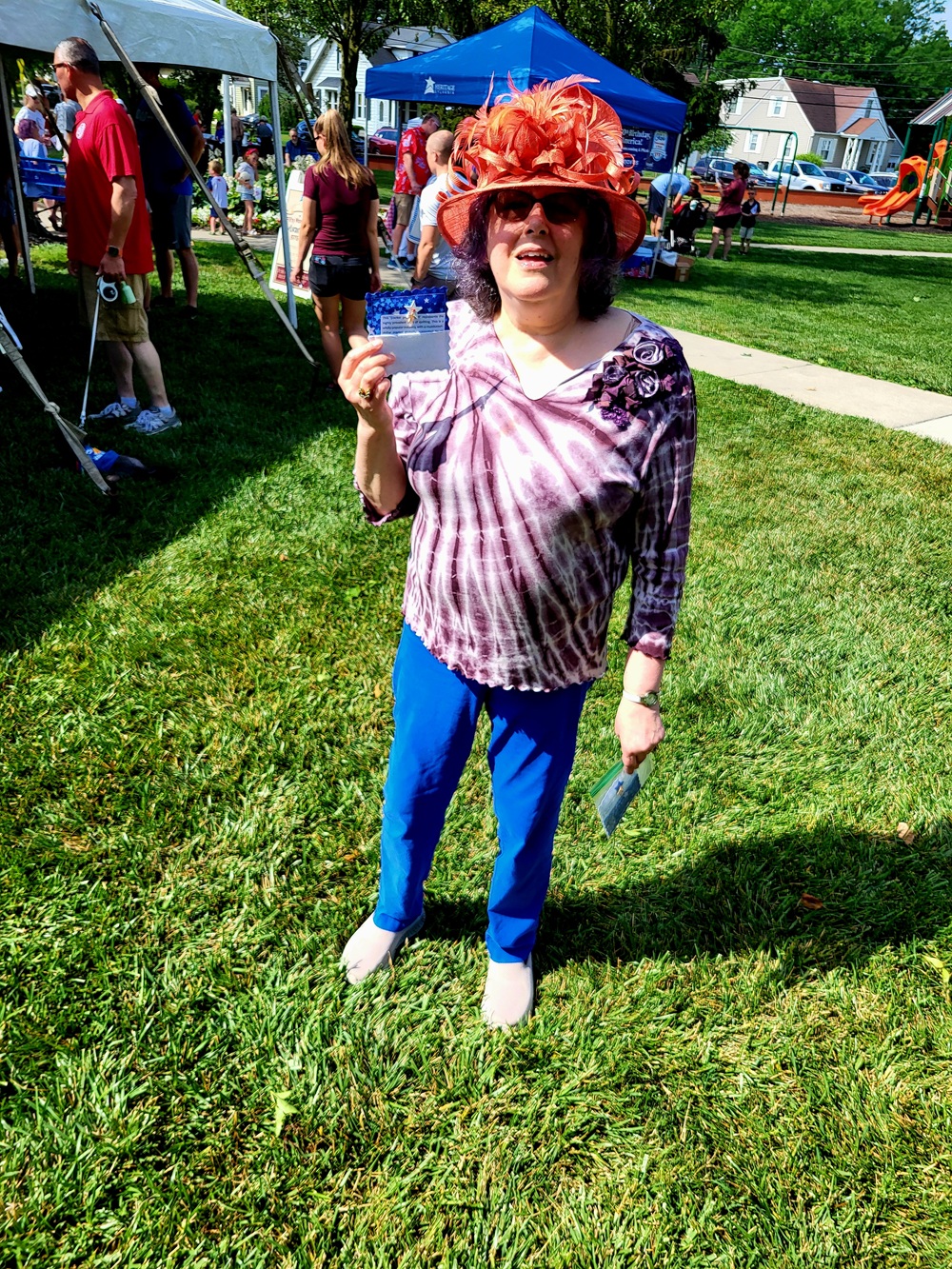
Shelia Painter holding her Pocket Prayer Quilts to register for the next time capsule. (TFP photo by Steven Bieber)
One of the attendees was Sheila Painter, a 73-year-old quilter and storyteller who has called Sylvania home since 1975. She said she has made more than 1,100 quilts and has donated almost all of them to charity.
Since a regular-sized quilt is too large for the time capsule, she brought small pocket prayer quilts created by Quilts of Compassion, a nonprofit organization in Toledo that makes disaster-relief and comfort quilts. The pocket quilts have a message attached stressing the importance of the quilting industry and expressing the hope that it will still be thriving 50 years from now.
“Quilting is fabulous, and we need to keep it alive. To cut up fabric and sew it back together into something warm and cuddly. It’s a wonderful thing.”
While the focus of the picnic was opening the time capsule, Sylvania plans to fill it with new items and rebury it. The city plans to refill the capsule sometime this fall and reopen it in 2076.
For those who missed the opening of the time capsule, the contents will be on display at the Cookie Kuhlman House, 5717 Main St., in downtown Sylvania, from July 11 through Sept. 13.
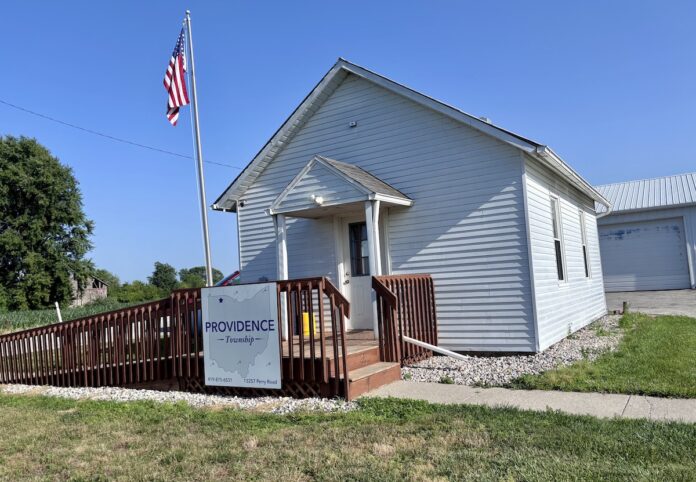
Providence Township Trustees discussed data center regulations during their July 1 meeting. (AWFP photo by Karen Gerhardinger)
PROVIDENCE TOWNSHIP – After the Lucas County Planning Commission (LCPC) and staff refrained from making a recommendation on Waterville Township’s proposed zoning text amendments for data centers – including the addition of an M-3 zoning classification – Providence Township is looking at a variety of options, Solicitor David Chamberlain told trustees during their July 1 meeting.
Chamberlain said the plan won’t follow the 67-page proposal that Waterville Township submitted to the LCPC, which serves as a recommending body.
Lucas County Prosecuting Attorney John Borell and Senior Planner Molly Maguire were among those who recommended that LCPC delay any recommendation on Waterville Township’s proposal, due to several concerns. Both consulted with Chamberlain last week about options for Providence Township.
Borell suggests using a conditional use permit (CUP), which is what is currently in place for both Monclova and Waterville townships.
“Generally, Ohio law does not permit including conditions on requests for zoning changes. A zoning change allows the property owner to use the property for any permitted use in that zoning classification,” Borell explained. “An applicant for a zoning change does not have to propose a specific project as part of the application process. Furthermore, when you look at what is being done in other areas, the conditional use permit is what is being used.
“Based on the above, it was my recommendation that the trustees retain the authority to rezoning property to M-3 and that the campus-type developments be a conditional use within the M-3 classification. The conditional use allows the BZA (Board of Zoning Appeals) to impose any reasonable requirement as a condition of approval.”
Maguire said she agrees with creating an M-3 industrial zoning classification for anything that requires extensive utilities and new infrastructure. The text amendment could include design criteria for M-3 uses that include setbacks, buffers, landscaping, noise limitations and more.
With a zone change, mailed public notices and meetings would be required, along with posted notices on the site. If the zoning is approved, a site plan for new construction would be submitted to the township and sent to the county plan commission – which would have those drawings reviewed by county agencies for comments.
With a Conditional Use Permit, the review is specific for the use and a site plan may or may not be required for the BZA to review. She also pointed out that smaller townships with part-time zoning inspectors and no staff to assist make it a challenge to enforce the conditions in these permits.
Any text amendment – whether to add M-3 zoning or required a CUP – would only apply to the zoned areas of the township. Large portions of Providence Township are un-zoned.
“We have no authority, as far as zoning issues, in the un-zoned area,” Chamberlain confirmed. “There is no zoning to change, so M-3 or any other category does not apply. If a data center decides to go in the un-zoned area – or a junk yard or a truck stop – we have no say in that.”
Maguire confirmed that the un-zoned portion of the township falls under the county health department and county engineer for well, septic and access.
“The un-zoned portion does not have any control or oversight on new uses,” Maguire said.
Chamberlain said that getting the un-zoned area zone is, and always has been, something that trustees have wanted the citizens in those areas to push for, but that he believes that will be “a hard hill to climb.”
Trustees discussed options for what kind of fee to charge an applicant seeking to place a large, campus-style data center or industrial facility in the township. That fee needs to be reasonable and apply to everyone equally – not single out data centers, they agreed.
“If they want to come, then it’s going to come. All we can do is the best we can to protect the township. I wouldn’t go looking for a fight with them,” Chamberlain said of large developers.
Chamberlain said he would continue to work with Maguire to come up with a proposal to bring back to the trustees.
During the meeting, the board also:
-Heard Road Superintendent Kevin Keifer say that he would need to cut back corn that was planted in the right of way at S.R. 295 and Perry Road, as he’s done every year, in order to maintain a proper line of sight.
-Approved a contract with the Ohio Plan for insurance.
-Learned that work on repaving Patton Road will begin after July 13. Trustees agreed to speak with the Lucas County Engineer and Gerken Paving about how to level out a bump in the road where it crosses Yawberg.
-Heard that construction of a roundabout at Providence-Neapolis-Swanton and Archbold-Whitehouse roads will begin later than expected because delays to relocating utilities for roundabouts in Monclova Township have pushed Providence Township’s roundabout utility prep a month behind.
-Heard Keifer say that a sinkhole in front of Whalen’s was fixed. In the process, he discovered a 12-inch tile that is broken. The land owner and township are looking at splitting the cost of the tile work.
-Heard that Keifer got a call from the state fire marshal about the township’s gas pumps being installed without a permit. The county is now involved, and Keifer is waiting to hear back. He had sought bids for having the work redone but has not heard back from the selected bidder.
-Listened to Fire Chief Rick Triggs say that the department is sponsoring two cadets, one who is 17 and the other 19, who would like to ride in a utility vehicle to observe on scenes other than injury accidents. Trustees advised him to work with the insurance agent to see what kind of waivers or restrictions should be put in place.
-Learned that Kendall Communications is looking for property to install a new cell tower within a one-mile radius of Neapolis.
Some of the dishes offered at Zane's Lebanese Grill & Cafe include hummus, baklava, Zataar pita chips, a specialty supreme bowl, and grape leaves. Most of the menu items are made in-house daily. A coffee shop is offered at the Sylvania and Bowling Green locations. (Photo by Mark Griffin)
PERRYSBURG – Starting up and maintaining a small business is difficult.
Approximately 20-22 percent of new small businesses fail within their very first year. Approximately 30-33 percent fail within the second year, and roughly half of all new small businesses have permanently closed their doors within five years.
One local Mediterranean-style family empire seems to be beating the odds.
On June 29, the father/sons team at Zane’s Lebanese Grill signed a lease to open their sixth local location, to be located in Perrysburg.
“We tried to get into Perrysburg the last three years and it never worked out,” said Ali Ismail, 34, co-owner of Zane’s Lebanese Grill and Zane’s Lebanese Grill & Cafe along with his father, Zane Ismail, 67, and brothers MuhamedIsmail, 36, and JaaferIsmail, 30.
The three brothers are all graduates of Ottawa Hills High School.
Muhamed earned a bachelor’s degree in exercise science from the University of Toledo. Ali earned a bachelor’s degree in exercise science and a master’s degree in public health and epidemiology from UToledo. Jaafer earned a bachelor’s degree in nursing from Lourdes University.
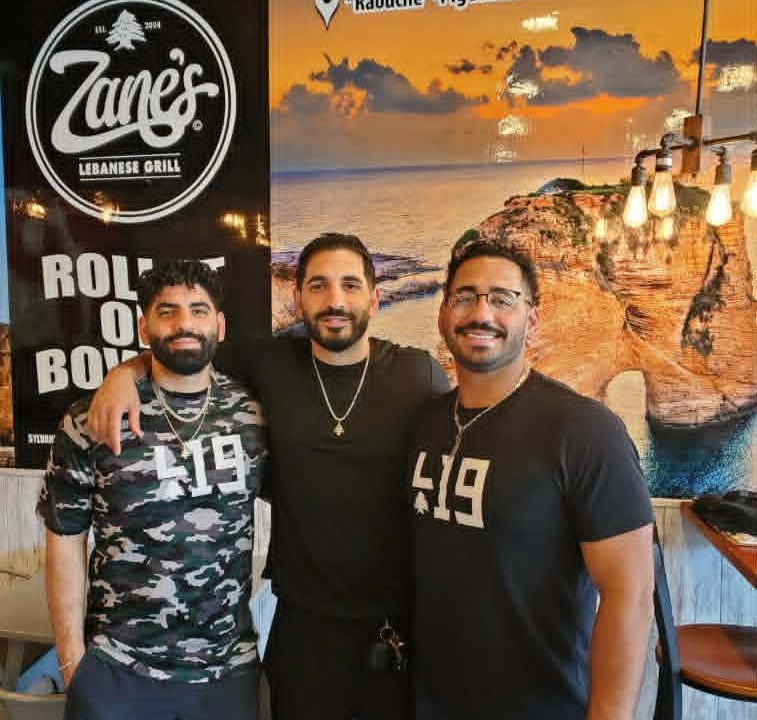
Zane’s Lebanese Grill & Cafe was started by Zane Ismail and is now primarily run by his three sons, left to right, Ali, Muhamed and Jaafer. All three graduated from Ottawa Hills High School. Zane’s Lebanese Grill & Cafe has locations in Sylvania, Lambertville, Mich., Toledo, Maumee and Bowling Green. A sixth location is scheduled to open in Perrysburg in 2027. (TFP photo by Mark Griffin)
Zane’s Lebanese Grill also has locations in Toledo, Sylvania, Maumee, Bowling Green, and Lambertville, Mich. The Perrysburg location will be located at 26567 N. Dixie Highway, Suite 133, and is scheduled to open in 2027.
Zane, who emigrated to the United States from Lebanon when he was 16, started Sharif’s Restaurant on Monroe Street in 1976 and sold it in 1990. He later opened Pita Sub on Main Street in Sylvania.
Pita Sub relocated to the former Jet’s Pizza at 4900 N. McCord Rd., in Sylvania in 2017. Pita Sub Express, as the Sylvania location was called, was renamed to Zane’s after the family convinced their father to allow them to use his name.
Zane’s Lebanese Grill & Cafe, which opened in Sylvania in 2023, and its sister locations have a build-your-own-roll-or-bowl concept. The business slogan is “roll it or bowl it,” and everything is made from scratch using mostly Zane Ismail’s recipes.
All of the ingredients are made fresh daily.
Items on the menu can be made in a bowl or rolled into a wrap.
The Supreme Bowl, a popular selection on the menu, consists of customers starting with a base of rice, lettuce or hummus and topped with two proteins or double of one protein. Options include chicken, gyro, beef, falafel, beef shawarma, kafta, BBQ chicken or a grilled veggie kabob.
All of the meat is 100 percent zabiha halal. Bowls, including the Original Bowl and Hummus Bowl, can be made gluten free or dairy free.
Zane’s homemade sauces include garlic sauce, cucumber sauce, BBQ sauce, tahini sauce, smoked eggplant hummus, and Lebanese salsa.
All three brothers are big fans of their father, and they appreciate the risks he took opening his restaurants.
“My dad is very intuitive,” Ali said. “Sometimes that guy can tell the future. Taking that and learning from all our past experiences is how we determine our next steps. His input will always be there and will be respected. Us three [sons] have his ways ingrained in us. He knows who he raised.”
Jaafer said, “He is loving, caring and very passionate about everything. He has a willingness to be creative and understated. Putting love in the food and the [dining] experience defines his success.”
Muhamed added the best way he can describe his father is as a “genuine, unique, giving human being.”
Zane’s Lebanese Grill also offers a Zane’s Cafe at its Sylvania and Bowling Green locations. The Cafes feature hot and cold drinks, including espresso, Turkish coffee, organic coffee, lattes and the “very popular” Adani chai, an organic tea with milk, cardamom and spices.
“We made 300 batches of chai before we found the right recipe,” Jaafer said. “Everything we do about making our chai is intentional. Our coffees, we have everything ranging from organic black coffee to peach coffee to pistachio coffee to Dubai chocolate coffee.”
Both Cafe locations are open on Sundays, but the grills are closed – for now. Current Zane’s hours are Monday through Saturday from 11 a.m. to 9 p.m., but the Zane’s team said a plan to open all six locations on Sundays is “in the works.”
“Customers have been asking,” Ali said.
Sweets like baklava, rice pudding, cheesecake, baklava cheesecake, and cookies are some of the items available daily.
Ali said the Zane’s team has always intended its menu to reflect “good health” and offer sizeable portions.
“It’s a lot of food,” Ali said. “You get a lot at a fair price and you get what you pay for. Everything is made from scratch. You can come in here and be very relaxed. We are such a melting pot. People from all groups have reasons to come here.
“People come here for business meetings or for a date or after the gym,” he added. “You can see police officers, people in scrubs … You don’t have to be dressed a certain way, so it’s very convenient.”
Zane’s Lebanese Grill & Cafe also offers catering. Visit Zanesgrill.com to learn more.
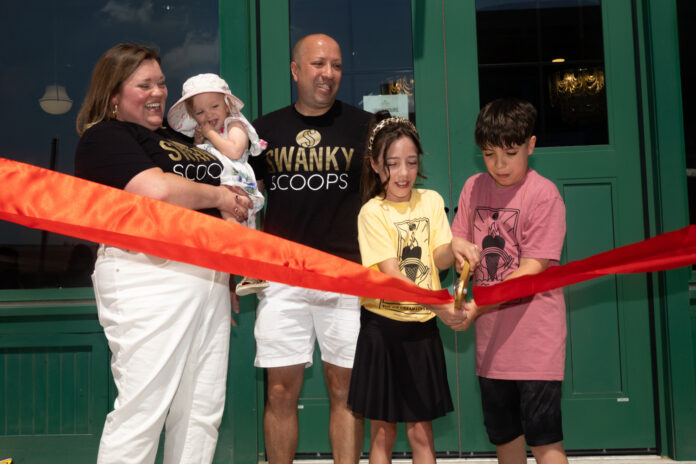
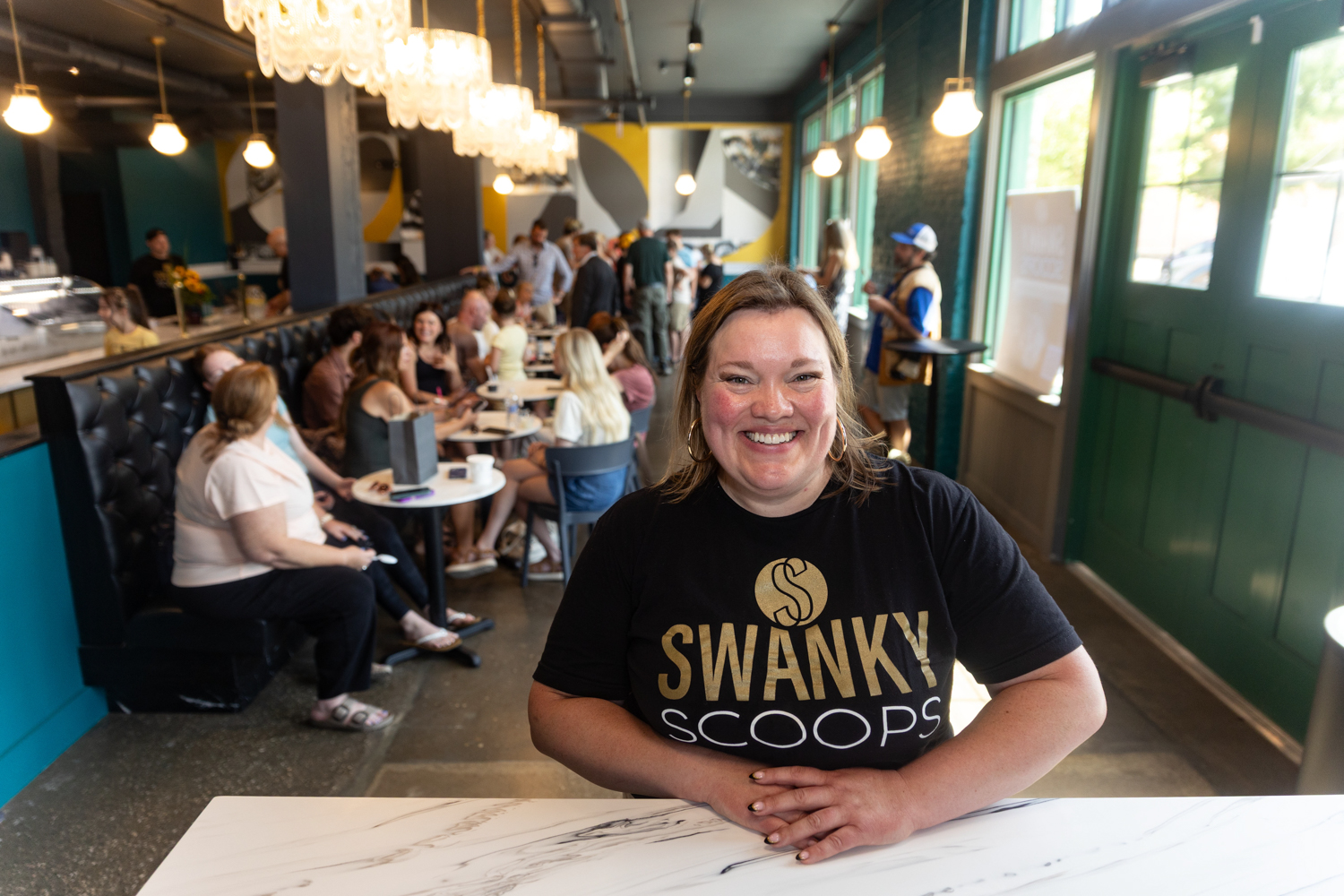
Alissa Vieira, founder of Swanky Scoops, holds her 23-month-old, Gwendolyn Vieira, and celebrates the ribbon cutting to the physical location of Swanky Scoops with her husband, Jay Vieira, and her daughter and son Adelaide and Winston Vieira, (both 9) immediately after the 9-year-olds cut the ribbon during the grand opening for Swanky Scoops at 144 S Huron St. in downtown Toledo on Wednesday, July 1, 2026. (TFP photo by Stephen Zenner)
TOLEDO – Smiles were served during the grand opening of Swanky Scoops artisan ice cream in the warehouse district on last week at 144 S. Huron Street.
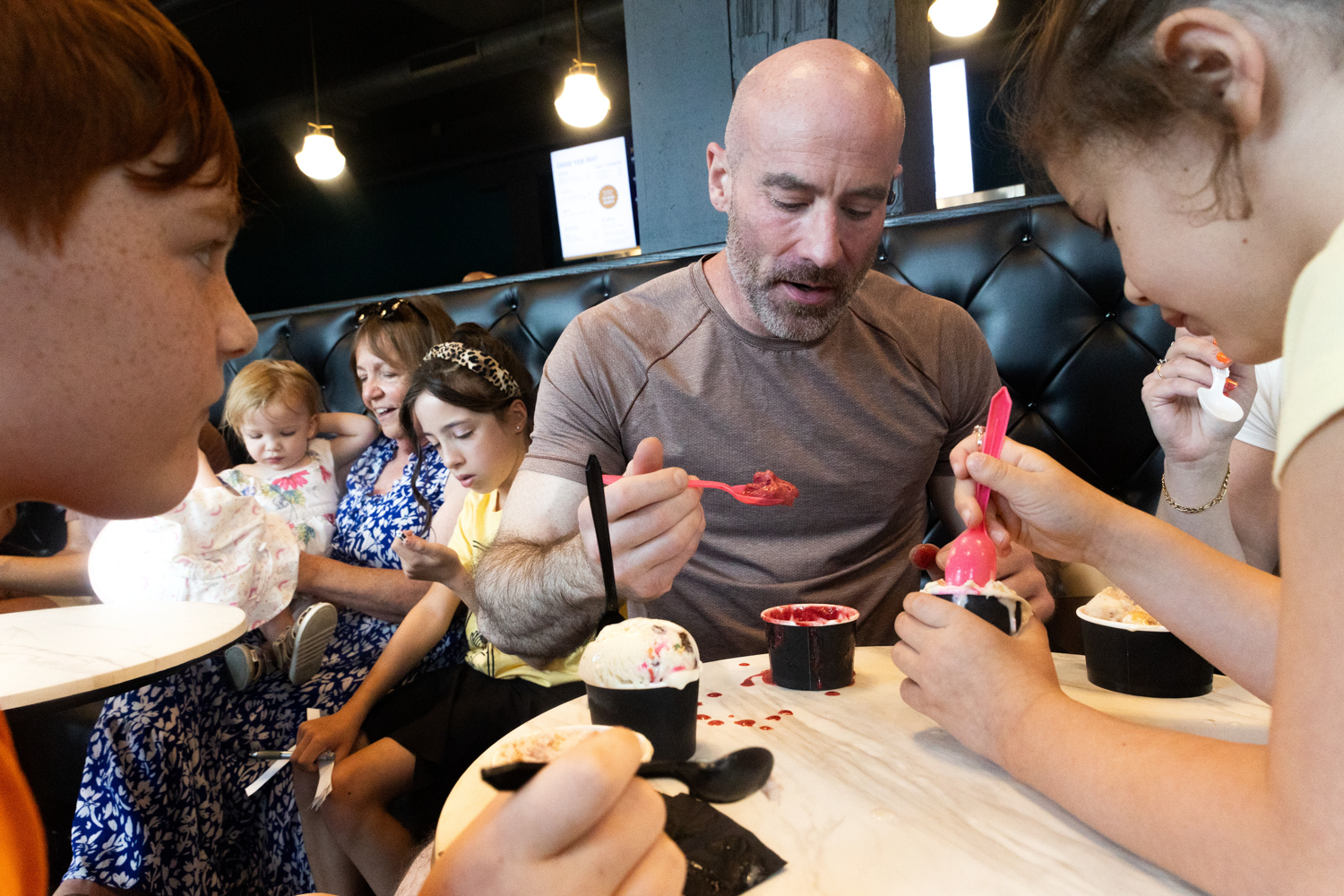
“We’ve been coming since they opened [at the Huron Street location], but I figured coming during the grand opening would be good too,” said Dustin Haskins, who enjoyed the frozen treat with his two children.
Memorial Day weekend was a soft launch for Warehouse District location, but now, a few months on, with i’s dotted and t’s crossed, Swanky Scoops cut the proverbial red-ribbon in front of a crowd of patrons on one of the hottest days of the year.
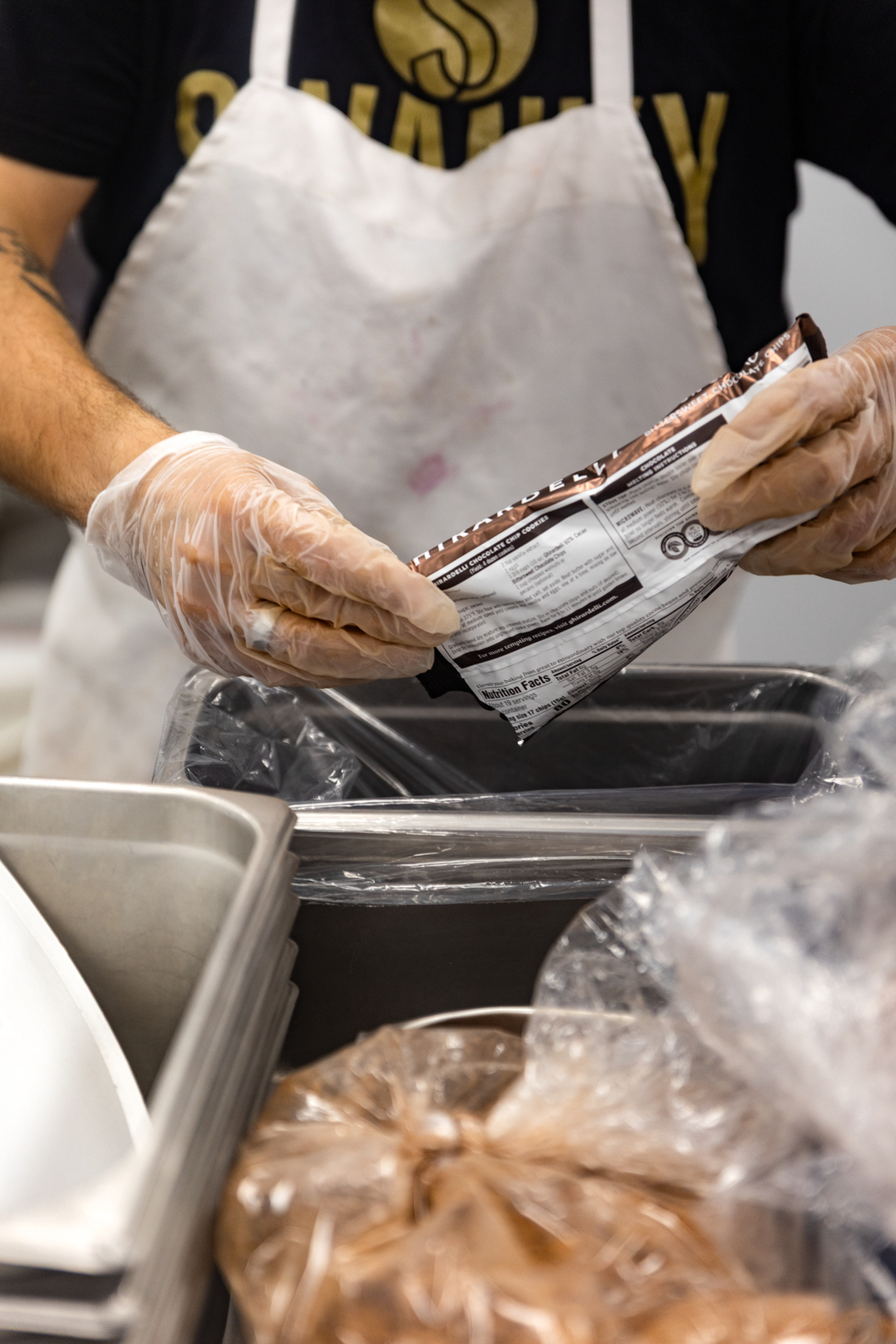
Thomas Craley, back end staff at Swanky Scoops, preps ingredients while making ice cream. (TFP photo by Stephen Zenner)
A smooth treat
Owner Alissa Vieira has sold her ice cream that specializes in “unique and unexpected flavors” to Toledoans for almost half a decade.
“I’ve always loved making ice cream. It’s a fun, creative way to test out different flavor combinations,” Vieira said. “It’s my desert island food, you know. If you could only take one thing with you.”
Wednesday was a milestone, the official celebration for the business’s newest home, near the downtown Toledo’s Farmer’s Market.
Alissa Vieira, founder of Swanky Scoops. (TFP photo by Stephen Zenner)
Swanky Scoops has been successful selling their distinctive take on the tasty treat with a “French style” recipe, meaning the dessert has a custard base with “egg yolks cooked into the milk and cream.” According to Vieira, this process makes for “…rich and creamy ice cream,” which many people at the opening commented on.
“Smooth, bubbly, airy, light and fluffy,” is how Karen Hopkinson of Walbridge described the unique texture to the dessert that made it “fantastic.”
Swanky Scoops has been successful selling their distinctive take on the tasty treat with a “French style” recipe. (TFP photo by Stephen Zenner)
An eight-year-old of few words, Danny LaValley, simply gave a thumbs up to describe the waffle cone he buried his face in.
And maybe one of Vieira’s biggest supporters, blogger, influencer and content-creator, Shana Lee, who held one side of the ribbon during the opening, had only wonderful things to say about the ice-cream stop.
“I’ve been supporting them since the first scoop,” Lee said, as she described enjoying Swanky Scoops over many years. “It was so good, it tasted so fresh, it tasted like real ingredients.”
“They’re making ice cream right now, literally,” she said, emphasizing the freshness, and explained there were employees making ice cream in the back of the store.
The Toledo Free Press verified two back end employees making ice cream during the grand opening event.
“We’re the brains behind the operation,” said Diann Harrison, who was mixing an ice cream base.
David Berryman, front end staff for Swanky Scoops, hands ice cream to Andrea Petersen during the grand opening for Swanky Scoops. (TFP photo by Caleb Parrish)
After that “first scoop” Lee said she was impressed with the quality of the ice cream and the quality of the hospitality. Initially Lee and Vieira were strangers, but after one stop into Swanky Scoops, Lee said Vieira remembered her and her mother’s names.
The ice cream laid the foundation for an organic friendship, “I followed them everywhere,” Lee said.
Dustin Haskins, Lydia Heidtman, Hunter Haskins, 11, Helena Haskins, 6. “We’ve been coming since they opened, but I figured coming during the grand opening would be good too,” Dustin Haskins said. (TFP photo by Stephen Zenner)
Swanky history
Over the past few years, Swanky Scoops has been “everywhere.”
Around the end of 2019, Vieira started seriously considering opening up her own business. “I purchased commercial ice cream equipment in the beginning of 2020,” Vieira said.
Initially, due to the COVID-19 pandemic, she began working out of her home in Oregon, Ohio. “I had my ice cream batch freezer set up in my garage.”
Gaby LaValley, with the Toledo City Paper, eats ice cream with her son Danny LaValley, 8. (TFP photo by Stephen Zenner)
By 2021, Swanky Scoops moved into a shared kitchen with the Original Sub Shop and Deli, and began selling prepackaged ice cream by May of 2021.
Patrons of the Original Sub Shop and Deli could purchase pints or half-pints of Swanky Scoops and had the option between four or five flavors.
But, Vieira said, “Ice cream is best enjoyed in a dipping cabinet, where it’s tempered to the perfect temperature, and we can scoop and serve it for you.” She admitted that the initial run of pints was just to get her product out in front of people.
In 2022, Swanky Scoops started showing up at events, with their mobile cart, “so that we could go into farmer’s markets and festivals, and then also private parties for corporate and social events.”
And by 2023, Vieira moved her business to 10th Street, in downtown Toledo, but the size of the location wasn’t big enough for accommodating customers in-store.
December 2025 is when Vieira signed the lease for the Huron Street location, and in March started a Kickstarter that raised $11,617 towards renovations.
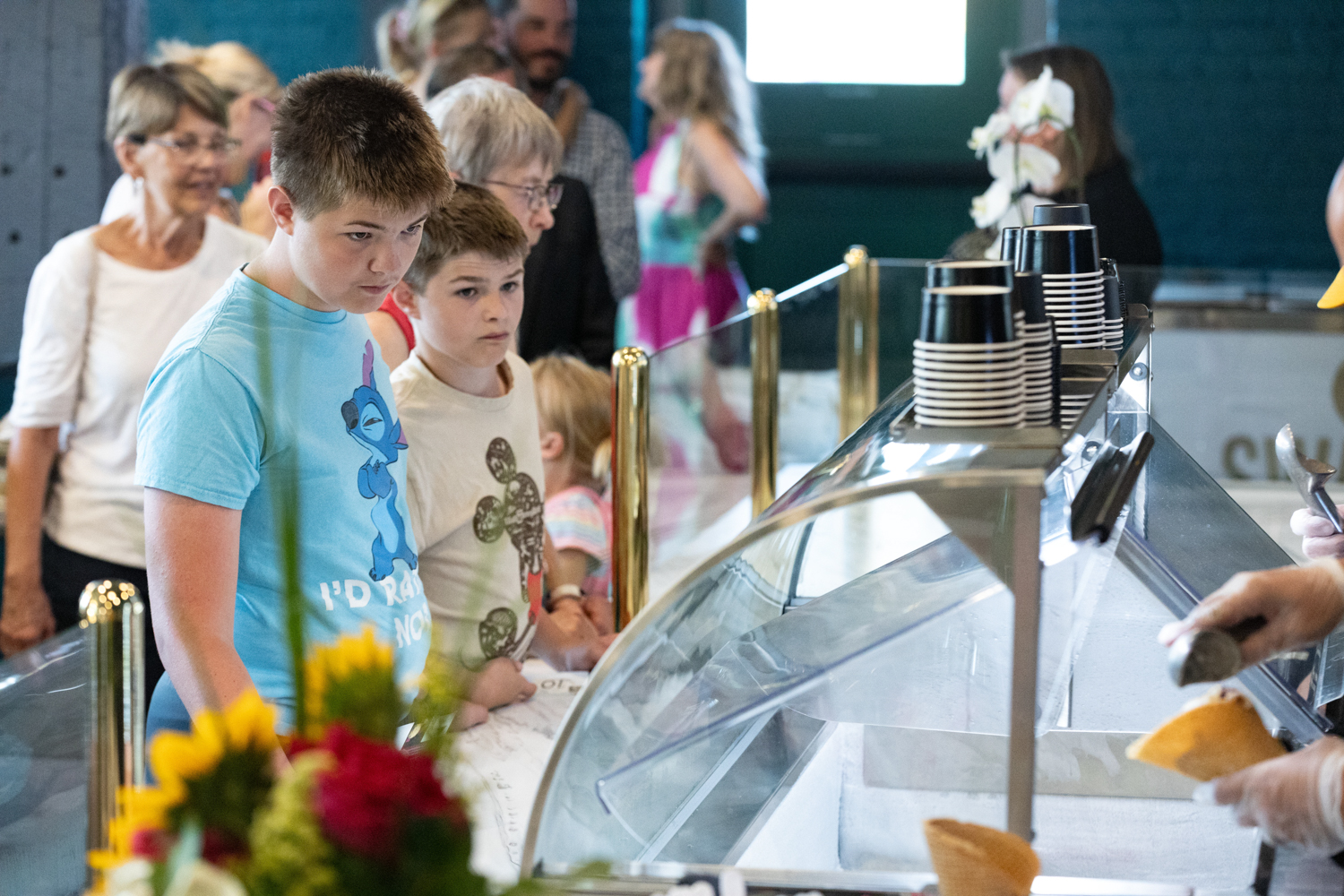
Caleb, 15, and Ryan Kuhlman, 13, of west Toledo, eye ice cream during the grand opening for Swanky Scoops. (TFP photo by Stephen Zenner)
By May 21, the store was open, and on July 1 the business was celebrating.
“It’s exciting to have a new location to welcome more people in,” said Jaymes Mull, front end staff, during the grand opening.
Satisfied customers filled the store that featured a mural by local artist Connor Degnan.
“Our flavors are always rotating, our menu is changing, very frequently, sometimes even every few days,” Vieira said and invited people to check in regularly.
“Ice cream is best enjoyed in a dipping cabinet, where it’s tempered to the perfect temperature, and we can scoop and serve it for you,” said Swanky Scoops owner Alissa Vieira. (TFP photo by Caleb Parrish)
Rabona Casino y sus slots con jackpots para giros épicos
Entré a Rabona Casino con una idea bastante simple: encontrar tragamonedas que no se sintieran iguales después de diez giros. Lo que buscaba no era solamente un premio grande, aunque claro, eso siempre llama la atención, sino una combinación de ritmo, funciones especiales y jackpots que hicieran que cada sesión tuviera algo de expectativa. En mi primera visita me tomé unos minutos para explorar el catálogo en lugar de pulsar directamente el botón de jugar, y creo que fue una buena decisión.
La plataforma de rabona me pareció cómoda para filtrar juegos y descubrir títulos por proveedores, temática o popularidad. Yo suelo fijarme antes en la ficha de una slot que en sus colores o animaciones. Puede sonar un poco obsesivo, pero me ayuda a evitar esa sensación de haber apostado sin entender qué estaba ocurriendo. En especial, reviso el RTP, la volatilidad y la manera concreta en que funciona el jackpot.
Mi primera impresión fue clara: una tragamonedas con jackpot puede ser entretenida, pero sigue siendo un juego de azar. El premio potencial nunca debe confundirse con una garantía.
Mecánicas de jackpots que encontré
No todos los jackpots se comportan igual, y esa diferencia importa más de lo que parece. En algunas tragamonedas el bote es fijo, es decir, ofrece una cantidad predeterminada que se activa mediante una combinación concreta o dentro de una ronda especial. En otras, el jackpot es progresivo y aumenta a medida que se realizan apuestas. Ese segundo formato tiene un atractivo evidente, porque la cifra puede crecer hasta niveles muy llamativos, aunque normalmente también es más difícil de activar.
Probé varias clases de juegos y me di cuenta de que los jackpots locales me resultaban más fáciles de entender. Suelen estar vinculados a una única slot, así que puedo ver con claridad qué símbolos, minijuegos o ruedas necesito alcanzar. Los jackpots de red, en cambio, conectan a muchos jugadores y posiblemente a varios casinos. La cifra suele ser mayor, sí, pero también hay mucha más gente persiguiendo la misma oportunidad.
El detalle de la apuesta mínima
Una cosa que tardé un poco en detectar fue la relación entre el importe apostado y la elegibilidad para ciertos premios. Algunas slots permiten participar en un jackpot con cualquier apuesta, mientras que otras exigen un nivel concreto, una apuesta máxima o la activación de una función adicional. No conviene asumir nada. Una tarde jugué una slot de temática aventurera, acumulé varios símbolos especiales y solo después vi que el premio principal requería una configuración de apuesta distinta. No fue una tragedia, pero sí una lección bastante útil.
Por eso ahora prefiero leer la sección de información antes de girar. Parece un paso pequeño, incluso aburrido, pero me evita interpretar mal lo que veo en pantalla. Las reglas suelen explicar cuándo entra el jackpot, si hay una rueda aleatoria, si depende de símbolos scatter o si se activa en una bonificación.
Tipo de jackpot
Cómo suele activarse
Mi percepción
Fijo
Combinación concreta o función bonus
Más directo de comprender
Progresivo local
Ronda especial, símbolos o evento aleatorio
Buen equilibrio entre expectativa y reglas
Progresivo de red
Evento poco frecuente, a veces aleatorio
Premio enorme, probabilidad más incierta
RTP y volatilidad, dos datos que miro antes de jugar
El RTP, o retorno teórico al jugador, es uno de esos conceptos que se mencionan mucho y se interpretan mal. Cuando una slot indica un RTP del 96%, no quiere decir que vaya a devolver 96 euros por cada 100 apostados en una sesión corta. Es una cifra estadística calculada sobre una cantidad enorme de partidas. Durante veinte, cincuenta o incluso cientos de giros, cualquier cosa puede ocurrir. A mí me sirve como referencia, no como una previsión de resultados.
La volatilidad sí afecta más a la sensación inmediata de juego. Una slot de baja volatilidad suele entregar premios pequeños con más frecuencia, mientras que una de alta volatilidad puede pasar muchos giros sin nada especialmente relevante y, de repente, lanzar una ganancia más notable. Los jackpots suelen aparecer mucho en títulos de volatilidad media-alta o alta, por razones bastante evidentes. El premio máximo necesita espacio dentro de la estructura de pagos.
Para mí, un RTP competitivo no elimina el riesgo. Solo aporta una pieza más para comparar juegos y decidir cuánto tiempo quiero dedicarles.
En la práctica, intento no mezclar dos expectativas distintas. Si quiero una sesión más relajada, me inclino por volatilidad media y apuestas moderadas. Si quiero probar una slot con una función de jackpot más ambiciosa, reduzco el presupuesto y acepto de entrada que la partida puede ser irregular. Esta segunda opción puede ser emocionante, pero no siempre es divertida, depende del día y de la paciencia que tenga.
Funciones especiales que hacen que los giros cambien de ritmo
Las funciones especiales son la parte que más transforma una tragamonedas moderna. Los giros gratis siguen siendo mis favoritos, especialmente cuando incluyen multiplicadores crecientes o símbolos expansivos. Hay algo muy sencillo pero efectivo en ver que una ronda que parecía normal empieza a encadenar premios. No siempre sucede, por supuesto, y ese es precisamente el punto que conviene recordar.
También encontré mecánicas de cascada, donde los símbolos ganadores desaparecen y dejan sitio a otros nuevos, y formatos de compra de bonus en los juegos donde esa opción está permitida. Personalmente, la compra de bonus me genera opiniones mezcladas. Ahorra tiempo, eso es cierto, pero concentra una cantidad considerable en una sola ronda. Prefiero llegar a la función de manera normal, aunque entiendo por qué algunos jugadores quieren saltarse la espera.
Lo que me llamó la atención en las rondas bonus
Durante una sesión corta, una rueda de premios se activó después de reunir tres símbolos scatter. No conseguí el jackpot, ni estuve particularmente cerca, pero la pantalla ofrecía varios niveles de premio y el suspense funcionó bastante bien. Ese tipo de diseño convierte una función breve en un momento memorable. Aun así, procuro no perseguirla después. Si la ronda no aparece dentro del presupuesto que había decidido, cierro el juego y ya está.
Estas son las funciones que normalmente valoro al explorar el catálogo, no porque garanticen nada, sino porque hacen que la experiencia sea menos plana:
Giros gratis con multiplicadores que aumentan durante la ronda.
Símbolos wild expansivos, pegajosos o que se desplazan por los carretes.
Rondas de selección, ruletas y minijuegos vinculados a jackpots.
Cascadas o avalanchas que permiten varias combinaciones en un único giro.
Modos de riesgo, cuando las reglas y el presupuesto permiten usarlos con calma.
La presentación visual también cuenta, aunque intento no darle más importancia de la necesaria. Hay slots muy vistosas con mecánicas simples y otras menos espectaculares que esconden una tabla de pagos interesante. Una música intensa puede hacer que un giro se sienta enorme aunque el resultado sea modesto. Me ha pasado, y por eso a veces bajo un poco el volumen. Es un detalle mínimo, pero cambia mi manera de tomar decisiones.
Cómo elijo una slot antes de hacer un depósito
Antes de jugar con dinero real, suelo aprovechar el modo de demostración cuando está disponible. No sirve para medir si una slot “paga”, porque los resultados siguen siendo aleatorios, pero sí para entender el ritmo, la cuadrícula, las apuestas mínimas y la frecuencia aparente de las animaciones bonus. También reviso los métodos de pago disponibles y las condiciones de posibles promociones. Un bono puede parecer atractivo a primera vista, pero el requisito de apuesta cambia mucho la experiencia, sobre todo si el juego elegido contribuye de manera limitada.
No tengo una fórmula perfecta, y quizá eso sea mejor. Mi rutina es sencilla: defino un importe que puedo perder, elijo una slot por sus reglas antes que por su publicidad y fijo una duración aproximada. Si consigo una ganancia que me deja satisfecho, la retiro o dejo de jugar. Parece evidente al escribirlo, aunque en el momento no siempre resulta tan automático.
Para no improvisar demasiado, me apoyo en unos criterios concretos antes de empezar una partida:
Compruebo el RTP publicado y la volatilidad indicada por el proveedor.
Leo cómo se activa el jackpot y si existe una apuesta mínima obligatoria.
Empiezo con el importe más bajo que me permita conocer el juego sin presión.
Evito aumentar la apuesta solo porque una ronda bonus lleva tiempo sin aparecer.
Reviso límites personales de depósito, tiempo y pérdidas si voy a jugar durante más de unos minutos.
La última regla es probablemente la más importante. Una slot no “debe” una bonificación por llevar muchos giros sin activarla. Cada tirada es independiente dentro de la mecánica del juego. Entenderlo no quita emoción, al menos a mí no me la quita, pero evita que la emoción se convierta en una mala decisión.
Conclusión personal sobre los jackpots y giros épicos
Conclusión: mi experiencia con las slots de Rabona Casino fue más interesante cuando dejé de buscar el gran golpe inmediato y empecé a comparar mecánicas. Los jackpots progresivos aportan esa posibilidad remota que hace que una sesión se sienta distinta, mientras que los giros gratis, multiplicadores y minijuegos añaden ritmo incluso cuando el premio máximo no llega. Para mí, el mejor enfoque es elegir juegos con reglas claras, entender el RTP y la volatilidad, y mantener límites realistas. La emoción funciona mucho mejor cuando no depende de recuperar nada.
Reseñas y valoración final
Mi reseña personal es positiva en cuanto a variedad y navegación. Me resultó fácil pasar de slots más clásicas a títulos con jackpots, filtros y funciones especiales más complejas. Aprecio que pueda revisar la información del juego antes de decidir, porque no todos los jugadores buscan la misma volatilidad ni tienen la misma tolerancia a las sesiones irregulares.
Si tuviera que resumir mi valoración, diría que es una plataforma adecuada para quien disfruta explorando tragamonedas y entiende que los jackpots son una posibilidad, no un objetivo asegurado. Yo volvería a jugar de forma puntual, con un presupuesto definido y algo de curiosidad por probar nuevos bonus. Pero si algún día noto que juego por frustración en vez de por entretenimiento, prefiero cerrar la sesión. Esa, curiosamente, ha sido mi función especial más útil.