Home Blog Page 5

Past and present directors reflect on museum’s evolution

0
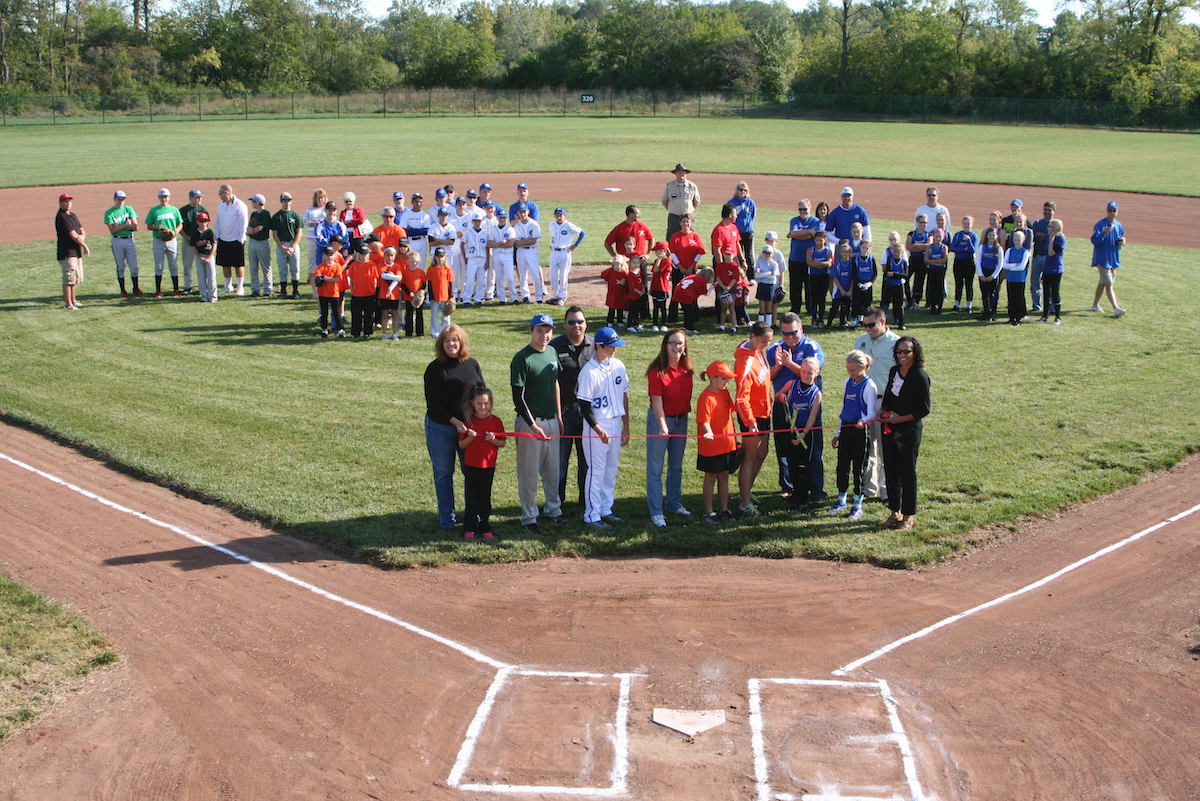
TMA director Adam Levine accepts a proclamation from Toledo Mayor Wade Kapszukiewicz and this year’s Kid Mayor, 10-year-old Jamie Howard of Ella P. Stewart Academy, in honor of the 125th anniversary of the museum. (TFP photo by Laurie Bertke)

TOLEDO — Two important milestones converged at Ohio’s Homecoming & Picnic on July 11, as the Toledo Museum of Art hosted free community festivities in coordination with the America 250-Ohio Commission to mark the nation’s anniversary and 125 years since the institution’s own founding in 1901.

The day brought three museum directors past and present together for a candid conversation moderated by Libbey Inc. CEO and TMA Board President Mike Bauer. While the directors recounted memories from their tenures and discussed the museum’s evolution before a rapt crowd in the GlasSalon, families frolicked outside on the Glass Pavilion lawn playing games, making art, watching historical demonstrations and listening to live music.

Panelists included Adam Levine, the museum’s 11th director since he assumed the role in 2020, and his two predecessors, Brian Kennedy and Don Bacigalupi. Kennedy directed the museum from 2010 to 2019 and Bacigalupi served from 2004 to 2009. 

Brian Kennedy, who directed TMA from 2010 to 2019, speaks during a panel discussion with other directors July 11 in the GlasSalon. (TFP photo by Laurie Bertke)

During his time as director, Kennedy recalled, he liked to say that the museum didn’t happen — it was called into being by its founders, Edward Drummond Libbey and Florence Scott Libbey.

Mrs. Libbey encouraged her husband to establish an art museum for the enrichment of the community, and the couple provided the land, funded much of the iconic construction on campus and donated their own personal art collection to the endeavor. An endowment fund from the Libbeys continues to fund museum operations and the purchase of works of art. 

Kennedy said the Libbeys were people of the Gilded Age who brought the eye in design together with the hand in manufacturing to make something extraordinary. 

He encouraged people to consider what the founders were trying to do when they started the museum, and not to lose that. “They were very, very remarkable people. And they set off this notion of art education, and Toledo is the beneficiary for generations now,” said Kennedy.

All three directors touched repeatedly on the importance of increasing community engagement during their tenures. 

TMA director Adam Levine, left, speaks with past directors Don Bacigalupi and Brian Kennedy before a panel discussion July 11 in the GlasSalon. (TFP photo by Laurie Bertke)

When he first arrived at the museum and began talking with residents, Bacigalupi recalled his surprise and concern at observing a disconnect between the passion Toledoans expressed for the museum and how often they visited. He set about exploring ways to make the museum more accessible and open, and recalled the marketing campaign his staff developed. Banners and billboards utilized colloquial language with messages such as, “Come on in to your museum,” and “Come up and see me sometime.”

“It was kind of a different voice that the museum could speak in, that wasn’t up on a hill and up a marble staircase, but was, in fact, in the language parlance of the community which is, I think, the best language for this museum to speak,” said Bacigalupi. “It doesn’t mean that we, in any way, disrespect the scholarship and the quality of the museum and its history, but it does open its arms to a broader community.”

The museum’s annual Juneteenth celebration also began under Bacigalupi’s tenure, the idea growing out of his own experience at celebrations during his formative years in Texas and conversations with African-American staff members. It further evolved under Kennedy’s leadership into the block party the museum hosts annually in conjunction with the holiday.

“We are constantly evolving toward this greater sense of community engagement,” said Levine. “We’re sitting in a building that didn’t exist until 20 years ago, using a template that Don developed for the first Juneteenth celebration, that Brian perfected in the block party for getting the zoning, and getting the permit and getting the tents, right? … So we are always sort of standing on the shoulders of people who came before.”

Jim WIlliams, dressed as Edward Drummond Libbey, and Jennifer Rounds, dressed as Florence Scott Libbey, pose for photos July 11 in the TMA Glass Pavilion. (TFP photo by Laurie Bertke)

Broadening the collection

Levine credited his two predecessors with the role they played in creating the contemporary art program at TMA.

The debt of gratitude that we should have to both Don and Brian for getting the governance frameworks in place and changing the culture, to think about finding quality as a global phenomenon, both temporally and geographically, cannot be understated,” he said.

Levine said one of the first exercises Kennedy did was to put pins in a map representing the origins of the museum’s artwork, to see what regions were missing. 

“Because there’s great work from those places, and a huge part of building a collection that causes people to feel reflected is just trying to find the best art, which is what we’ve always done, but from anywhere,” said Levine. “It’s really these two gentlemen that started to put some sense of systematicity around what had been a superlative collection, but really was very director-driven.”

From left, TMA director Adam Levine, past director Don Bacigalupi, Jim WIlliams, dressed as Edward Drummond Libbey, and Jennifer Rounds, dressed as Florence Scott Libbey, Libbey Inc. CEO and TMA board president Mike Bauer and former TMA director Brian Kennedy pose for a photo July 11 in the Glass Pavilion. (TFP photo by Laurie Bertke)

After the museum hosted an exhibit of Aboriginal Australian art in 2013, Kennedy said people began asking why the museum did not have any Native American art in its collection. This led to the museum making a concerted effort to expand its collection of art made by indigenous peoples, with a particular focus on Native American art

Kennedy also recalled a moment during the 2016 Jaume Plensa exhibition, Human Landscape, that brought home the significance of the decision to place “Paula,” a giant cast iron head, in front of the museum. He stopped to talk with a man who was walking up the steps with his young daughter, and the man told him, “Thank you for putting a black woman in front of a white museum.” The piece remains on display in the Sculpture Garden today. 

Megan Knight and Faith Yeary of Birds Eye View Circus, dressed as Lady Justice and Lady Liberty, high five young guests July 11 during Ohio’s Homecoming & Picnic at the Toledo Museum of Art.(TFP photo by Laurie Bertke)

Bringing art to everyone

Toledo Mayor Wade Kapszukiewicz was on hand at the panel with this year’s Kid Mayor, 10-year-old Jamie Howard of Ella P. Stewart Academy, to present a proclamation in honor of the museum’s 125th anniversary. He acknowledged that TMA has been named the best museum in the country for the past two years. 

The mayor also noted that admission to the Toledo Museum of Art has been free since 1901, making it a place that “everyone can enjoy, regardless of their background or their means.” 

“Anything that can bring art to the people, to everyone, is special,” said Kapszukiewicz. “Toledo Museum of Art, truly, is among the best museums in the entire country, and I might even say in the entire world.”

Families blow giant bubbles on the Toledo Museum of Art Glass Pavilion lawn during Ohio’s Homecoming & Picnic on July 11. (TFP photo by Laurie Bertke)

Waterville welcomes Blues, Brews and Brats on Saturday

0
Mud Morganfield, the eldest son of Chicago blues legend Muddy Waters, will take the stage on Saturday, July 25 at the Anthony Wayne Area Rotary Club's Blue, Brews and Brats in downtown Waterville. (Courtesy photo by Roman Sobus)

WATERVILLE – When Mud Morganfield was a young child living in a South Side Chicago apartment building, the eldest son of Muddy Waters often ran into blues musicians, including Little Walter and Chuck Berry, in the hallway.

“I was a little tot,” said Morganfield, who at 74 is in his prime as a blues musician. “I would see those guys in the building, but I didn’t know who they were until I got a little older. I didn’t know the significance of the blues at the time.”

While he calls Chicago home, Morganfield has traveled all over the country, and internationally, since launching his professional career in 2008. On Saturday, July 25, he’ll headline the 11th annual Blues, Brews and Brats in downtown Waterville.

Last week, Morganfield chatted with John Henry, whose decades-long love of the blues has brought musicians to town for concerts and recordings with his Third Street Cigar Records. The Third Street Cigar lounge features dozens of photos of blues musicians throughout the decades, including one of Muddy Waters performing with Junior Wells and Buddy Guy at the Toledo Sports Arena in 1972 – a photo Morganfield plans to check out during his visit.

“It’s such a rich history; I’m sure you saw all of those Chicago Chess guys,” Henry told Morganfield, referring to Chess Records, which was founded in 1950 in the Windy City, and recorded Waters, Howlin’ Wolf, John Lee Hooker and Big Bill Broonzy, to name a few.

The influence of blues on music – including rock, R&B, funk, soul and jazz – is indisputable. The Rolling Stones named themselves after Muddy Waters’ song “Rollin’ Stone,” released by Chess Records in 1950.

For Morganfield, his father’s DNA and encouragement pulled him into the blues at an early age. At night, he would tap a rhythm on his head in order to fall asleep. As he got older, Muddy would give him any instrument he wanted. As he got older, Morganfield launched several bands with friends. 

“The only thing is, these guys wanted me to buy all the wine,” he laughed. “I would buy it. I just wanted to play.”

As he sang in multiple bands and performed other musicians’ songs, Morganfield was trying to find his own unique voice, but he always ended up sounding like his father.

“I have to get in where I fit in. I have to do what God put me here to do,” he said, adding that he’s thankful for the gift he got from his famous father.

While he continued to play, Morganfield got a degree from Malcolm X College and studied at DeVry University, then spent years working as a semi driver.

“They called me the singing trucker,” he said.

But his professional career didn’t take off until 2008, when blues legend Mary Lane took him to a professional gig. He followed that with his first self-produced album, Fall Waters Fall. In 2012, Morganfield signed with Severn Records and released the acclaimed Son of the Seventh Son. For Pops – A Tribute to Muddy Waters, came out in 2014, and featured several musicians. Severn also released They Call Me Mud in 2018 – the same year that Delmark Records released Portrait.  His most recent release is Deep Mud, in 2025.

While Morganfield has received many accolades over the years, he remains humble.

“I learned never to really brag. I’m a God-fearing man. If you’re arrogant, as fast as God can give it, he can take it. I’ve stayed grounded with that,” he said.

Morganfield credits his late mother, Mildred – who passed away at age 92 last year – for being his biggest supporter throughout his career. His father passed in 1983. While he looks and sounds like Muddy Waters, Morganfield is quite different than his father and some of the other Chicago blues musicians of his time.

“They come up from the cotton fields of Mississippi. I come up in Chicago,” he said.

When Morganfield takes the stage on Saturday night, expect a Chicago blues experience that will draw on his own background – plus a few songs to honor his dad. Joining him on stage will be Studebaker John, an internationally-known artist and bandleader who has produced and arranged albums over the years. Studebaker plays guitar and harp at the same time. Also in the band is guitarist Rick Kreher, who played in Muddy Waters’ final band. Chris Alexander will be on drums and Morganfield Mud will sing and play the bass guitar in a show that Henry knows will wow the crowds.

Toronto-based seven-piece band Bywater Call will take the stage during the 11th annual Blues, Brews and Brats in downtown Waterville. (Courtesy photo)

Also on the lineup is Toronto-based Bywater Call, a powerhouse seven-piece Southern soul, roots rock band comprised of Meghan Parnell, vocals; Dave Barnes, guitar; Bruce McCarthy, drums; Mike Meusel, bass; John Kervin, keys; Stephen Dyte, trumpet; and Julian Naili, tenor sax.

Fans will also enjoy a Toledo Rhythm and Blues All Star show featuring The Good, The Bad and The Blues, Bobby G, Stormy Monday and Ramona Collins.

Local blues singer Ramona Collins is part of a Toledo Rhythm and Blues All Star lineup slated for the Saturday, July 25 Blues, Brews and Brats in downtown Waterville. (Courtesy photo)

This is the 11th year for the BBB, which is the prime fundraiser for the Anthony Wayne Area Rotary Club (AWARC). But Henry has been bringing blues musicians to town since the 1980s, when he was a University of Toledo freshman hosting a blues show for the college radio station. In the years that followed, Henry and fellow Anthony Wayne High School Class of 1982 graduate Paul Croy hosted blues musicians for a backyard charity event before they decided to join forces with Rotary in 2015.

Bobby G is one of several Toledo-based blues musicians set to perform on Saturday, July 25 at the Blues, Brews and Brats. (Courtesy photo)

Finding blues artists to perform for the event is a passion for Henry, who has hosted legends including Big Jack Reynolds, Johnny Rawls, Bobby G, Chris Shutters and The Good, The Bad and the Blues in Third Street Cigar over the years. Rawls was recently in town for a week, and has recorded albums with Third Street Cigar Records and Waterville’s Bigfoot Studios.

While Waterville’s blues connection might go unnoticed by many in the community, it will be on full display Saturday night. Bringing the brews to the BBB are Buffalo Rock Brewing Company of Waterville. Also, Adventure Spirits Distilling of Whitehouse will be mixing up three drinks for the BBB: a Barrel Aged Old Fashioned, a Honey Lemon Drop and an Espresso Martini, all $8 each.

Glenn’s Brats will be serving up the brats, while guests can also enjoy Tano’s Pizza, Toledo Chuckwagon and Detroit Donuts – which is also bringing a snow-cone station.

This year will be a little cozier, with the festival taking up South Third Street just beyond Mad Anthony’s, so customers can still access the popular bar without paying admission to the BBB, said AWARC member Deb Cheney.

“Our footprint is a little smaller. We’ll all be closer, but it will have a better vibe,” she said.

Also expect enhanced security to ensure safety, with extra patrols in the area.

“We’re hoping for about 1,500 people,” Cheney said. “With a great lineup, great beer and cocktails, we think we’ll have a better draw.”

Cheney noted that additional sponsors this year have enabled the BBB to raise more for their biggest fundraiser of the year. That all goes back into the community, to support youth groups and local nonprofits, including scholarships for Anthony Wayne and Otsego high school graduates; Anthony Wayne High School’s Interact and STRIVE clubs, Anthony Wayne Youth Foundation, Anthony Wayne Neighborhood Bridges, Let’s Build Beds, Scouts, Nature’s Nursery and YMCA youth programs.

Gates open at 5:30 p.m. and music begins at 6 p.m. Bring a lawn chair, a thirst and some dancing shoes. For information, visit anthonywaynearearotary.org

Zoning Commission reviews data center text amendment

0
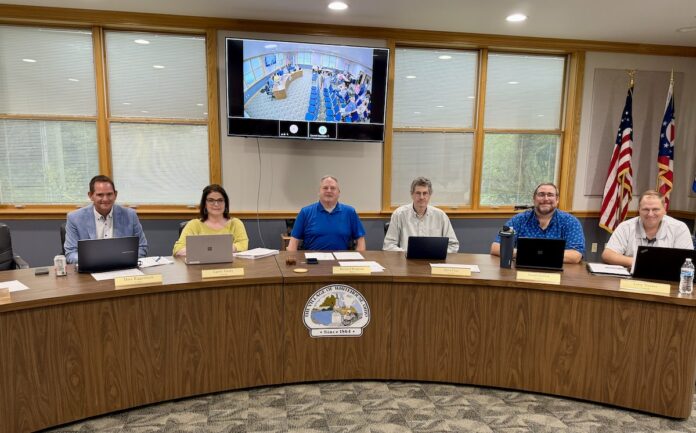
With abundant land and access to electric and gas lines, Waterville Township is being eyed for a potential data center. On July 20, the Zoning Commission reviewed proposed zoning text amendments to govern data centers and other large developments. (AWFP photo by Karen Gerhardinger)

WATERVILLE TOWNSHIP – The 34-person capacity Waterville Township hall was packed on July 20, with residents eager to listen and weigh in on a proposed zoning text amendment that would set the rules for data centers and other campus style developments.

While the Zoning Commission – including Chair Keith Moosman and members Bill Burkett, Bob Long, Jon Poponak and Cathy Vorst – didn’t make any decisions or even set a public hearing on the proposed changes, the meeting did provide an opportunity to discuss the process and questions about annexation and conflict of interest.

After five months of intense work, the Data Center Advisory Committee and Trustee Toby Miller announced the proposed changes in May. These include the addition of an M-3 zoning classification and changes to the current M-1 and M-2 language. Over the past two months, the document has been posted online, discussed in public forms and reviewed by the Lucas County Planning Commission (LCPC), which made “no recommendation” and punted the matter back to the township. The goal is to get the changes put into place before the one-year data center moratorium expires at the end of the year, Miller said.

The new language would replace the current zoning, which permits data centers in agriculturally-zoned areas with a conditional use permit (CUP) approved by a five-person, appointed Board of Zoning Appeals (BZA). The CUP process is administrative and not subject to referendum, while a zoning change is considered legislative and therefore open for citizens to file a referendum to let voters decide.

Assistant County Prosecutor John Borell has cautioned trustees that this new language is setting a new legal precedent that might not hold up in court. Miller shared the eight specific concerns from Borell, plus the answers from the township’s Columbus-based legal team of Brossius, Johnson and Griggs assuring that the language is legally sound and defensible.

Former trustee Karen Schneider said she trusts Borell’s judgment, and believes that the township wouldn’t have the financial means to support itself if a data center developer decided to sue on even one aspect of the regulations outlined in the new language.

“I appreciate the boldness of what you all are doing, but I think complexity here equals defeat, because we don’t have the legal finances or the wherewithal to fight that,” she said.

Instead, she suggested the township follow Borell’s advice to put all of the details in the 67-page document into the zoning book as conditions required to get a permit in an M-2 district. She also cautioned that adding an M-3 to the zoning resolution would open the township up to projects that, a few years ago, never would even be considered as compatible uses in the community.

“Heavy industrial and the way we live now – they don’t even fit into the same sentence,” Schneider said. 

Burkett also agreed with the idea of adding many of the conditions into the zoning resolution, which has been updated many times as the township has changed. He disagreed with Miller’s assertion that nothing is on the books to provide guidelines for such a large project.

“We’re not all chicken farmers here looking at backwards regulations. I understand you did a lot of work on it, but for over the past 10 to 15 years we’ve been working on those regulations. The best thing we could do to respond at the time was to look at conditional uses – that gave us the power to address some of those issues,” he said.

The township’s legal team is considering all legally-viable ideas shared by residents and committee members. Lyn Cox asked for an update on her requests for a 1,000-foot setback from schools, churches and residences; to prevent cryptocurrency or data mining projects; and to ban discharging of wastewater into area streams and fields.

A crytocurrency or data mining operation wouldn’t be approved because the noise levels wouldn’t meet the standards included in the M-3 language, Miller said. The setbacks are being considered by the legal team, although Miller noted that they need to be cautious on adding requirements that might be deemed as punitive.

“If they are punitive, they will sue. And if they sue, the entire zoning resolution will be thrown out. It is threading a needle,” Miller said.

Requiring a data center to discharge into a sanitary sewer line would be problematic, as there are no sanitary sewers anywhere in the township, Miller said. And wastewater discharge is governed by the EPA – which Cox pointed out is “loosening their requirements.”

If a data center is required to hook up to sanitary sewer, their primary option would be to ask Waterville or Whitehouse for services, and this would prompt those municipalities to ask the developer to annex. Then all of the regulations the township has put into place wouldn’t be applicable. 

The township is currently working on strengthening its annexation agreements with the city and the village, but Miller said some areas are already considered open to annexation, such as the area west of the Port Authority land on Neapolis Waterville Road.

The Zoning Commission members agreed to wait until the Columbus law firm provides updates on all the questions before setting a date for a public hearing in early August. During that hearing, commission members will take input from residents, and then vote on whether they recommend passage. The trustees will then hold their own public hearing and make a final decision on whether to adopt the zoning text amendments. 

For now, only Miller and Trustee Julie Theroux are set to vote, as Trustee Kyle Hertzfeld has recused himself because a distant relative with the same last name could stand to benefit from a data center development.

“There is no reason for him to recuse himself. He doesn’t own land [that could be sold to a developer for a data center] or adjoining properties. He has no financial interest. His last name just happens to be Hertzfeld,” Miller said. 

BZA member Jill Lipinski questioned whether Zoning Commission member Bill Burkett should be allowed to vote, as he is an employee of Regional Growth Partnership, which she said is working with the county to bring data centers to the community.

“There’s no conflict of interest for me to serve on this board just because of what job I have. If there is an application that is submitted and somebody believes there is a conflict because my employer has a reason to benefit from that, then there might be a conflict of interest. But strictly because of who I work for is not a conflict of interest,” Burkett said, asking Lipinski to contact the Ohio Ethics Commission for clarification.

Miller said he contacted the OEC and the county already, to determine if any member of the Zoning Commission, BZA or board of trustees has a conflict. They found none, he said, including Burkett or Hertzfeld. 

Resident Bryan Imes suggested the people in the audience contact Hertzfeld too, and Miller agreed that a show of support might be helpful.

“We voted him in this position to represent us,” Imes said. “For him to recuse himself…doesn’t help the cause. He could go on the record and say he’s against it [data centers].”

Miller pointed out that Hertzfeld sent a written statement opposing data centers, and that was read aloud during the July 10 meeting. He agreed that it hurts the township to not have all three trustees weighing in.

The Zoning Commission did not set its public hearing, but will need to provide a 10-day notice to residents prior to that date. The trustees meet on July 22 at 6:30 p.m., and cannot set a public hearing on the matter until the Zoning Commission holds a public hearing and votes on a recommendation.

Artwork re-installed at International Cove Riverwalk

0
Workers carry the last part of the “You Are Doing Great/You Are Beautiful” installation at the International Cove part of the Riverwalk in Toledo, Ohio on Monday July 20, 2026. TFP Photo/STEPHEN ZENNER

Black letters with a bright yellow border reading “You Are Doing Great” on one side, and on the other side “You Are Beautiful” were reinstalled at International Cove Monday early afternoon. Matthew Hoffman, the artist who created the work, was on hand to ensure the integrity of his vision, along with members of the Arts Commission of Greater Toledo, while workers from Kokosing did the heavy lifting.

Initially the work was a temporary public art installation for The Arts Commission’s Momentum Festival in 2019, but then was moved to the east side in-between restaurants and International Cove. During Metroparks Toledo’s renovation of their multi-step Riverwalk project, the artwork was removed, and now is permanently reinstalled on July 20, 2026.

Hoffman said it was exciting to see the artwork re-installed, and that he is always trying to put positive messages out into the world.

Matthew Hoffman, the artist of the “You Are Beautiful/You Are Doing Great” installation, walks towards the truck with the art piece, while installation workers from Kokosing, Rob Ingersoll, a foreman, Caleb Gleckler, a laborer, Craig Mesenburg, a foreman and Joe Zika, a superintendent, begin to unload the sign in pieces at the International Cove part of the Riverwalk in Toledo, Ohio on Monday July 20, 2026. TFP Photo/STEPHEN ZENNER
Rob Ingersoll, a foreman with Kokosing, Craig Mesenburg (behind the work), a foreman with Kokosing, and Joe Zika, a superintendent with Kokosing, move a piece of the “You Are Beautiful” installation onto heavy machinery to move into place at the International Cove part of the Riverwalk in Toledo, Ohio on Monday July 20, 2026. TFP Photo/STEPHEN ZENNER
Heavy machinery moves the first part of the “You Are Beautiful” installation at the International Cove part of the Riverwalk in Toledo, Ohio on Monday July 20, 2026. TFP Photo/STEPHEN ZENNER
Matthew Hoffman, the artist of the “You Are Beautiful/You Are Doing Great” installation takes pictures of workers moving the piece into its location at the International Cove part of the Riverwalk in Toledo, Ohio on Monday July 20, 2026. Initially the work was a temporary public art installation for The Arts Commission’s Momentum Festival in 2019. TFP Photo/STEPHEN ZENNER
Matthew Hoffman, the artist of the “You Are Beautiful/You Are Doing Great” artwork fills in details at the base of the piece after it is placed in its location at the International Cove part of the Riverwalk in Toledo, Ohio on Monday July 20, 2026. Initially the work was a temporary public art installation for The Arts Commission’s Momentum Festival in 2019. TFP Photo/STEPHEN ZENNER
Matthew Hoffman, the artist of the “You Are Beautiful/You Are Doing Great” artwork fills in details at the base of the piece after it is placed in its location, while workers bring on additional pieces of the artwork at the International Cove part of the Riverwalk in Toledo, Ohio on Monday July 20, 2026. Initially the work was a temporary public art installation for The Arts Commission’s Momentum Festival in 2019. TFP Photo/STEPHEN ZENNER
Kokosing workers place pieces of the “You Are Doing Great/You Are Beautiful” artwork installation with Ben Cook of the Arts Commission and Matthew Hoffman, the artist, watching at the International Cove part of the Riverwalk in Toledo, Ohio on Monday July 20, 2026. TFP Photo/STEPHEN ZENNER
Workers carry the last part of the “You Are Doing Great/You Are Beautiful” installation at the International Cove part of the Riverwalk in Toledo, Ohio on Monday July 20, 2026. TFP Photo/STEPHEN ZENNER
Workers secure the individual parts of the “You Are Doing Great/You Are Beautiful” installation at the International Cove part of the Riverwalk in Toledo, Ohio on Monday July 20, 2026. Initially the artwork was a temporary public art installation for The Arts Commission’s Momentum Festival in 2019. TFP Photo/STEPHEN ZENNER
Craig Mesenburg, a foreman with Kokosing, drills into the concrete to secure the art installation of the “You Are Doing Great/You Are Beautiful” sign at the International Cove part of the Riverwalk in Toledo, Ohio on Monday July 20, 2026. Initially the artwork was a temporary public art installation for The Arts Commission’s Momentum Festival in 2019. TFP Photo/STEPHEN ZENNER
Workers carry the last part of the “You Are Doing Great/You Are Beautiful” installation at the International Cove part of the Riverwalk in Toledo, Ohio on Monday July 20, 2026. TFP Photo/STEPHEN ZENNER

Cartoons by Don Lee: You’ve been Flocked

0
Cartoon by Don Lee

Properties and projects: Development in Swanton Township

0
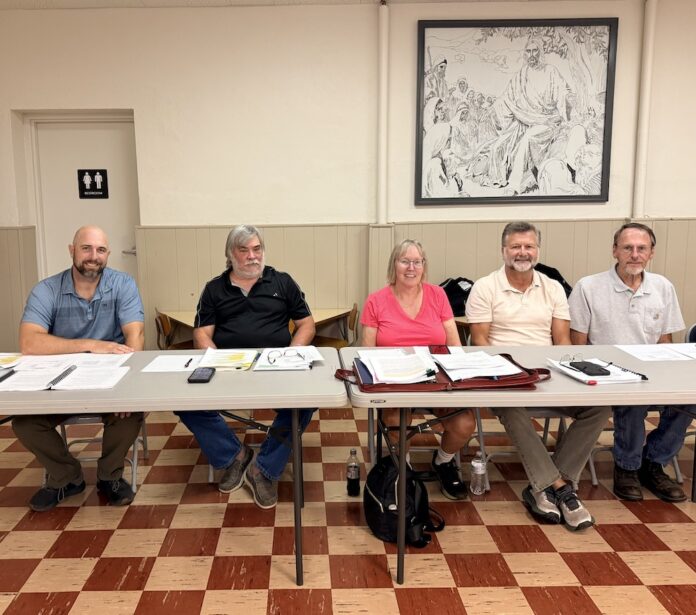
Swanton Township Trustees (from left) Mike Nowicki, Bill Anderson and Matt Beil, along with fiscal officer Mindy Curry and zoning inspector Ben Mooney, met on July 14. A new website was debuted with contact information at swantontownshipoh.gov – where residents can sign up for text alerts and find out contact information for township officials. (AWFP photo by Karen Gerhardinger)

SWANTON TOWNSHIP – Airport Highway properties and projects were among the topics shared by Zoning Inspector Ben Mooney during the Swanton Township Trustees’ July 14 meeting, held immediately after the start of the quarterly Zoning Commission meeting.

Mooney reported that the commission approved Shawn Albert‘s plans to build an office building on the southeast corner of Girdham and Airport Highway for his S & J General Contractors. The material will be corrugated metal, typically not allowed in the overlay district, but the design is attractive, the commission agreed, also approving an alternative landscaping plan.

The commission also approved Kevin Martin‘s plans to use the parking lot behind the building, located on the southwest corner of Airport Highway and U.S. 20A, for customers of the Greens at Oak Openings. He will close one entrance on Airport and one on U.S. 20A, leaving the main entrance on U.S. 20A.  The Zoning Commission is allowing Martin to use gravel in the lot for up to two years, but then he must get it paved. The business includes a mini golf course, restaurant and gathering space, and is set to open in the coming months.

The Zoning Commission approved the re-zoning of 13 parcels totaling 112 acres in the Land-Air Commerce Park, 11520 Airport Highway. Interstate Capital acquired the land for development. Any construction plans will required a special meeting with the commission and the Ohio Department of Transportation will require a speed study.

An abandoned home at 11650 Airport Hwy. was also discussed. The owner is in more than $22,000 in arrears on taxes. The Lucas County Auditor can do a tax foreclosure on the property, which would be put up for sale through the sheriff’s office. Whoever buys the property will need to be aware that it’s less than the required five acres, so doing anything with the land would be a challenge. If it doesn’t sell, the township can work with the Lucas County Land Bank, which will clear the taxes and title and give it to the township – which would then be responsible for demolishing the building. Mooney and the county have both attempted to contact the owner and received no response. He described the condition of the home as being dangerous. Trustees agreed to begin the foreclosure process. 

Mooney reported that the operators of a business at 12565 Airport Hwy. are working on changes to mitigate the impact of their business on neighboring residences, including planting arborvitae and reducing dust from the gravel lot where semis enter. And, elsewhere in the township, he continues to look for options to remove an a boat that was abandoned in front of a Reed Road residence many years ago. The boat can’t be donated because it doesn’t have a title, and he continues to seek answers from Michigan and Ohio.

Since taking the position in March, Mooney has begun working on updating the township’s zoning resolution. He presented new residential and commercial zoning violation fees, and plans to later submit ordinances for zoning – rules that he said will help protect residents and businesses. The fees for violations will allow the township to follow up on zoning violation letters and spur the recipient to contact the township, he said. 

“It will allow us faster and defined rules to help accomplish township goals,” he said.

While the township’s Zoning Commission is complete, with members Mike Bayer, Johnnie Bryce, Liz Thurman, Mike Tye and Bruce Wholf, the trustees are working to recruit members to the Board of Zoning Appeals (BZA). That board hasn’t met in five years, although legally required to at least hold an organizational meeting every January. The trustees contacted those listed as BZA members and one one – Ron Oberhaus – agreed to continue. The BZA meets as needed to hear cases in which an applicant wants an exception to the rules in the zoning resolution. Interested members should send a resume or letter of interest to Fiscal Officer Mindy Curry at [email protected].

During the meeting, the trustees also:

-Held a moment of silence for former trustee and U.S. Navy veteran Joseph Zielinski, who passed on July 7.

-Agreed, with some conditions, to have Mooney contract with iWorQ Systems for a $250 activation fee and $2,000 a year for three years. The system will allow Mooney to track all of the zoning records with notes, photos and renderings, as well as permits and violation letters. Trustee Matt Beil plans to contact TrioTech to see how it fits in with cybersecurity measures and with the county prosecutor to look over the contract, while Mooney ensures that iWorQ does not sell the township’s data.

-Heard Curry say that she has asked assistant county prosecutor John Borell to come to the next meeting to address the topic of legal expenditures and outside council authorization policies. Her request was prompted by the receipt of a $65,000 settlement check from a defamation case between prior fiscal officer Peggy Michael and former Whitehouse council member Rebecca Conklin Kleiboemer in 2020. The township incurred $356,055.28 in legal fees for the case.

*Disclosure: Rebecca Conklin Kleiboemer is a board member for the Toledo Free Press, under which the Anthony Wayne Free Press operates.

-Learned from the Lucas County Engineer’s Office that the Ohio Public Works Commission has $500,000 set aside for projects in communities with populations less than 5,000. The engineer asked if Swanton Township has any projects that could be covered with such funding, and if the township could come up with the 10 percent match of $50,000. Trustees discussed possible  projects, including a connecting bike trail on Fulton-Lucas Road between the Wabash Cannonball Trail’s north and south forks, where the 55 mph road is very narrow. Trustees also mentioned a need for repaving on Sager and Reed roads.

-Reminded residents that the township has a new website: swantontownshipoh.gov and emails. Residents can also sign up for text alerts on the site. A postcard with this information is going to every household. 

-Heard that the township will host a free bulk trash drop-off on Saturday, Aug. 22 from 8 a.m. to 4 p.m. at the maintenance garage, 6576 Manore Rd.

-Learned the results of a speed study on the south side of the airport. The study was done at the request of airport police, who noticed an uptick in speeding by Amazon Air and Tronair employees. Based on the study, the section between Sager and the north terminus should be reduced to 50 mph; South Airfield Road from Whitehouse Spencer to Air Cargo Parkway should remain at 55 mph; and Whitehouse Spencer Road between Sager and the Airfield should be lowered to 45 mph.

-Agreed to accept the village of Swanton’s invitation to participate in the Saturday, Aug. 8 Swanton Corn Festival parade, which starts at 10:30 a.m., launching from Swanton Sports Center at 610 N. Main and traveling south past Swanton Memorial Park. Trustees approved up to $500 to purchase candy, giveaways and a banner.

Loss of local news is making voters less informed, taxpayers poorer

0
Pexels photo by Tim Samuel.

This article by Marty Schladen was originally published in the Ohio Capital Journal. Find the original post here.

When local newspapers shut their doors and no reporters are there to watch school boards, city councils, and county commissioners, taxes go up, according to a new study.

The increase is $12 million a year in Ohio and $1.1 billion nationally — and that doesn’t even count the money that gets stolen or the cost to investigate and prosecute corruption, the report released earlier last month by Rebuild Local News says.

Those costs represent increased interest on municipal bonds as lenders worry that without a reporter on the beat, local officials will misappropriate funds.

“Local journalism performs a core fiscal function: continuous, external oversight of public institutions,” the report said. “When that oversight erodes, governments face less scrutiny over spending and procurement decisions, increasing the likelihood of wasteful spending and corruption.”

It added, “For these reasons, bond markets perceive greater risk of lending to unmonitored local governments and thus demand a higher interest rate as compensation for bearing the additional credit risk. The higher borrowing costs for local governments are ultimately borne by local taxpayers in the form of increased taxes and reduced spending on public services and infrastructure upkeep.”

Rebuild Local News is a nonprofit organization that advocates ways to make local journalism sustainable.

That sustainability has been under dramatic assault over the past decade.

The Medill School of Journalism at Northwestern University last year reported that 50 million Americans had limited or no access to local news — an all-time high. It said Ohio had lost 54.4 percent of its newspapers since 2005, the seventh-most of any state.

In Ohio, 1.04 million, or 8.7 percent of residents, live in 21 news desert counties, the Rebuild Local News report said. Those counties have $1.3 billion in bond debt, and the fact that they’re news deserts makes it $12 million more expensive each year to service it, the report said. 

The Rebuild Local News report was written by the group’s research director Matthew Baker and Dermot Murphy, an associate professor of finance at the University of Illinois Chicago. It builds on a 2020 study by Murphy and two other academics that found that newspaper closures are associated with higher municipal borrowing costs.

“Following a newspaper closure, municipal borrowing costs increase by 5 to 11 basis points, costing the municipality an additional $650,000 per issue,” that study said. “This effect is causal and not driven by underlying economic conditions.”

Baker and Murphy defined a news desert as a county with no local newspaper, and used census data to determine how many people live in them. They also looked at total issuance and the mix of municipal bonds.

Using the 0.86 percent news-desert premium estimated in the 2020 study, they determined how much more people in news deserts are paying, assuming that those counties were borrowing in the same proportion as non-news deserts.

The researchers said the higher costs aren’t just a matter of coincidence. 

“Critically, this estimate is causal rather than correlational: neighboring counties with similar economic conditions but still-robust news coverage do not experience an increase in borrowing costs,” it said.

In addition to higher interest rates come other costs, the report said.

“The stakes of this watchdog function are not abstract,” it said. “The Youngstown Vindicator, a 150-year-old daily that closed in 2019, had spent decades exposing organized crime and public corruption, contributing to dozens of convictions. Its absence removed a check that no internal control replaced.”

It just makes sense that without a reporter sitting in public meetings, making open-records requests and roaming government halls, an unscrupulous public official would be more likely to try something sketchy.

The report gave an example.

“In Bell, California, a low-income, predominantly Latino community of approximately 36,000 people in Los Angeles County, city officials spent years raising their own pay with almost no public scrutiny,” it said. “By the late 2000s, the city manager was earning $787,637 a year, the police chief $457,000, and city council members nearly $100,000 for what was officially part-time work. All of these raises were approved at public municipal meetings that lacked robust newspaper coverage.”

The Los Angeles Times later learned of the situation and reported it out.

Ruben Vives, one of the reporters who broke the story, said it was too late in the game.

“Someone would have got wind of this earlier had there been a reporter there,” the report quoted him as saying. “This is just a prime example of when you turn away, and you let something like this just kind of grow and grow, and it becomes sort of a cesspool of corruption.”

Galloway method attracts runners of all levels

0
Members of the Toledo Area Galloway Group meet three times a week to run in area parks. (Courtesy photo)

When 62-year-old Maria Matney decided to start running again, after a six-year hiatus, she thought just completing a 5k would be a challenge. Now, two years later, Matney has not only completed multiple half marathons, but is training to run a full marathon. 

She credits the Toledo Area Galloway Group (TAGG) for her success.

“This program and Jeff Galloway’s Run-Walk-Run method was a game changer,” Matney said. “I’ve been able to increase my running pace.”

Designed for people of all fitness levels, including Wellness Walkers, social runners and distance athletes, the program offers a structured, supportive environment to help each member reach their personal health, wellness and racing goals, said TAGG Program Director Nickie Sattler.

Nickie Sattler is program director for the Toledo Area Galloway Group (TAGG) – which uses the Jeff Galloway Run-Walk-Run method. (AWFP photo by Karen Gerhardinger)

Named for Jeff Galloway, an Olympic runner, the method involves intervals of walking with running, usually 30 seconds of walking and 30 seconds of running.

As Galloway was running a beginner’s running program, he noticed that many of his students were getting too winded to run consistently. So he suggested running a little, until they couldn’t hold a conversation, and then walking a little.

“He spent a lot of time gathering data, and that changed some of his ideas. He found that 30 seconds was the sweet spot – it allowed the heart rate to lower,” Sattler said. “This method has less impact on the body, it’s easier on the knees and the heart rate doesn’t get too high.”

The Galloway Method was introduced in 1973 and has helped thousands of runners meet their goals in the decades since, she added.

Sattler was a self-described couch potato when her son, Joseph, headed off to Marine Corps boot camp seven years ago. To keep her mind off his absence, and to show solidarity with the rigorous training he was undergoing, she started running around the neighborhood. 

“I never thought I’d be doing half marathons and marathons. Going around the block was enough,” she said. 

So she joined a Dayton Galloway Group and discovered the Run-Walk-Run method as a way to increase her stamina and her pace.

“I can run three miles without a break, at a slower pace. I run faster taking walk breaks,” she said, noting that she’s increased her personal record. “I’m not the fastest, but the back-of-the-pack runners get their money’s worth, and they enjoy the run. And nothing says that if you have to take a break and walk that you’re not a runner.”

Recently TAGG held a kickoff for its summer/fall session, with coffee, a meeting and a three-mile run. The season runs through November 21 and new Wellness Walkers and social runners are welcome.

Training sessions are all coach-led, three days a week, to ensure proper pacing, motivation and safety. Tuesdays and Thursdays are conditioning and maintenance sessions of 3 miles while Saturdays are dedicated to endurance-building group runs and walks in area Metroparks, ranging from 5 to 10 miles.

When Beth Tronolone joined TAGG, the former high school and college volleyball player didn’t have a lot of running experience. Now 68, she didn’t begin running until 57. 

“I was able to go from being a slow runner to doing  a 5k,” she said. “I signed up for the Garmin Half Marathon and had an impressive time for a first-timer.”

Just as she was hitting her pace, Tronolone was sidelined with arthritis in the knee, which kept her from even walking three miles. Using the Galloway Method, she slowly worked her way back into running and, last week, completed six miles.

“It’s great beginning runners, injured runners and older runners. I represent all three,” she laughed. “I’m at a point where I’m not going to go faster and see my name in the paper. Every once in a while I will place second or third, but that’s because I’m old. But I feel like I’m accomplishing something. And it’s about the camaraderie. I love my running group. The people are so great and we get to go to a lot of different places.”

Among her favorite runs over the years were the Shawshank Hustle and the Labor Day Mackinac Bridge Run. This year the group is preparing for three half marathons – the Air Force, Detroit Free Press International, and the Churchill’s – as well as the Honolulu Marathon.

While Tronolone is the oldest member at 68, the group has members in their 20s as well. The members usually follow up a run with a stop at an ice cream or coffee shop, brewery or restaurant. But the runners don’t keep their socializing until the end. Often they are talking to one another while running – because they’re not huffing and puffing.

“We’re trying to grow the community and share the love,” Sattler said. “The Galloway community is very supportive of each other.”

To learn more, email [email protected] or join the Toledo Area Galloway Group on Facebook.

Worst air quality on record

0
Smoke from Canadian wildfires reaches The Fifth Third Bank building, One Seagate, hazing the air and breaking records for poor air quality with Air Quality Index (AQI) ratings of over 700 in downtown Toledo, Ohio on Thursday July 16, 2026. Since the late 90s AQI has been monitored, and 300 and above is considered hazardous to be out in. TFP Photo/STEPHEN ZENNER

TOLEDO – Smoke passing over the Midwest from Canadian wildfires caused Toledo to have the worst air quality on record for the northwest Ohio city.

The Air Quality Index (AQI) measures pollution levels in the air, putting anything at 301 or higher at a hazardous level.

0-50 is the rating for good air quality.

51-100 is the rating for moderate concern, with potential to irritate some groups of people.

101-150 is an unhealthy amount of pollution for sensitive groups of people, according to AirNow.Gov.

151-200 is where some members of the general public will begin to have their health affected by the poor air quality.

201-300 is very unhealthy air quality.

301+ is hazardous.

The air quality on July 16, 2026 more than doubled the 300 marker. The photos below were all taken that day.

Monroe Street in downtown Toledo. (TFP photo by Stephen Zenner)
The Anthony Wayne Bridge as seen from the dock at Promenade Park in downtown Toledo during a cascade of polluted air from Canadian wildfires. (TFP photo by Stephen Zenner)
Veterans’ Glass City Skyway bridge is obscured by pollution caused by the fires. (TFP photo by Stephen Zenner)
The Toledo skyline with the Martin Luther King Jr. Bridge. (TFP photo by Stephen Zenner)

Wild Side: Young raccoons venture out

0
Two young raccoons grazing early in the morning. (Photo by Art Weber, nature photographer for Metroparks Toledo)

Wildlife populations have been high recently as young of all species set out
on their own, venturing away from nests, hollows and dens. This pair of young raccoons
has wandered from the safety of their den, probably in a nearby tree or hollow log where
they were born two to three months ago. Their mother, who performs all the duties of
raising young, is likely nearby. It’s not unusual for her to remain close to her young
through their first year.